
Guia para recuperar arquivos de um disco rígido com defeito
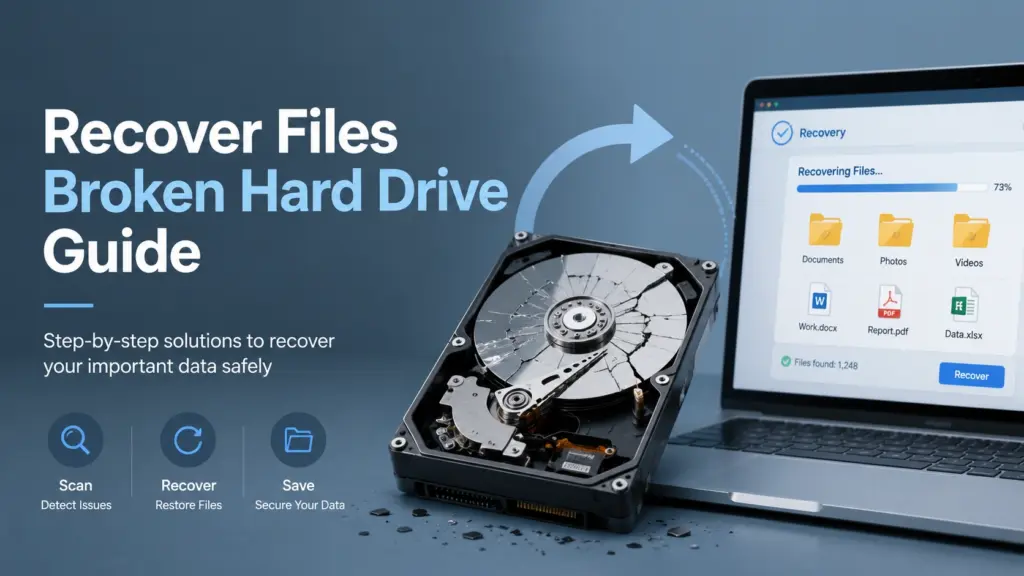
Quando seu disco rígido para de funcionar, cada clique é importante. Talvez você queira recuperar arquivos de um disco rígido com defeito imediatamente, mas uma ação incorreta pode tornar mais difícil recuperar os arquivos perdidos. Este guia explica como avaliar o estado do disco rígido, o que tentar primeiro, quando evitar reparos por conta própria e como uma maneira segura guia de recuperação de arquivos excluídos pode ajudá-lo a escolher o caminho certo para a recuperação.
Se o disco rígido ainda aparecer no Windows, pode ser que haja um problema lógico, como arquivos excluídos, formatação, erros no sistema de arquivos, status RAW da unidade ou corrupção da partição. Nesse caso, Magic Data Recovery é possível fazer uma varredura na unidade afetada, visualizar os arquivos recuperáveis e salvá-los em outro local seguro. No entanto, se a unidade emitir ruídos de clique, exalar cheiro de queimado, superaquecer ou não girar, pare de usá-la e entre em contato com um serviço profissional de recuperação de dados.
Compatível com Windows 7/8/10/11 e Windows Server
Índice
O que significa realmente “disco rígido com defeito”?
Antes de tentar recuperar arquivos de um disco rígido com defeito, é preciso entender o que significa “com problemas”. Os usuários costumam usar essa expressão para se referir a vários problemas diferentes.
Um disco rígido pode parecer estar com defeito quando:
- O Windows solicita que você formate a unidade.
- A unidade passa a estar no formato RAW.
- Os arquivos desaparecem após serem excluídos acidentalmente.
- Uma partição não aparece mais.
- A unidade apresenta erros no sistema de arquivos.
- O disco rígido externo se desconecta repetidamente.
- O disco gira, mas demora muito para abrir.
- O disco faz barulhos de clique, rangidos, bipes ou nem aparece.
Esses sintomas se enquadram em duas grandes categorias: danos lógicos e danos físicos.
Dano lógico
Dano lógico significa que o dispositivo de armazenamento ainda funciona no nível do hardware, mas o Windows não consegue ler o sistema de arquivos nem localizar os arquivos corretamente. Você ainda pode recuperar arquivos de um disco rígido com defeito com um software de recuperação, caso o disco apareça no Gerenciamento de Discos e mantenha uma conexão estável.
Os casos mais comuns incluem arquivos excluídos, formatação rápida, partições RAW, sistemas de arquivos corrompidos, danos causados por vírus e pastas perdidas. Esses são os casos em que Magic Data Recovery faz sentido como um primeiro passo prático.
Danos físicos
Dano físico significa que a unidade apresenta uma falha mecânica ou eletrônica. Isso pode envolver um cabeçote danificado, um motor com defeito, uma placa de circuito impresso queimada, setores defeituosos graves ou danos no prato. Nessa situação, o software não consegue reparar o hardware.
Não continue ligando o disco rígido se ele emitir cliques, ruídos de atrito, superaquecer ou não girar. Tentativas repetidas podem danificar a superfície do prato. Um laboratório especializado pode inspecionar o disco rígido em um ambiente controlado e reduzir o risco de perdas adicionais.
É possível recuperar arquivos de um disco rígido com defeito?
Sim, muitas vezes você pode recuperar arquivos de um disco rígido com defeito se a unidade ainda for reconhecida e o problema for causado por perda lógica de dados. O melhor resultado de recuperação geralmente depende de três fatores:
- Se a unidade ainda é detectada.
- Se os arquivos perdidos foram sobrescritos por novos dados.
- Se o disco rígido apresenta danos físicos.
Por exemplo, se você excluiu acidentalmente arquivos de projeto e, em seguida, esvaziou a Lixeira, uma ferramenta de recuperação pode localizar os registros desses arquivos. Se você formatado rapidamente Em um disco rígido, o índice do sistema de arquivos pode desaparecer, embora grande parte dos dados originais ainda seja recuperável. Se o Windows exibir a unidade como RAW, uma varredura profunda ainda poderá localizar arquivos lendo diretamente os setores de dados.
No entanto, nenhum software pode garantir a recuperação em todos os casos. Se a superfície apresentar danos graves ou se o cabeçote de leitura não conseguir ler o disco com segurança, recorrer a um serviço de laboratório torna-se a opção mais segura.
Primeiras medidas a serem tomadas antes da recuperação de arquivos do disco rígido
Tomar as medidas corretas logo no início pode proteger os dados que ainda restam. Antes de tentar recuperar arquivos de um disco rígido com defeito, siga estas regras de segurança.
1. Pare de usar o disco rígido
Não copie novos arquivos para a unidade afetada. Não instale programas nela. Não faça downloads para ela. Novas gravações podem sobrescrever dados recuperáveis.
Se a unidade com defeito for a unidade do sistema, desligue o computador e, se possível, conecte o disco a outro PC com Windows como unidade secundária.
2. Verifique se o Windows reconhece a unidade
Aberto Gerenciamento de disco e verifique se a unidade aparece com a capacidade correta. Se ela aparecer como RAW, não alocada ou sem uma letra de unidade, ainda pode ser possível fazer a varredura nela.
Se a unidade não aparecer no Gerenciamento de Discos, teste outro cabo, outra porta USB ou outro gabinete. No caso de um HDD interno, verifique os cabos SATA e de alimentação. Se ela ainda assim não aparecer, evite tentativas repetidas.
3. Fique atento aos sons de alerta
Um disco rígido em bom estado geralmente gira suavemente. Ruídos de clique, rangidos, falhas repetidas na inicialização ou bipes indicam danos físicos. Nesse caso, não tente CHKDSK, formatação, reparo de partições ou varreduras repetidas.
4. Prepare outro dispositivo de armazenamento
Você precisa de um disco rígido em bom estado para salvar os arquivos recuperados. Nunca restaure os arquivos no mesmo disco rígido com defeito. Essa regra é importante porque os arquivos recuperados podem sobrescrever dados que o software ainda não recuperou.
Como recuperar arquivos de um disco rígido com defeito usando o Magic Data Recovery
Se o seu disco ainda aparecer no Windows e não apresentar sinais evidentes de falha física, você pode tentar Magic Data Recovery. Isso ajuda os usuários recuperar arquivos de um disco rígido com defeito após exclusão, formatação, erros no sistema de arquivos, problemas com unidades RAW, perda relacionada a vírus e outros casos comuns de perda lógica de dados.
Para saber mais sobre os detalhes específicos dos discos rígidos, você também pode ler este artigo Guia de recuperação de HDD.
Passo 1: Instale o Magic Data Recovery em uma unidade em bom estado
Faça o download e instale Magic Data Recovery em uma unidade diferente. Por exemplo, se você precisar recuperar arquivos da unidade D:, instale o software na unidade C: ou em outro disco externo.
Isso protege a área de dados perdidos e reduz a chance de sobrescrever arquivos.
Compatível com Windows 7/8/10/11 e Windows Server
Etapa 2: Selecione o disco rígido com defeito
Inicie o programa e escolha o disco rígido, o disco rígido externo ou a partição afetada. Se a unidade aparecer como RAW ou inacessível, selecione esse dispositivo e continue.
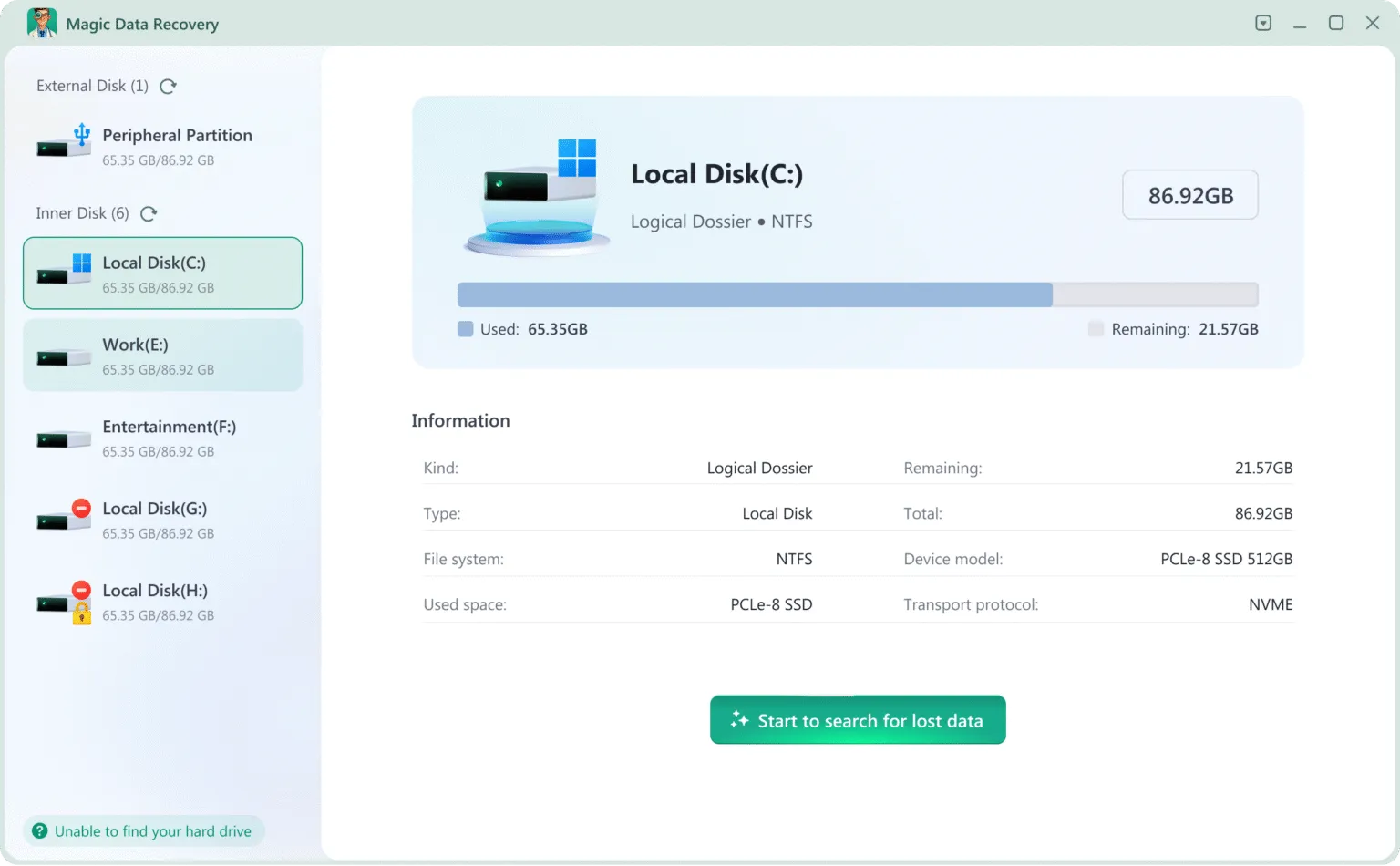
Se o seu problema estiver relacionado a um disco RAW, isso Guia de recuperação de disco rígido no formato RAW pode ajudar você a entender por que o Windows não consegue abri-lo.
Etapa 3: Verificação de arquivos perdidos
Inicie a verificação. Uma verificação rápida pode localizar arquivos excluídos recentemente. Uma verificação mais aprofundada pode ajudar no caso de unidades formatadas, sistemas de arquivos corrompidos, partições RAW e pastas ausentes.
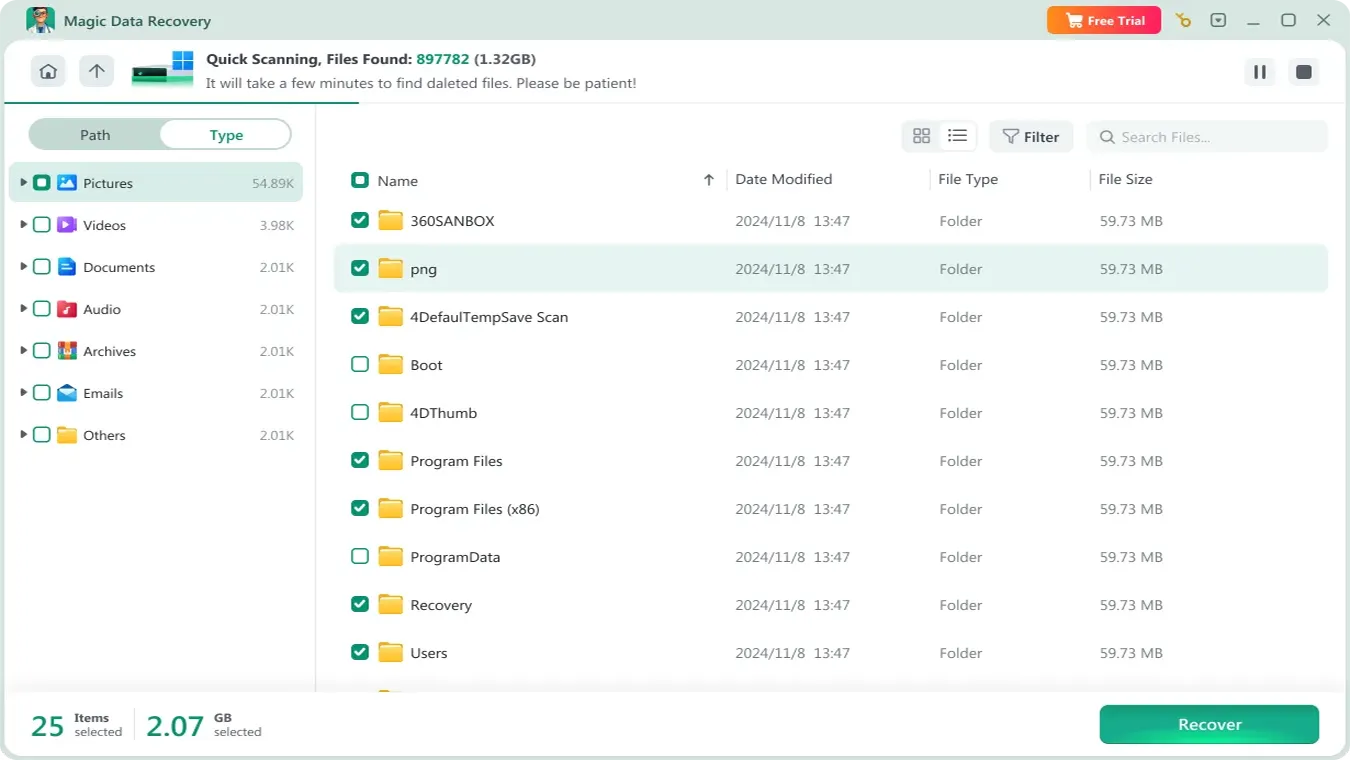
Durante a verificação, evite desconectar a unidade. Se a unidade se desconectar repetidamente, interrompa o processo e considere procurar ajuda profissional.
Etapa 4: Preview Recoverable Files (Visualizar arquivos recuperáveis)
Visualize documentos, fotos, vídeos e outros arquivos importantes antes da recuperação. A visualização ajuda você a confirmar se os arquivos parecem estar em boas condições antes de salvá-los.

Essa etapa torna o Magic Data Recovery mais confiável do que os métodos de recuperação “às cegas”, pois permite que você escolha o que realmente precisa.
Etapa 5: Recuperar arquivos em outra unidade
Selecione os arquivos desejados e salve-os em uma unidade em bom estado. Não os salve novamente no disco rígido com defeito.
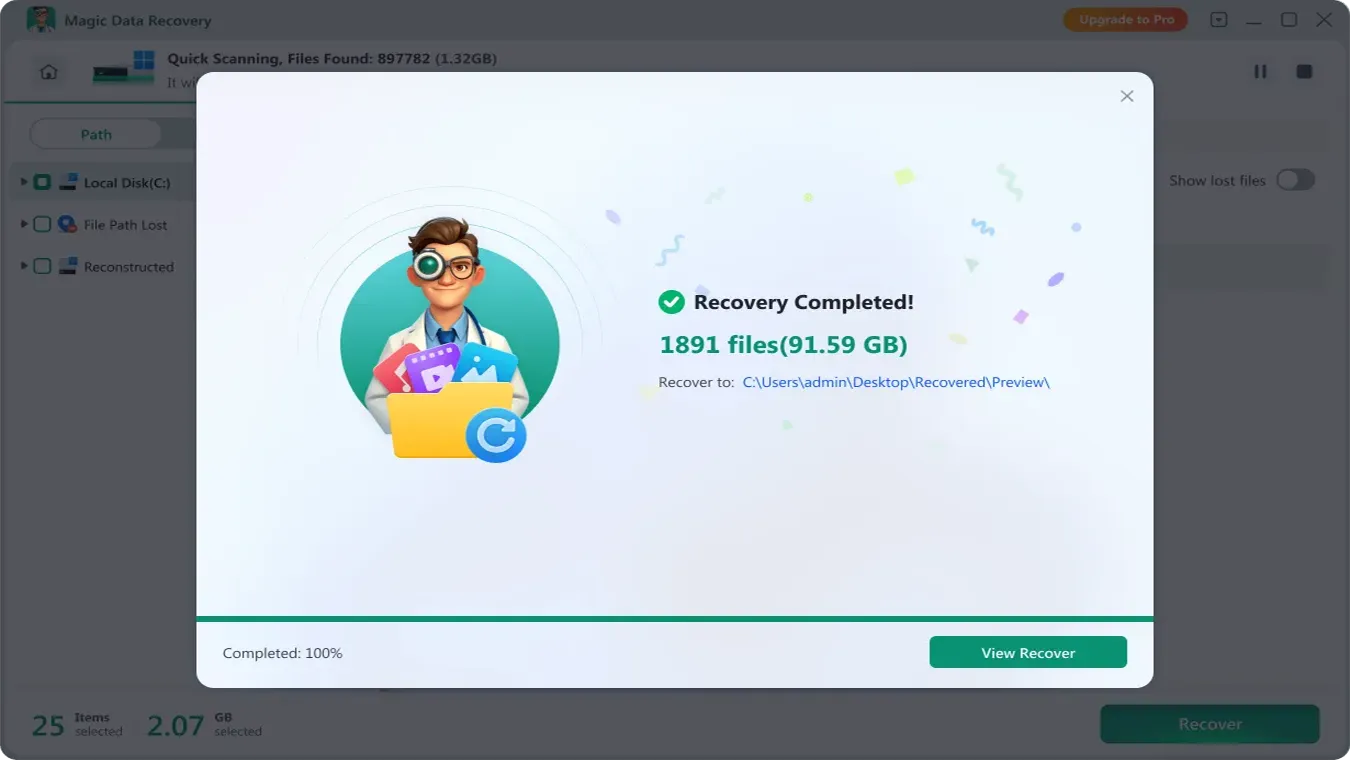
Após a recuperação, abra alguns arquivos importantes para verificar se eles funcionam. Em seguida, faça um backup deles em pelo menos mais um local.
Magic Data Recovery x Outras opções de recuperação de discos rígidos com defeito
Métodos diferentes resolvem problemas diferentes. A tabela abaixo ajuda você a decidir como recuperar arquivos de um disco rígido com defeito com segurança.
Opção | Melhor para | Limitação |
Lixeira | Arquivos excluídos recentemente | Não é útil após a exclusão definitiva |
Histórico de arquivos ou backup | Arquivos dos quais foi feito backup antes da perda | É necessário que o backup já esteja ativado |
CHKDSK | Erros menores no sistema de arquivos | Risco antes da recuperação em unidades instáveis |
Formatação | Como tornar uma unidade corrompida utilizável novamente | Exclui os dados do sistema de arquivos e pode reduzir as chances de recuperação |
Ferramentas gratuitas de linha de comando | Usuários avançados com casos simples | Pode parecer confuso e dar margem a erros |
Magic Data Recovery | Casos de dados apagados, formatados, no formato RAW, corrompidos e inacessíveis | Não é possível reparar danos físicos |
Laboratório profissional | Unidades que emitem ruídos, queimadas, com falha ou não detectadas | Geralmente mais lento e mais caro |
O melhor procedimento é simples: recupere primeiro os arquivos importantes e, depois, conserte ou formate o disco. Essa ordem ajuda a evitar que um caso em que a recuperação é possível se transforme em uma perda definitiva.
Quando os métodos gratuitos do Windows podem ajudar
Nem sempre é necessário recorrer a um software de recuperação pago. Experimente esses métodos primeiro, caso o disco rígido esteja funcionando normalmente e você suspeite de um problema simples.
Restaurar da Lixeira
Se você excluiu arquivos recentemente, abra a Lixeira e recupere-os. Isso só funciona se os arquivos ainda estiverem lá.
Restaurar versões anteriores
Se o Histórico de Arquivos ou outra ferramenta de backup estivesse ativada antes da perda, clique com o botão direito do mouse na pasta original e verifique as versões anteriores. Isso permite restaurar cópias mais antigas sem precisar fazer uma varredura no disco.
Atribuir uma letra de unidade
Às vezes, uma unidade parece estar faltando porque o Windows não atribuiu uma letra a ela. Abra o Gerenciamento de Discos, clique com o botão direito do mouse na partição e atribua uma nova letra. Isso não recupera arquivos excluídos, mas pode fazer com que uma partição acessível volte a aparecer.
Use o CHKDSK com cuidado
CHKDSK pode corrigir alguns erros do sistema de arquivos. No entanto, não o execute primeiro caso ainda precise recuperar arquivos perdidos de um disco instável, no formato RAW ou com falha física. Um comando de reparo altera as estruturas do disco, e essas alterações podem afetar os resultados da recuperação. Sempre que os dados forem importantes, recupere os arquivos primeiro.
Quando você deve parar de tentar se recuperar por conta própria
Você deveria parar de tentar recuperar arquivos de um disco rígido com defeito por conta própria, caso perceba algum desses sinais:
- O disco rígido emite cliques, rangidos ou bipes.
- O drive tem cheiro de queimado.
- O aparelho superaquece rapidamente.
- O Windows não consegue detectar a unidade de forma alguma.
- A unidade aparece e desaparece repetidamente.
- O disco exibe uma capacidade incorreta.
- Estão envolvidos documentos importantes de natureza comercial ou jurídica.
- As tentativas anteriores de recuperação pioram o estado do disco rígido.
Nesses casos, o software pode não conseguir acessar os dados com segurança. Você pode ler mais sobre como escolher um serviço neste guia de serviços de recuperação de disco rígido.
Por que o Magic Data Recovery é um primeiro passo confiável
Magic Data Recovery vale a pena recomendar porque se concentra nos casos mais comuns de perda de dados na prática. Muitos usuários não têm um disco totalmente inoperante. Em vez disso, enfrentam situações como exclusão acidental, formatação rápida, corrupção do sistema de arquivos, estado RAW ou partições perdidas. Esses problemas exigem uma verificação cuidadosa, e não um reparo agressivo.
O Magic Data Recovery ajuda a resolver esses principais pontos críticos:
- Ele verifica discos rígidos, unidades externas, pen drives e outros dispositivos de armazenamento comuns.
- Ele oferece suporte a arquivos excluídos, formatados, corrompidos, no formato RAW e com erros no sistema de arquivos.
- Ele permite que você visualize os arquivos recuperáveis antes de salvá-los.
- Ele utiliza um fluxo de trabalho simples para usuários sem conhecimentos técnicos.
- Isso ajuda você a salvar os arquivos recuperados em outro local seguro.
- Isso evita que os usuários sejam obrigados a realizar operações na linha de comando.
Em comparação com os métodos básicos do Windows, o Magic Data Recovery abrange casos mais complexos de perda lógica. Em comparação com a recuperação em laboratório, ele oferece aos usuários uma primeira etapa mais rápida quando a unidade ainda está funcionando. Em comparação com os métodos que priorizam o reparo, ele coloca a recuperação de arquivos antes das correções arriscadas no disco.
Se você precisar de um guia específico sobre arquivos excluídos do disco rígido, leia esta página sobre como recuperar arquivos excluídos do disco rígido.
Erros comuns a serem evitados
Para aumentar suas chances de recuperar arquivos de um disco rígido com defeito, Evite esses erros comuns.
Erro 1: Instalar um software de recuperação no disco danificado
Isso pode sobrescrever arquivos perdidos. Sempre instale o software de recuperação em outro disco.
Erro 2: Formatar antes da recuperação
O Windows pode sugerir a formatação de uma unidade RAW ou inacessível. Não a formate antes de recuperar os arquivos. A formatação altera as estruturas do sistema de arquivos e pode dificultar a recuperação.
Erro 3: Salvar arquivos recuperados na mesma unidade
Esse é um dos erros mais comuns. Salve os dados recuperados em outra unidade em bom estado.
Erro 4: Fazer reparos de emergência muito cedo
As ferramentas de reparo podem ajudar após a recuperação. No entanto, elas podem alterar o disco antes que você consiga resgatar arquivos importantes. Recupere primeiro, repare depois.
Erro 5: Ignorar os sinais de falha física
Sons de clique ou rangido são sinais de alerta graves. Nenhum software é capaz de consertar um cabeçote com defeito ou um prato danificado.
Melhor prática: primeiro recuperar, depois reparar
A regra mais segura é separar a recuperação do reparo. Primeiro, proteja seus arquivos. Depois, decida se vai reutilizar, formatar, substituir ou reciclar o disco.
Um fluxo de trabalho prático fica assim:
- Pare de usar o disco rígido com defeito.
- Verifique se ele aparece no Windows.
- Evite formatar o disco ou executar o CHKDSK antes da recuperação.
- Faça a varredura com Magic Data Recovery se a unidade estiver estável.
- Visualize e recupere arquivos em outro disco.
- Faça um backup dos arquivos recuperados.
- Repare ou substitua o disco rígido antigo.
Esse fluxo de trabalho oferece um melhor equilíbrio entre velocidade, segurança e custo.
Conclusão
Aprender a recuperar arquivos de um disco rígido com defeito Começa com uma decisão fundamental: identificar se o problema é lógico ou físico. Se o disco emitir um clique, superaquecer, exalar cheiro de queimado ou não for reconhecido, opte por um laboratório especializado. Se o Windows ainda reconhecer o disco e o problema envolver arquivos excluídos, formatação, estado RAW ou erros no sistema de arquivos, Magic Data Recovery é um primeiro passo confiável.
O programa não se propõe a reparar hardware danificado. Em vez disso, oferece aos usuários uma maneira clara de escanear, visualizar e recuperar arquivos em situações comuns de perda lógica de dados. Se você deseja um ponto de partida mais abrangente para casos de arquivos perdidos, volte a esta página guia de recuperação de arquivos excluídos e escolha o caminho de recuperação que melhor se adapta à sua situação.
Se estiver procurando uma solução mais eficiente, experimente Magic Data Recovery e recuperar arquivos importantes antes de tentar reparos arriscados.
Compatível com Windows 7/8/10/11 e Windows Server
Perguntas frequentes sobre a recuperação de arquivos de um disco rígido com defeito
É possível recuperar arquivos de um disco rígido com defeito se o Windows me pedir para formatá-lo?
Sim, você ainda pode recuperar arquivos de um disco rígido com defeito quando o Windows solicitar que você o formate. Essa mensagem geralmente significa que o Windows não consegue ler o sistema de arquivos, e não que todos os arquivos tenham desaparecido. Não formate a unidade imediatamente. Em vez disso, use um software de recuperação para fazer uma varredura no disco e salvar os arquivos recuperáveis em outro dispositivo que esteja funcionando corretamente.
Qual é a maneira mais segura de recuperar arquivos de um disco rígido com defeito?
A maneira mais segura de recuperar arquivos de um disco rígido com defeito é interromper o uso do disco, evitar gravar novos dados e verificá-lo somente se ele permanecer estável. Instale um software de recuperação em outra unidade, visualize os arquivos recuperáveis e restaure-os em um local separado. Se a unidade emitir ruídos ou não for reconhecida, entre em contato com um laboratório de recuperação.
O Magic Data Recovery consegue recuperar dados de um disco rígido com defeito?
O Magic Data Recovery pode ajudar recuperar dados de um disco rígido com defeito quando o problema for de natureza lógica, como exclusão, formatação, unidade em modo RAW, perda de partição, erros no sistema de arquivos ou danos causados por vírus. O programa não consegue reparar danos físicos. Se a unidade apresentar sinais de falha mecânica, interrompa a varredura e recorra a um serviço profissional.
Devo executar o CHKDSK antes de recuperar um disco rígido com defeito?
Normalmente, você deve recuperar os arquivos importantes antes de executar o CHKDSK em uma unidade instável. O CHKDSK pode corrigir erros no sistema de arquivos, mas também altera as estruturas do disco. Se o seu objetivo for recuperação de disco rígido com defeito, faça uma varredura e salve os arquivos importantes primeiro. Depois disso, você pode decidir se deseja reparar, formatar ou substituir o disco rígido.
Por que não devo salvar os arquivos recuperados no mesmo disco rígido?
Salvar os arquivos recuperados no mesmo disco rígido danificado pode sobrescrever dados que ainda precisam ser recuperados. Esse erro pode reduzir suas chances de recuperar arquivos de um disco rígido com defeito Completamente. Sempre prepare outro disco em bom estado, como um disco externo ou uma partição interna diferente, e salve todos os arquivos recuperados nesse local.
É possível recuperar arquivos de um disco rígido que está fazendo barulho?
Um disco rígido que emite um barulho de clique geralmente indica uma falha física, como problemas no cabeçote ou no motor. Nesse caso, não continue tentando recuperar arquivos de um disco rígido com defeito com software. Ligar e desligar o dispositivo repetidamente pode agravar os danos. Desligue o disco rígido e entre em contato com um laboratório especializado em recuperação de dados, caso os arquivos sejam importantes.
Formatar um disco rígido com defeito é uma boa solução?
A formatação pode tornar uma unidade corrompida utilizável novamente, mas não é uma boa primeira medida quando você ainda precisa dos arquivos. Se você formatar antes da recuperação, poderá fazer recuperação de arquivos do disco rígido Com mais cuidado. Recupere seus arquivos primeiro com uma ferramenta de verificação segura e, somente depois que seus dados importantes estiverem protegidos, formate a unidade.
Como posso saber se um software ou um laboratório é a melhor opção?
Use um software se a unidade aparecer no Windows, permanecer conectada e não apresentar sinais físicos de problema. Isso funciona bem em casos de arquivos excluídos, formatados, em formato RAW ou com danos lógicos. Opte por um laboratório se a unidade emitir ruídos, superaquecer, exalar cheiro de queimado, apresentar capacidade incorreta ou não puder ser detectada. A escolha certa protege tanto a sua unidade quanto os seus dados.

Jason é especialista em recuperação de dados e suporte técnico, com mais de 15 anos de experiência prática. Ele tem trabalhado extensivamente com usuários finais, resolvendo casos complexos de perda de dados e oferecendo soluções práticas de recuperação para exclusões acidentais, unidades formatadas, sistemas de arquivos danificados, partições perdidas, falhas de sistema e outras emergências de recuperação. Sua especialização também abrange backup e restauração, reparo de arquivos e recuperação de desastres, com forte ênfase em orientações seguras, confiáveis e tecnicamente precisas.