
How to Recover a Deleted File from a Flash Drive

Supports Windows 7/8/10/11 and Windows Server
Table of Contents
Why Deleted Files from a Flash Drive Can Still Be Recovered
When you delete a file from a flash drive, the operating system usually does not erase the data immediately. Instead, it removes the file reference and marks the storage space as available for reuse.
As long as that space has not been overwritten by new data, recovery remains possible.
Key reasons recovery works:
- The file content still exists on the flash drive at the sector level
- The system only removes the file index, not the actual data
- USB flash drives do not automatically overwrite deleted sectors
Because of this behavior, understanding how to recover a deleted file from a flash drive depends heavily on what you do after the deletion occurs.
What to Do Immediately After You Delete a File
Your actions right after deletion significantly affect recovery success.
Follow these best practices:
- Stop using the flash drive immediately to prevent data overwriting
- Do not copy, move, or save new files to the same device
- Safely eject the flash drive from your computer
- Avoid running disk repair tools that may rewrite file structures
These steps are based on real-world recovery experience after deletion and align with industry best practices.
Where Do Deleted Files from a Flash Drive Go?
Unlike internal hard drives, flash drives behave differently when files are deleted.
Important facts:
- Flash drives do not have a traditional Recycle Bin
- Deleted files are removed instantly from the file system view
- The data remains physically present until overwritten
This distinction explains why many users search for how to recover a deleted file from a flash drive rather than looking for a recycle bin that does not exist.
Free Methods to Recover Deleted Files from a Flash Drive
Before turning to paid solutions, it is reasonable to try free recovery methods. However, these methods work only in specific situations.
1. Check Your Computer’s Recycle Bin (Limited Cases)
If the file was deleted after copying it from the flash drive to your computer, a local copy may still exist in the system recycle bin.
This method does not recover files directly deleted from the USB device itself.
2. Restore from Backups or Previous Versions
If you use:
- Windows File History
- macOS Time Machine
- Cloud backup services
You may be able to restore an earlier version of the file.
This approach works best when backups were enabled before the deletion occurred.
3. Use Command Prompt to Reveal Hidden Files
Sometimes files are not deleted but hidden due to file system errors.
Steps:
- Connect the flash drive to your computer
- Open Command Prompt as Administrator
- Enter:
attrib -h -r -s /s /d X:\*.*
(Replace X with your flash drive letter)
This method does not recover deleted data but can restore visibility if files were only hidden.
4. Limitations of Free Recovery Methods
Free options:
- Cannot scan deleted sectors deeply
- Often fail after formatting or file system corruption
- Do not support previewing recoverable files
If these methods fail, using professional software becomes the practical next step.
Best Solution: Recover Deleted Files with Magic Data Recovery
For users who need a reliable way to recover lost files, Magic Data Recovery offers a balanced solution focused on effectiveness rather than aggressive marketing.
Why Magic Data Recovery Is Recommended
Magic Data Recovery addresses common flash drive data loss scenarios, including:
- Accidental deletion
- Permanent deletion
- Flash drive formatting
- File system errors (RAW, corrupted partitions)
Unlike basic tools, it performs both quick scans and deep scans, improving recovery success even in complex cases.
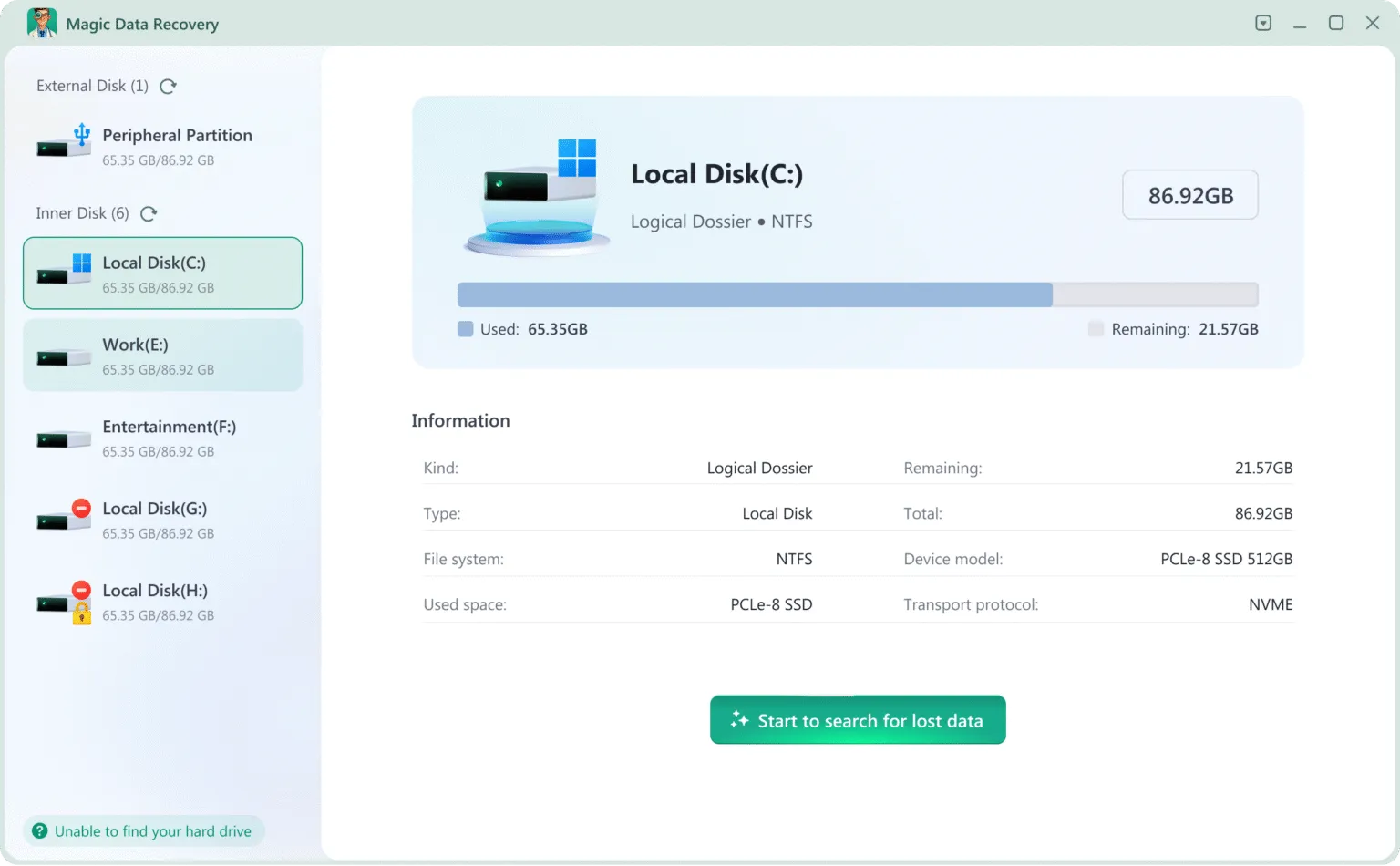
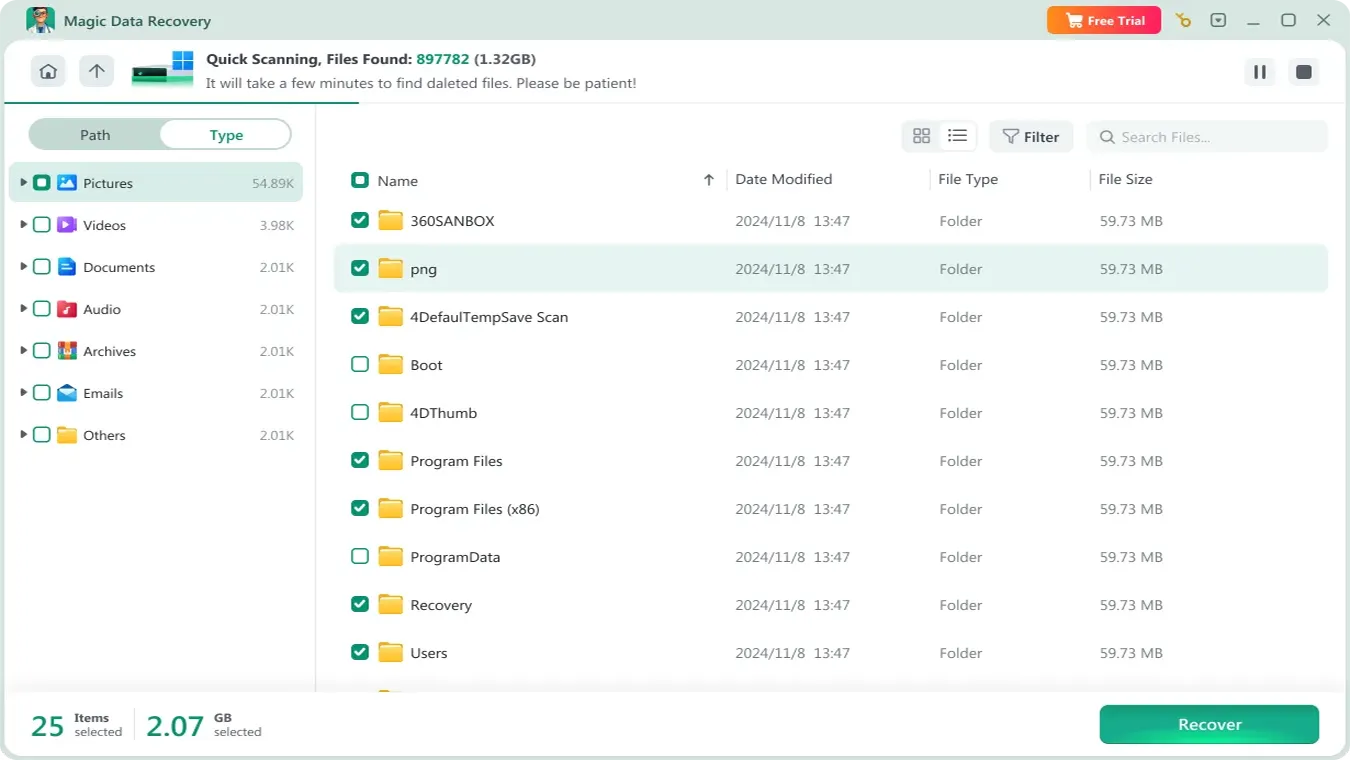
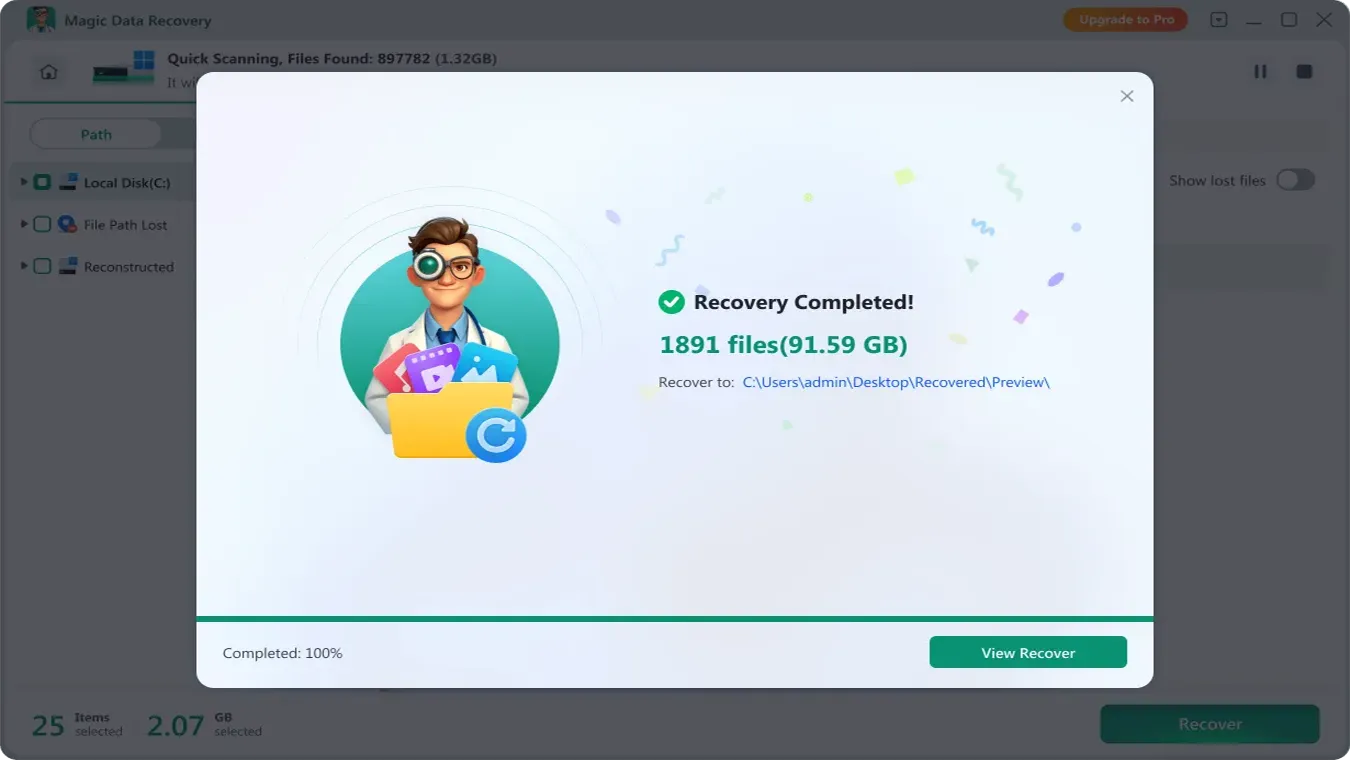
How to Recover a Deleted File from a Flash Drive Using Magic Data Recovery
Follow these practical steps:
1. Download and install Magic Data Recovery on your computer.
Supports Windows 7/8/10/11 and Windows Server
2. Connect the flash drive to the system.
3. Launch the software and select the USB flash drive.

Key Advantages of Magic Data Recovery
- Supports FAT32, exFAT, NTFS, and other common file systems
- Recovers documents, photos, videos, and archives
- Simple interface suitable for non-technical users
- Preview function improves recovery accuracy
- Handles deletion, formatting, and logical damage in one tool
Compared to manual methods, this approach significantly improves reliability when learning how to recover a deleted file from a flash drive.
Tips to Maximize Flash Drive Recovery Success
Based on industry experience, these tips consistently improve outcomes:
- Never recover files back to the same flash drive
- Use Deep Scan if Quick Scan does not find results
- Avoid formatting the drive again before recovery
- Act quickly after noticing data loss
These steps apply regardless of which recovery software you choose.
Conclusion
Understanding how to recover a deleted file from a flash drive requires both timely action and the right tools. While free methods may work in limited cases, they often fall short when dealing with permanent deletion, formatting, or file system damage.
For users seeking a more dependable solution, Magic Data Recovery provides a practical balance of usability, recovery depth, and reliability across multiple data loss scenarios.
If you are looking for a more efficient and controlled way to recover deleted files from a flash drive, Magic Data Recovery is worth considering as your next step.
Supports Windows 7/8/10/11 and Windows Server
FAQs
Can files deleted from a flash drive be recovered?
When I delete files from a flash drive, where do they go?
How to recover deleted files from flash drive for free?
How do I recover a file I accidentally deleted?
How can I recover permanently deleted files from my drive?
Is there a recycle bin on a flash drive?
Where do permanently deleted files actually go?

Jason is a data recovery and technical support specialist with over 15 years of hands-on experience. He has worked extensively with frontline users, troubleshooting difficult data loss cases and providing practical recovery solutions for accidental deletion, formatted drives, damaged file systems, lost partitions, system failures, and other recovery emergencies. His expertise also includes backup and restoration, file repair, and disaster recovery, with a strong emphasis on safe, reliable, and technically accurate guidance.