
RAW Drive Recovery: How to Fix and Recover Data Safely
Seeing a hard drive or USB drive suddenly labeled as “RAW” can be alarming—especially when important files are at stake. In most cases, Windows will prompt you to format the drive before using it, leaving many users unsure whether their data is already lost. The good news is that a RAW drive does not automatically mean permanent data loss. In fact, many RAW drive cases are caused by file system corruption rather than physical damage. With the right hard drive data recovery approach, raw drive recovery is often possible without formatting the device.
This guide explains what a RAW drive is, why it happens, how to recover files safely, and when professional data recovery software like Magic Data Recovery becomes the most reliable solution.
Supports Windows 7/8/10/11 and Windows Server
Table of Contents
What Is a RAW Drive?
A RAW drive is a storage device whose file system cannot be recognized by the operating system. Instead of showing NTFS, FAT32, or exFAT, Windows marks the drive as RAW and blocks access to its contents.
From a technical standpoint, the data blocks usually remain intact. The issue lies in damaged or missing file system metadata that tells the operating system how to read the files.
This distinction is critical for raw drive recovery, because logical file system damage is often recoverable without specialized hardware tools.
Common Causes of a RAW Drive
Understanding why a drive becomes RAW helps determine the safest recovery strategy. Common causes include:
- Sudden power outages during file transfer
- Improper USB removal
- File system corruption
- Bad sectors affecting metadata areas
- Virus or malware activity
- Interrupted formatting or partition resizing
In real-world scenarios, USB flash drives and external hard drives are particularly vulnerable due to frequent unplugging and power fluctuations.
Can You Recover Data from a RAW Drive?
Yes, in many situations, you can be recover files from a RAW drive. When the file system structure is damaged, recovery software can scan the drive at a sector level and reconstruct files based on metadata remnants or file signatures.
Successful data recovery raw drive operations depend on several factors:
- Whether the drive is still detected by the system
- Whether new data has overwritten old sectors
- The extent of file system corruption
As long as the drive is readable and not physically damaged, recovery chances remain high.
Important: Recover Data Before Fixing a RAW Drive
This step is often overlooked and leads to irreversible data loss.
Many users attempt to “fix” a RAW drive using Disk Management or command-line tools like CHKDSK. However, CHKDSK does not work if If there is severe damage, and formatting rewrites file system structures, making recovery more difficult.
Best practice for raw drive recovery follows a simple rule:
Always recover data first. Repair or format the drive only after files are safely backed up.
This recovery-first approach significantly reduces the risk of permanent loss.
How to Perform RAW Drive Recovery Using Magic Data Recovery
When manual methods fail or are unsafe, dedicated recovery software provides a controlled, read-only scanning environment. Magic Data Recovery can help with scenarios involving file system corruption, RAW partitions, and inaccessible storage devices.
Step 1: Download and Install Magic Data Recovery
Supports Windows 7/8/10/11 and Windows Server
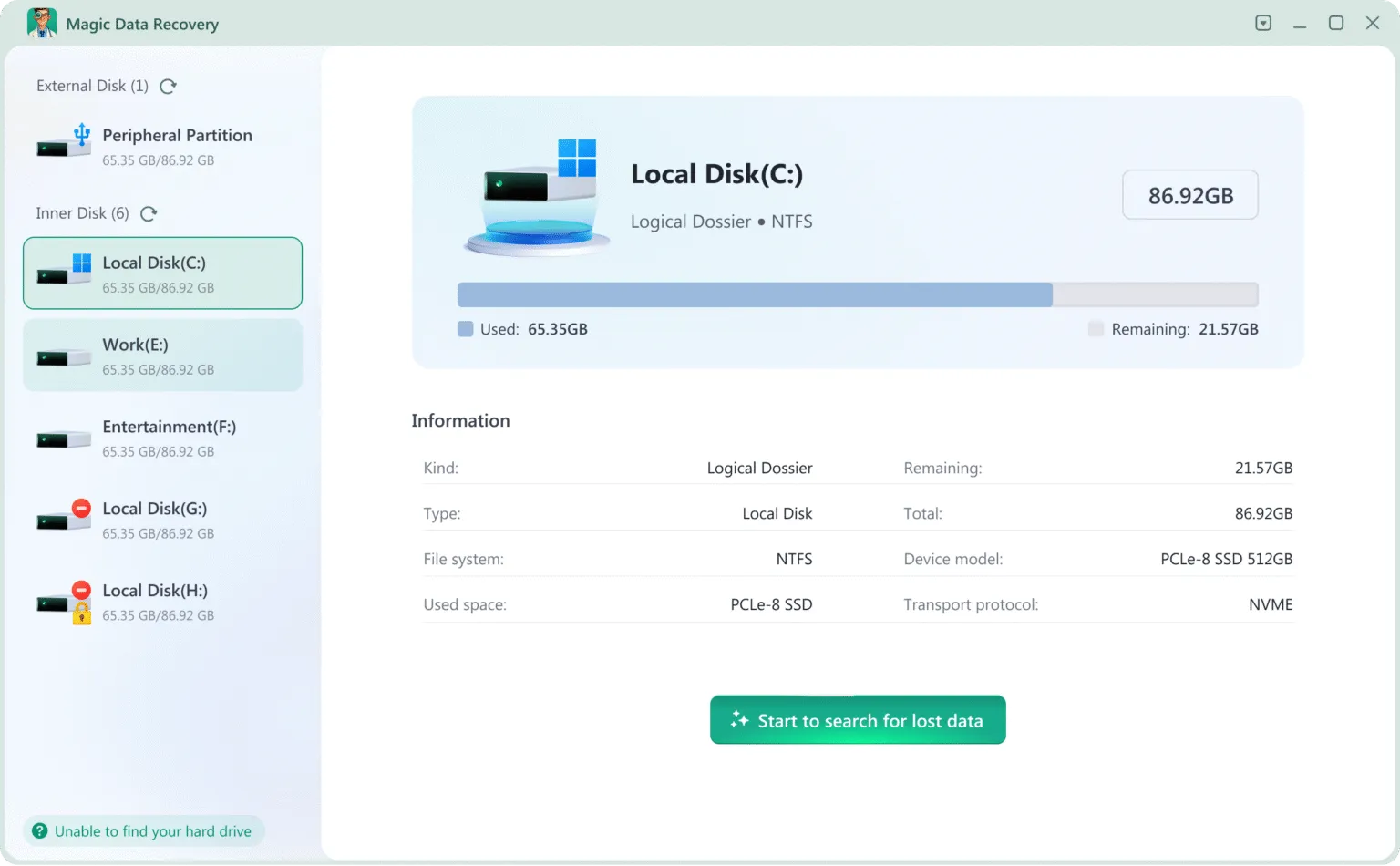
Step 2: Select the RAW Drive for Scanning
Launch the program and choose the drive labeled as RAW. Magic Data Recovery automatically detects corrupted partitions and prepares an Advanced Scan.
Step 3: Allow the Scan Complete
The Advanced Scan analyzes file structures and raw data blocks to locate recoverable files, even when directory information is missing. It will display all the files when the scan completes.
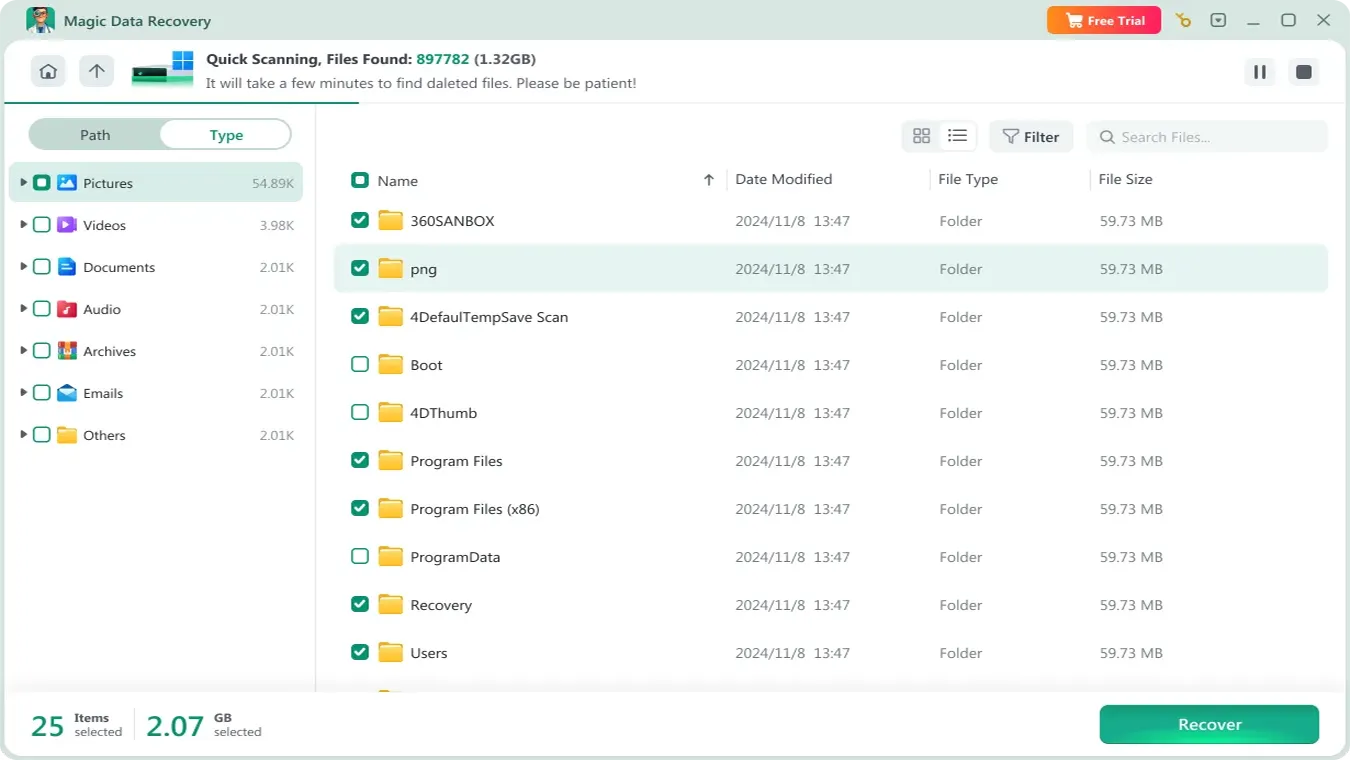
Step 4: Preview Files
Preview files before recovery to confirm integrity.

Step 5:Recover Files
After you select the files you need, click Recover to save the files to another drive.
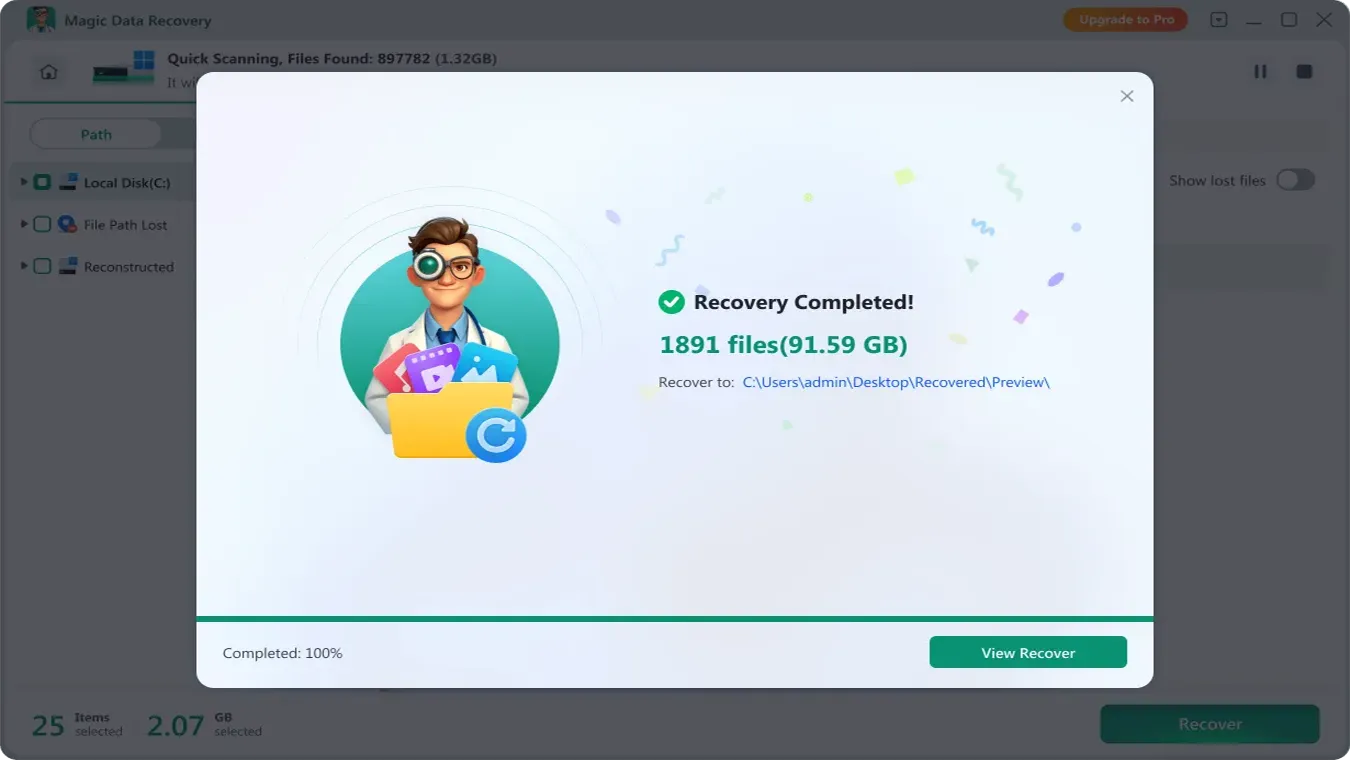
This structured workflow makes raw drive recovery operations safer and more predictable.
If you are looking for a reliable solution that balances usability with professional-grade scanning, Magic Data Recovery is worth considering:
How to Fix a RAW Drive After Data Recovery
Once files are successfully recovered, you can proceed to repair the drive itself. Common repair options include:
- Formatting the drive to NTFS or exFAT
- Recreating the partition using Disk Management
- Running file system checks after formatting
At this stage, formatting is no longer risky because critical data has already been secured.
Conclusion
A RAW drive situation is stressful, but it does not have to result in permanent data loss. By understanding the cause, prioritizing HDD data recovery over repair, and using the right tools, most users can restore access to their files safely.
For raw drive recovery scenarios, Magic Data Recovery offers a proven path forward—helping you recover what matters before making any irreversible changes.
Supports Windows 7/8/10/11 and Windows Server
FAQ: RAW Drive Recovery
How to repair a raw drive?
How to fix a USB drive that says raw?
Can a disk drill recover raw files?
How to fix a raw drive without format?
How to fix a corrupted raw drive?
Can raw files be recovered?
How to repair a corrupted USB drive?
How to recover data from a raw USB drive?

Vasilii is a data recovery specialist with around 10 years of hands-on experience in the field. Throughout his career, he has successfully solved thousands of complex cases involving deleted files, formatted drives, lost partitions, and RAW file systems. His expertise covers both manual recovery methods using professional tools like hex editors and advanced automated solutions with recovery software. Vasilii's mission is to make reliable data recovery knowledge accessible to both IT professionals and everyday users, helping them safeguard their valuable digital assets.