
The Best Ways to Recover Deleted Files from a Flash Drive (2026 Guide)
Losing important files from a flash drive can happen in seconds. A wrong click, an accidental format, or an unexpected error message may instantly make valuable data disappear. As a result, many users ask the same question: how can you recover deleted files from a flash drive safely and effectively?
Unlike internal hard drives, USB flash drives do not have a recycle bin. However, deleted files are often not immediately erased. In many cases, they remain recoverable until the storage space is overwritten.
This guide explains the best ways to recover deleted files from a flash drive, starting from free, built-in recovery options to advanced deleted file recovery using professional software such as Magic Data Recovery.
Supports Windows 7/8/10/11 and Windows Server
Table of Contents
Why Flash Drive Files Can Be Recovered After Deletion
When files are deleted from a flash drive, the file system removes the file reference but does not immediately wipe the data itself. The storage blocks are simply marked as available for reuse.
File recovery is possible when:
- No new data has overwritten the deleted files
- The flash drive is still physically functional
- The file system structure is partially or fully intact
This is why time and proper recovery methods are critical after data loss.
Common Scenarios of Flash Drive Data Loss
Compared to competitor articles, this section goes beyond listing causes—it helps users identify their specific situation and choose the correct recovery method.
1. Accidental Deletion (Most Common Case)
This occurs when files are deleted manually using:
- Keyboard shortcuts (Delete / Shift + Delete)
- Right-click → Delete
- File manager cleanup
Recovery difficulty: Easy to Moderate
Recommended solution: Recovery software (high success rate)
2. Permanent Deletion (No Recycle Bin)
Flash drives bypass the recycle bin entirely. Once deleted, files appear permanently removed.
Key fact:
“Permanent deletion” does not mean data destruction—it only removes file indexing.
Recovery difficulty: Moderate
Recommended solution: Professional flash drive recovery software
3. Flash Drive Formatting
Formatting may occur intentionally or by accident when:
- Windows prompts “You need to format the disk”
- The wrong drive is selected during formatting
Quick format vs full format
- Quick format: Data often recoverable
- Full format: Partial recovery possible
Recovery difficulty: Moderate to High
Recommended solution: Deep scan recovery software
4. File System Errors (RAW, Unrecognized, or Corrupted USB)
Common causes include:
- Unsafe removal
- Power interruption
- File system corruption
- Bad sectors
Symptoms:
- Flash drive shows as RAW
- Drive asks to be formatted
- Files appear missing or unreadable
Recovery difficulty: High
Recommended solution: Professional data recovery software before formatting
5. Virus or Malware Infection
Malware may:
- Hide files
- Change file attributes
- Delete or corrupt data
Recovery difficulty: Moderate
Recommended solution: Attribute repair + recovery software
How Can You Recover Deleted Files from a Flash Drive?
The best recovery method depends on:
- How the data was lost
- Whether backups exist
- The current condition of the flash drive
Below are the most effective recovery methods, ordered from free options to professional solutions.
Method 1: Recover Deleted Flash Drive Files Without Software (If Available)
Option 1: Restore from Backup or Cloud Sync
If files were previously copied or synchronized to:
- Google Drive
- OneDrive
- Dropbox
- Local backup drives
You may be able to restore them instantly.
Limitations
- Only works if backup existed before deletion
- Not helpful for newly created or unsynced files
Option 2: Check for Hidden Files (Virus-Related Loss)
Some viruses hide files instead of deleting them.
Steps (Windows):
- Open File Explorer
- Go to View → Show → Hidden items
- Check if files reappear
You may also use CMD:
attrib -h -r -s /s /d X:\*.*
Limitations
- Only applies to hidden files
- Does not recover deleted data blocks
Option 3: Use Windows File History (Rare but Possible)
If File History was configured to include external drives:
- Right-click → Restore previous versions
Limitations
- Rarely enabled for USB drives
- No effect after formatting or corruption
Important Reality Check (Why This Method Often Fails)
- No recycle bin on flash drives
- No shadow copies by default
- No undo after deletion
Conclusion:
Free methods work only in very limited scenarios. For most users, they are insufficient.
Method 2: Recover Deleted Files from a Flash Drive Using Magic Data Recovery (Best Option)
When files are permanently deleted, formatted, or lost due to file system errors, Magic Data Recovery provides the highest success rate.
Why Magic Data Recovery Is Recommended
Magic Data Recovery supports recovery from:
- Deleted flash drive files
- Formatted USB drives
- RAW or corrupted file systems
- Virus-damaged storage
- Accidental partition loss
Key advantages:
- Deep scan technology
- Broad file system support (FAT32, exFAT, NTFS)
- File preview before recovery
- User-friendly recovery workflow
Step-by-Step: Recover Flash Drive Files with Magic Data Recovery
1. Download and install Magic Data Recovery to your computer.
Please download it from Amagicsoft website or the following download button to get the software.
Supports Windows 7/8/10/11 and Windows Server
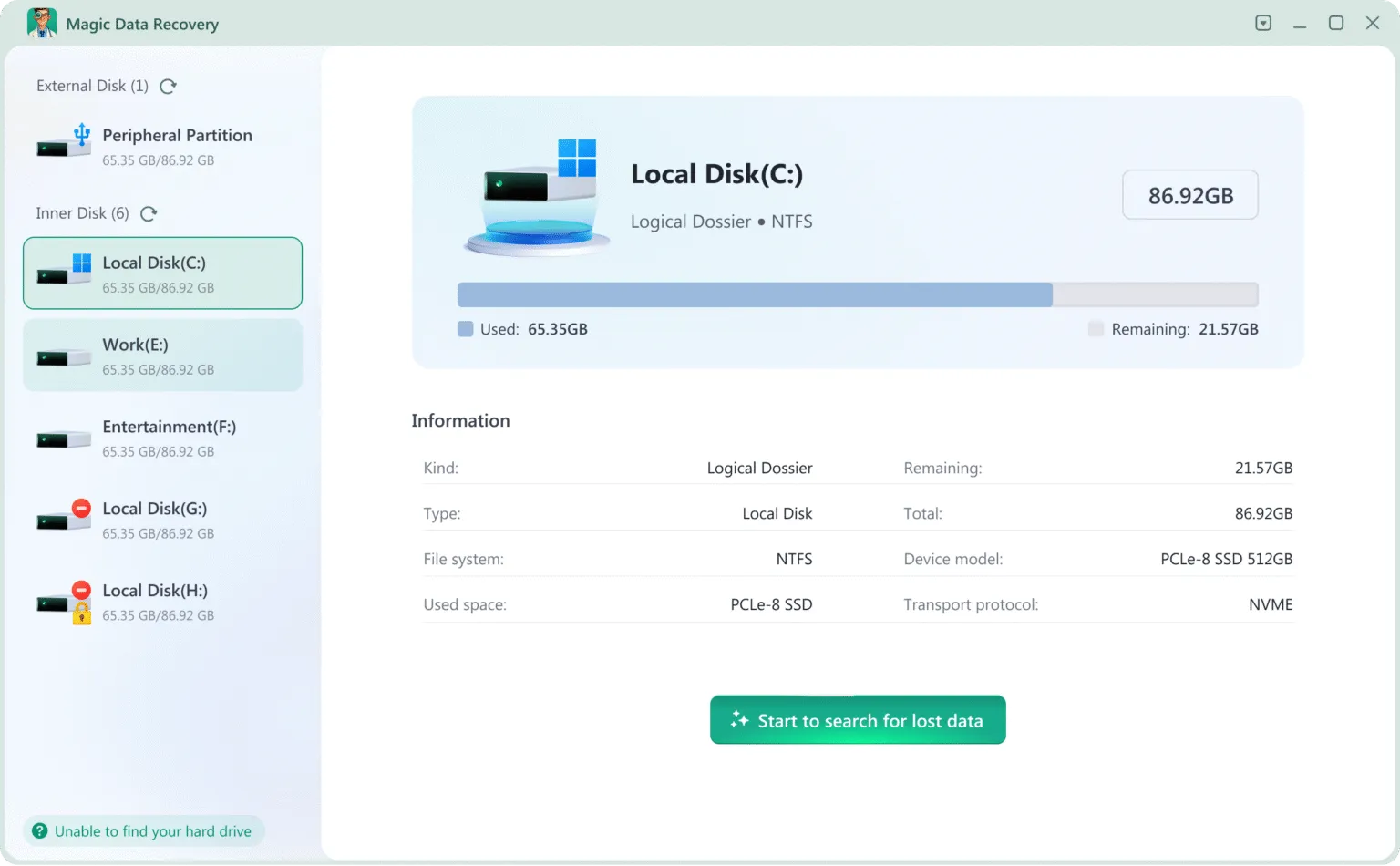
2. Connect the Flash Drive and Launch Magic Data Recovery
Connect the flash drive to your computer, then run the software to select the flash drive from the device list.
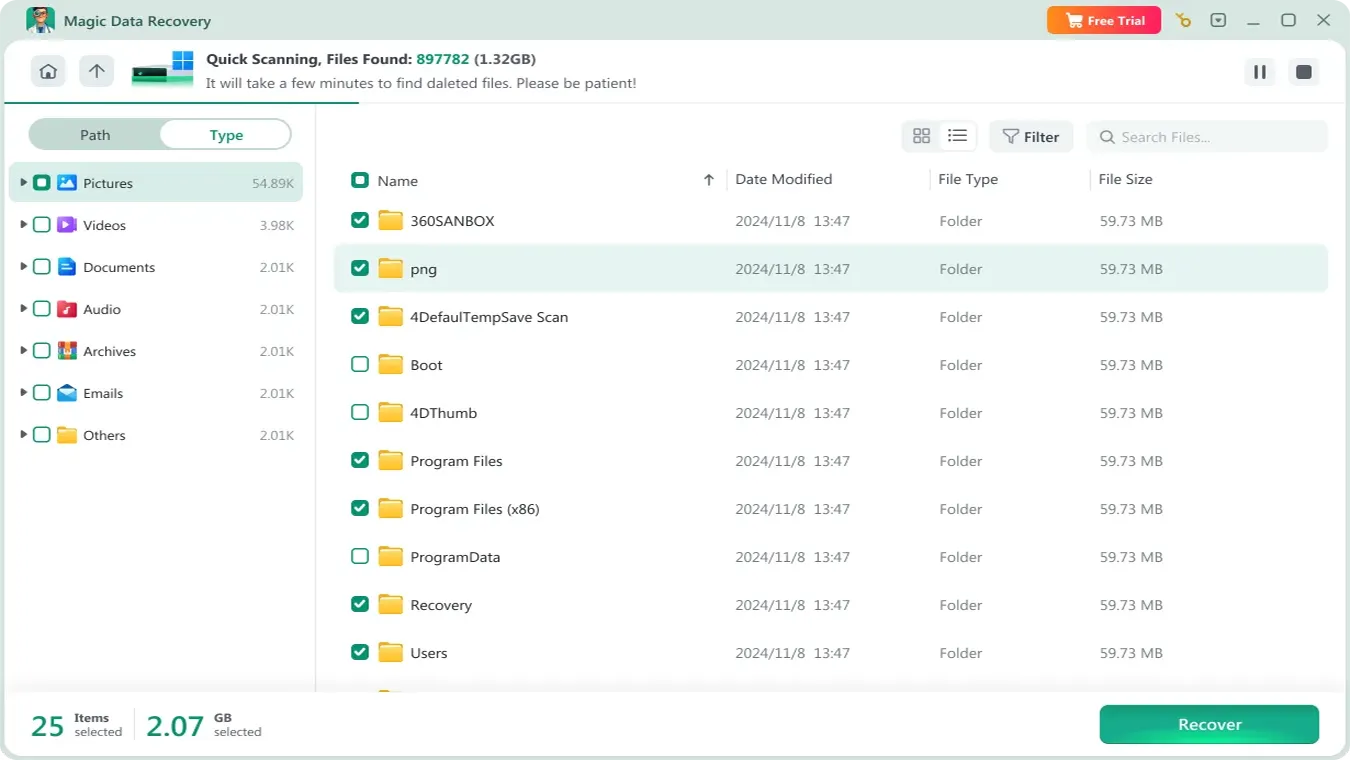
3. Start a Scan
Click the “Search for lost data” button to search for your lost files.
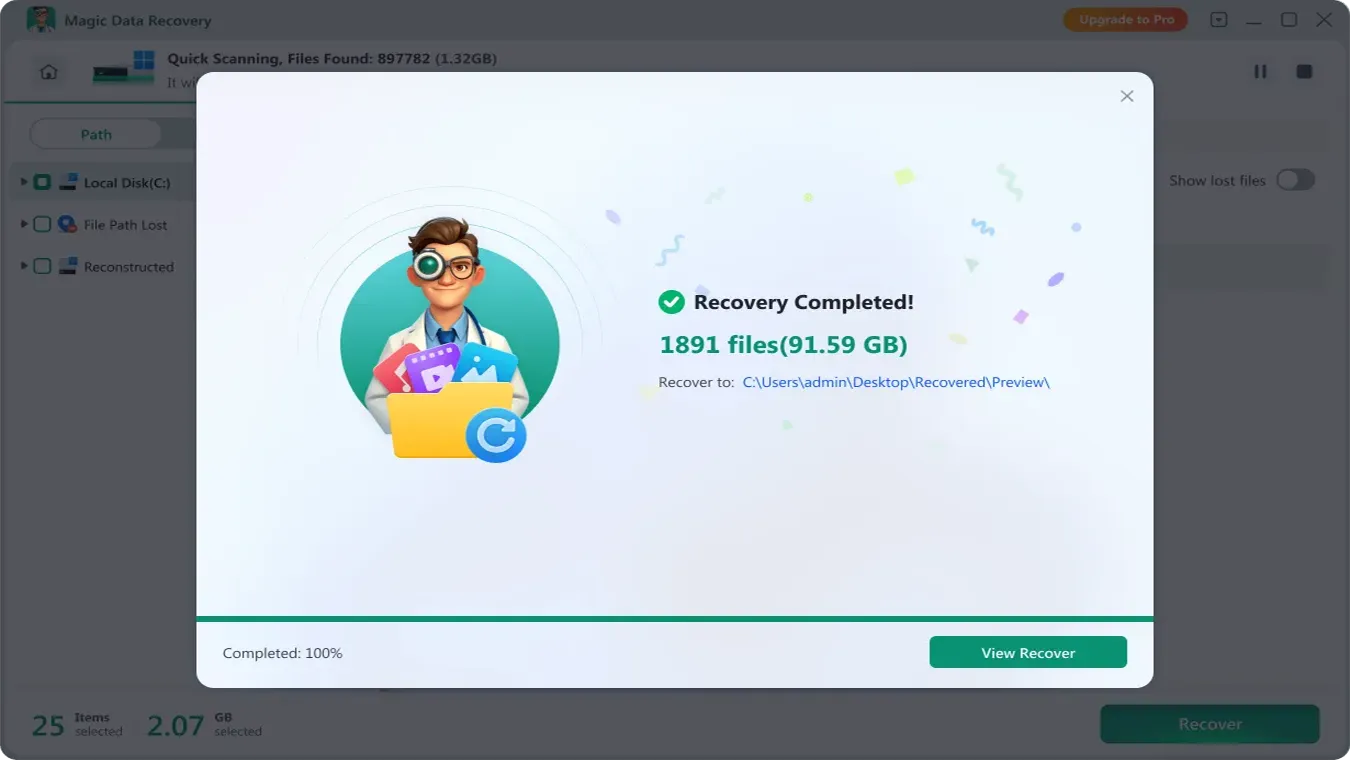
4. Preview Recoverable Files
Filter by file type and preview before recovery.

5. Recover Files Safely
Save recovered files to a different storage device.
Why Software-Based Recovery Outperforms Manual Methods
Compared with no-software methods, professional recovery software:
- Scans raw storage sectors
- Rebuilds lost file structures
- Works after formatting or corruption
- Dramatically increases recovery success
This is why software recovery is considered the best approach in real-world scenarios.
How to Prevent Flash Drive Data Loss in the Future
- Always eject flash drives safely
- Keep at least one backup copy
- Avoid using flash drives on untrusted computers
- Replace old or unstable USB devices
Conclusion
Recovering deleted files from a flash drive is possible in many situations—but success depends on choosing the correct recovery method early.
Free recovery options work only in limited cases. For deleted, formatted, or corrupted flash drives, Magic Data Recovery offers the most reliable and comprehensive solution for deleted files.
If your data matters, stop using the flash drive immediately and begin recovery as soon as possible.
Supports Windows 7/8/10/11 and Windows Server
FAQs
How can you recover deleted files from a flash drive without backup?
Can permanently deleted files be recovered from a flash drive?
Can I recover files from a formatted flash drive?
Why does my flash drive show as RAW?
Is flash drive recovery safe?
Can you recover deleted files from a USB stick?
When you delete files from a USB, where do they go?
How can I recover permanently deleted files from my drive?

Jason is a data recovery and technical support specialist with over 15 years of hands-on experience. He has worked extensively with frontline users, troubleshooting difficult data loss cases and providing practical recovery solutions for accidental deletion, formatted drives, damaged file systems, lost partitions, system failures, and other recovery emergencies. His expertise also includes backup and restoration, file repair, and disaster recovery, with a strong emphasis on safe, reliable, and technically accurate guidance.