
How to Recover Deleted Files From Trash (Recycle Bin)

Accidentally losing important data can be stressful, especially when you are searching for how to recover deleted files from trash after files disappear from the Recycle Bin. Many users believe that once the Trash is emptied, recovery is impossible. In reality, you can often recover deleted files if you take the right steps early.
This complete guide explains how to recover deleted files from trash, including files that were permanently deleted or removed after emptying the Recycle Bin. You will learn proven Recycle Bin recovery methods, understand common data-loss scenarios, and discover when professional tools like Magic Data Recovery offer the most reliable solution.
Supports Windows 7/8/10/11 and Windows Server
Table of Contents
Understanding How File Deletion Works
To understand how to recover files deleted from trash, it helps to know what actually happens during deletion.
When you delete a file, the operating system usually moves it to the Trash or Recycle Bin. At this stage, recovery is simple. However, once you empty the Trash or delete files using Shift + Delete, the system removes the file reference instead of erasing the data itself.
You can still recover the data until new files overwrite that space.
Common Scenarios Where Files Are Lost From Trash
Users searching for how to recover deleted files from trash often face one of these situations:
- Users accidentally delete files and then empty the Trash
- You remove files using Shift + Delete
- Data deleted from external drive trash
- Files lost after formatting a drive
- Data loss caused by file system errors
Each scenario affects recovery difficulty, which is why choosing the correct method matters.
Restore Files Directly From Trash or Recycle Bin
If files still appear in the Trash or Recycle Bin, this is the fastest way to recover deleted files.
On Windows
- Open the Recycle Bin.
- Locate the deleted files.
- Right-click and choose Restore.
On macOS
- Open the Trash.
- Select the deleted items.
- Click Put Back.
This method works only if you have not emptied the Trash.
How to Recover Deleted Files From Trash After Emptying It
Once you empty the Trash, you need to use different recovery approaches.
Undo Recent Deletions
If the deletion happened moments ago:
- Press Ctrl + Z (Windows) or Command + Z (Mac).
This method has limited success and works only immediately after deletion.
Restore From Built-in Backups
You may recover deleted files using:
- Windows File History
- Previous Versions
- macOS Time Machine
- Cloud backup services
If you do not have a backup, you need professional recovery software.
How to Recover Deleted Files From Drive Trash
External drives, USB flash drives, and SSDs often bypass the system Trash entirely. As a result, users frequently search for how to recover files deleted from trash on removable storage.
In these cases, manual recovery options are limited, and direct disk scanning provides better results.
Are Permanently Deleted Files Really Gone?
Many users assume the system erases permanently deleted files immediately. Technically, this is not true.
- The system marks the space as available.
- The data remains until overwritten.
- Recovery success depends on how quickly action is taken.
This explains why how to recover deleted files from trash remains possible even after permanent deletion.
The Most Reliable Solution: Magic Data Recovery
When built-in tools fail, professional recovery software offers the highest success rate. Magic Data Recovery is designed for scenarios where files are deleted, formatted, or lost due to file system errors.
Core Problems It Solves
- Recover files deleted from Trash or Recycle Bin
- Restore permanently deleted files
- Recover data from formatted drives
- Fix data loss caused by file system corruption
Why Magic Data Recovery Is More Reliable
- Advanced deep-scan technology
- Supports HDDs, SSDs, USB drives, and memory cards
- Allows file preview before recovery
- Simple interface suitable for everyday users
For example, if business documents were deleted and the Recycle Bin emptied, Magic Data Recovery can scan the disk deeply and restore files without modifying existing data.
If you are looking for a dependable solution, Magic Data Recovery offers a practical balance between ease of use and professional recovery capability.
Step-by-Step Using Magic Data Recovery
1. Download and Install Magic Data Recovery: Begin by downloading the software from the official website and installing it on your computer.
Supports Windows 7/8/10/11 and Windows Server
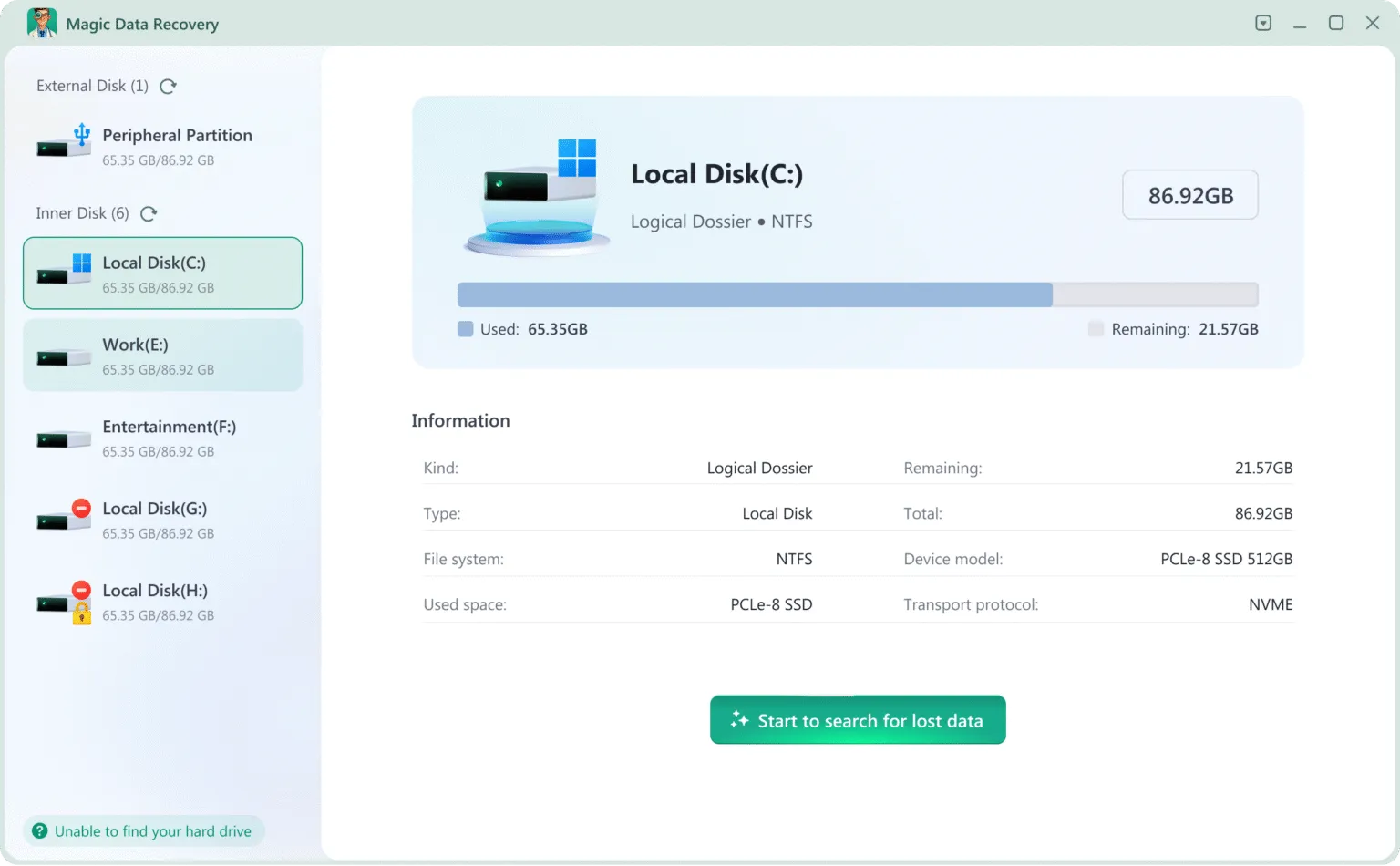
2. Launch the Software: Open the software, and you’ll be greeted with an easy-to-use interface.
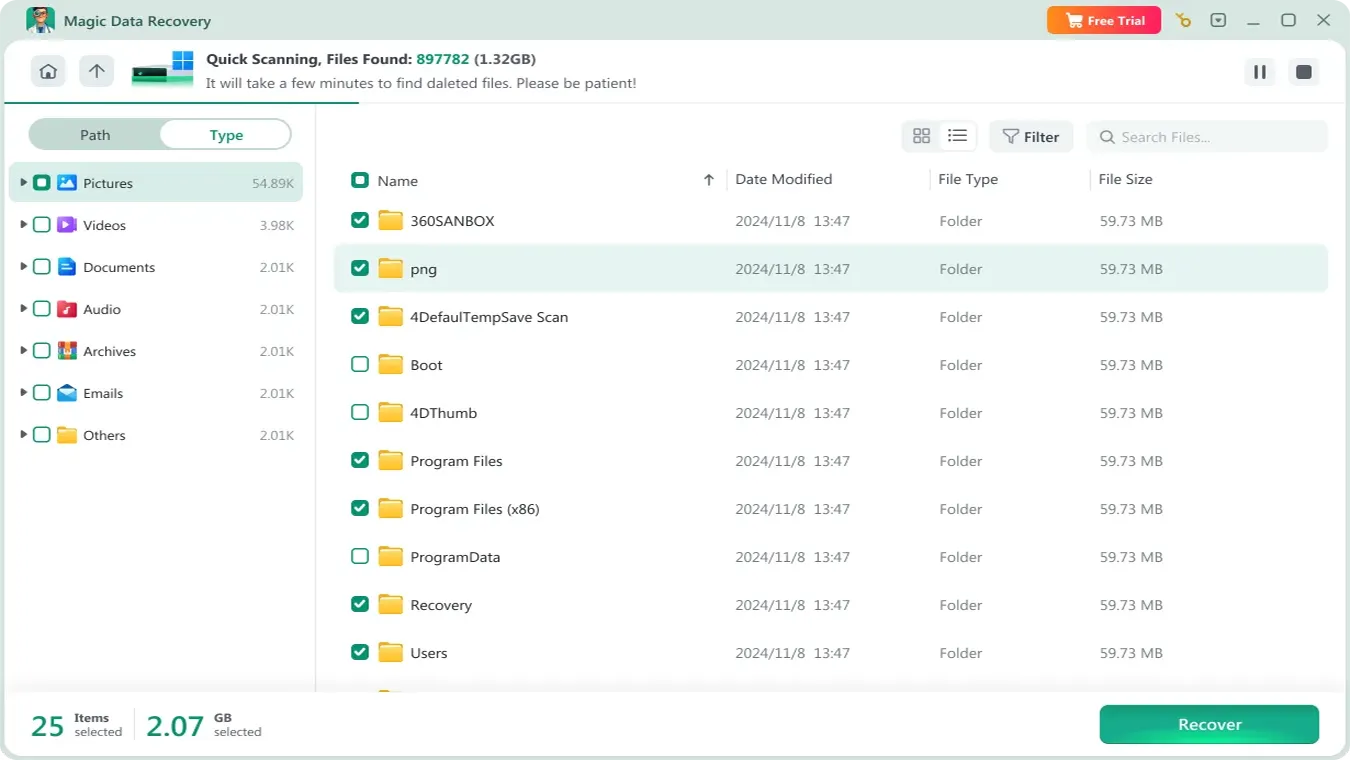
3. Select the Drive: Choose the drive or partition where your deleted file was stored. The program supports internal and external storage devices.

Best Practices to Improve Recovery Success
To increase recovery success:
- Stop using the affected drive immediately
- Avoid installing recovery tools on the same disk
- Act as soon as possible
- Restore files to a separate storage device
These practices are critical when learning how to recover deleted files from trash effectively.
Conclusion
Understanding how to recover deleted files from trash helps prevent permanent data loss. While simple deletions are easy to restore, permanently deleted files require a more advanced Recycle Bin recovery solution.
When backups are unavailable, Magic Data Recovery provides a reliable option for recovering deleted, formatted, or inaccessible files. Choosing the right recovery method at the right time significantly improves success.
Supports Windows 7/8/10/11 and Windows Server
FAQs
How to recover permanently deleted files from trash?
Can you recover deleted files after emptying the trash?
How to recover deleted files from drive trash?
Is deleted trash gone forever?
Are permanently deleted files actually deleted?
How to recover permanently deleted files not in the Recycle Bin?
Are deleted files permanently stored in the Recycle Bin?

Jason is a data recovery and technical support specialist with over 15 years of hands-on experience. He has worked extensively with frontline users, troubleshooting difficult data loss cases and providing practical recovery solutions for accidental deletion, formatted drives, damaged file systems, lost partitions, system failures, and other recovery emergencies. His expertise also includes backup and restoration, file repair, and disaster recovery, with a strong emphasis on safe, reliable, and technically accurate guidance.