
How to Recover Deleted Excel Sheet Guide
Accidentally deleting a worksheet can remove formulas, reports, charts, or business data in seconds. Fortunately, you may still be able to recover deleted Excel sheet content if an earlier workbook version exists, Excel created a recovery copy, or the original Excel file remains recoverable. However, the correct method depends on what you deleted: a worksheet tab inside Excel or the entire .xlsx or .xls workbook.
This guide explains what actually happens when an Excel sheet is deleted and, more importantly, which document recovery methods truly work. You will first learn reliable, built-in recovery options provided by Excel and Windows. Only after those options are exhausted will we explain when specialized recovery software becomes necessary—and why Magic Data Recovery can be a practical solution in specific scenarios.
Supports Windows 7/8/10/11 and Windows Server
Wondering if your files can be recovered? Find out in seconds with our quick check below.
Data Recovery Assessment
Answer 3 quick questions to estimate your recovery chances
Table of Contents
Before You Recover Deleted Excel Sheet Data: Check What Was Lost
An Excel workbook is the complete .xlsx, .xls, or .xlsm file. A worksheet, also called a sheet or tab, exists inside that workbook. Therefore, deleting one worksheet does not send a separate file to the Windows Recycle Bin.
What happened? | Best first action |
A sheet tab disappeared | Check whether it is hidden |
You deleted a sheet but have not saved | Close without saving, then reopen |
You deleted a sheet and already saved | Check Version History |
Excel crashed | Use Document Recovery or AutoRecover |
The workbook is in OneDrive/SharePoint | Check cloud Version History |
The entire Excel file was deleted | Check the Recycle Bin |
The file is not in the Recycle Bin | Use backups or recovery software |
Method 1: Recover Deleted Excel Sheet by Checking Hidden Tabs
First, confirm that the worksheet is really deleted. Sometimes a user hides a tab accidentally and assumes Excel removed it.
- Open the workbook.
- Right-click any visible sheet tab.
- Choose Unhide.
- Select the missing worksheet.
- Click OK.
Also check File > Options > Advanced and confirm that Show sheet tabs is enabled.
Method 2: Recover Deleted Excel Sheet Before Saving
If you deleted a worksheet after the last save and have not saved again, return to the last intact workbook version.
- Stop editing the workbook.
- Close Excel.
- When Excel asks whether to save changes, choose Don’t Save.
- Reopen the workbook.
- Check whether the deleted worksheet has returned.
However, this method also removes other unsaved edits made after the last save. Therefore, copy any important new values elsewhere before closing if you still need them.
For this scenario, preserving the last saved workbook usually gives you the cleanest way to recover deleted Excel sheet data before the deletion becomes part of the saved file.
Method 3: Recover Deleted Excel Sheet After Saving with Version History
If you already saved the deletion, closing without saving will not restore the sheet. However, an older workbook version may still contain it.
For a workbook stored in OneDrive or SharePoint:
- Open the workbook.
- Go to File > Info > Version History.
- Find a version from before the deletion.
- Open it and confirm the missing sheet exists.
- Restore that version or copy the required data into the current workbook.
Microsoft documents Version History for Excel files stored through OneDrive and SharePoint. It also warns that restoring an older version replaces the current version, so inspect the old copy first.
As a result, Version History is one of the strongest built-in ways to recover deleted Excel sheet content after saving.
Method 4: Recover Deleted Excel Sheet with AutoRecover
If Excel crashed, lost power, or closed unexpectedly, AutoRecover may contain a recent workbook state. Microsoft explains that Excel can save recovery information automatically when AutoRecover is enabled.
First, reopen Excel and look for the Document Recovery pane. Next, open the most relevant recovered workbook and check for the missing worksheet. You can also use:
File > Info > Manage Workbook > Recover Unsaved Workbooks
Then save any useful recovered copy under a new name. AutoRecover does not replace normal backups. Nevertheless, it can help recover deleted Excel sheet content after an unexpected shutdown.
Method 5: Recover Deleted Excel Sheet from Previous Versions
For a locally stored workbook, Windows Previous Versions or File History may provide an older copy if Windows created one earlier.
- Find the workbook in File Explorer.
- Right-click it and choose Properties.
- Open Previous Versions.
- Select a copy from before the deletion.
- Open or copy it before replacing your current file.
If a usable previous copy exists, this method can recover deleted Excel sheet data, including formulas and formatting.
Method 6: How to Retrieve Deleted Excel Sheet Not in Recycle Bin
Many users search how to retrieve deleted excel sheet not in recycle bin, but this query can describe two different problems.
If you deleted only a worksheet tab, it will never appear separately in the Recycle Bin. Instead, use the last saved workbook, Version History, AutoRecover, or Previous Versions.
However, if “Excel sheet” means the entire workbook file, determine whether Windows permanently deleted the .xlsx or .xls file. Shift+Delete, an emptied Recycle Bin, or deletion from some external storage devices can remove the normal restore option.
At this point, stop adding files to the affected drive because new writes can overwrite recoverable file data. Next, check backups. If no intact copy exists, file recovery software becomes a reasonable next step.
Method 7: Recover a Deleted Excel File with Magic Data Recovery
Magic Data Recovery becomes relevant when the entire Excel workbook is missing rather than one internal worksheet. For example, you may need it after permanent deletion, an emptied Recycle Bin, or accidental loss from a USB drive.
Importantly, Magic Data Recovery does not directly undelete one worksheet from inside a workbook that you already saved. Instead, it scans storage for recoverable Excel files. If it finds an older workbook copy that still contains the missing tab, you can restore that file and then copy the required worksheet.
Why Magic Data Recovery Fits This Scenario
Magic Data Recovery supports .xlsx files and common document formats. Its workflow lets users select a drive, scan for lost data, preview supported files, and recover selected items to another location. It also supports common storage media such as internal drives, external drives, USB drives, and memory cards.
How to Recover the Workbook
When standard recovery methods fail, Magic Data Recovery can help retrieve deleted Excel files from storage devices while minimizing further data loss.
Step 1: Download and Install Magic Data Recovery
Download Magic Data Recovery and install it on a drive different from the one where the Excel file was originally stored. Installing on the same drive risks overwriting recoverable data.
Supports Windows 7/8/10/11 and Windows Server
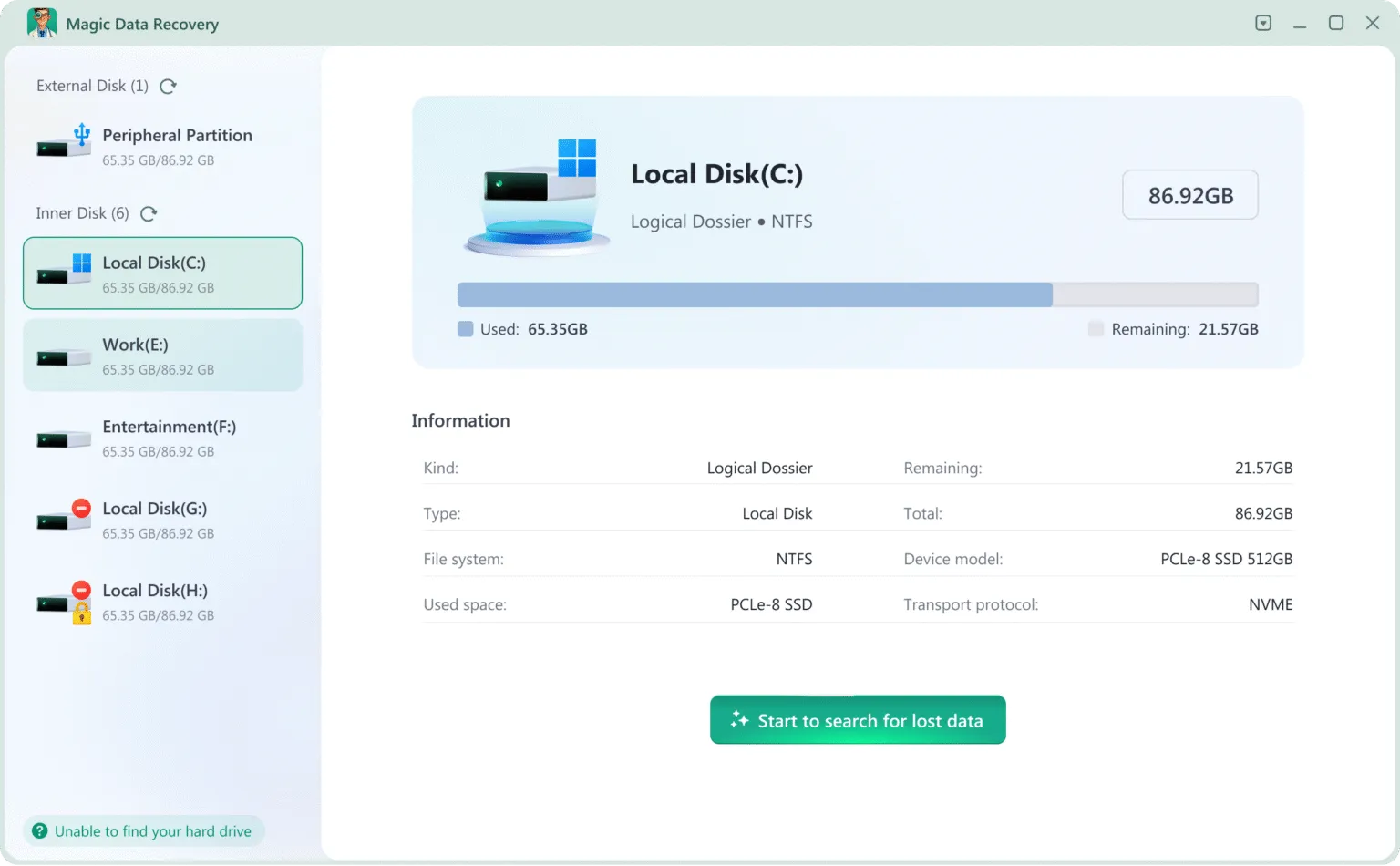
Step 2: Select the Drive to Scan
Launch the software and choose the disk or partition where the Excel file was deleted. This may be a system drive, external drive, or USB storage device.
Step 3: Scan for Deleted Excel Files
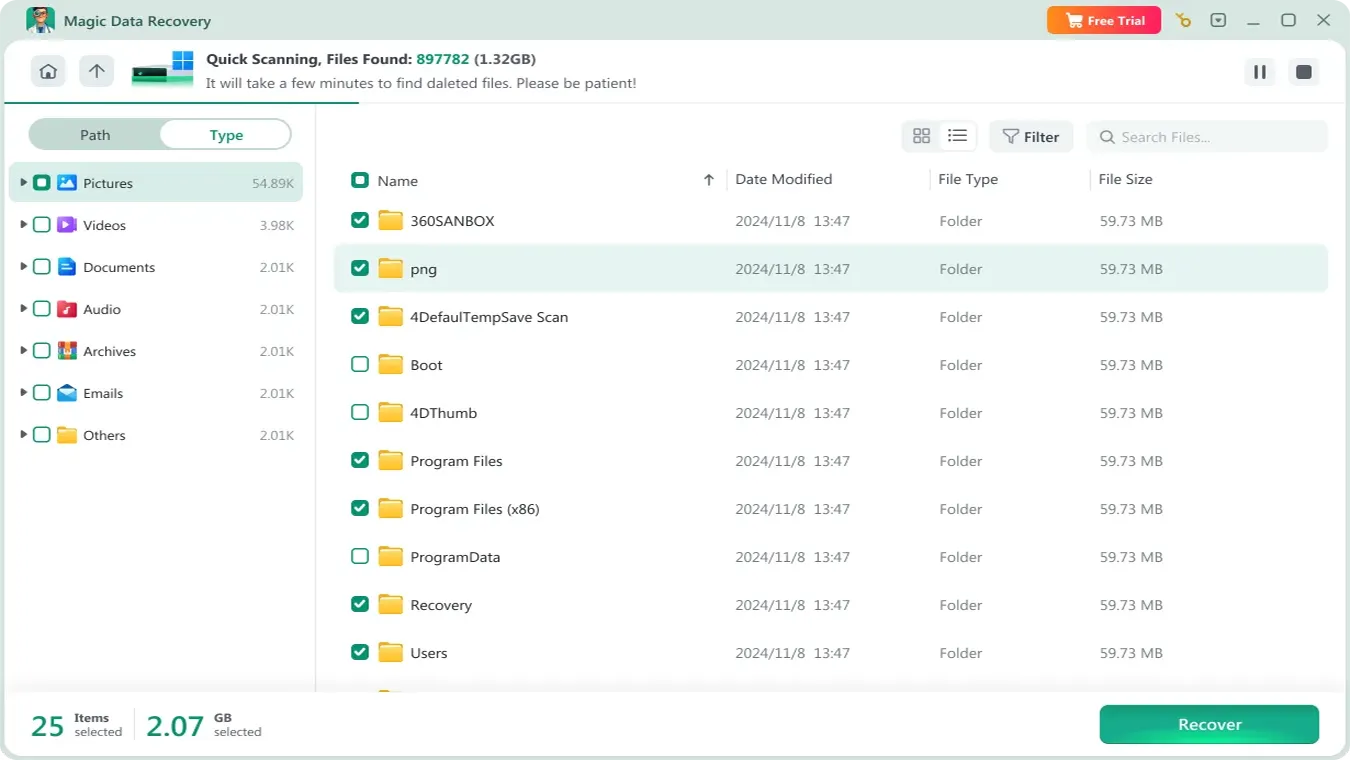
Magic Data Recovery performs an advanced scan automatically. As the scan progresses, recoverable Excel files appear in real time, allowing you to locate .xlsx or .xls files efficiently.
Step 4: Preview Excel Files Before Recovery
Use the preview feature to verify file contents before restoring them. This step helps confirm whether the recovered file still contains the missing sheet.

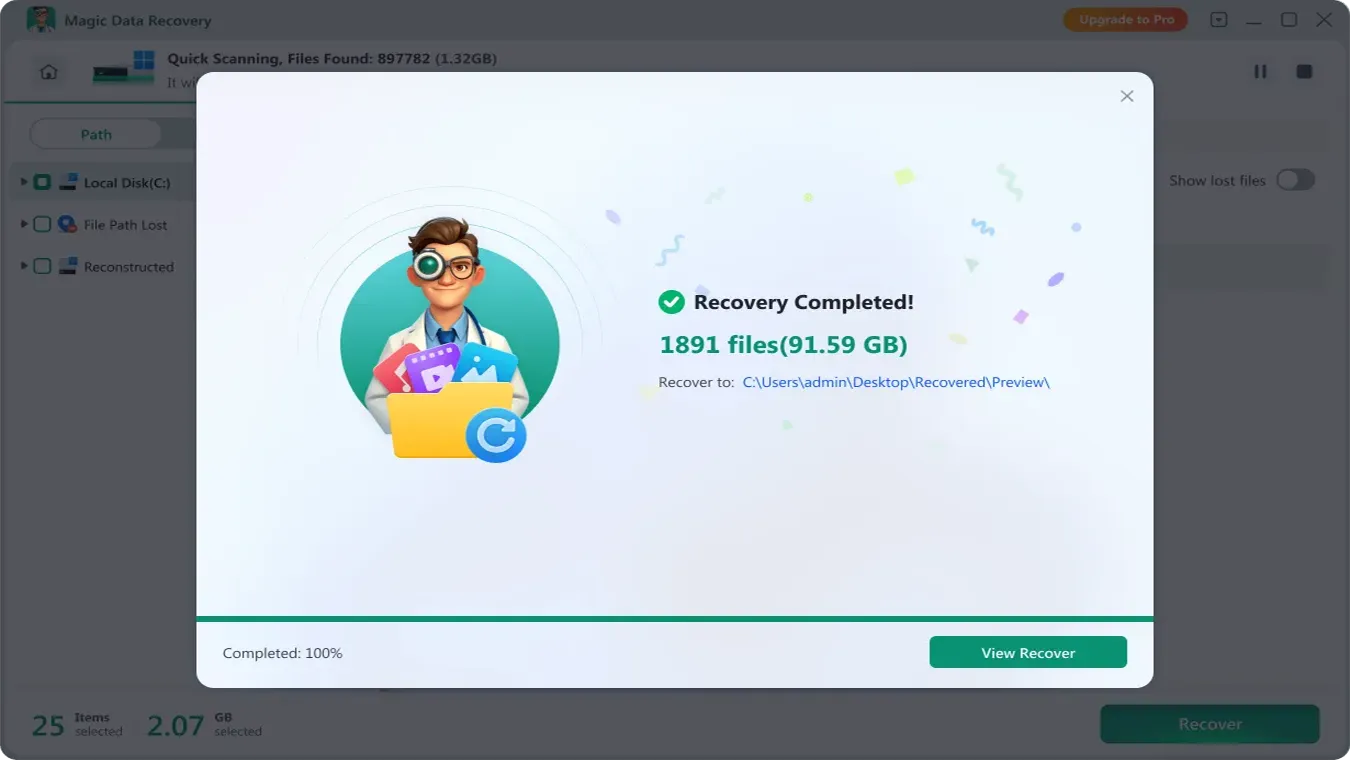
Step 5: Recover Files to a Safe Location
Select the required Excel files and save them to a different drive. Avoid restoring data to the original location to reduce the risk of corruption.
Tips After You Recover Deleted Excel Sheet Data
After recovery, keep AutoRecover enabled, use Version History when available, create regular backups, and save a new workbook version before restructuring important sheets. In addition, avoid keeping business-critical data in only one copy. Microsoft also recommends regular saving and backups rather than relying on AutoRecover alone.
Why Excel Sheet Recovery Sometimes Fails
Even with multiple recovery paths, some attempts fail. Common reasons include:
- You saved the file after deletion, which overwrote its internal data.
- SSD TRIM permanently removed unused data blocks.
- Excel automatically cleaned temporary files.
- Cloud sync replaced older file versions.
When these conditions apply, built-in recovery options no longer work reliably.
Conclusion
The best way to recover deleted Excel sheet content depends on when you noticed the deletion. If you have not saved, close without saving and reopen the last intact copy. If you already saved, check Version History, AutoRecover, or Previous Versions first.
For users searching how to retrieve deleted excel sheet not in recycle bin, remember that a worksheet tab never enters the Recycle Bin by itself. However, if the entire workbook was permanently deleted and backups cannot restore it, Magic Data Recovery offers a practical next step by scanning storage for recoverable Excel files and allowing you to preview supported results before recovery.
We recommend Magic Data Recovery because it addresses the specific problem that built-in Excel recovery cannot solve: a lost or deleted workbook with no usable saved version. That narrow recommendation keeps the recovery process accurate and trustworthy.
Supports Windows 7/8/10/11 and Windows Server
Recover Deleted Excel Sheet – FAQs
Can I recover a deleted Excel sheet after saving?
Can Ctrl+Z recover a deleted worksheet in Excel?
How do I recover an Excel sheet that is not in the Recycle Bin?
Where can I find Excel AutoRecover files?
Can Magic Data Recovery restore one deleted worksheet?
What should I do after permanently deleting an Excel file?
What is the safest way to recover a deleted worksheet?

Vasilii is a data recovery specialist with around 10 years of hands-on experience in the field. Throughout his career, he has successfully solved thousands of complex cases involving deleted files, formatted drives, lost partitions, and RAW file systems. His expertise covers both manual recovery methods using professional tools like hex editors and advanced automated solutions with recovery software. Vasilii's mission is to make reliable data recovery knowledge accessible to both IT professionals and everyday users, helping them safeguard their valuable digital assets.