
How to Retrieve Lost Files from Hard Drive in 2026

Table of Contents
Lost Important Files from Your Hard Drive?
Losing critical files can be stressful, especially when they disappear from your hard drive without warning. Accidental deletion, unexpected formatting, file system errors, or even malware attacks can instantly make valuable data inaccessible. Fortunately, in many cases, it is still possible to retrieve lost files from hard drive devices—if you act quickly and use the right approach.
This guide explains why hard drive data loss happens, how recovery works, and which HDD recovery methods are most effective in real-world situations. You will also learn how Magic Data Recovery helps users recover files from various loss scenarios, including deleted, formatted, and corrupted hard drives, without requiring advanced technical knowledge.
Supports Windows 7/8/10/11 and Windows Server
Why Files Are Lost from a Hard Drive
Before attempting recovery, it is important to understand how data loss occurs. Different scenarios affect recovery success in different ways.
Accidental Deletion
Users often delete files unintentionally by pressing the wrong shortcut or emptying the Recycle Bin. Even after deletion, the data usually remains on the drive until overwritten, which means you can still retrieve lost files from hard drivestorage in many cases.
Hard Drive Formatting
Formatting removes file system references but does not immediately erase data. Quick formatting, in particular, leaves a high chance of recovery if no new data has been written to the disk.
File System Errors and Corruption
Power outages, improper shutdowns, or bad sectors can corrupt file systems. When this happens, files may appear missing, or the drive may show as RAW. Data often still exists but becomes inaccessible through normal methods.
Virus or Malware Attacks
Some malware hides, encrypts, or deletes files. While encrypted data may require decryption keys, hidden or deleted files can often be restored with professional recovery tools.
Can You Really Retrieve Lost Files from a Hard Drive?
In most logical data loss scenarios, recovery is possible. However, success depends on several factors:
- Whether the lost data has been overwritten
- The type of file system (NTFS, FAT32, exFAT, APFS, etc.)
- The physical condition of the hard drive
- How quickly recovery actions are taken
Avoid continuing to use the affected drive, as new data may overwrite recoverable sectors and reduce recovery chances.
Best Way to Retrieve Lost Files from Hard Drive Safely
For most users, data recovery software provides the most practical and effective solution. Among available tools, Magic Data Recovery stands out for its balance of recovery capability and ease of use.
Why Choose Magic Data Recovery?
Magic Data Recovery is designed to help users retrieve lost files from hard drive devices across a wide range of scenarios, including:
- Deleted files (even after emptying Recycle Bin)
- Formatted hard drives
- File system errors and RAW drives
- Virus-related data loss
Unlike manual methods, it performs deep scanning to locate files based on structure and signatures rather than relying solely on file system records.
Key Advantages of Magic Data Recovery
- Supports Windows 7/8/10/11 and Windows Server
- Recovers documents, photos, videos, emails, and archives
- Offers quick scan and deep scan modes
- Allows file preview before recovery
- Simple, guided interface suitable for non-technical users
These features make it a reliable option compared to basic system tools or free utilities with limited capabilities.
How to Retrieve Lost Files from Hard Drive Using Magic Data Recovery
Follow these steps to recover your data safely:
Step 1: Install the Software
Download and install Magic Data Recovery on a different drive than the one you want to recover data from. This prevents accidental overwriting.
Supports Windows 7/8/10/11 and Windows Server
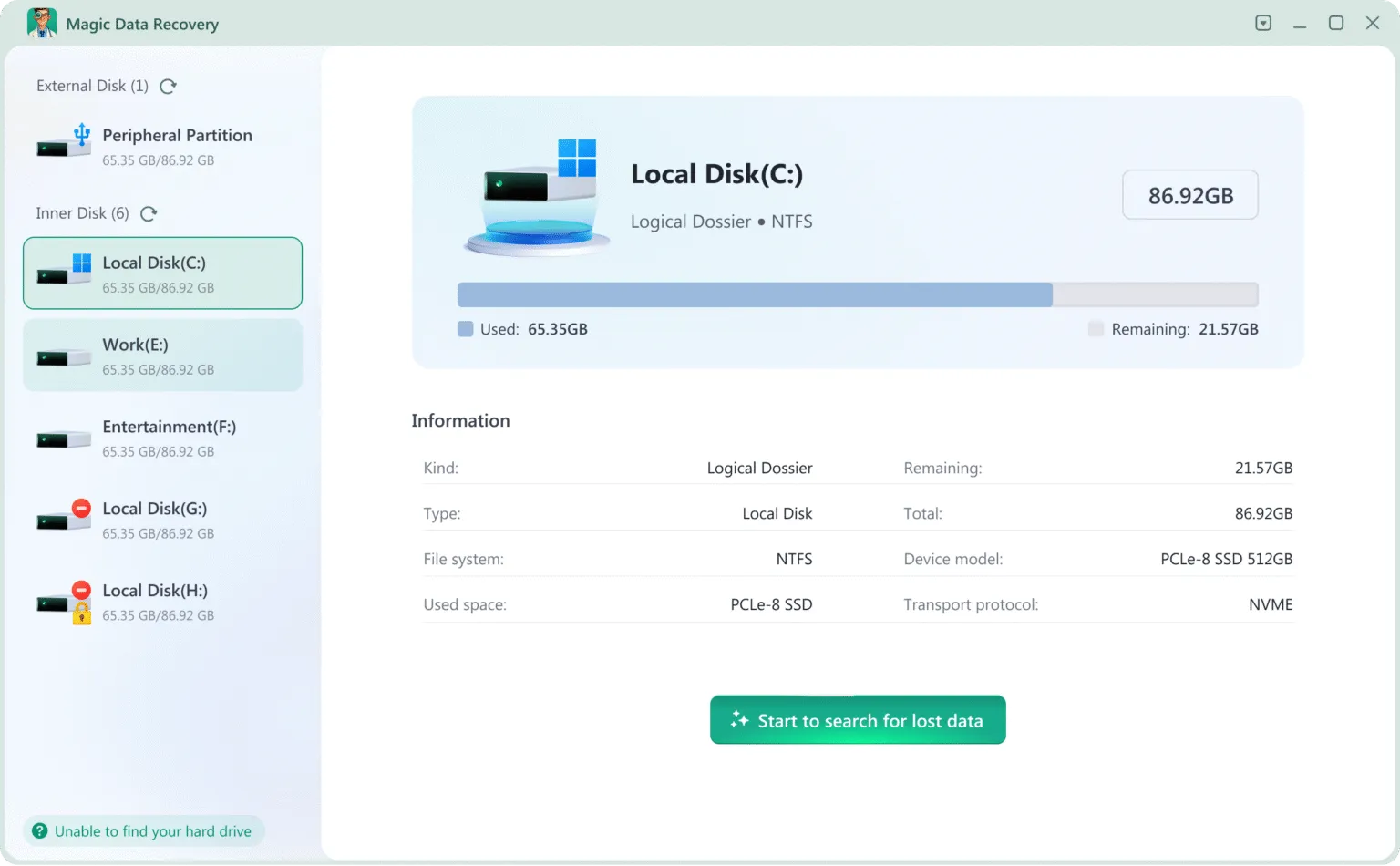
Step 2: Select the Affected Hard Drive
Launch the software and choose the hard drive or partition where files were lost.
Step 3: Scan for Lost Files
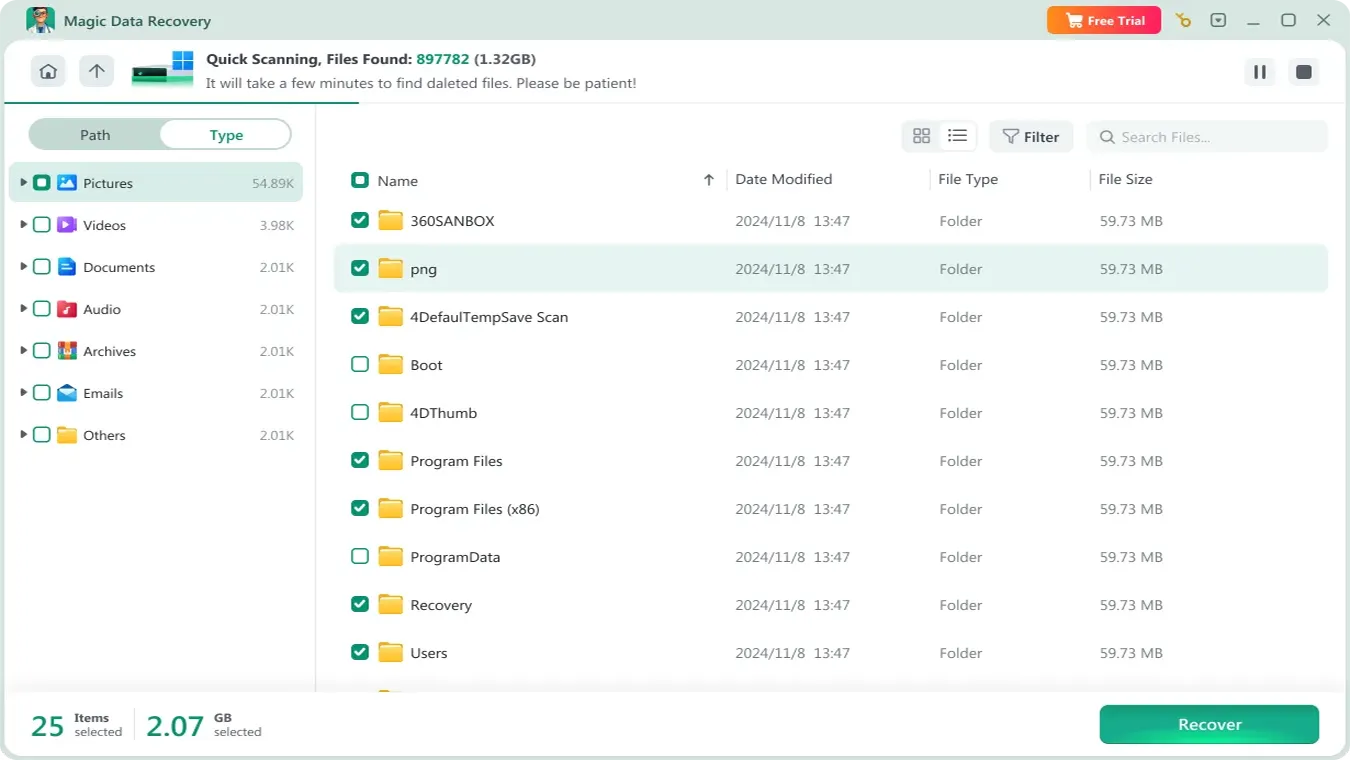
Start with a quick scan. If results are incomplete, proceed with a deep scan for more thorough analysis.
Step 4: Preview Recoverable Files
After the scan is complete, browse through the scan results and preview recoverable files. Previewing allows you to verify file integrity, check filenames, formats, and confirm that the content is intact before recovery. This step helps avoid restoring corrupted or unnecessary files.

Step 5: Recover and Save Files Safely
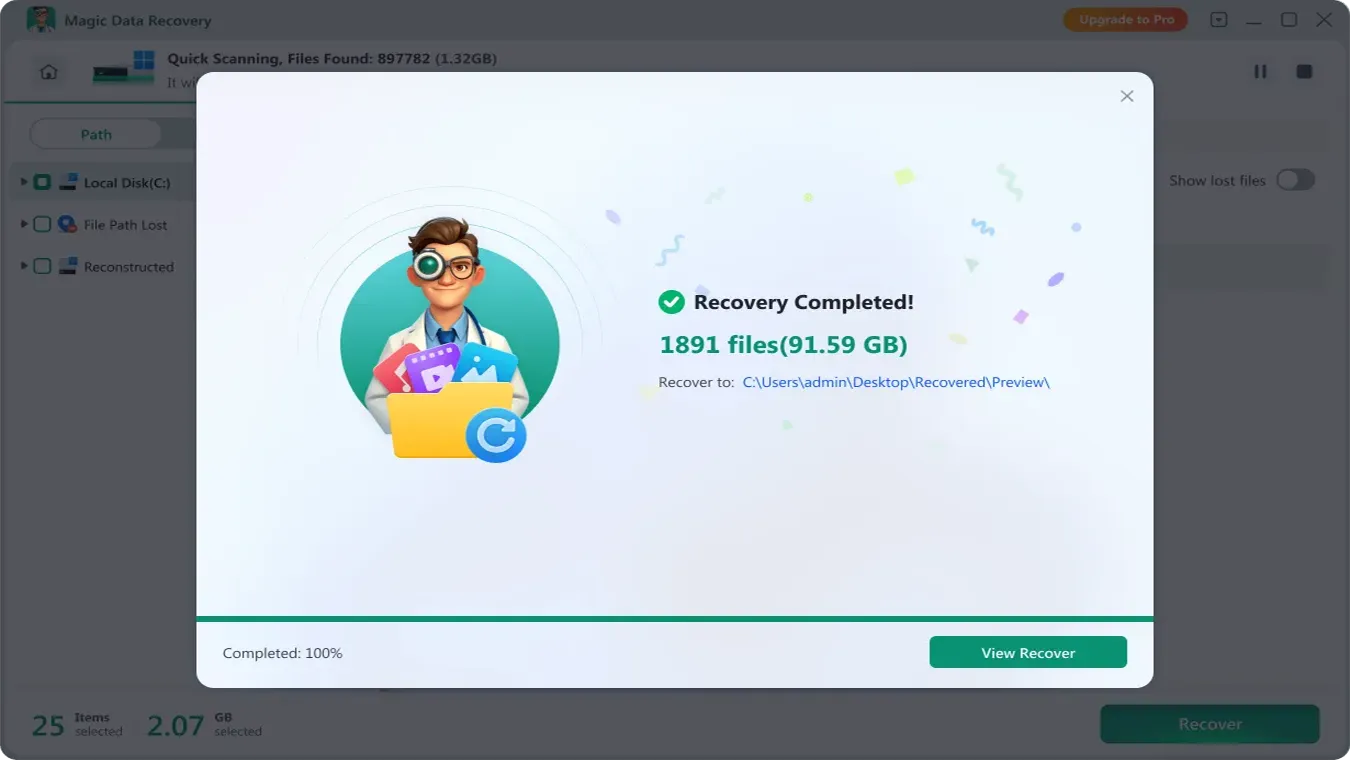
Select the files you want to restore and recover them to a secure external location, such as an external hard drive or USB storage device. Avoid saving recovered files back to the original hard drive to prevent accidental data overwriting and ensure a successful recovery process.
Alternative Recovery Methods and Their Limitations
While software recovery is effective, some users attempt other options first.
Built-in Backup Solutions
Windows File History
This methods work only if backups were enabled before data loss.
Free Recovery Tools
Free tools may help recover small amounts of data but often lack deep scanning, file preview, or support for complex file system errors.
Professional Data Recovery Services
Professional labs are suitable for physically damaged or dead hard drives. However, they are expensive and require shipping your device, which may raise privacy concerns.
When Professional Data Recovery Is Necessary
If your hard drive shows signs of physical failure—clicking noises, not spinning, or not being recognized by the system—software recovery is no longer safe. Professionals use clean-room environments and specialized equipment to extract data directly from disk platters.
For logical data loss, however, software like Magic Data Recovery remains the most cost-effective and accessible option.
Best Practices to Improve Recovery Success
To maximize your chances to retrieve lost files from hard drive storage:
- Stop using the affected drive immediately
- Do not reinstall operating systems or run disk repairs before recovery
- Recover files to an external drive
- Maintain regular backups after recovery
These steps align with industry best practices and reduce permanent data loss risks.
Conclusion
Hard drive data loss is frustrating but rarely hopeless. In most cases involving deletion, formatting, or file system errors, files remain recoverable with the right hard drive data recovery approach. Magic Data Recovery offers a practical solution by combining advanced scanning technology with user-friendly operation, making it suitable for both everyday users and professionals.
If you are looking for an efficient and reliable way to retrieve lost files from hard drive devices without unnecessary complexity, Magic Data Recovery is worth considering.
Supports Windows 7/8/10/11 and Windows Server
FAQs
How to recover lost files from a hard drive?
Is it possible to recover permanently deleted data from a hard disk?
How to find missing files on a hard drive?
How to retrieve lost files in drive?
Is data permanently stored in hard disk?
How do professionals recover data from a hard drive?
Where do permanently deleted files actually go?
Can data from a dead hard drive be recovered?

Erin Smith is recognized as one of the most professional writers at Amagicsoft. She has continually honed her writing skills over the past 10 years and helped millions of readers solve their tech problems.