
How to Recover Permanently Deleted Files in Windows 11
Accidentally deleting important files is a common Windows 11 problem. Many users believe that once files are permanently deleted—especially after using Shift + Delete or emptying the Recycle Bin—there is no way back. In reality, this assumption is often incorrect. In this guide, you will learn how to recover permanently deleted files in Windows 11, why recovery is sometimes possible, and which methods work best in real-world situations. We will also explain when Windows built-in tools are enough and when professional recovery software such as Magic Data Recovery becomes the more reliable deleted file recovery solution.
This article focuses on practical recovery scenarios, clear explanations, and proven methods—so you can make informed decisions instead of guessing.
Supports Windows 7/8/10/11 and Windows Server
Table of Contents
What Does “Permanently Deleted” Mean in Windows 11?
When files are deleted normally, Windows moves them to the Recycle Bin. However, when you use Shift + Delete or remove files from external drives, Windows skips the Recycle Bin entirely.
Despite the term “permanently deleted,” Windows 11 does not immediately erase the file data. Instead:
- The file entry becomes invisible to the system
- The storage space is marked as available
- The actual data remains until overwritten
This behavior explains why recovering permanently deleted files in Windows 11 is often possible—especially if you act quickly.
Can You Recover Permanently Deleted Files in Windows 11?
Yes, in many cases you can. Recovery success depends on several factors:
- Whether the storage space has been overwritten
- The type of storage device (SSD vs HDD)
- Whether TRIM is enabled
- How soon recovery starts after deletion
For traditional hard drives, recovery chances remain high if the disk has not been heavily used. On SSDs, recovery becomes more time-sensitive due to TRIM optimization.
What to Do Immediately After Permanent Deletion
Before attempting any recovery method, follow these best practices:
- Stop using the affected drive immediately
- Avoid installing new software on the same disk
- Do not copy new files to the storage device
- Disconnect external drives if applicable
These steps reduce the risk of overwriting recoverable data.
Built-in Windows 11 Methods to Recover Deleted Files
Check File History (If Previously Enabled)
File History automatically backs up files stored in key folders. If enabled earlier, it may allow you to restore deleted versions.
Steps:
- Open Control Panel
- Select File History
- Choose “Restore personal files”
- Browse and restore the needed file
This method only works if File History was active before deletion.
Restore Previous Versions
Windows sometimes stores earlier versions of files through system protection.
Steps:
- Right-click the original folder
- Select Properties
- Open the Previous Versions tab
- Restore available versions
This option is limited and depends on system configuration.
Windows File Recovery (Command Line Tool)
Microsoft provides a command-line recovery utility. While powerful, it requires technical knowledge and does not offer file previews.
This approach suits advanced users but often proves inconvenient for everyday recovery needs.
Why Built-in Tools Often Fall Short
While Windows 11 offers recovery features, they have clear limitations:
- No deep scan for deleted data
- Limited file type support
- No preview before recovery
- Ineffective after formatting or partition errors
When built-in solutions fail, specialized software becomes necessary.
Best Solution to Recover Permanently Deleted Files in Windows 11
Using Magic Data Recovery (Recommended)
Magic Data Recovery is a professional data recovery tool designed to handle complex loss scenarios beyond basic deletion.
It supports recovery from:
- Permanently deleted files
- Formatted drives
- Partition loss or corruption
- File system errors
Unlike command-line tools, it offers a clear interface and guided workflow.
Why Magic Data Recovery Is More Reliable
Key advantages include:
- Deep scanning technology that locates lost file structures
- Broad file type support (documents, photos, videos, archives)
- Compatibility with HDDs, SSDs, USB drives, and memory cards
- Preview before recovery to verify file integrity
For users trying to recover permanently deleted files in Windows 11, these features significantly improve success rates.
How to Recover Permanently Deleted Files with Magic Data Recovery
Follow these steps to recover your data safely:
Step 1: Stop Using the Hard Drive
Continued use may overwrite deleted data. Disconnect the drive immediately.
Step 2: Install a Professional HDD Recovery Software
Install the tool on a different disk (not the affected one). A reliable choice is Magic Data Recovery, known for its deep-scan engine and high recovery success rate.
Supports Windows 7/8/10/11 and Windows Server
Step 3: Select the HDD
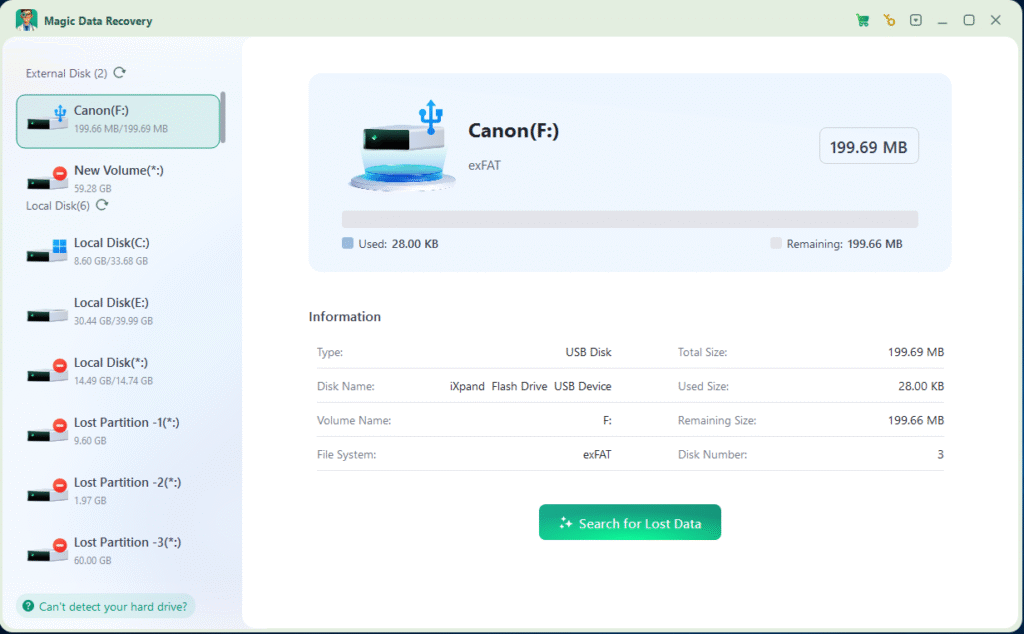
Open the software and choose the damaged drive from the device list.
Step 4: Run a Full Scan
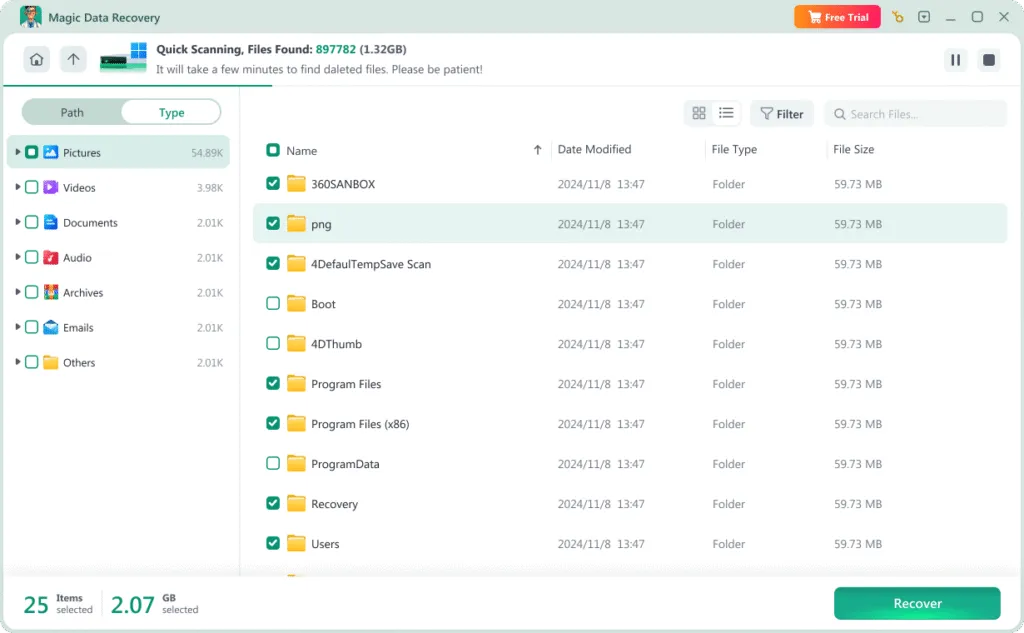
Start with a quick scan and it will list some files, then proceed with a deep scan for maximum recovery.
Step 5: Preview and Restore
Preview files, select the ones you need, and save them to another drive. This prevents overwriting original sectors and increases the safety of your restored data.

Common Mistakes That Reduce Recovery Success
Avoid these errors:
- Installing recovery software on the same disk
- Continuing to use the affected drive
- Repeated formatting attempts
- Using multiple recovery tools simultaneously
Each mistake increases the risk of permanent data loss.
Conclusion
Recovering deleted files in Windows 11 is often possible—but only when the right steps are taken early. Built-in Windows tools help in limited cases, yet they frequently fall short after formatting, partition loss, or Shift deletion.
For users facing serious data loss, Magic Data Recovery offers a more dependable and user-friendly solution. Its deep scan capability, broad device support, and preview-based recovery make it a practical choice when data truly matters.
If you are searching for a more efficient lost file recovery way to recover permanently deleted files in Windows 11, Magic Data Recoveryis worth considering as part of a safe and informed recovery strategy.
Supports Windows 7/8/10/11 and Windows Server
FAQs
Can you recover permanently deleted files?
Are permanently deleted files actually deleted?
How to recover files deleted by shift delete in Windows 11?
Does Windows 11 permanently delete files?
How to retrieve permanently deleted files in Windows 11?
Is permanently deleted files cannot be recovered true or false?
Where do permanently deleted files go on Windows?
How do you permanently erase data so that it cannot be recovered?

Erin Smith is recognized as one of the most professional writers at Amagicsoft. She has continually honed her writing skills over the past 10 years and helped millions of readers solve their tech problems.