
Free Excel File Password Recovery Guide

If you are searching for free excel file password recovery, you are likely dealing with one of two stressful problems. First, you forgot the password to open or edit an Excel workbook. Second, the Excel file itself is missing, deleted, formatted away, or damaged after a storage or file system issue. These situations look similar at first, but they require very different solutions. This guide explains the difference, shows practical recovery methods, and helps you choose the right fix without risking further data loss.
Many online guides focus only on unlocking protected sheets. That helps in some cases, but it does not solve every scenario. If your workbook was deleted, lost after formatting, or affected by a file system error, a password tool alone will not help. In that case, a recovery utility such as Magic Data Recovery becomes relevant because it is designed to recover lost data from deletion, formatting, and file system problems.
Supports Windows 7/8/10/11 and Windows Server
Table of Contents
What Free Excel File Password Recovery Really Means
People use excel file password recovery to describe several different tasks, but those tasks are not the same.
1. Recovering a password to open an Excel file
This is the hardest case. The workbook is encrypted, and Excel asks for a password before you can view the file. Microsoft does not provide a built-in way to recover a forgotten workbook password. That is why users often try password hints, old records, password managers, or third-party recovery tools first.
2. Removing worksheet or workbook structure protection
This is different from full-file encryption. Some guides explain ZIP/XML edits for worksheet protection on .xlsx files. That approach may work for sheet-level protection, but it does not unlock a file protected with a password to open. Knowing this difference saves time and avoids false expectations.
3. Recovering a missing Excel file
Sometimes the real issue is not the password. The file may have been deleted, lost after formatting, disappeared because of a partition problem, or become inaccessible after a file system error. In those cases, you need file recovery, not password cracking. Microsoft also points users to built-in options such as Recover Unsaved Workbooks and Version History in some scenarios.
Why Users Search for Excel File Password Recovery Free
The search intent behind excel file password recovery free, free excel file password recovery, and excel file password recovery freeware is clear: users want a quick, low-cost fix. That is reasonable. However, free methods usually work only in limited situations.
For example, some manual approaches help with sheet protection, older file types, or very specific workbook structures. Free online services may also raise privacy concerns because Excel files often contain contracts, payroll data, budgets, or customer lists. A practical guide should say this clearly instead of promising a universal fix.
In real use, the safest path depends on the situation:
- You remember part of the password, try password hints, pattern recall, and your password manager.
- The workbook was only sheet-protected, a structural workaround may help.
- If the file is missing, deleted, or affected by storage damage, use a data recovery workflow instead.
- The file is business-critical, make a backup before testing any manual edits.
Best Methods for Excel File Password Recovery
When people search for excel file password recovery, they often assume every locked workbook can be fixed in the same way. However, that is not true. Some Excel files are fully encrypted and require a password to open, while others only restrict editing, sheet changes, or workbook structure. Once you understand which one you are dealing with, choosing the right recovery method becomes much easier.
1. Check whether the workbook is encrypted or only protected
Start by identifying what Excel is asking for.
If Excel blocks the file before it opens, you are dealing with a password-to-open problem. If the workbook opens but prevents edits, it may be worksheet or workbook protection. This distinction matters because manual XML methods typically apply to sheet protection, not encrypted workbooks.
When this method works best
- You can open the file but cannot edit certain sheets
- The workbook is in .xlsx format
- You want to test a non-destructive workaround first
Common mistake
Users often assume every locked Excel file can be fixed with the ZIP method. That is not true for encrypted files.
2. Try account-based and built-in recovery options first
Before using third-party software, check simple recovery paths:
- Search your password manager
- Review old notes or onboarding docs
- Ask the original file owner
- Check whether a version without the password exists
- Use Recover Unsaved Workbooks if the file was never properly saved
- Use Version History if the file lived in OneDrive or SharePoint
These steps are fast, safe, and often overlooked. Microsoft documents both unsaved workbook recovery and earlier-version restoration for Office files.
3. Use manual methods only when they match the file type
A lot of excel file password recovery free articles recommend ZIP/XML editing or VBA. These can be useful, but only in narrow cases. They do not replace full workbook decryption. Manual edits also carry risk if you modify the wrong XML node or overwrite the original archive.
Good use cases
- Worksheet protection on newer .xlsx files
- Test files or personal workbooks
- Situations where you created a backup first
Poor use cases
- Password to open
- Highly sensitive business files
- Workbooks already showing signs of corruption
That is one reason many “top tool” articles rank well but still leave users stuck. They present techniques without enough scenario filtering.
4. Use a recovery tool if the Excel file is gone, deleted, or inaccessible
This is where many articles underperform. In real office work, users often search free excel file password recovery when the workbook is actually missing after a delete, format, USB error, RAW partition issue, or file system problem. A password article alone does not solve that.
If your Excel file disappeared or became inaccessible because of deletion, formatting, or file system errors, Magic Data Recovery is the more relevant solution. Instead of trying to “unlock” a file that is no longer available, you need to scan the storage device and recover the lost workbook itself.
Why Magic Data Recovery Is Worth Recommending
Magic Data Recovery fits naturally into this topic because many users confuse access issues with loss issues. The product addresses a core pain point that password utilities do not: recovering lost Excel files when the workbook has been deleted, removed during formatting, or lost after a file system problem.
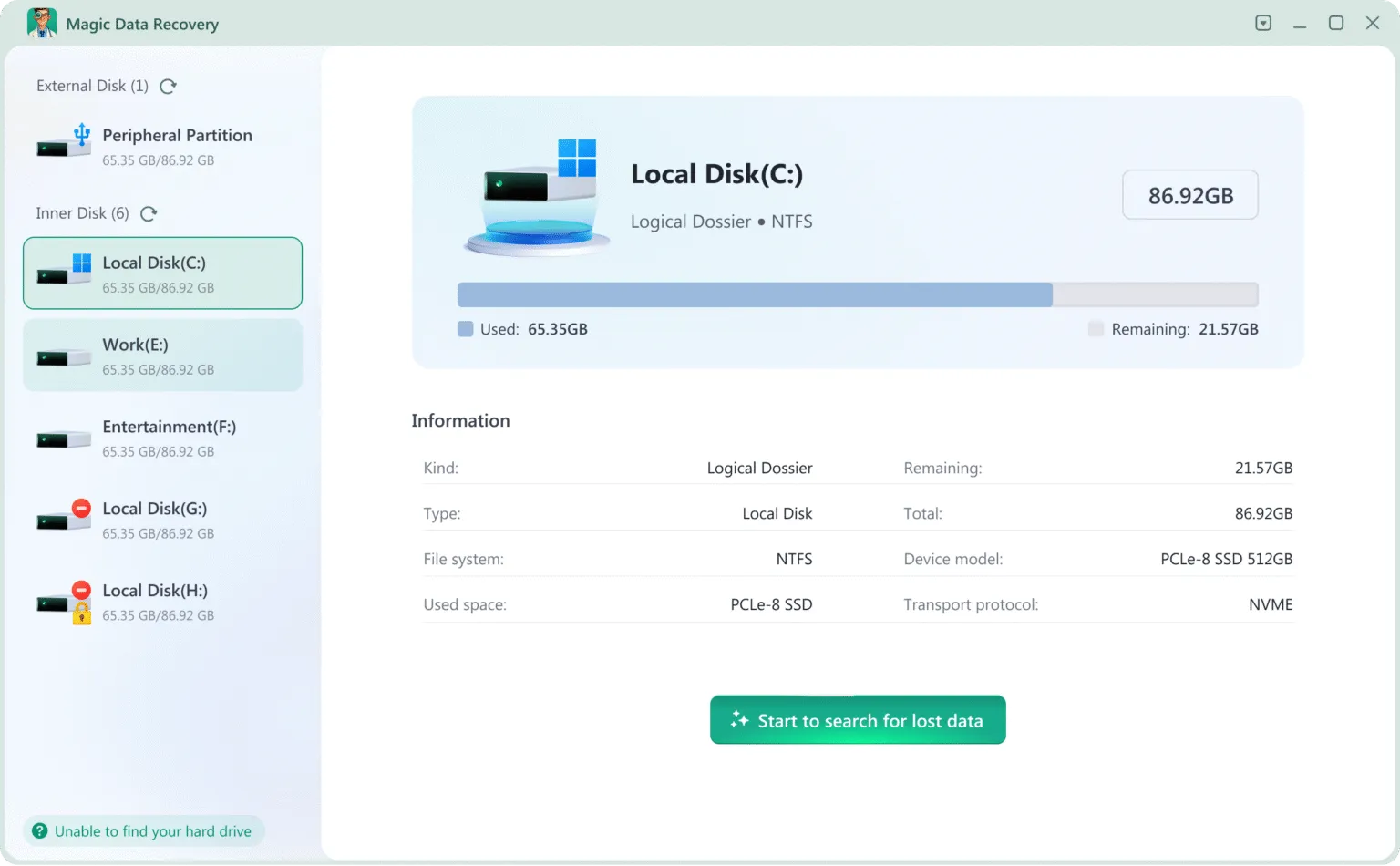
Core problem it solves
Magic Data Recovery helps recover data in scenarios such as:
- Accidental deletion
- Formatting
- File system errors
- Other situations where files become lost or inaccessible
That matters because a workbook password cannot be recovered from a file you no longer have access to.
Unique selling points
From a problem-solving perspective, the value is practical:
- Focused on recovering lost files, not just bypassing passwords
- Covers a wide range of real-world data loss situations
- More suitable when the Excel file is missing rather than merely locked
- Helps avoid risky edits and unreliable free solutions
Example scenarios
Imagine these common situations:
- You deleted a budget workbook and then searched excel file password recovery freeware because the file used to be protected.
- A USB drive was formatted by mistake, and your accounting spreadsheets disappeared.
- A file system error made an Excel folder unreadable, and now the workbook cannot be opened or found.
In each case, the priority is to recover the file first. That is where Magic Data Recovery is more reliable than a password-only tool.
Why it can be more dependable than other options
Free tools often focus on a narrow use case. Some only remove sheet protection. Others require older Excel versions, partial password knowledge, or online upload. Magic Data Recovery approaches the problem from the storage level, which is the right angle when the file is lost after deletion, formatting, or a file system issue.
If you are looking for a more efficient solution for lost Excel documents, Magic Data Recovery is a practical tool to try.
Supports Windows 7/8/10/11 and Windows Server
Excel File Password Recovery Free vs Paid Solutions
Free solutions can be useful, but they come with trade-offs.
Free methods usually work best when:
- You know the file is only sheet-protected
- You have a backup copy
- The workbook is not business-critical
- You are comfortable editing file structure manually
Paid or dedicated tools make more sense when:
- The file is valuable
- You are unsure whether the issue is password-related or storage-related
- The workbook was deleted or lost after formatting
- You want a more stable, less experimental workflow
This is the missing nuance in many free excel file password recovery pages. They optimize for clicks by promising quick fixes, but users benefit more from a decision-based guide.
How to Choose the Right Solution
Use this simple framework:
Choose a password-focused method when:
- The file still exists
- Excel asks for a password to open or modify it
- You know the workbook is protected, not missing
Choose Magic Data Recovery when:
- Excel file was deleted
- Drive was formatted
- The file system became damaged
- Workbook cannot be found even though you believe it once existed
- You suspect corruption or storage issues caused the loss
Practical Tips Before You Start
To improve your chances of success, follow these best practices:
- Stop writing new data to the affected drive if the file is missing.
- Make a backup before editing ZIP/XML structures.
- Test recovery on a copy, not the original workbook.
- Check OneDrive, Recycle Bin, and unsaved workbook recovery first.
- Keep expectations realistic for encrypted workbook passwords. Microsoft does not provide built-in recovery for forgotten passwords.
Conclusion
The best free excel file password recovery solution depends on the actual problem.
If your workbook still exists and is only sheet-protected, a free manual method may be enough. If you forgot a password to open an encrypted workbook, recovery is harder, and results depend on what information or tools you have available. If the Excel file has been deleted, lost after formatting, or affected by a file system error, a password method is the wrong tool.
That is why Magic Data Recovery is the product I would recommend in this article. It addresses the broader and more common real-world problem: users do not just lose passwords; they also lose files. By supporting deleted, formatted, and file system error scenarios, it offers a more reliable path when the workbook itself is gone. If you are trying to solve the problem faster and with fewer risky workarounds, Magic Data Recovery is a sensible option.
Supports Windows 7/8/10/11 and Windows Server
FAQs
What is the difference between excel file password recovery and Excel file recovery?
Excel file password recovery usually means regaining access to a protected workbook or sheet. Excel file recovery means restoring a workbook that was deleted, unsaved, formatted away, or lost because of corruption or file system issues. Many users confuse these two problems, so choosing the correct method first saves time and reduces recovery risk.
Are excel file password recovery free tools safe to use?
Some are safe, but not all. Free tools can work for limited cases, especially sheet protection, but quality varies. You should avoid uploading sensitive business spreadsheets to unknown online services. For important files, always make a backup first and use tools that clearly explain what type of Excel protection or loss scenario they support.
Can free excel file password recovery methods unlock any Excel file?
No. Free methods do not work for every case. ZIP/XML tricks may help remove worksheet protection from certain .xlsx files, but they do not reliably recover a password to open an encrypted workbook. That is why users need to identify whether they are facing protection, encryption, deletion, or actual file loss before choosing a solution.
When should I use excel file password recovery freeware instead of data recovery software?
Use excel file password recovery freeware when the workbook still exists and the main problem is access restriction. Use data recovery software when the file has been deleted, disappeared after formatting, or become inaccessible because of file system errors. If the workbook is missing, recovering the file itself should come before any password-related attempt.
Does Microsoft provide a built-in Excel password recovery feature?
Microsoft provides password protection features, but it does not offer a built-in way to recover a forgotten workbook protection password. However, Microsoft does offer related recovery paths for some file-loss situations, such as Recover Unsaved Workbooks and Version History. That distinction is important because password recovery and file recovery are not the same task.
Why is Magic Data Recovery relevant in an article about excel file password recovery?
Because many users search excel file password recovery when their real issue is that the Excel workbook is gone. If the file was deleted, lost after formatting, or affected by a file system problem, a password-only tool will not help. Magic Data Recovery is relevant because it targets those lost-file scenarios directly.
Can I recover an Excel workbook after formatting a drive?
Yes, in some cases you can, but you should stop using the drive immediately to avoid overwriting recoverable data. Formatting does not always mean the original files are gone forever. A dedicated recovery solution such as Magic Data Recovery is a better fit here because the challenge is storage-level loss, not workbook password removal.
What should I do first before trying any excel file password recovery method?
First, confirm whether the workbook is protected, encrypted, unsaved, deleted, or corrupted. Then back up the file or stop writing data to the affected drive. Next, check easy recovery paths such as password managers, Recycle Bin, Recover Unsaved Workbooks, and Version History. Only after that should you try manual or third-party solutions.

Jason is a data recovery and technical support specialist with over 15 years of hands-on experience. He has worked extensively with frontline users, troubleshooting difficult data loss cases and providing practical recovery solutions for accidental deletion, formatted drives, damaged file systems, lost partitions, system failures, and other recovery emergencies. His expertise also includes backup and restoration, file repair, and disaster recovery, with a strong emphasis on safe, reliable, and technically accurate guidance.