
File Recovery Windows 10: Best Guide

Losing files on a PC is frustrating. It gets worse when the files are not just deleted, but lost after formatting, a file system error, a Windows reinstall, or a virus attack. That is why file recovery remains one of the most searched problems for Windows users. If you need a practical file recovery windows 10 guide, this article will show you what to do first, what file recovery options actually work, and when a dedicated tool makes more sense than manual methods. Microsoft confirms that Windows File Recovery is available for local drives but works through the command line, requires a separate destination drive, and does not support cloud storage or network file shares.
Table of Contents
Why File Recovery Windows 10 Is Still a Common Problem
Even though many users have moved to newer systems, people still search for file recovery windows 10 because millions of devices remain in use and data loss patterns have not changed much. The most common triggers include accidental deletion, emptying the Recycle Bin, formatting a partition, file system corruption, malware, and reinstalling Windows without backing up user folders. Leading recovery articles usually focus on deleted-file cases first, but real users often need help with more complex situations.
What to Do Before You Attempt File Recovery
Good recovery starts with the right first move. If you keep using the affected drive, Windows may overwrite the space where your lost files still exist. Microsoft explicitly recommends minimizing or avoiding use of the computer after data loss to improve recovery chances.
Follow these steps first:
- Stop saving new files to the affected drive.
- Do not install recovery software on the same partition where data was lost.
- Connect an external drive for recovered files.
- Identify the cause of data loss: deletion, format, corruption, reinstall, or malware.
- Recover important files first, especially documents, photos, videos, and project data.
This matters because the best file recovery method depends on the cause, not just the missing file type.
Common File Recovery Windows 10 Scenarios
Not all data loss happens in the same way. In some cases, files are simply deleted. In others, the problem is more serious and involves formatting, corruption, system changes, or malware. That is why understanding the exact scenario is the first step in choosing the right file recovery windows 10 method.
1. Deleted Files
If you only deleted a file recently, check the Recycle Bin first. Many top-ranking guides start here because it is fast and free. If the file is not there, you may still recover it with a recovery tool, especially if you have not written much new data to the drive.
2. Formatted Drive or Partition
A quick format does not always erase file data immediately. In many cases, recoverable file records or raw data still exist until overwritten. That is why formatted-drive recovery is possible, but time matters. Several current guides treat formatted recovery as a separate workflow, which shows how different it is from ordinary undelete cases.
3. File System Error or Corrupted Partition
If a drive becomes RAW, unreadable, or inaccessible, the problem may involve partition metadata or the file system itself. In that case, repair commands such as CHKDSK can sometimes help, but they can also complicate recovery if used at the wrong time. A safer approach is usually to recover important files first, then repair the disk structure. This is especially important for external drives and memory cards.
4. Lost Files After Reinstalling Windows
Many users reinstall Windows to fix system issues and then discover that folders, desktop files, or app data are missing. If the partition was not fully overwritten, recovery may still be possible. However, every system update, application install, or file download reduces the chance. That is why post-reinstall file recovery should begin as soon as possible.
5. Virus or Malware Damage
Some threats delete files. Others hide them, encrypt them, corrupt the file system, or damage partitions. In virus-related cases, you need two actions: isolate the device from further infection and attempt recovery from clean media or with trusted recovery software. Current virus-recovery guides also highlight that malware-related loss often needs a broader scan than a simple undelete workflow.
Free Methods for File Recovery Windows 10
Before you use a dedicated recovery tool, it makes sense to try the built-in options available in Windows 10. These free methods work best in simple loss situations, such as recent deletion or previously backed-up files. However, their limits become clear when files are lost after formatting, corruption, or a system reinstall.
Check the Recycle Bin
This is the easiest option. It works only when files were deleted normally and the bin was not emptied. Many leading pages still rely on this as the first recommendation because it restores the original file instantly.
Use File History or Previous Versions
If File History was enabled before the loss, you may be able to restore older versions of folders and files. This method is reliable, but only when the backup feature was already active. That limitation appears consistently in current recovery guides.
Try Windows File Recovery
Microsoft’s Windows File Recovery can help with some lost files on local devices. It is a command-line tool, not a graphical app. Microsoft also states that the source and destination cannot be the same drive, and only extensive mode supports recovery from non-NTFS file systems. That makes it useful for some users, but less approachable for beginners or urgent multi-scenario recovery.
Example command structure:
winfr source-drive: destination-drive: [/mode] [/switches]
This tool can be useful if you are comfortable with commands and know the original location or file type. Still, it is not the most efficient path when you need recovery after formatting, file system damage, virus activity, or a Windows reinstall.
Why Free Methods Often Fall Short
Free methods are worth checking first. However, they usually fail in the exact scenarios where users most urgently need help:
- The Recycle Bin is already empty.
- No File History backup exists.
- A formatted drive can make recovery more difficult.
- In some cases, a partition becomes corrupted or unreadable.
- Reinstalling Windows can also lead to unexpected data loss.
- A virus changed or damaged file structures.
- You do not know the original path or file name.
That gap is exactly where a modern file recovery tool should help.
Magic Data Recovery Review: A Practical Solution for Real Data Loss
If your problem goes beyond simple deletion, Magic Data Recovery is the more practical option to recommend in a file recovery windows 10 article because it aligns with the real scenarios users face: deleted files, formatted drives, file system errors, system reinstall, and virus-related loss.
What Core Problem Does Magic Data Recovery Solve?
Magic Data Recovery helps users recover lost data when built-in Windows methods are no longer enough. Instead of relying only on a recent-delete case or a previously enabled backup, it is designed to scan storage more deeply and help locate files across a wider range of failure conditions.
Why Magic Data Recovery Stands Out
Here are the most important strengths to highlight naturally:
- Magic Data Recovery supports deleted file recovery.
- It also works well for formatted drives and file system errors.
- Users can rely on it after reinstalling Windows or facing virus-related data loss.
- Unlike command-line tools, the workflow is easier for ordinary users to follow.
- This makes it a practical option even when the original file path is no longer clear.
That makes Magic Data Recovery a stronger fit for broad-intent file recovery searches than articles that only cover undelete or backup restoration.
Real Usage Scenarios
A few realistic examples make the recommendation more credible:
- You formatted the wrong partition while creating a boot disk.
- Your external drive suddenly asks to be formatted before opening.
- You reinstalled Windows 10 and forgot to copy Desktop and Documents first.
- A virus attack removed access to photos, office files, or archives.
- You emptied the Recycle Bin and later realized an important folder was inside.
These are exactly the cases where users stop looking for theory and start looking for a working solution.
Why It Can Be More Reliable Than Manual Options
Manual recovery methods often depend on narrow conditions. Recycle Bin only helps with standard deletion. File History only helps if you enabled it before the incident. Windows File Recovery is powerful in some cases, but it is still command-line based and requires more precision from the user. Microsoft’s documentation makes those limitations clear.
Magic Data Recovery is easier to justify because it fits the broader problem set. It reduces complexity, handles more recovery scenarios in one workflow, and makes recovery more accessible for non-technical users. That is a better match for searchers who need a practical file recovery windows 10 solution, not a command reference.
If you are looking for a more efficient solution, Magic Data Recovery is worth trying.
How to Use Magic Data Recovery for File Recovery Windows 10
Follow these steps to recover data safely:
1. Download and install Magic Data Recovery to your computer: Please download it from Amagicsoft website or the following download button to get the software.
Supports Windows 7/8/10/11 and Windows Server
2. Connect the Flash Drive and Launch Magic Data Recovery: Connect the drive to your computer, then run the software to select the drive from the device list.
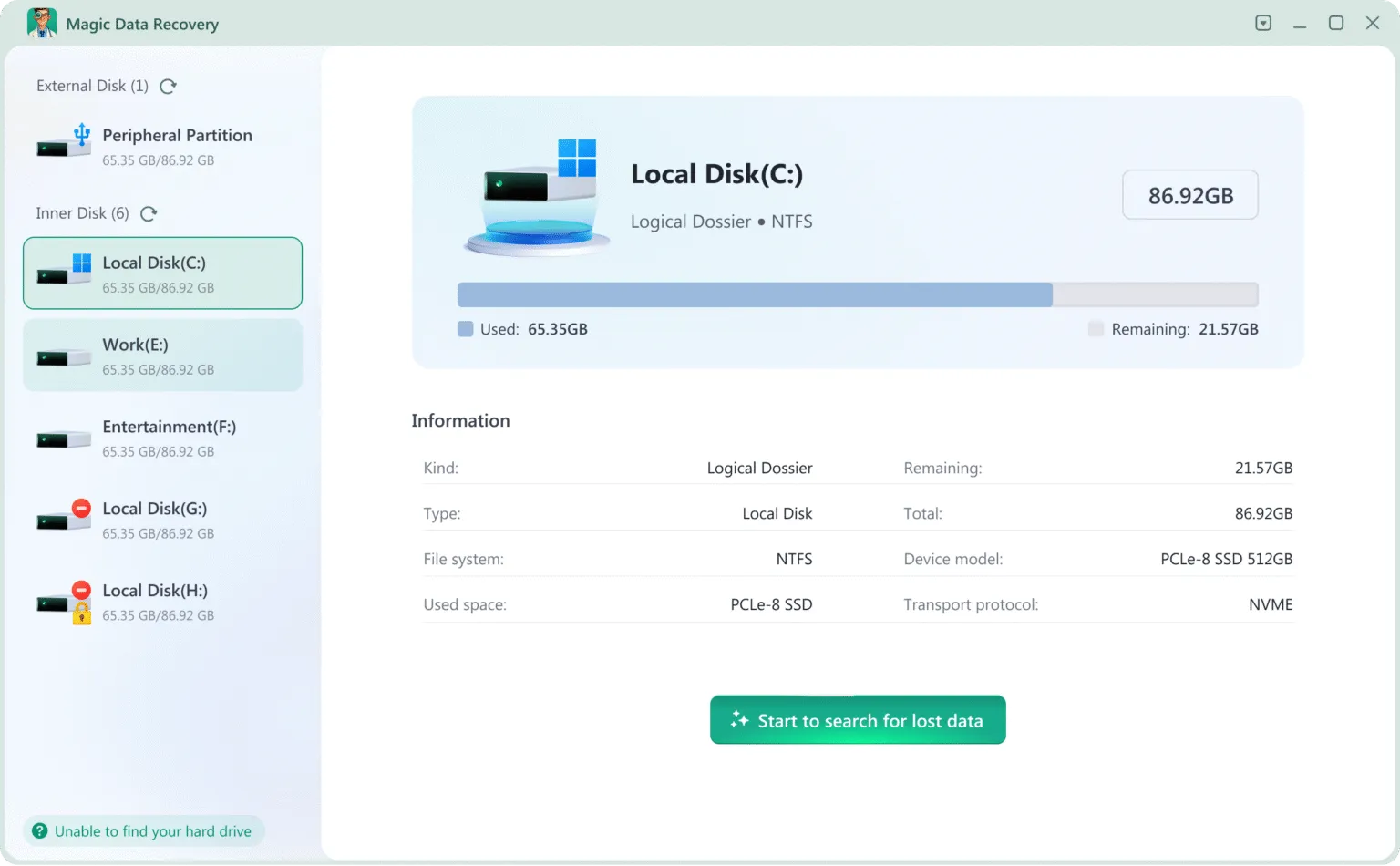
3. Start a Scan: Click the “Search for lost data” button to search for your lost files.
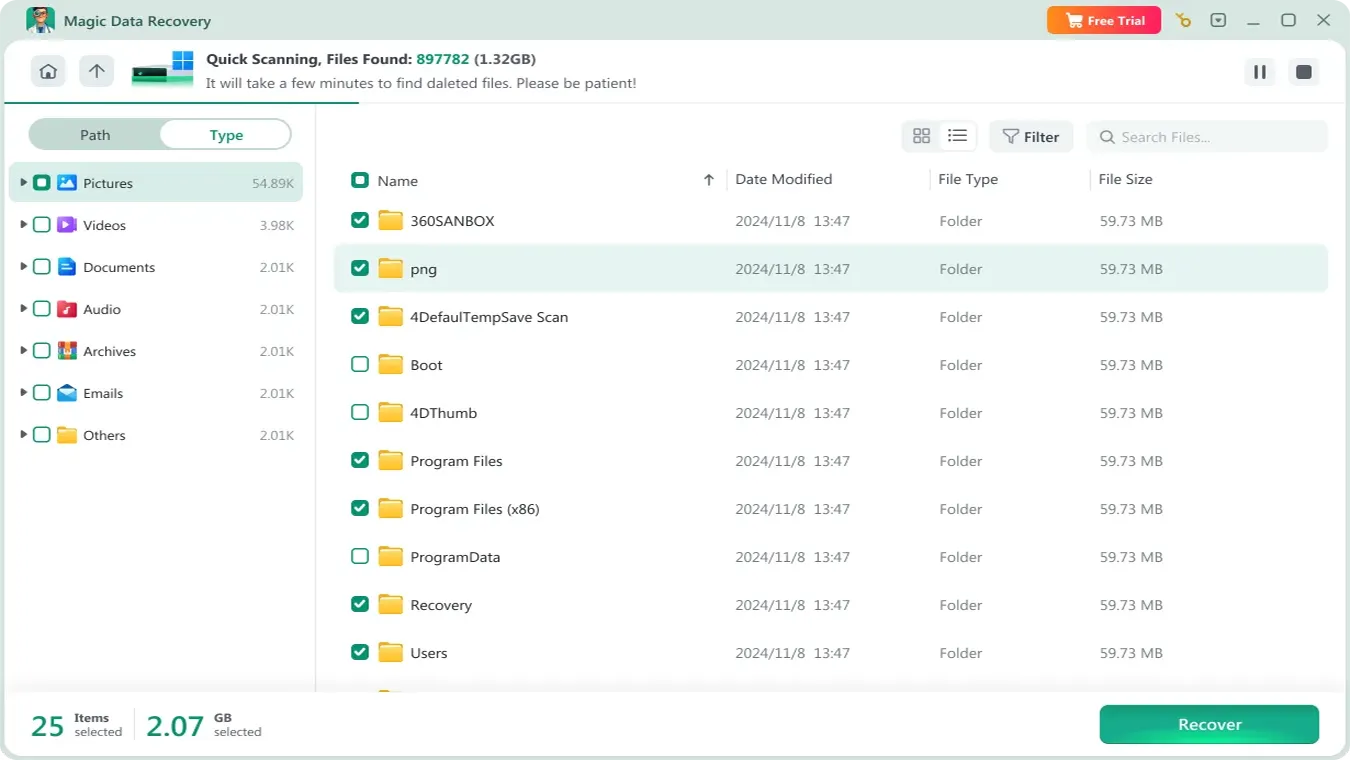
4. Preview Recoverable Files: Filter by file type and preview before recovery.

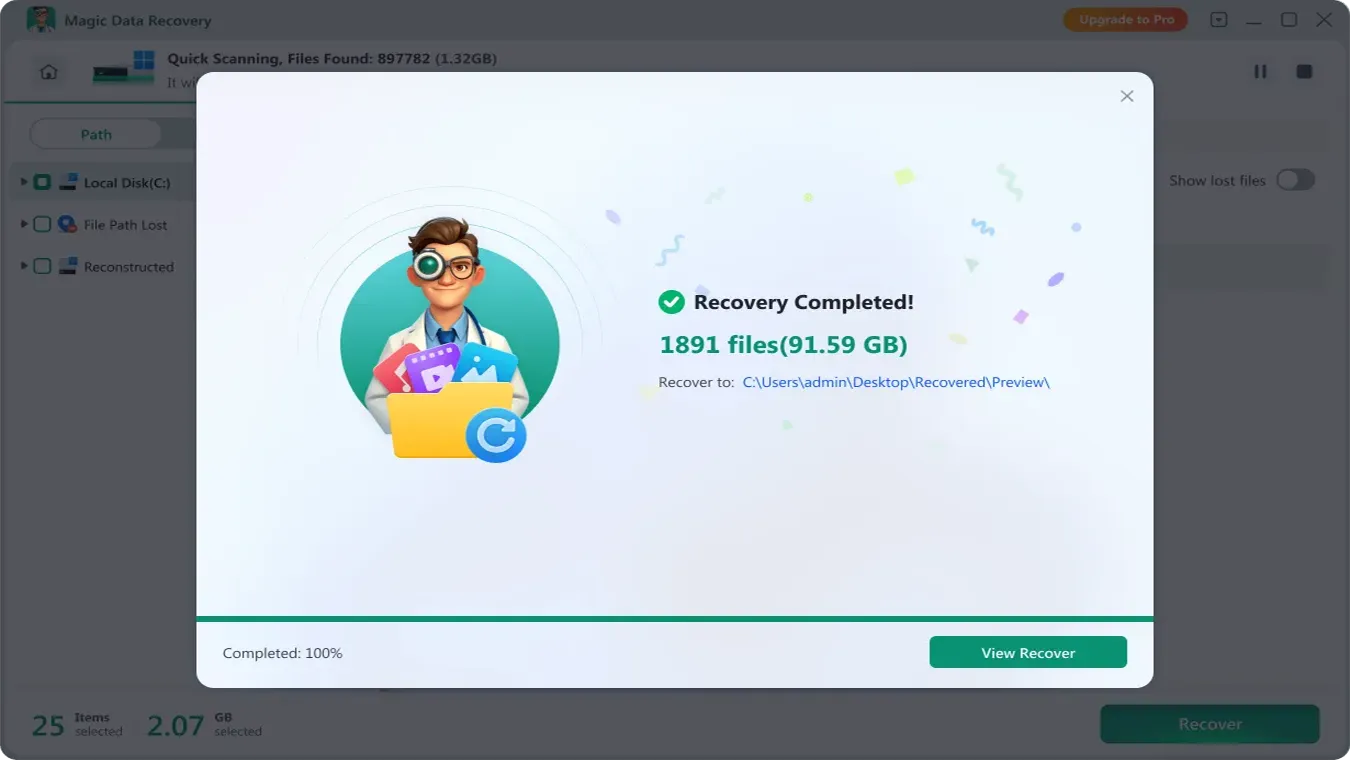
5. Recover Files Safely: Save recovered files to a different storage device.
Best Practices to Improve File Recovery Success
- Act quickly after data loss.
- Avoid writing new data to the affected drive.
- Recover to another disk.
- Scan the right partition first.
- Recover critical files before attempting repairs.
- Remove malware before resuming normal use.
- Set up backups after recovery is complete.
These steps are simple, but they often make the difference between partial recovery and permanent loss.
Common Mistakes to Avoid
Even the best file recovery plan can fail if you make the wrong move too early. Many users try to fix the drive immediately, install new software, or save files back to the same location. However, these actions can reduce the chance of successful recovery results.
Running CHKDSK Too Early
If the drive structure is damaged, repair commands can change metadata before you secure the files you need. Recover first when the data matters more than immediate repair.
Installing Tools on the Same Drive
This can overwrite recoverable sectors and reduce success.
Trusting Only One Recovery Method
Many top-ranking articles split advice into separate pages or emphasize one tool path. In practice, users need a decision tree, not just one method.
Waiting Too Long
The longer you keep using the computer, the lower your chance of successful file recovery.
File Recovery Windows 10 vs Built-In Windows Tools
Built-in tools still matter. Recycle Bin, File History, and Windows File Recovery are useful in specific cases. Microsoft’s documentation confirms that Windows File Recovery supports local drives and different modes, but it remains command-line based and requires careful setup.
A dedicated solution like Magic Data Recovery is the better recommendation when:
- you need one tool for multiple loss scenarios,
- you want a simpler workflow,
- you are not comfortable with commands,
- you need to recover data after formatting or system problems,
- or you suspect virus-related damage.
Conclusion
A good file recovery solution should do more than explain how to restore files from the Recycle Bin. Real users lose data after formatting, file system errors, Windows reinstallations, and malware incidents too. That is why the best file recovery approach is the one that matches the actual cause of the loss.
Magic Data Recovery is the tool I would recommend here because it solves the broader problem, not just the easiest case. It supports deleted, formatted, corrupted, post-reinstall, and virus-damaged data recovery in a way that is more practical for ordinary users than relying only on manual Windows methods. For anyone who wants a more complete and dependable solution, Magic Data Recovery is the strongest fit for this topic.
Supports Windows 7/8/10/11 and Windows Server
FAQs
What is the best file recovery windows 10 method for deleted files?
For recently deleted files, start with the Recycle Bin. If the file is no longer there, try File History if you enabled it before the loss. When both options fail, a dedicated recovery tool is usually the better choice because it can scan the drive directly and find files that Windows no longer lists normally.
Can file recovery work after formatting a drive?
Yes, file recovery can still work after a quick format, especially if you stop using the drive immediately. The key factor is whether new data has overwritten the original file content. Formatted-drive recovery usually needs a deeper scan than normal undelete, so a dedicated recovery tool is often more effective than built-in Windows options.
Is Windows File Recovery enough for most users?
Not always. Windows File Recovery can be useful, but Microsoft provides it as a command-line app, and you must recover files to a different drive. It also works best when you know the source, destination, and recovery mode clearly. For many ordinary users, that creates too much friction in urgent recovery situations.
Can I recover files after reinstalling Windows 10?
You may be able to, but speed matters. If the reinstall did not overwrite the entire partition, some lost data may still be recoverable. However, every new update, download, or program install reduces your chances. Stop using the affected partition as soon as possible and scan it with a recovery tool before making more changes.
Can a virus make file recovery harder?
Yes. Some viruses delete files, while others hide them, corrupt file system data, or damage partitions. That makes recovery more complicated than a standard delete case. You should isolate the device, remove the malware safely, and then attempt recovery with a trusted tool that can scan beyond simple file listings.
Why do experts say not to save recovered files to the same drive?
Saving recovered files to the same drive can overwrite sectors that still contain other lost data. Microsoft gives the same principle in its Windows File Recovery guidance by requiring a separate destination drive. Using another internal partition, USB drive, or external disk helps protect the remaining recoverable files.
Is backup still useful if I already have a file recovery tool?
Absolutely. Recovery tools help after something goes wrong, but backups reduce risk before it happens. File History and previous versions can work well when enabled in advance, yet many users only realize they need them after a loss. The best strategy combines regular backups with a recovery tool for emergencies.
Why recommend Magic Data Recovery instead of only free tools?
Free tools are fine for simple situations, but they often break down in real-world cases like formatting, file system errors, reinstalling Windows, or virus-related damage. Magic Data Recovery is easier to position as the better solution because it addresses multiple loss scenarios in one workflow and suits users who want results without command-line complexity.

Jason is a data recovery and technical support specialist with over 15 years of hands-on experience. He has worked extensively with frontline users, troubleshooting difficult data loss cases and providing practical recovery solutions for accidental deletion, formatted drives, damaged file systems, lost partitions, system failures, and other recovery emergencies. His expertise also includes backup and restoration, file repair, and disaster recovery, with a strong emphasis on safe, reliable, and technically accurate guidance.