
OneNote Files Disappeared? 8 Recovery Fixes
You open OneNote to review meeting notes, class materials, or a project plan—and suddenly an entire page, section, or notebook seems to be gone. When OneNote files disappeared without warning, the first assumption is usually that the notes were permanently deleted. Fortunately, that is often not the case.
Missing OneNote content can result from a sync problem, signing in with the wrong Microsoft account, a closed notebook, a misplaced section, accidental deletion, or an app migration. Only some situations involve actual file loss.
This guide walks through eight recovery methods in the safest order. Start with OneNote and OneDrive before using disk-level recovery. If your local notebook or backup files were genuinely deleted from a Windows drive, the Amagicsoft deleted file recovery guide explains why deleted data may remain recoverable until it is overwritten. In that situation, Magic Data Recovery can scan the affected drive for lost files.
Supports Windows 7/8/10/11 and Windows Server
Table of Contents
Why Did My OneNote Files Disappear?
Before trying random fixes, identify what probably happened. The phrase OneNote files disappeared can describe several very different problems.
What you see | Likely cause | Best place to start |
A page is missing but the notebook still exists | Accidental deletion or page moved elsewhere | Search and OneNote Recycle Bin |
An entire notebook disappeared from the sidebar | Closed notebook or wrong account | Account check and File > Open |
Notes appear on one device but not another | Sync problem | Manual sync and OneNote for the web |
A section suddenly vanished after a sync error | Misplaced section | Misplaced Sections |
Notes disappeared after switching OneNote versions | Migration or backup issue | Open Backups |
A local notebook folder was deleted | Actual file deletion | Windows Recycle Bin or recovery software |
Drive was formatted, corrupted, or became inaccessible | Storage-level data loss | Data recovery software |
This distinction matters. If OneNote notes disappeared because the app stopped syncing, scanning your hard drive should not be your first move. However, if local OneNote data was deleted or lost after disk damage, a storage recovery tool becomes much more relevant.
1. Search Across All OneNote Notebooks
The quickest fix is also the easiest to overlook. A missing page may still exist but have been moved, renamed, or stored in another section.
In the desktop version of OneNote:
- Open the search box.
- Change the search scope to All Notebooks.
- Search for a distinctive phrase that appeared inside the missing note.
- Review results from other sections and notebooks.
You can also press Ctrl + E in supported desktop versions to broaden the search.
OneNote search is more useful than searching only by page title because it can locate content inside notes. Microsoft specifically recommends searching all notebooks as one of the first steps when notes appear to be missing.
If your OneNote files disappeared after reorganizing a large notebook, this method may find them without any recovery operation at all.
2. Check the Microsoft Account and Reopen the Notebook
A surprisingly common reason for a OneNote notebook disappeared problem is that OneNote is connected to a different Microsoft account.
This happens frequently when someone uses:
- A personal Microsoft account and a work account
- Several Microsoft 365 tenants
- A school account alongside a personal OneDrive
- A new Windows installation or computer
- A recently upgraded OneNote application
Check the account shown in OneNote and confirm that it matches the account originally used for the notebook.
Then go to:
File > Open
Look for the missing notebook. Depending on your version, you may also see More Notebooks.
Next, sign in to OneDrive through your browser and inspect the folders associated with the same account. If the notebook appears online but not inside the desktop application, the data probably still exists.
Microsoft’s migration guidance also recommends signing in with the same account used in the previous OneNote app and reopening notebooks through File > Open when content appears missing after migration.
3. Fix OneNote Sync and Check OneNote for the Web
When notes exist on your phone or another computer but are missing on the current device, synchronization deserves immediate attention.
First, open the affected notebook and manually trigger synchronization. Depending on the desktop version, you can use options such as:
File > View Sync Status > Sync All
or right-click the notebook and choose:
Sync This Notebook
Then open the same notebook in OneNote for the web.
This comparison tells you something important:
- If the missing notes appear online, your desktop app has a local display or synchronization problem.
- If recent notes exist only on one device, they may not have uploaded successfully.
- If neither location contains the notes, continue with the recovery methods below.
Do not immediately reset OneNote, delete its cache, or close an unsynced notebook when unique recent notes still appear on one device. Copy important unsynced content somewhere safe first. Microsoft warns that unresolved sync problems can prevent notes from appearing across devices.
For many users reporting that OneNote files disappeared after sync, the content was inaccessible rather than permanently erased.
4. Look for Misplaced Sections
OneNote can create a Misplaced Sections area when it has changes to synchronize but cannot find the section’s expected destination.
This can make a section appear as though it vanished from the original notebook.
Look near the bottom of your notebook list for Misplaced Sections. If you find the missing content:
- Open the misplaced section.
- Confirm that it contains the notes you need.
- Right-click the section.
- Choose Move or Copy.
- Select a valid notebook as the destination.
Avoid deleting a misplaced section until you have confirmed that another synchronized copy exists.
Microsoft explains that misplaced sections can appear when OneNote tries to sync changes but cannot locate the original section file. The content remains there until it is moved, deleted, or OneNote resolves the location.
This method is especially useful when OneNote notes disappeared immediately after a synchronization error or notebook restructuring.
5. Recover Deleted Notes from the OneNote Recycle Bin
If you or another collaborator actually deleted a page or section, check the OneNote Recycle Bin.
For current Windows desktop versions, typically open:
History > Notebook Recycle Bin
Then:
- Locate the deleted page or section.
- Right-click it.
- Select Move or Copy.
- Choose the notebook or section where you want to restore it.
Menu names differ slightly across OneNote versions and platforms. Some versions use View > Deleted Notes instead.
Microsoft’s current recovery documentation states that deleted OneNote pages and sections are normally retained in the notebook recycle bin for up to 60 days, unless they are permanently removed sooner.
Therefore, if your OneNote files disappeared recently, checking the OneNote Recycle Bin should come before installing any recovery program.
What If the Whole Notebook Was Deleted?
The OneNote Recycle Bin mainly helps with content inside a notebook. If the entire cloud notebook was removed from OneDrive, move to the next method.
6. Check the OneDrive Recycle Bin
Most modern OneNote notebooks use OneDrive or SharePoint for cloud storage. Therefore, deleting the notebook at the storage level creates a different recovery situation from deleting one page inside OneNote.
Sign in to the correct OneDrive account and open Recycle bin.
Search for the missing notebook or related folder and restore it if available.
According to Microsoft, OneDrive personal accounts normally retain deleted items for 30 days. Work or school accounts generally keep them for 93 days, although administrators can change organizational retention settings.
Microsoft 365 subscribers may also have access to Restore your OneDrive, which can roll back file and folder activity from the previous 30 days. This can help after widespread accidental deletion, corruption, or unwanted changes.
If the problem began after deleting folders directly from OneDrive, check this location before attempting local OneNote recovery.
7. Restore Missing OneNote Notes from Backups
Desktop OneNote includes another important safety net: local backups.
Open OneNote and go to:
File > Info > Open Backups
Browse the available notebook folders and open the most recent backup that contains your missing content. Once you find the right page or section:
- Right-click it.
- Choose Move or Copy.
- Copy the content into your active notebook.
- Verify that the restored section synchronizes correctly.
Microsoft’s current platform recovery information lists automatic Windows backups as daily by default, with approximately two weeks of default backup retention. Your actual settings can differ, so older or customized installations may behave differently.
You can also check the configured location under:
File > Options > Save & Backup
Microsoft documents the traditional Windows backup folder under the user’s local OneNote application data directory.
OneNote Files Disappeared After an App Upgrade?
This deserves special attention because Microsoft has been moving users from OneNote for Windows 10 to the current OneNote on Windows application.
If OneNote files disappeared during migration, Microsoft recommends checking File > Info > Open Backups and locating available .one backup files. Restored sections can then be moved or copied back into an active notebook.
8. Recover Deleted Local OneNote Files with Magic Data Recovery
The previous seven methods focus mainly on OneNote and Microsoft’s cloud recovery mechanisms. However, they may not help if the underlying local files themselves were deleted.
Examples include:
- A local OneNote notebook folder was accidentally deleted
- OneNote backup files were removed
- A drive containing notebook backups was formatted
- File system errors made a folder inaccessible
- A storage problem caused locally saved files to disappear
- Exported copies or related documents were permanently deleted
In these scenarios, Magic Data Recovery provides a different type of solution. Instead of fixing OneNote synchronization, it scans the Windows storage device for deleted or lost file data.
Magic Data Recovery supports recovery after deletion, formatting, file-system problems, and other common storage-loss scenarios. It uses a read-only scanning workflow and supports more than 5,000 file types overall.
How to Recover Lost Local OneNote Data
Step 1. Stop using the affected drive
If a local notebook or backup was deleted, avoid downloading files, installing programs, or saving new data to that drive. New writes can overwrite deleted information.
Step 2. Install Magic Data Recovery safely
Whenever possible, install the program on another partition or storage device rather than the drive containing the lost data.
Supports Windows 7/8/10/11 and Windows Server
Step 3. Select the affected drive
Launch the program and choose the Windows partition or storage device where the notebook, backup, or exported files were previously stored.
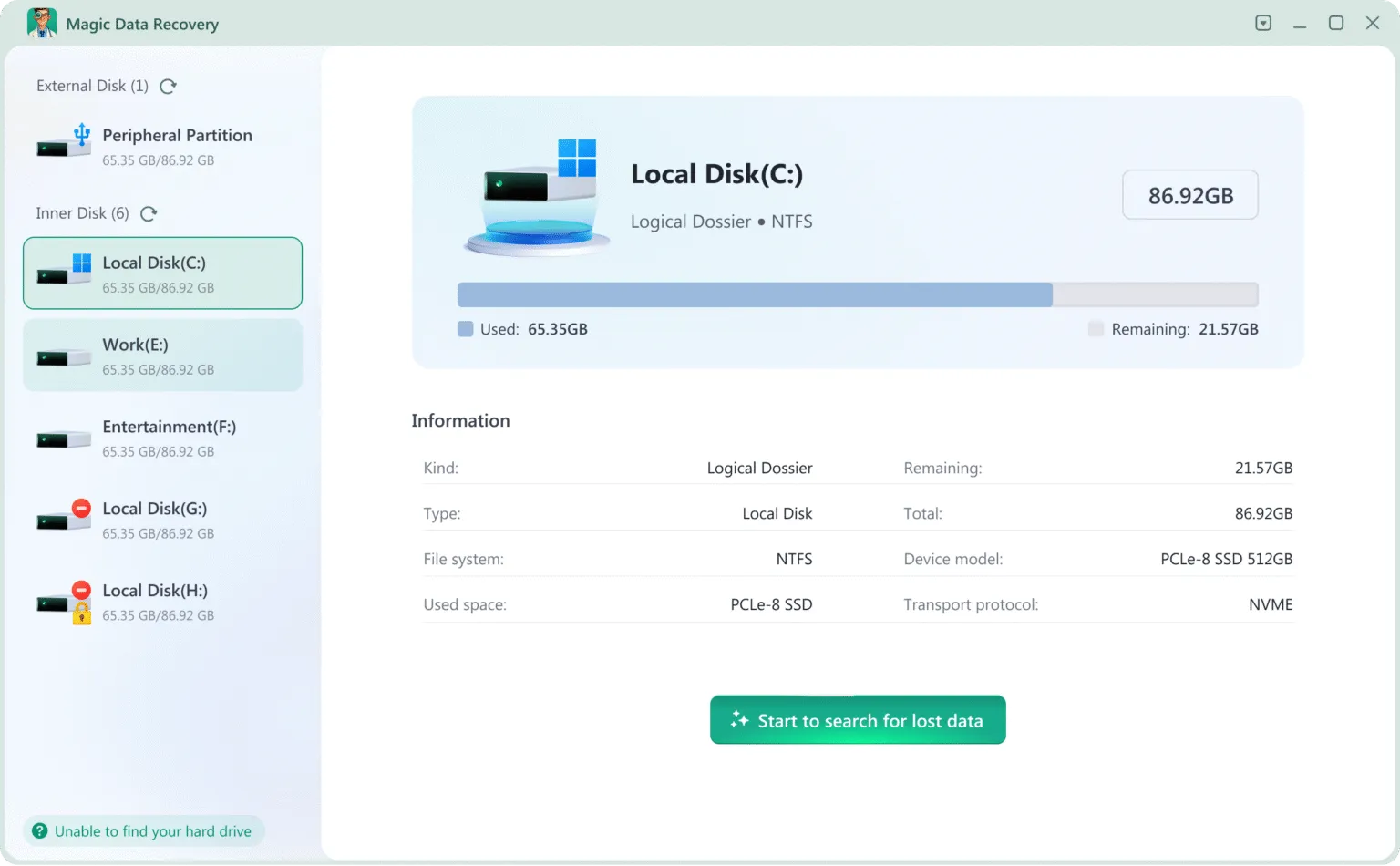
Step 4. Scan for lost data
Start the scan. Use file names, dates, paths, and other available filters to narrow the results.
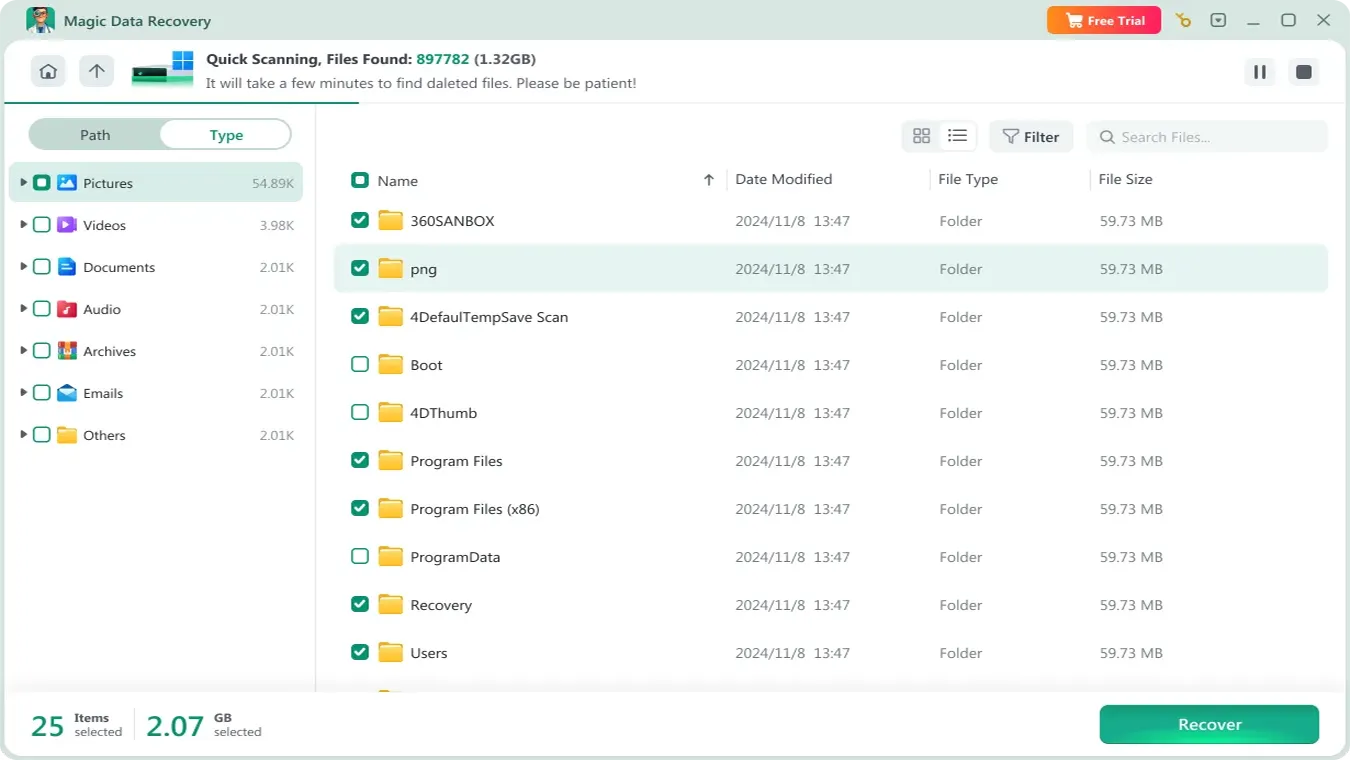
Step 5. Preview available files
Preview supported recoverable content when possible before recovery.

Step 6. Recover to another drive
Select the files you need and save them to a different storage location. Do not restore them directly onto the source drive.
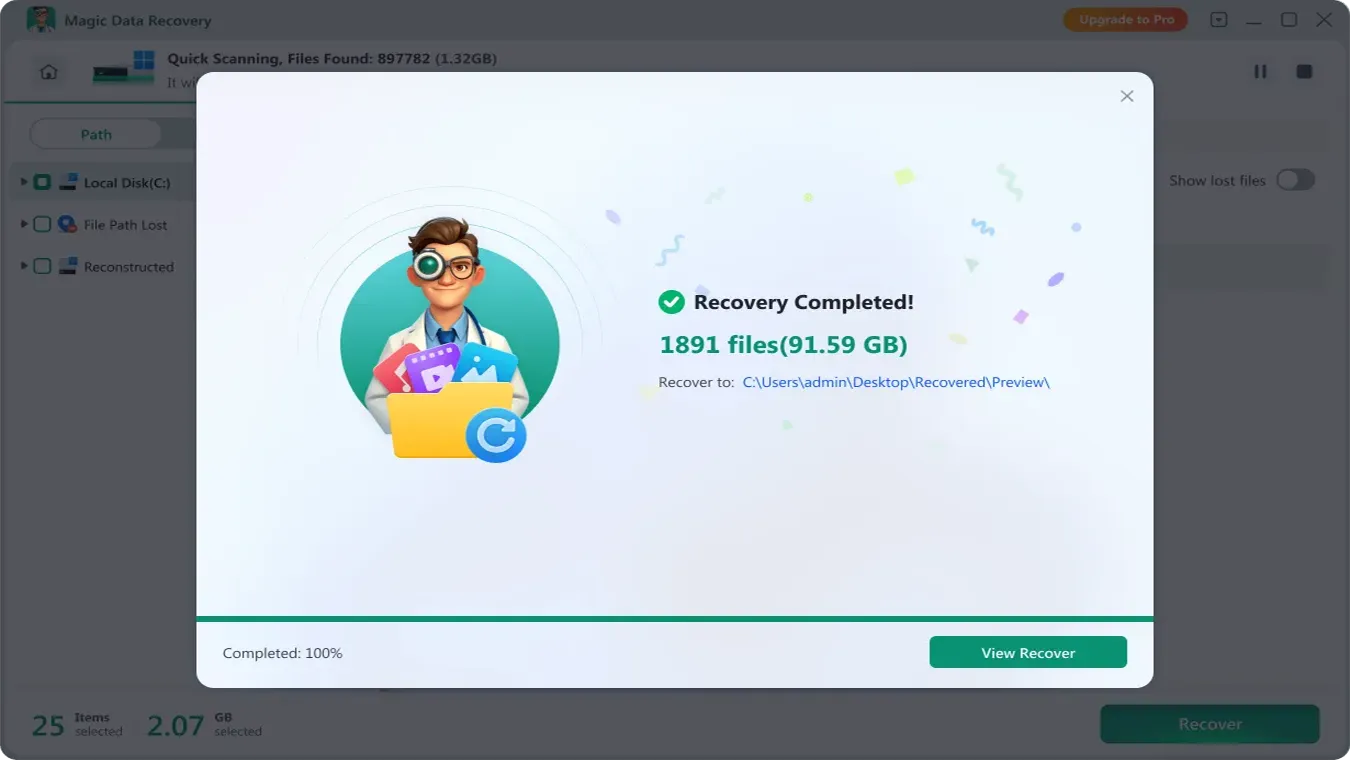
For the complete interface workflow, see the Magic Data Recovery user guide.
When Magic Data Recovery Will—and Will Not—Help
This distinction is important.
Magic Data Recovery is appropriate when OneNote files disappeared because data that physically existed on a Windows storage device was deleted, formatted, lost, or made inaccessible.
It is not a substitute for OneNote synchronization recovery. If your notes existed only in a cloud notebook and were never available as recoverable local files or backups, scanning the PC cannot recreate data that was stored exclusively on Microsoft’s servers.
That is why OneNote search, synchronization, OneDrive, the notebook recycle bin, and backups should come first.
Which OneNote Recovery Method Should You Try First?
Use this order to avoid unnecessary recovery work:
- Search all notebooks.
- Confirm the correct Microsoft account.
- Compare the notebook with OneNote for the web and fix sync errors.
- Check Misplaced Sections.
- Open the OneNote Recycle Bin.
- Check the OneDrive Recycle Bin.
- Restore a OneNote backup.
- Scan the disk only if local files were genuinely lost.
This order protects unsynced content while also avoiding a common mistake: treating every OneNote missing notes problem as physical data loss.
How to Prevent OneNote Files from Disappearing Again
After you recover the notes, spend a few minutes reducing the chance of another incident.
- Confirm that important notebooks finish syncing before shutting down or switching devices.
- Occasionally open notebooks in OneNote for the web to verify that recent changes reached the cloud.
- Resolve synchronization errors instead of ignoring warning icons.
- Keep automatic OneNote backups enabled.
- Store critical backups on a different drive rather than only on the system disk.
- Avoid deleting OneDrive notebook folders unless you understand how the deletion affects OneNote.
- Before migrating between OneNote versions, synchronize all notebooks and check for misplaced sections.
- Export especially important notes periodically when an independent copy is required.
Microsoft also recommends moving important backups to a secondary drive, external storage device, or network location because a backup stored on the same failing disk cannot protect you from physical drive problems.
Conclusion
When OneNote files disappeared, do not assume the worst. In many cases, the notes are still present in another notebook, under another Microsoft account, in Misplaced Sections, in the OneNote Recycle Bin, on OneDrive, or inside an automatic backup.
Start with Microsoft’s built-in recovery options because they preserve the original notebook structure and are the most appropriate solution for sync-related problems.
However, if the investigation shows that local OneNote files, backups, or exported data were actually deleted from a Windows drive, disk-level recovery becomes appropriate. The Amagicsoft deleted file recovery guide explains how deleted files can remain recoverable before their storage space is overwritten.
For deletion, formatting, or file-system-related data loss, Magic Data Recovery is worth trying because it can scan the affected storage, locate lost data, preview supported files, and recover selected items to a safer location without requiring advanced recovery knowledge.
Supports Windows 7/8/10/11 and Windows Server
FAQs
Why have my OneNote files disappeared?
OneNote files disappeared can result from signing in with the wrong Microsoft account, a closed notebook, synchronization errors, misplaced sections, accidental deletion, OneDrive changes, an app migration, or actual local file loss. Check OneNote and OneDrive first before assuming the underlying data was permanently deleted.
Can I recover deleted OneNote notes?
Yes. You can often recover deleted OneNote notes through the OneNote Recycle Bin, OneDrive Recycle Bin, or an automatic backup. Microsoft currently states that deleted OneNote pages and sections normally remain in the notebook recycle bin for up to 60 days unless they are permanently removed sooner.
Where are OneNote files stored?
Modern notebooks are commonly synchronized through OneDrive or SharePoint, while OneNote may also maintain local cached content and backups on supported desktop systems. Older or intentionally local notebooks can exist on the computer itself. The exact storage model depends on the OneNote version and how the notebook was created.
How long does OneNote keep deleted notes?
Microsoft's current documentation states that the OneNote Recycle Bin generally retains deleted pages and sections for 60 days. This period does not guarantee recovery if someone manually empties or permanently deletes the content. OneDrive has separate retention rules for files deleted at the cloud-storage level.
What should I do if OneNote files disappeared after an update?
First, sign in with the same Microsoft account used before the update and reopen the notebook through File > Open. Then check OneNote for the web, Misplaced Sections, and File > Info > Open Backups. Microsoft also provides dedicated backup-recovery guidance for users migrating between OneNote Windows applications.
Can OneDrive restore a disappeared OneNote notebook?
Possibly. If an entire cloud notebook was deleted from OneDrive, check the OneDrive Recycle Bin. Personal-account items normally remain there for 30 days, while work or school accounts generally use a 93-day period unless an administrator changes the policy.
Can data recovery software recover missing OneNote files?
It can help when local notebook files, backups, exported copies, or related data were physically deleted or lost from a Windows storage device. However, disk recovery software cannot reliably solve a cloud-only synchronization problem. Try OneNote and OneDrive recovery methods before scanning the local drive.
How can I stop OneNote notes from disappearing again?
Keep notebooks synchronized, resolve sync warnings promptly, verify important notes through OneNote for the web, and keep automatic backups enabled. For critical work, store an additional backup on another drive or storage location so a disk failure does not affect both the original data and its backup.

Jason has over 15 years of hands-on experience in the computer data security industry. He specializes in data recovery, backup and restoration, and file repair technologies, and has helped millions of users worldwide resolve complex data loss and security issues.