
Best NTFS Recovery Software to Recover Deleted or Formatted NTFS Files

NTFS recovery software helps recover files from Windows drives after accidental deletion, formatting, RAW partition errors, corrupted file systems, or partition loss. If your NTFS hard drive, SSD, USB drive, or external disk still appears in Windows Disk Management, stop writing new data to it and scan it as soon as possible.
In this guide, we compare free and paid NTFS recovery software for different data-loss situations. You will learn which tool is best for deleted files, formatted NTFS drives, RAW partitions, and beginner-friendly recovery. For users who want a simple Windows recovery workflow, Magic Data Recovery is also included as an easy option for scanning and restoring lost NTFS files.
Supports Windows 7/8/10/11 and Windows Server
PAGE CONTENT:
Quick Answer: Which NTFS Recovery Software Should You Use?
For most Windows users, the best NTFS recovery software is the one that can scan deleted files, formatted NTFS drives, RAW partitions, and inaccessible disks without requiring complex commands. Magic Data Recovery is a good choice for beginners who want a visual recovery workflow. Windows File Recovery is free, but it requires command-line operation. TestDisk is useful for lost partitions, while R-Studio is better for advanced users who understand file systems and disk structures.
What Is NTFS Recovery Software?
NTFS recovery software is a tool designed to scan Windows NTFS drives and locate lost files that are no longer visible in File Explorer. It may recover files deleted from the Recycle Bin, lost after formatting, hidden by file system corruption, or stored on an NTFS partition that has become RAW or inaccessible.
NTFS is the default file system used by modern Windows systems. It supports permissions, encryption, metadata, compression, and large storage volumes. These features make NTFS reliable, but they do not prevent data loss caused by deletion, formatting, partition errors, malware, power failure, or disk corruption.
Compared with a general file recovery tool, good NTFS recovery software should understand NTFS file records, folder structures, file names, and metadata. This is important because recovering only raw file signatures may bring files back without their original names or folders.
Best NTFS Recovery Software Comparison
| NTFS Recovery Software | Best For | Free Version | Difficulty | Key Advantage |
|---|---|---|---|---|
| Magic Data Recovery | Deleted, formatted, RAW, and inaccessible NTFS drives | Free scan and preview | Easy | Beginner-friendly Windows recovery workflow |
| Windows File Recovery | Free NTFS file recovery on Windows 10/11 | Yes | Hard | Official Microsoft tool, but command-line based |
| Recuva | Recently deleted NTFS files | Yes | Easy | Simple free recovery for basic deletion cases |
| TestDisk / PhotoRec | Lost NTFS partitions and raw file recovery | Yes | Hard | Powerful free tools for technical users |
| R-Studio | Advanced NTFS recovery and complex cases | Limited trial | Hard | Professional recovery features |
| Disk Drill | General Windows and Mac recovery | Limited free recovery | Easy | Modern interface and broad file support |
| Stellar Data Recovery | File recovery with advanced scan options | Limited free recovery | Medium | Good for users who want guided recovery |
| EaseUS Data Recovery Wizard | Beginner-friendly paid recovery | Limited free recovery | Easy | Popular guided recovery workflow |
If you only need to recover a few recently deleted files, a free tool may be enough. If the NTFS drive was formatted, became RAW, lost its partition, or contains important business files, use software that supports deep scanning, file preview, and safe recovery to another drive. Do not save recovered files back to the same NTFS drive, because this may overwrite recoverable data.
Common NTFS Data Loss Scenarios
You may need NTFS recovery software when one of these problems happens:
Accidental deletion
Files are deleted normally, removed with Shift + Delete, or lost after the Recycle Bin is emptied.
Formatted NTFS drive
A hard drive, SSD, USB drive, or external disk is formatted by mistake, causing files to disappear.
RAW or inaccessible NTFS partition
Windows may show errors such as “You need to format the disk before you can use it” or “The file or directory is corrupted and unreadable.”
Lost or deleted partition
A partition may disappear after disk management mistakes, failed resizing, repartitioning, or system installation.
System crash or power failure
Unexpected shutdowns can damage NTFS metadata and make files or folders inaccessible.
Bad sectors or disk errors
Drives with bad sectors may still be scannable, but you should recover important files before running repair operations.
Malware or ransomware
Some malware deletes, hides, corrupts, or encrypts files. Recovery depends on whether the original data still exists and whether files were overwritten.
Why Magic Data Recovery Is a Good NTFS Recovery Software for Windows
Magic Data Recovery is designed for Windows users who need a simple way to recover files from NTFS hard drives, SSDs, USB drives, external drives, and other storage devices. It can help in common NTFS data-loss scenarios, including accidental deletion, formatted drives, inaccessible partitions, file system errors, and lost files after system problems.
Key reasons to consider Magic Data Recovery:
• It supports NTFS file recovery from internal and external drives.
• It provides quick scan and deep scan modes for different data-loss situations.
• It lets users preview recoverable files before saving them.
• It works well for users who do not want to use command-line recovery tools.
• It can recover documents, photos, videos, archives, and other common file types.
• It supports Windows 7, Windows 8, Windows 10, Windows 11, and Windows Server.
Compared with free command-line tools, Magic Data Recovery is easier for beginners because users can select a drive, scan it, preview files, and recover selected data through a visual interface.
How to Recover Files from an NTFS Drive with Magic Data Recovery
Follow these steps to recover deleted or lost files from an NTFS drive:
1. Download and install Magic Data Recovery
Install the software on a different drive whenever possible. If files were lost from the C: drive, avoid installing new software to the same partition unless you have no other option.
Supports Windows 7/8/10/11 and Windows Server
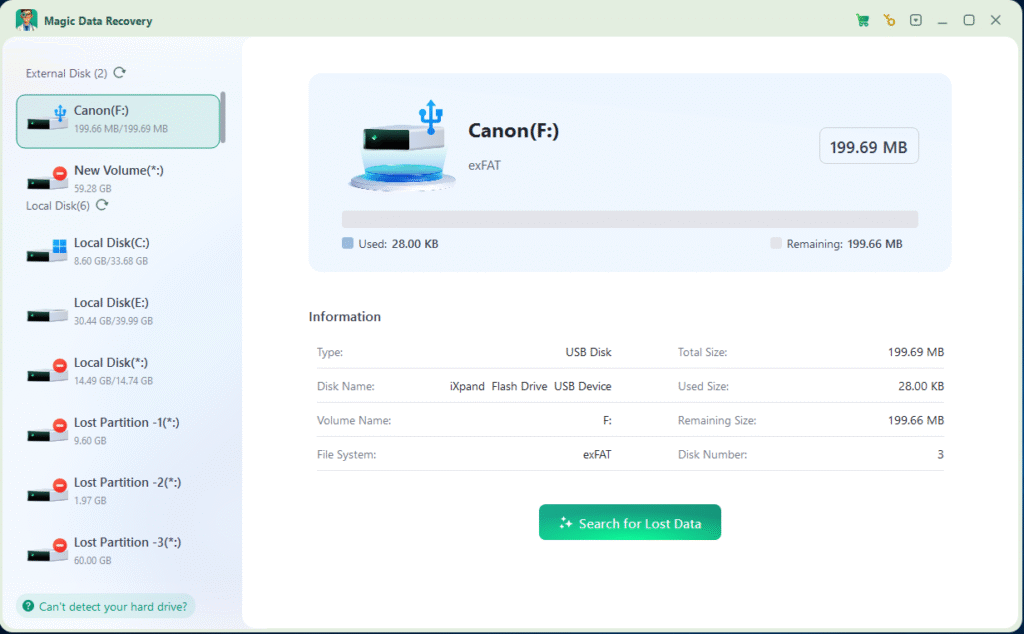
2. Select the NTFS drive
Launch Magic Data Recovery and choose the NTFS hard drive, SSD, USB drive, external drive, or partition where your files were lost.
3. Scan for lost NTFS files
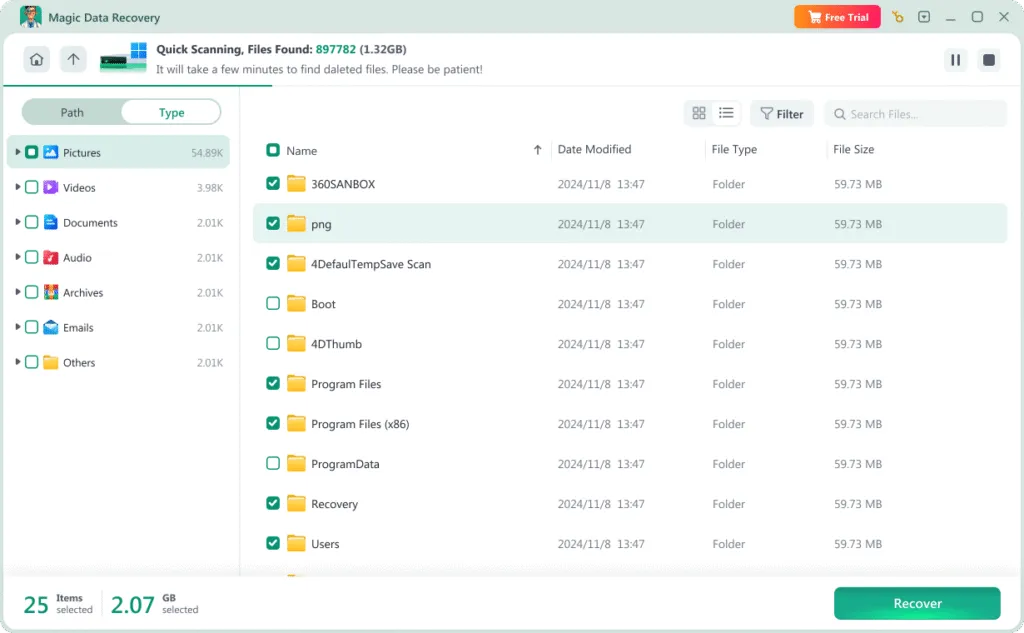
Click the scan button to search for deleted, formatted, or inaccessible files. You can start with a quick scan for recently deleted files and use a deep scan if the NTFS drive was formatted or became RAW.
4. Preview recoverable files
Open the scan results and preview documents, photos, videos, archives, or other files to confirm whether they are recoverable.

5. Recover files to a safe location
Select the files you need and save them to another drive. Do not recover files back to the same NTFS drive, because doing so may overwrite other lost data.

If you want to learn about the usage steps of Magic Data Recovery through a detailed instructional video, please watch the video:
How to Choose NTFS Recovery Software
Not every recovery tool handles NTFS data loss in the same way. Before choosing NTFS recovery software, check the following points:
- NTFS file system support
The software should support NTFS drives and recover file names, folder structures, and metadata whenever possible. - Deleted and formatted recovery
A good tool should handle both simple deletion and more serious cases such as accidental formatting or partition loss. - RAW or inaccessible drive support
If Windows asks you to format the drive before use, choose software that can scan RAW or inaccessible NTFS partitions. - File preview
Preview is important because it helps you confirm whether files are recoverable before saving them. - Read-only scanning
Recovery software should scan the original drive without modifying the lost data. - Ease of use
Command-line tools may be powerful, but most home users need a visual interface and clear recovery steps. - Recovery destination control
The software should allow you to save recovered files to another drive instead of writing them back to the damaged NTFS volume.
When Can NTFS Files Be Recovered?
NTFS recovery depends on whether the lost data has been overwritten. In many cases, deleted or formatted files are still physically stored on the drive until new data takes their place. This is why you should stop using the affected NTFS drive immediately.
NTFS recovery software may help in these situations:
• Files were deleted and the Recycle Bin was emptied.
• Files were removed with Shift + Delete.
• An NTFS drive was formatted by mistake.
• An external NTFS drive became RAW or inaccessible.
• A partition was deleted or lost.
• Windows asks you to format the drive before use.
• Files disappeared after a crash, malware attack, or system error.
However, no NTFS recovery software can guarantee 100% recovery. If the lost files were overwritten, physically damaged, or encrypted by ransomware, recovery may be incomplete or impossible.
What Not to Do Before NTFS Recovery
Before running NTFS recovery software, avoid these mistakes:
Do not save new files to the affected drive
New data may overwrite deleted files and reduce recovery chances.
Do not format the drive again
If Windows asks you to format the disk, cancel the prompt and scan the drive first.
Do not run CHKDSK before recovery
CHKDSK may repair file system errors, but it can also modify file records. Recover important files first, then repair the disk.
Do not install recovery software on the same partition
If files were lost from the system drive, install the software on another drive when possible.
Do not recover files back to the same NTFS drive
Always save recovered files to a different disk or external storage device.
Need an Easy NTFS Recovery Software for Windows?
If your NTFS drive still appears in Windows, you can scan it with Magic Data Recovery before trying risky repair operations. The software helps you search for deleted, formatted, RAW, or inaccessible NTFS files and preview recoverable data before saving.
Download Magic Data Recovery and scan your NTFS drive safely.
Supports Windows 7/8/10/11 and Windows Server
Conclusion: Choose the Right NTFS Recovery Software
NTFS data loss can happen after deletion, formatting, partition errors, system crashes, or drive corruption. The right NTFS recovery software depends on your recovery scenario, technical skill level, and whether the drive is still detected by Windows.
If you want a free option and are comfortable with commands, Windows File Recovery or TestDisk may be worth trying. If you need a simpler Windows recovery workflow with drive scanning, file preview, and step-by-step recovery, Magic Data Recovery is a practical choice for recovering deleted, formatted, RAW, or inaccessible NTFS files.
For more hard drive recovery tips, read our hard drive recovery guide.
FAQ About NTFS Recovery Software
Can NTFS recovery software recover permanently deleted files?
What is the best NTFS recovery software for Windows?
Can I recover files from a formatted NTFS drive?
Does NTFS recovery software work on external hard drives?
Can I recover files from a RAW NTFS partition?
Is Windows File Recovery good for NTFS recovery?
Can NTFS recovery software recover original file names?
Can NTFS recovery software guarantee 100% recovery?

Erin Smith is recognized as one of the most professional writers at Amagicsoft. She has continually honed her writing skills over the past 10 years and helped millions of readers solve their tech problems.