
SSD Repair Guide: Fix a Corrupted SSD Without Losing Data

When an SSD becomes RAW, corrupted, inaccessible, or suddenly stops responding, many users immediately search for SSD repair solutions. However, repairing an SSD too quickly can make data recovery harder. Formatting, CHKDSK, driver changes, or other repair tools may modify the file system and reduce the chance of recovering lost files.
Before you try to fix the drive, you should first decide one thing: is this a logical SSD error that can be repaired, or should you recover your data first? This guide explains how to repair SSD errors safely, when SSD data recovery should come first, and how Magic Data Recovery can help you recover files before taking risky repair steps.
Supports Windows 7/8/10/11 and Windows Server
Table of Contents
Can an SSD Be Repaired?
Before trying to fix an SSD, you need to identify whether the problem is logical or physical. Logical issues are usually safer to repair after your data is recovered. These may include file system errors, RAW partitions, missing drive letters, corrupted directories, or driver conflicts.
However, physical or hardware-related problems are different. If the SSD is not detected in BIOS, shows the wrong capacity, disconnects repeatedly, or fails without warning, the issue may involve NAND wear, controller failure, firmware corruption, or electrical damage. In these cases, repair software may not solve the problem, and data recovery should come first.
The safest rule is simple: recover important files first, then repair the SSD.
When SSD Repair Works and When Data Recovery Comes First
Not every SSD failure behaves the same. Therefore, you should evaluate the situation carefully.
Situations Where Repair May Work
SSD repair may work when the drive is still detected by Windows, BIOS, or Disk Management and the problem is mainly logical. Common examples include:
- The SSD turns into RAW format.

- Windows says, “You need to format the disk before you can use it.”

- The SSD partition becomes inaccessible.

- The file or directory is corrupted and unreadable.
- The SSD has no drive letter.
- The SSD appears in Disk Management but cannot be opened.
- The file system is damaged after a crash, power loss, or failed update.
In these cases, the SSD may be repairable. However, if the drive contains important files, recover the data before using CHKDSK, formatting, partition repair, or other repair tools.
In these cases, logical fixes can restore access.
Situations Where SSD Data Recovery Should Come First
Data recovery should come first when the SSD shows signs of serious failure, such as:
- The SSD is not detected in Windows.
- The SSD is not detected in BIOS or UEFI.
- The drive fails without warning.
- The system freezes or crashes when the SSD is connected.
- The SSD appears and disappears repeatedly.
- The SSD shows the wrong capacity.
- The SSD becomes RAW or unallocated.
These symptoms may be caused by file system corruption, firmware problems, controller issues, NAND wear, or hardware failure. If the SSD is still detected with the correct capacity, recovery software may help scan and recover files. If the SSD is not detected on multiple computers, professional recovery may be required.
SSD Repair vs SSD Data Recovery: What Should Come First?
Many users confuse SSD repair with SSD data recovery, but they are different actions.
SSD repair focuses on making the drive usable again. It may include CHKDSK, formatting, driver updates, partition repair, firmware updates, or drive letter changes.
SSD data recovery focuses on retrieving lost files before the SSD is changed. This is important because repair tools may modify the file system, remove damaged entries, or overwrite recoverable data.
If the SSD contains important files, data recovery should always come first. After your files are saved to another healthy drive, you can repair, format, replace, or further diagnose the SSD with much lower risk.
What to Do Before Attempting SSD Repair
Before you try to fix an SSD, take a few steps to reduce the risk of permanent data loss.
Do not format the SSD, even if Windows asks you to. Formatting rebuilds the file system and may make recovery harder.
Do not run CHKDSK immediately if the SSD contains important files. CHKDSK can repair file system errors, but it may also remove damaged file records.
Do not install recovery software on the affected SSD. Install it on another healthy drive or computer.
Do not save recovered files back to the same SSD. Always save them to another internal drive, external hard drive, or USB drive.
Do not update firmware, initialize the disk, create a new partition, or perform Secure Erase before recovering important files.
A safe workflow is: stop using the SSD, scan it with recovery software, recover important files to another drive, and then try repair methods.
Recover Data Before SSD Repair
A proper SSD repair workflow should start with data recovery. This is especially important when the SSD becomes RAW, inaccessible, corrupted, unallocated, or suddenly stops working. Traditional repair methods may fail or change the file system, while recovery software scans the SSD first and helps you save files before repair.
Magic Data Recovery is designed to recover files from deleted, formatted, RAW, corrupted, inaccessible, or suddenly failed SSDs. It allows you to scan the affected SSD, preview recoverable files, and save them to another healthy location before using repair tools.
Why Choose Magic Data Recovery Before SSD Repair?
Magic Data Recovery helps you protect important files before taking risky SSD repair actions. Instead of fixing or formatting the SSD immediately, it scans the affected drive first and shows recoverable files.
Key benefits include:
- Recovers files from RAW, formatted, corrupted, inaccessible, or lost SSD partitions.
- Helps recover data before CHKDSK, formatting, partition repair, or firmware updates.
- Supports documents, photos, videos, archives, and business files.
- Allows file preview before recovery.
- Saves recovered files to another healthy drive.
- Works with Windows 7/8/10/11 and Windows Server.
Important: If the SSD is not detected in BIOS or does not show the correct capacity, software recovery may not work. In that case, professional hardware-level recovery may be needed.
How to Recover Files Before SSD Repair
Before performing any repair or troubleshooting steps, it is crucial to recover your data first to prevent permanent loss. Magic Data Recovery makes this process easy and safe:
1.Download and install Magic Data Recovery on a healthy computer or another drive. Do not install it on the affected SSD.
Supports Windows 7/8/10/11 and Windows Server
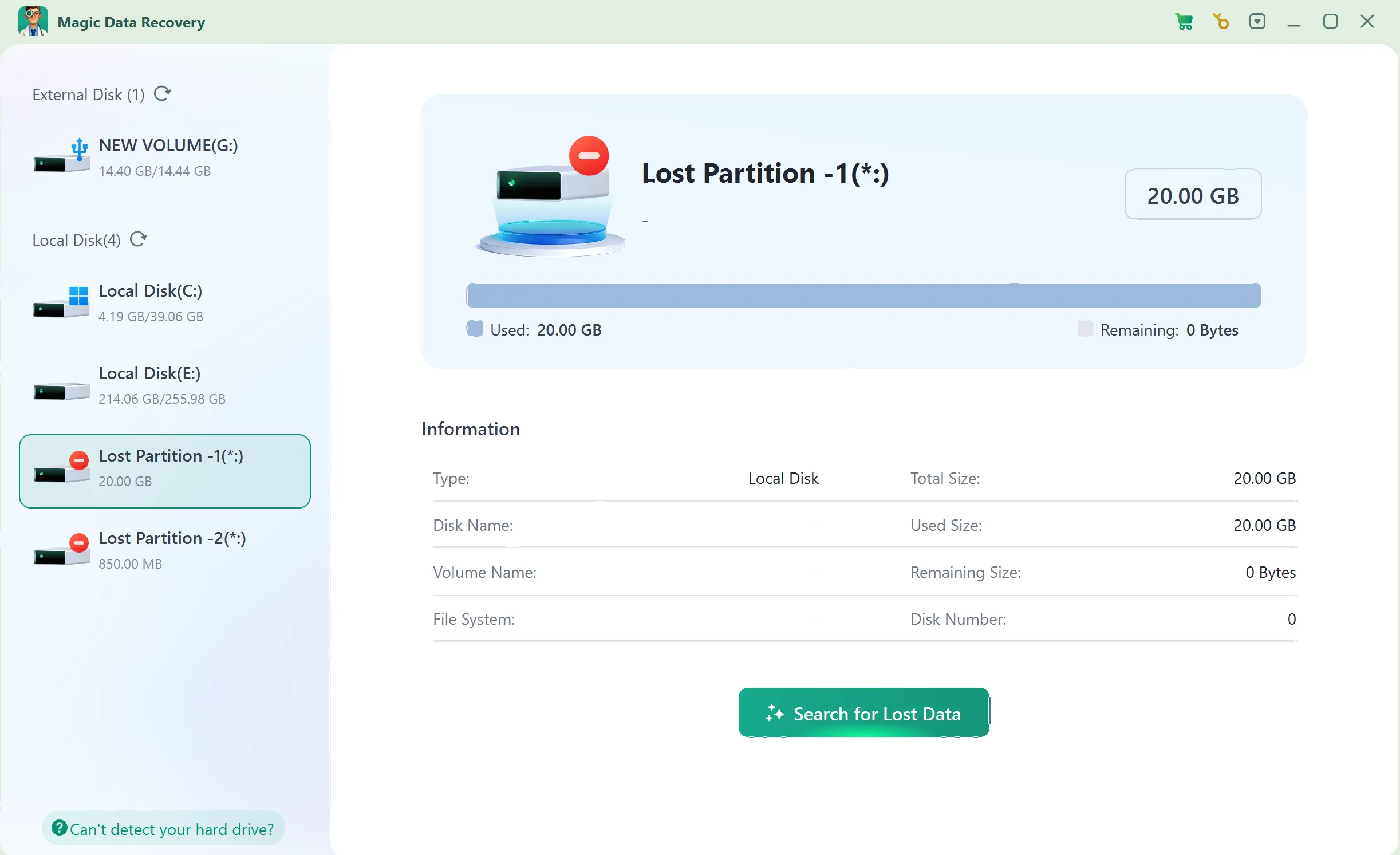
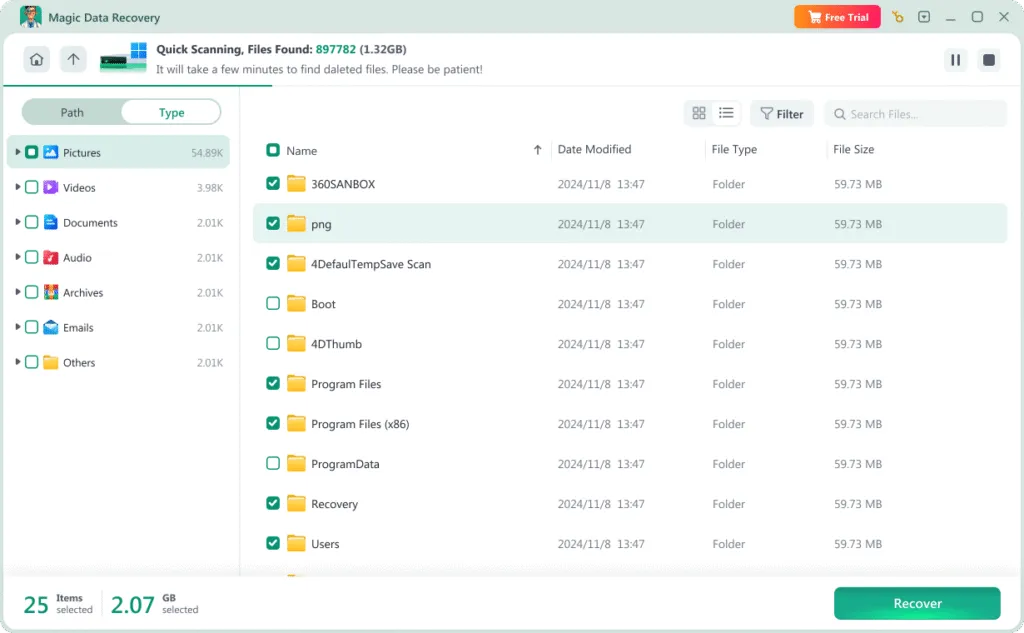
5. Preview files to confirm whether your documents, photos, videos, or other important data can be recovered.

5.Select the files you need and save them to another healthy drive. Do not save recovered files back to the damaged SSD.

7. After your data is safe, try SSD repair methods such as driver updates, CHKDSK, formatting, partition repair, or firmware updates.
Here is the video tutorial for your reference.
How to Fix SSD Errors Safely After Recovery
Once your data is secure, you can proceed with repair methods.
Check SSD Connection First
Start with basic connection checks, especially if the SSD is not detected or appears and disappears randomly.
- Turn off your computer completely.
- Reconnect the SSD.
- Try another SATA cable, USB cable, or M.2 slot.
- Use another USB enclosure if you are testing an external SSD.
- Restart the system and check whether the SSD appears in BIOS, Disk Management, or File Explorer.
If the SSD is still not detected on multiple computers or enclosures, stop repeated attempts and consider professional recovery, especially if the data is important.
Update or Reinstall SSD Drivers
If the SSD appears in Device Manager but does not work correctly, you can try updating or reinstalling the driver.
- Open Device Manager.
- Expand Disk drives.
- Right-click the affected SSD.
- Choose Update driver or Uninstall device.
- Restart the computer and let Windows reinstall the driver automatically.
This method may help when the issue is caused by a driver conflict. It will not fix physical SSD damage or recover lost files.
Use CHKDSK Carefully
CHKDSK can repair some file system errors when the SSD is still accessible and has a drive letter. However, it is a repair tool, not a data recovery tool. It may change file system records during the repair process.
Use CHKDSK only after recovering or backing up important files.
Open Command Prompt as administrator and run:
chkdsk X: /f
Replace X with the drive letter of your SSD.
Avoid using CHKDSK if the SSD is RAW, disconnects repeatedly, or contains important files that have not been recovered yet.

Format the SSD as a Last Option
Formatting can make a corrupted SSD usable again, especially when the file system is severely damaged. However, formatting removes file system records and may make data recovery harder.
Only format the SSD after you have recovered or backed up important files.
To format the SSD in Windows:
- Open Disk Management.
- Right-click the affected SSD partition.
- Choose Format.
- Select a file system such as NTFS or exFAT.
- Complete the format and test whether the SSD works normally.
If the SSD shows errors again after formatting, the drive may be unstable and should be replaced.
Common SSD Repair Problems and Safe Actions
| SSD Problem | Possible Cause | What to Do First | Repair Option |
|---|---|---|---|
| SSD becomes RAW | File system corruption | Recover files first | Format after recovery |
| SSD asks to be formatted | Damaged file system | Do not format immediately | Scan and recover data |
| SSD is not detected | Cable, port, firmware, or hardware issue | Test another port or enclosure | Seek professional help if still undetected |
| SSD shows unallocated | Partition table damage | Recover lost files first | Rebuild or recreate partition |
| SSD is inaccessible | File system or permission issue | Scan for recoverable files | Run CHKDSK after recovery |
| SSD causes freezing | Controller, NAND, or power issue | Stop repeated access | Recover or replace the SSD |
| Files disappeared from SSD | Deletion, TRIM, corruption, or update issue | Stop using the SSD | Scan with recovery software |
Conclusion
SSD repair is not always the first step. If your SSD is RAW, corrupted, inaccessible, unallocated, or asking to be formatted, you should recover important files before using repair tools. CHKDSK, formatting, driver changes, firmware updates, and partition repair may make the SSD usable again, but they can also change the file system and reduce recovery success.
The safest approach is to stop using the affected SSD, scan it with Magic Data Recovery, preview recoverable files, and save the files to another healthy drive. After your data is safe, you can repair, format, replace, or further diagnose the SSD with much lower risk.
For more SSD troubleshooting and recovery options, visit our complete SSD recovery solutions page.
Supports Windows 7/8/10/11 and Windows Server
FAQs
Can an SSD be repaired?
Should I repair an SSD or recover data first?
Can CHKDSK repair an SSD?
Can a RAW SSD be repaired?
Why is my SSD not detected?
Can Magic Data Recovery recover files before SSD repair?
Should I format an SSD to repair it?
What should I avoid before SSD repair?

Vasilii is a data recovery specialist with around 10 years of hands-on experience in the field. Throughout his career, he has successfully solved thousands of complex cases involving deleted files, formatted drives, lost partitions, and RAW file systems. His expertise covers both manual recovery methods using professional tools like hex editors and advanced automated solutions with recovery software. Vasilii's mission is to make reliable data recovery knowledge accessible to both IT professionals and everyday users, helping them safeguard their valuable digital assets.