
Samsung SD Card Data Recovery: How to Recover Lost Files
Samsung SD card data recovery is often possible when files have been accidentally deleted, the card was formatted, or its file system has become corrupted. The most important step is to stop using the card immediately, because taking new photos, recording videos, formatting the card, or saving new files may overwrite the lost data.
For logically damaged but still detectable cards, Magic Data Recovery can scan Samsung SD and microSD cards for lost photos, videos, documents, and other files. It supports recovery from accidental deletion, formatting, RAW file systems, inaccessible partitions, and other common data-loss scenarios, while allowing users to preview recoverable files before saving them to another drive.
This guide applies to Samsung-branded SD and microSD cards, including EVO, EVO Plus, EVO Select, and PRO Plus models, as well as removable memory cards used in Samsung phones, cameras, tablets, drones, and other devices. You will learn how to recover data safely, troubleshoot an undetected card, and determine when professional recovery may be necessary.
Before repairing or formatting the card, follow the recovery-first process below. For more general troubleshooting and recovery methods, visit our complete SD card recovery guide.
Supports Windows 7/8/10/11 and Windows Server
Table of Contents
Quick Answer: How to Recover Data from a Samsung SD Card
To perform Samsung SD card data recovery safely:
- Stop using the SD or microSD card immediately.
- Remove it from the phone, camera, or other device.
- Connect it directly to a Windows computer using a reliable card reader.
- Do not format the card or run CHKDSK before recovering important files.
- Scan the card with data recovery software.
- Preview the found photos, videos, and documents.
- Save recovered files to your computer or another drive—not back to the Samsung card.
If the card is not detected by any computer, card reader, or device, it may have physical damage and require a professional recovery service.
Can Samsung SD Card Data Be Recovered?
n many logical data-loss situations, Samsung SD card data can still be recovered. Deleted files are usually not erased immediately; instead, their storage space is marked as available for reuse. A quick format may also remove file-system references without immediately overwriting every file.
Recovery may be possible when the card:
- Contains accidentally deleted photos, videos, or documents
- Was quick-formatted in a phone, camera, or computer
- Appears as RAW or asks to be formatted
- Has a damaged or unsupported file system
- Is visible in Disk Management but cannot be opened
- Contains missing, hidden, or inaccessible folders
Software cannot repair a cracked, burned, severely bent, or electrically damaged SD card. If the card is not detected in Disk Management after testing another reader and computer, stop repeatedly reconnecting it and consider professional recovery.
Common Samsung SD Card Data Loss Scenarios
1. Accidental Deletion
Files deleted from an SD card normally bypass the Windows Recycle Bin. Recovery remains possible until the corresponding storage sectors are overwritten.
2. Accidental Formatting
A Samsung SD or microSD card may be formatted accidentally in a camera, Android phone, Windows computer, or another device. Quick formatting generally creates a new file-system structure, so old files may still be detectable through a deep scan.
3. RAW or “You Need to Format the Disk” Error
File-system corruption can cause the card to appear as RAW or trigger a formatting message. Do not accept the format prompt before recovering important data.
4. Samsung SD Card Not Showing Up
A missing drive letter, damaged reader, USB connection problem, outdated driver, or corrupted partition may prevent the card from appearing in File Explorer.
5. Files Missing from a Samsung Phone
When a microSD card remains inside a Samsung phone, Android access restrictions may prevent desktop software from scanning the card fully. Removing the card and connecting it through a reader generally provides more direct access.
6. Physical Damage
Cracks, damaged contacts, water exposure, overheating, and controller failure cannot be corrected with recovery software.
Choosing the Best Samsung SD Card Recovery Software
Not every recovery solution works the same way. Generic system utilities often repair errors but fail to locate deleted files. Therefore, users need specialized Samsung SD card recovery software that scans deeper than standard tools.
Why a Dedicated Samsung SD Card Recovery Tool Matters
A professional recovery tool analyzes raw storage sectors instead of relying only on file indexes. As a result, it can identify recoverable data that normal utilities completely miss. At the same time, a good tool avoids modifying original data, which reduces recovery risks.
Why Use Magic Data Recovery for a Samsung SD Card?
Magic Data Recovery is a Windows-based recovery tool designed to scan removable storage devices, including Samsung SD and microSD cards. It supports common logical data-loss scenarios such as accidental deletion, quick formatting, RAW file systems, inaccessible partitions, and corrupted directory structures.
For Samsung memory-card recovery, its main advantages include:
- Recovery of photos, videos, audio, documents, archives, and other files
- Support for more than 5,000 file types
- Deep scanning for formatted and logically corrupted cards
- File preview before recovery
- Filters for locating files by type, name, size, and date
- Recovery to another drive to avoid overwriting source data
The free version can be used to scan the Samsung SD card, review the results, preview supported files, and recover up to the product’s current free recovery allowance.
How to Recover Samsung SD Card Data Using Magic Data Recovery
If you want a safe and structured approach to Samsung SD Card Data Recovery, Magic Data Recovery offers a workflow that most users can follow easily. However, correct handling of the SD card remains essential throughout the process.
Step 1: Download and Install Magic Data Recovery
First, download Magic Data Recovery and install it on your computer. Most importantly, install the software on a drive different from the affected Samsung SD card. This step prevents accidental overwriting and helps protect recoverable data.
Supports Windows 7/8/10/11 and Windows Server
Step 2: Select the Samsung SD Card to Scan
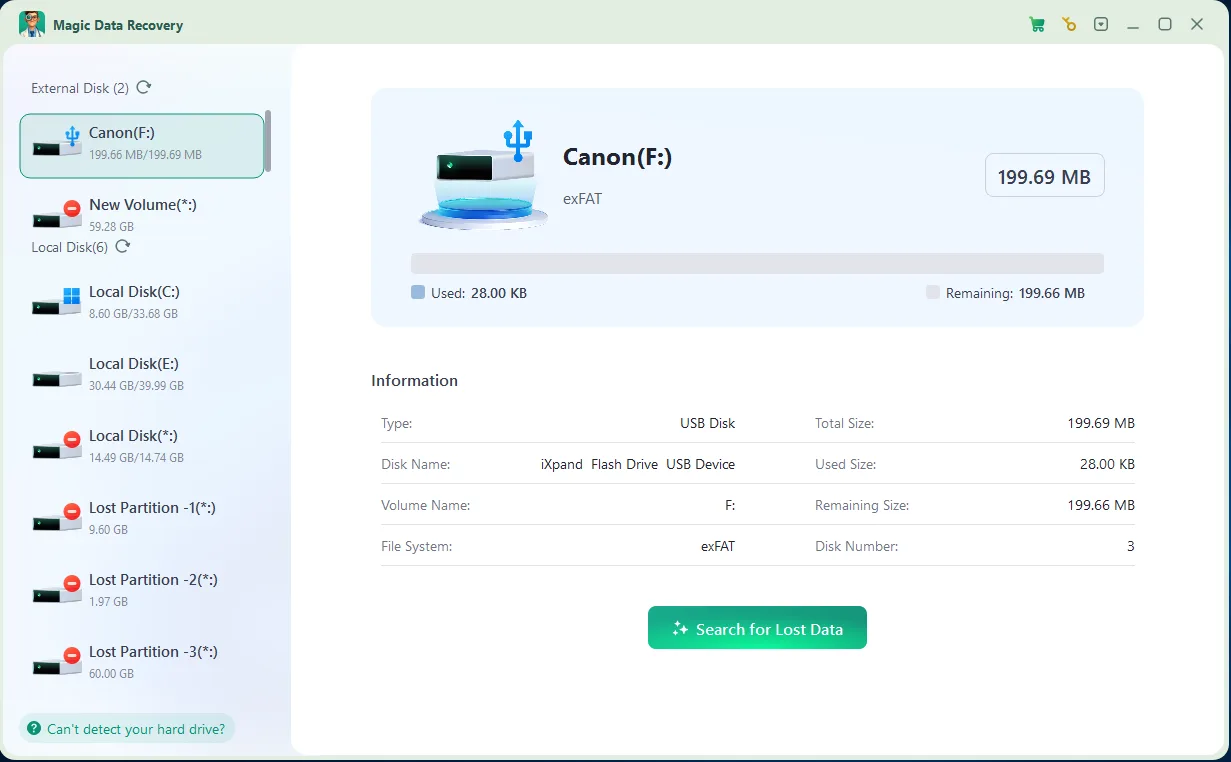
Next, connect your Samsung SD card to the computer using a card reader. After that, launch Magic Data Recovery. From the main interface, select the Samsung SD card you want to scan, and then start the recovery process.
Step 3: Scan the Samsung SD Card for Deleted Files
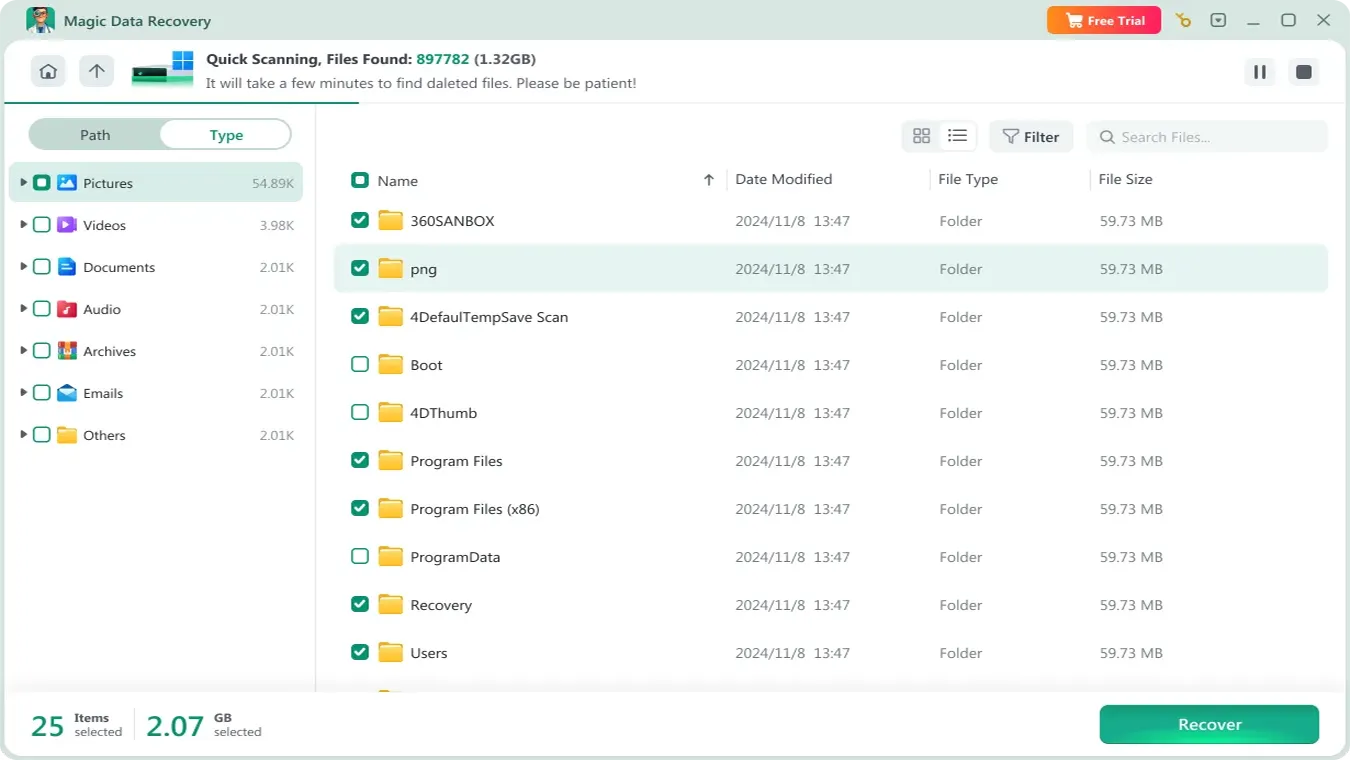
Once the scan begins, the software automatically performs an Advanced Scan. Meanwhile, Magic Data Recovery displays recoverable files in real time as scanning progresses. Therefore, you can begin identifying important files even before the scan finishes.
Step 4: Preview Deleted Files Before Recovery
After the scan completes, use the preview feature to check file content. For example, you can preview photos, videos, or documents to confirm they are intact. In addition, previewing allows you to recover only what you need, which saves time and storage space.

Step 5: Recover Files to a Safe Location
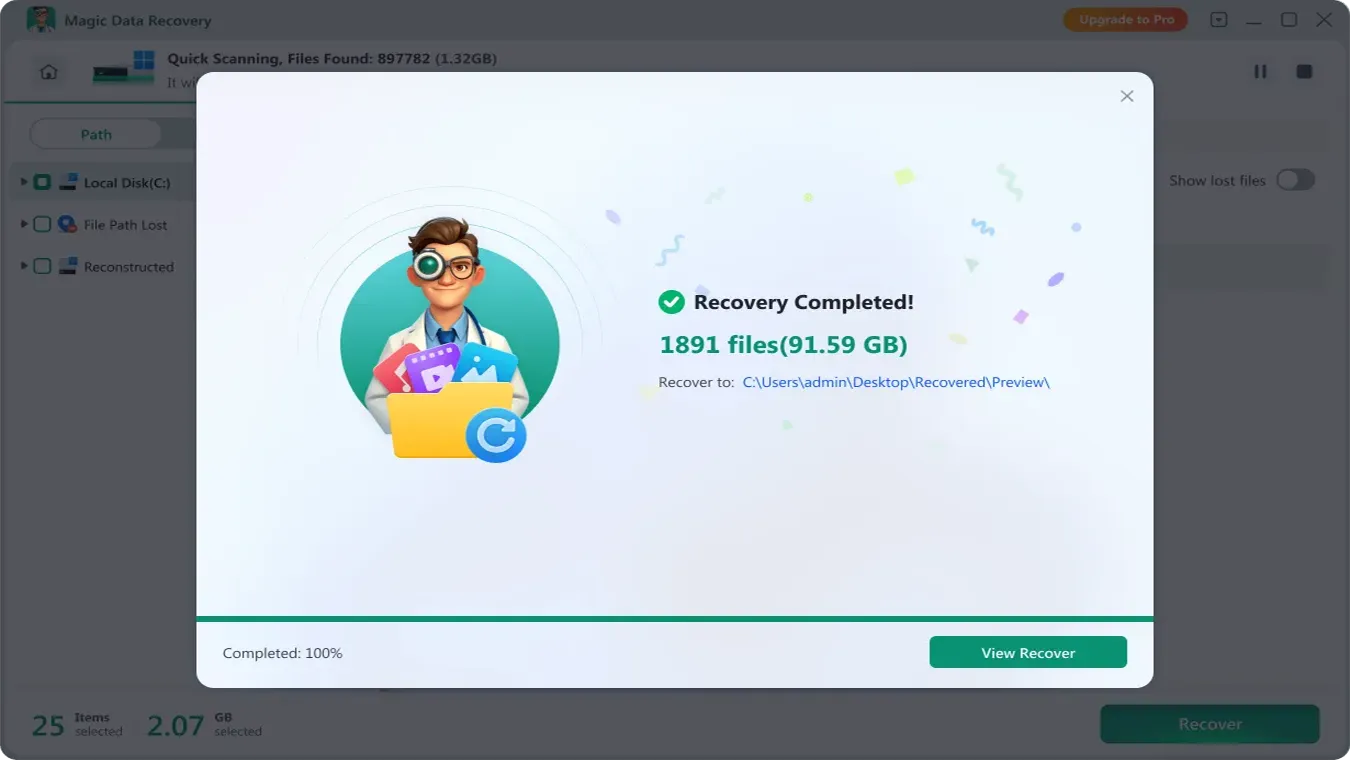
Finally, select the files you want to restore and choose a secure destination. Always save recovered data to your computer, another drive, or cloud storage. Never restore files to the same Samsung SD card, because doing so may overwrite other lost data and reduce recovery success.
What If the Samsung SD Card Is Not Detected?
If the Samsung SD card does not appear in File Explorer, check it in Windows Disk Management.
Try the following steps:
- Use another USB port.
- Test another card reader or SD adapter.
- Connect the card to another computer.
- Check whether it appears in Disk Management.
- Assign a drive letter only if the partition is healthy and simply lacks one.
- If the card appears as RAW or unallocated, recover the data before formatting.
If the card is not detected by any computer or card reader, software will normally be unable to scan it. This may indicate damaged contacts, controller failure, or other physical problems.
Should You Run CHKDSK Before Samsung SD Card Recovery?
Avoid running CHKDSK before recovering important files from a corrupted, RAW, or unstable Samsung SD card. CHKDSK is a file-system repair utility, not a deleted-file recovery tool. Its purpose is to modify file-system structures and repair detected errors.
A safer sequence is:
- Scan and recover important files.
- Confirm that the recovered files open correctly.
- Back up the recovered data.
- Run CHKDSK or reformat the card only after recovery.
If the card contains no important data, you may proceed directly with repair or formatting.
How to Recover Data from an SD Card Used in a Samsung Phone
If the lost files were stored on a removable microSD card inside a Samsung Galaxy phone, power off the phone and remove the card when possible. Connect the card directly to a computer through a card reader.
Direct card-reader access is generally preferable because the recovery program can scan the memory card as a storage device. When the card remains inside the phone, Android permissions and USB connection modes may restrict low-level access.
Do not install a recovery app on the affected microSD card, because installation and scanning may create new data and overwrite deleted files.
Tips to Improve Samsung SD Card Data Recovery Success
Even the best Samsung SD card recovery tool works better when combined with proper handling. Therefore, consider these proven tips:
- Stop using the SD card immediately
- Avoid reformatting the card
- Use a reliable card reader
- Recover files to a different storage device
- Begin recovery as soon as possible
As a result, recovery success rates improve significantly.
Conclusion
Samsung SD card data recovery is possible in many cases involving accidental deletion, quick formatting, RAW file systems, inaccessible partitions, and logical corruption. Recovery success largely depends on whether the original storage sectors have been overwritten, so stop using the card as soon as data loss is discovered.
For the safest workflow, connect the Samsung SD or microSD card directly to a Windows computer, scan it with Magic Data Recovery, preview the found files, and save recovered data to another drive. Repair commands and formatting should only be considered after important files have been recovered.
For additional recovery methods, troubleshooting instructions, and prevention advice, visit our complete SD card recovery guide.
Supports Windows 7/8/10/11 and Windows Server
FAQs About Samsung SD Card Data Recovery
Can I recover deleted files from a Samsung SD card?
Can I recover data from a formatted Samsung SD card?
How do I recover photos from a Samsung microSD card?
What should I do if my Samsung SD card says it needs to be formatted?
Can data be recovered from a corrupted Samsung SD card?
Why is my Samsung phone not reading the SD card?
Should I run CHKDSK on a corrupted Samsung SD card?
Does Samsung provide official SD card recovery software?

Vasilii is a data recovery specialist with around 10 years of hands-on experience in the field. Throughout his career, he has successfully solved thousands of complex cases involving deleted files, formatted drives, lost partitions, and RAW file systems. His expertise covers both manual recovery methods using professional tools like hex editors and advanced automated solutions with recovery software. Vasilii's mission is to make reliable data recovery knowledge accessible to both IT professionals and everyday users, helping them safeguard their valuable digital assets.