
SanDisk SD Card Recovery Guide & Fix
Losing photos, videos, or documents from a memory card can feel devastating—especially when they were stored on a trusted SanDisk device. Whether you accidentally deleted files, formatted the card, or encountered a file system error, SanDisk SD card recovery is often possible if you act quickly and follow the right SD card recovery methods.
This guide explains how SanDisk SD card recovery works, when recovery is feasible, and how to choose between SanDisk SD card recovery free tools and professional SanDisk SD card recovery software. You’ll also learn how Magic Data Recovery provides a safer and more reliable solution for complex data loss scenarios.
Supports Windows 7/8/10/11 and Windows Server
Table of Contents
Why SanDisk SD Card Recovery Is Often Possible
Before you panic, it’s important to understand how data loss works.
When you delete a file from an SD card, the system does not erase the data immediately. Instead, it marks the storage space as “available.” Until new data overwrites that space, recovery remains possible. The same principle applies to quick formatting.
However, recovery success depends on:
- Whether new data has overwritten the card
- Whether the card has physical damage
- Whether the file system structure is severely corrupted
Therefore, the first rule of SanDisk SD card recovery is simple:
Stop using the SD card immediately.
Identify Your Data Loss Scenario
Different problems require different recovery approaches. Below are the most common cases.
1. Accidentally Deleted Files
You removed photos or videos manually, or emptied the camera trash. Recovery is usually straightforward with scanning software.
2. Formatted SD Card
You formatted the card in a camera or computer. Quick format keeps recoverable data intact; full format reduces recovery chances.
3. File System Error (RAW / “Needs Formatting”)
The card shows errors such as:
- “You need to format the disk before using it.”
- SD card appears as RAW.
- File system corruption message.
In these cases, avoid formatting before attempting recovery.
4. SD Card Not Showing Files
The card appears empty, but storage space is still used. This often results from logical errors or virus-related file hiding.
Understanding your scenario ensures you choose the correct SanDisk SD card recovery software instead of trying risky fixes.
Before You Start: Prevent Overwriting
Many users unknowingly reduce recovery success by continuing to use the SD card. Follow these best practices:
- Do not save new files to the same card.
- Do not run repair tools before recovering data.
- Use a card reader instead of connecting through a camera.
- Recover files to a different drive.
These steps significantly improve the success rate of SanDisk SD card recovery.
SanDisk SD Card Recovery Software: What Actually Works?
There are three categories of tools available:
- SanDisk SD card recovery free command-line tools
- Open-source recovery utilities
- Professional SanDisk SD card recovery software
Free tools can work for simple deletion cases. However, formatted cards and file system errors usually require advanced scanning algorithms and structured recovery engines.
This is where professional solutions become necessary.
Recommended Solution: Magic Data Recovery
When basic methods fail or when data is highly valuable, Magic Data Recovery provides a structured and reliable recovery workflow.
Why Choose Magic Data Recovery?
Magic Data Recovery supports:
- Recovery of accidentally deleted files
- Recovery after formatting
- File system error repair (RAW partitions)
- Recovery from corrupted SD cards
- Multiple file types including photos, videos, and documents
Unlike many tools that only offer surface scans, it performs both quick and deep scans to locate fragmented or partially damaged files.
Core Advantages (Unique Selling Points)
- Intelligent scanning engine for structured file recovery
- Preview function before restoration
- Filter by file type, size, or date
- Supports FAT32, exFAT, NTFS file systems
- Safe recovery without modifying original data
Real-World Usage Scenario
For example, a photographer accidentally formats a SanDisk SD card before backing up wedding photos. A quick scan identifies recently deleted entries. If directory structure is damaged, deep scan reconstructs file signatures and restores images to a separate drive.
In cases involving RAW file systems, Magic Data Recovery scans sector by sector to extract recoverable data before any formatting is performed.
Why It’s More Reliable Than Free Tools
Free solutions often lack preview, structured recovery, or deep scan capabilities. Some require command-line expertise. Magic Data Recovery simplifies the process while preserving data integrity.
If you are looking for a safer and more efficient solution, consider trying Magic Data Recovery.
Supports Windows 7/8/10/11 and Windows Server
Step-by-Step Guide: How to Perform SanDisk SD Card Recovery
Follow these steps for the safest recovery workflow.
1. Insert the SanDisk SD Card Using a Reader:Connect your SD card to your computer through a card reader.
2. Open Magic Data Recovery:Launch the software and locate your SD card in the drive list.
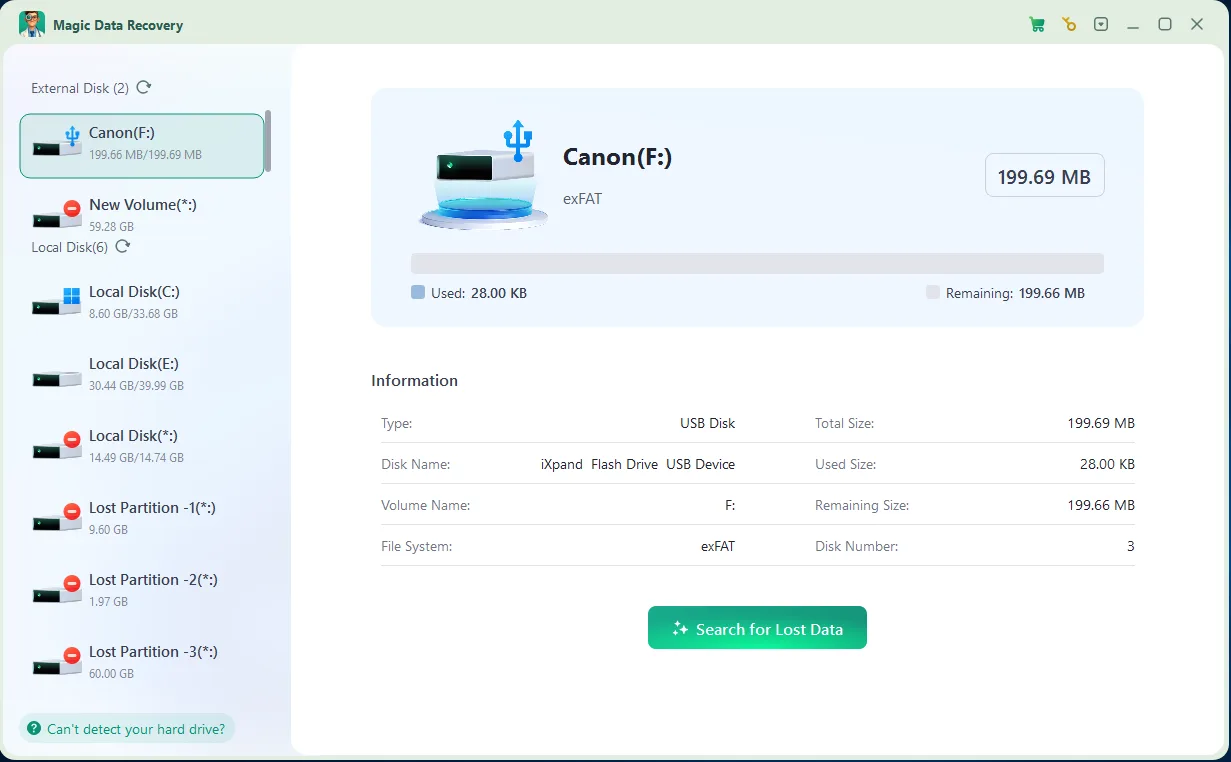
3. Select the SanDisk SD Card and Search for Lost Data: it will run quick scan then deep scan.
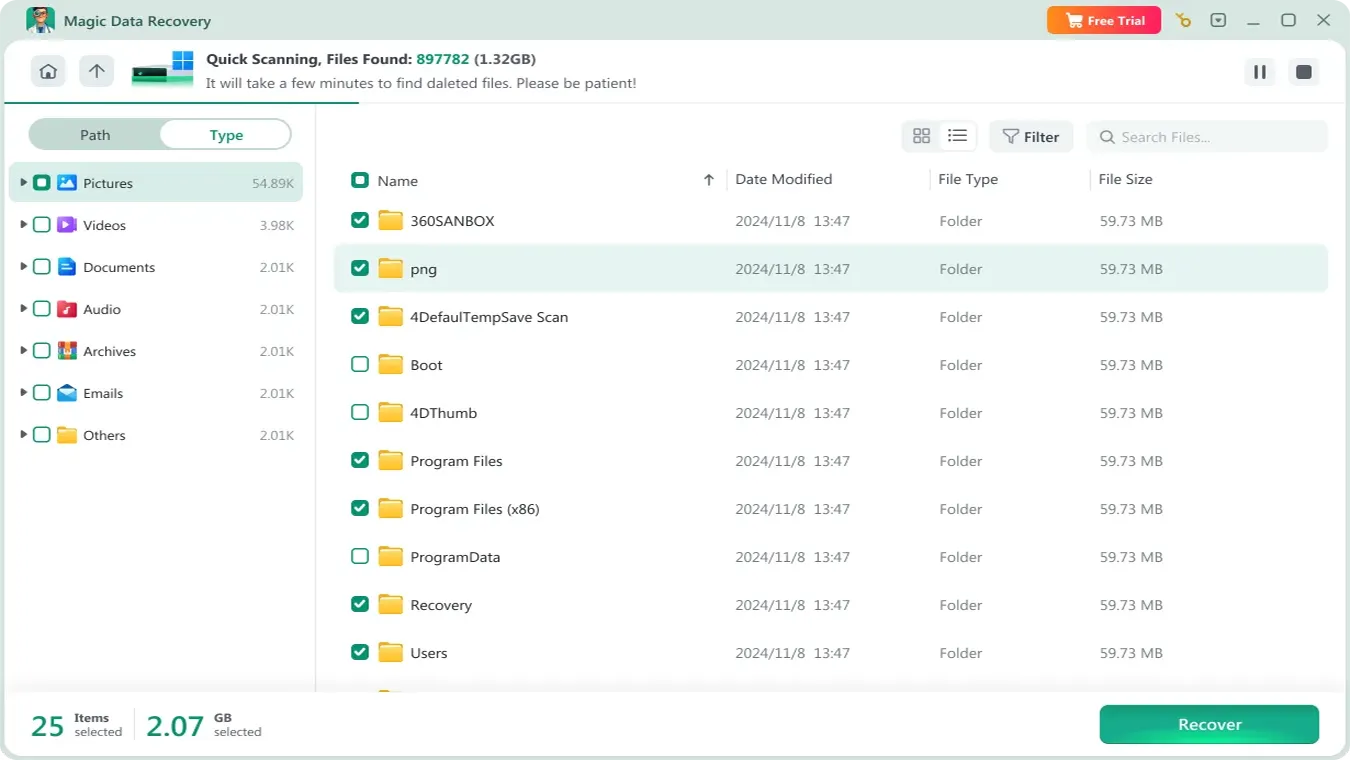
4. Filter by Photo File Types: Focus on JPG, PNG, or RAW formats for faster results.
5. Preview Recoverable Photos: Preview helps confirm the files are still usable.

6. Restore Photos to a Safe Location: Always recover files to your computer, not back onto the SD card.
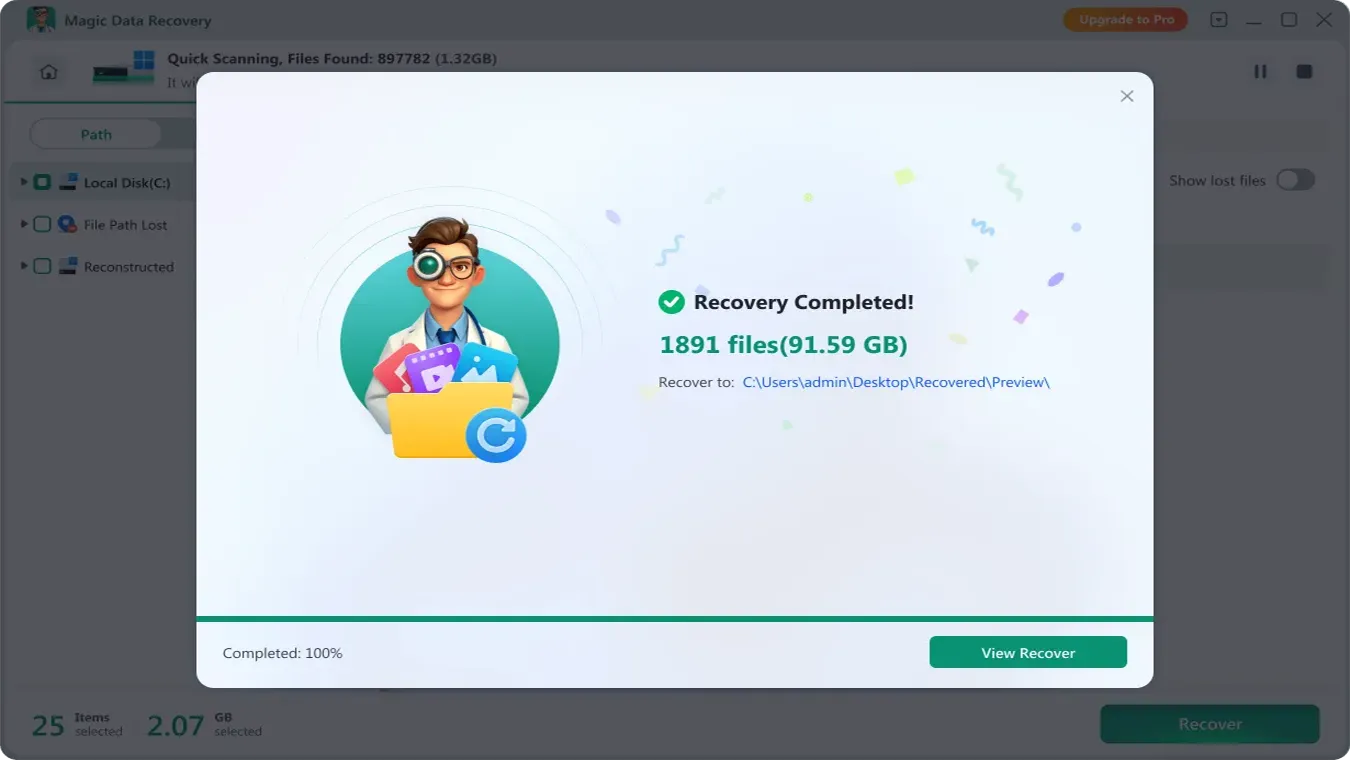
This structured approach ensures effective SanDisk SD card recovery without causing further data damage.
SanDisk SD Card Recovery Free Options: What You Should Know
Many users search for SanDisk SD card recovery free tools. While free tools may work in limited cases, they come with trade-offs:
- Limited recovery capacity
- No preview function
- Slower scan speeds
- Technical complexity
Free solutions are suitable for small file deletion cases. However, for formatted cards, corrupted partitions, or important data, professional SanDisk SD card recovery software is typically more dependable.
Transparency matters. Free options are not ineffective—but they are not designed for complex recovery scenarios.
Fixing File System Errors Without Losing Data
When your SD card shows “needs formatting,” do not format immediately.
Instead:
- Perform data recovery first.
- Back up all recoverable files.
- Reformat the card properly (preferably in camera).
- Run a health check before reuse.
Following this order protects your data and restores long-term card usability.
When Software Cannot Help
Not all data loss is logical. Physical damage signs include:
- Card not detected at all
- Frequent disconnections
- Burn marks or water exposure
In such cases, power off the device and consult professional data recovery services. Software-based SanDisk SD card recovery cannot repair hardware failure.
Conclusion
SanDisk SD card recovery is often possible if you act quickly and use the correct method. For simple deletion cases, free tools may be sufficient. However, for formatted cards, file system errors, and complex corruption, reliable SanDisk SD card recovery software becomes essential.
Magic Data Recovery stands out because it combines intelligent scanning, structured file reconstruction, and safe restoration practices. It addresses core data loss pain points without unnecessary complexity.
If your data matters, using a dependable SD card recovery solution is a practical decision—not a luxury.
Supports Windows 7/8/10/11 and Windows Server
FAQ
Can I recover deleted files from a SanDisk SD card?
Is SanDisk SD card recovery possible after formatting?
Are free SanDisk SD card recovery tools safe?
Why does my SD card show as RAW?
How long does SD card recovery take?
Can I recover videos from a camera SD card?
What should I avoid during recovery?
Is Magic Data Recovery suitable for beginners?

Jason is a data recovery and technical support specialist with over 15 years of hands-on experience. He has worked extensively with frontline users, troubleshooting difficult data loss cases and providing practical recovery solutions for accidental deletion, formatted drives, damaged file systems, lost partitions, system failures, and other recovery emergencies. His expertise also includes backup and restoration, file repair, and disaster recovery, with a strong emphasis on safe, reliable, and technically accurate guidance.