
Best Word Document Recovery Tool Guide

Losing an important Microsoft Word file can feel frustrating. A sudden system crash, accidental deletion, or formatting mistake may erase hours of work in seconds. Many users immediately start searching for a reliable word document recovery tool to restore their files.
The good news is that Word documents are often recoverable. In many cases, the file still exists on the storage device even after deletion. With the right Microsoft Word document recovery tool, you can locate and restore these files before new data overwrites them.
This guide explains:
- why Word documents disappear
- how built-in recovery methods work
- when you need a free word document recovery tool
- how professional recovery software such as Magic Data Recovery can help
By the end of this article, you will understand the safest and most effective document recovery way to recover lost Word documents.
Supports Windows 7/8/10/11 and Windows Server
Table of Contents
Why Word Documents Get Lost
Before choosing a word document recovery tool, it helps to understand why Word files disappear in the first place.
Several common situations lead to document loss.
Accidental Deletion
Many users delete files unintentionally when cleaning folders or emptying the Recycle Bin. Once the file disappears from the bin, recovery becomes harder without a word document recovery tool.
System Crash or Power Failure
Unexpected shutdowns may interrupt the saving process. As a result, Word files can become unsaved or corrupted.
Disk Formatting
Formatting a drive removes file system references. However, the underlying data often remains on the disk until new data replaces it.
File System Errors
File system corruption may occur because of improper device removal, disk errors, or system failures. These problems sometimes hide Word files from the operating system.
Malware or Virus Attacks
Malicious programs may delete or damage documents. In these situations, a professional Microsoft Word document recovery tool becomes necessary.
Understanding these causes helps you choose the right recovery method.
Can Deleted Word Documents Really Be Recovered?
Yes, many deleted Word documents remain recoverable.
When a file gets deleted, the operating system does not immediately erase the data from the disk. Instead, it marks the storage space as available for reuse. Until new data overwrites that space, a word document recovery tool can scan the disk and reconstruct the original file.
However, recovery success depends on several factors:
- how quickly you start the recovery process
- whether new files overwrite the deleted data
- the condition of the storage device
Therefore, it is important to stop using the affected drive and attempt recovery as soon as possible.
Built-In Microsoft Word Document Recovery Methods
Before installing third-party software, you can try several built-in Microsoft Word document recovery tool features.
These methods often work when files were unsaved or recently deleted.
Recover Unsaved Documents in Word
Microsoft Word automatically saves temporary versions of documents. You can access them through the built-in recovery feature.
Steps:
- Open Microsoft Word
- Click File
- Select Info
- Choose Manage Document
- Click Recover Unsaved Documents
This feature sometimes restores files lost during crashes.
Check the AutoRecover Folder
Word also stores automatic backups in the AutoRecover folder.
To locate these files:
- Open Word
- Go to File > Options > Save
- Copy the AutoRecover file location
- Open the folder in File Explorer
If a backup version exists, you can restore your document easily.
Search Temporary Files
Windows may create temporary versions of documents.
Search for files ending in:
*.tmp
*.asd
*.wbk
Some of these files may contain unsaved Word content.
Restore Files from the Recycle Bin
If you deleted the document recently:
- Open the Recycle Bin
- Locate the file
- Right-click and select Restore
Once the Recycle Bin is empty, you will likely need a free word document recovery tool.
When Built-In Methods Are Not Enough
Built-in recovery options work only in limited scenarios.
For example, they usually cannot recover:
- permanently deleted files
- files lost after formatting
- documents hidden by file system errors
- data lost due to partition damage
At this stage, a dedicated word document recovery tool becomes the safest option.
Professional recovery software performs deep disk scans to locate recoverable data that the operating system no longer lists.
Best Word Document Recovery Tool for Complex Data Loss
When standard recovery methods fail, a specialized solution such as Magic Data Recovery can provide deeper scanning and broader recovery capabilities.
Instead of relying on simple backups, this software analyzes the entire storage device to locate lost files.
Why Magic Data Recovery Is Useful
Magic Data Recovery helps users recover Word files in situations where basic methods fail.
It supports recovery from scenarios including:
- deleted Word documents
- formatted drives
- file system errors
- damaged or inaccessible partitions
Because the tool scans raw disk sectors, it can identify documents even when the original file structure is missing. You can download it from the button below.
Supports Windows 7/8/10/11 and Windows Server
Key Advantages of Magic Data Recovery
Several features make Magic Data Recovery a practical word document recovery tool.
Deep File Scanning
The software scans the storage device thoroughly. This process increases the chance of locating lost .doc or .docx files.
Multiple Recovery Scenarios
Unlike basic utilities, Magic Data Recovery supports recovery from:
- accidental deletion
- drive formatting
- partition loss
- corrupted file systems
Preview Before Recovery
Users can preview files before restoring them. This feature helps confirm that the recovered Word document is intact.
Simple Interface
The interface guides users through the recovery process step by step. Even beginners can complete recovery without technical knowledge.
Example Recovery Scenario
Imagine a student formatting a USB drive by mistake before submitting an assignment.
Built-in tools cannot recover the missing Word document. However, a word document recovery tool like Magic Data Recovery can scan the formatted drive and identify the document’s remaining data fragments.
Once located, the file can be restored safely to another location.
When to Use This Tool
Magic Data Recovery becomes especially useful when:
- the Recycle Bin is empty
- the drive was formatted
- the partition becomes inaccessible
- files disappear due to file system errors
If you are searching for a reliable free word document recovery tool alternative with deeper recovery capabilities, this solution can be worth considering.
How to Recover Word Files Using Magic Data Recovery
The recovery process usually takes only a few steps.
1. Install the Software: Download and install Magic Data Recovery on a different drive to avoid overwriting lost data.
Supports Windows 7/8/10/11 and Windows Server
2. Select the Storage Device: Open the program and choose the disk or partition where the Word document was stored.
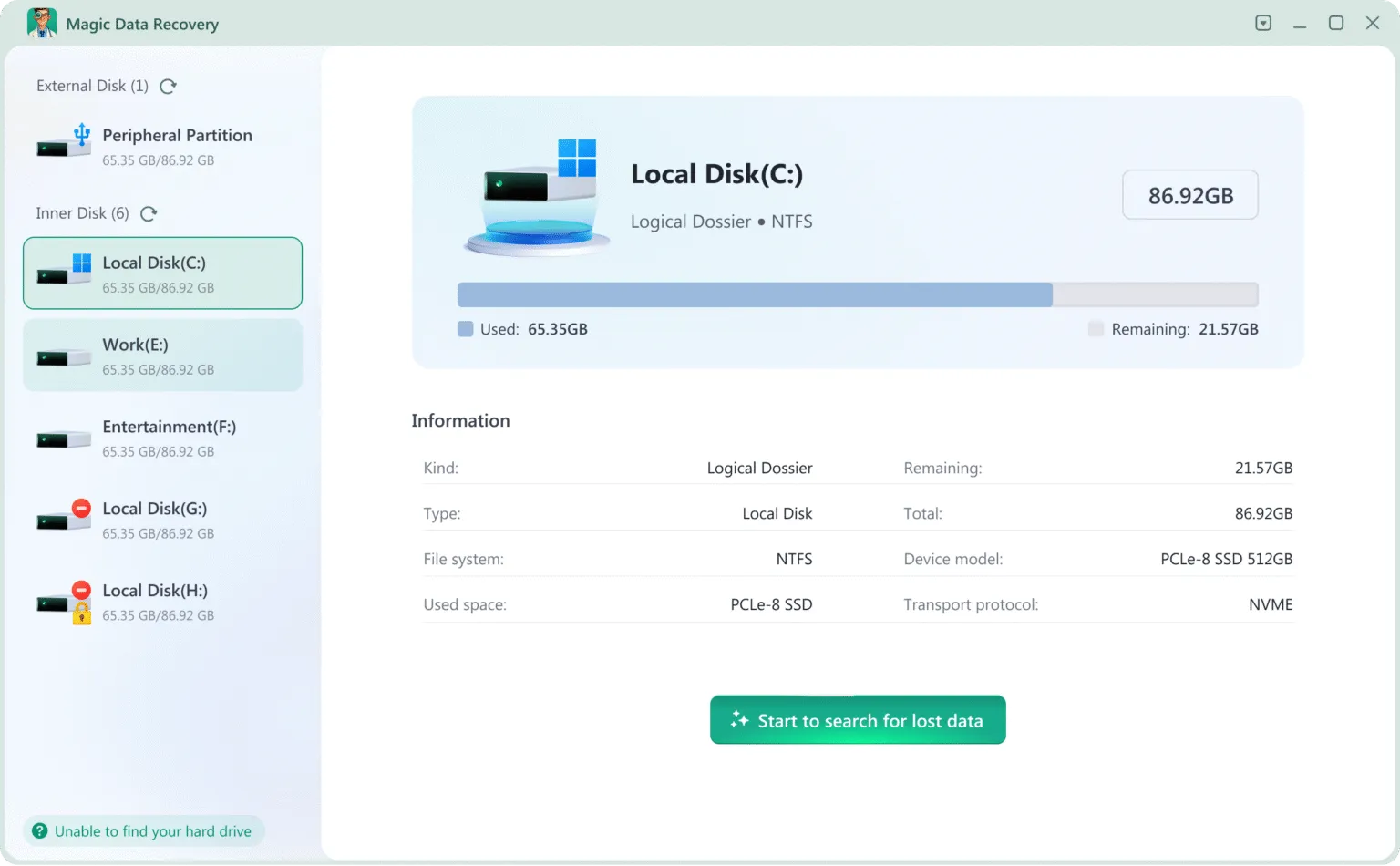
3. Start the Scan: Click Search for lost data button to run quick and deep scan. The software analyzes disk sectors to locate recoverable files.
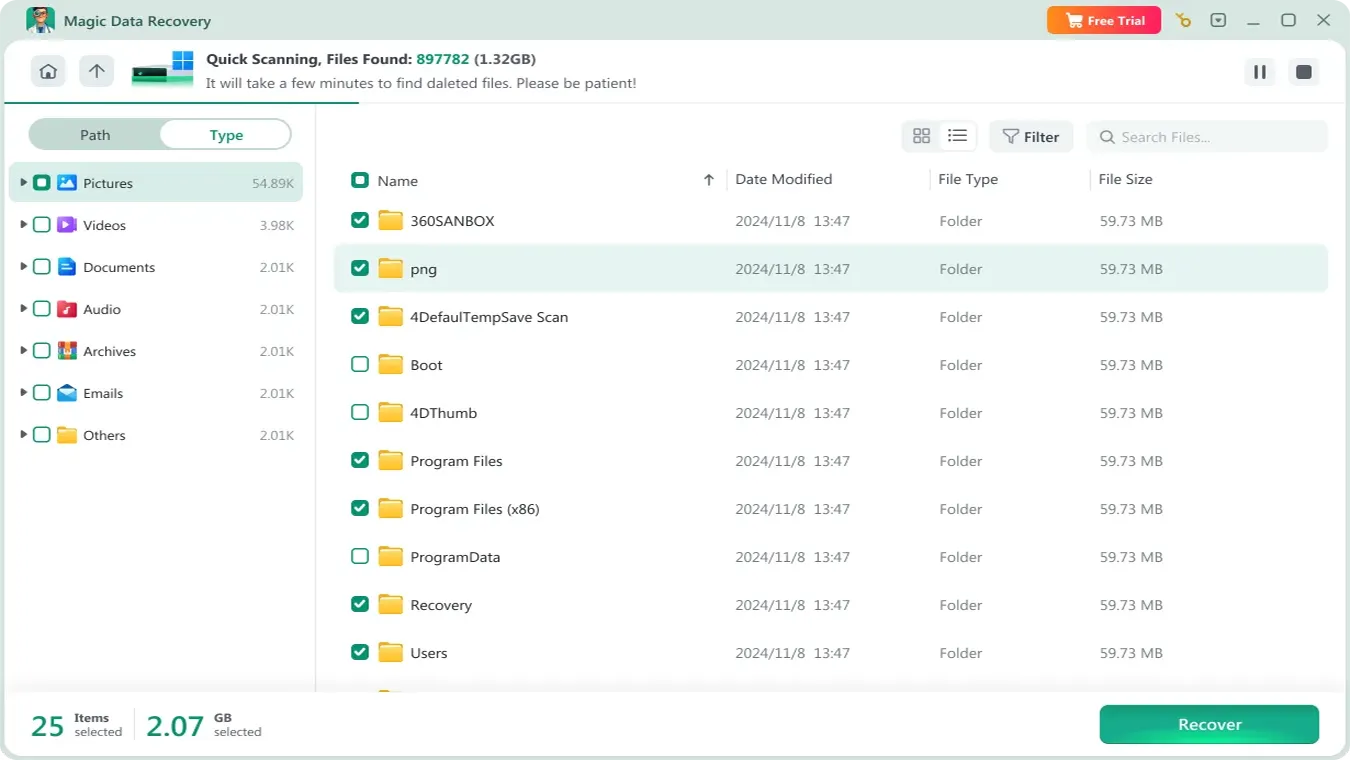
4. Preview Documents: Browse the scan results and preview Word documents to verify their content.
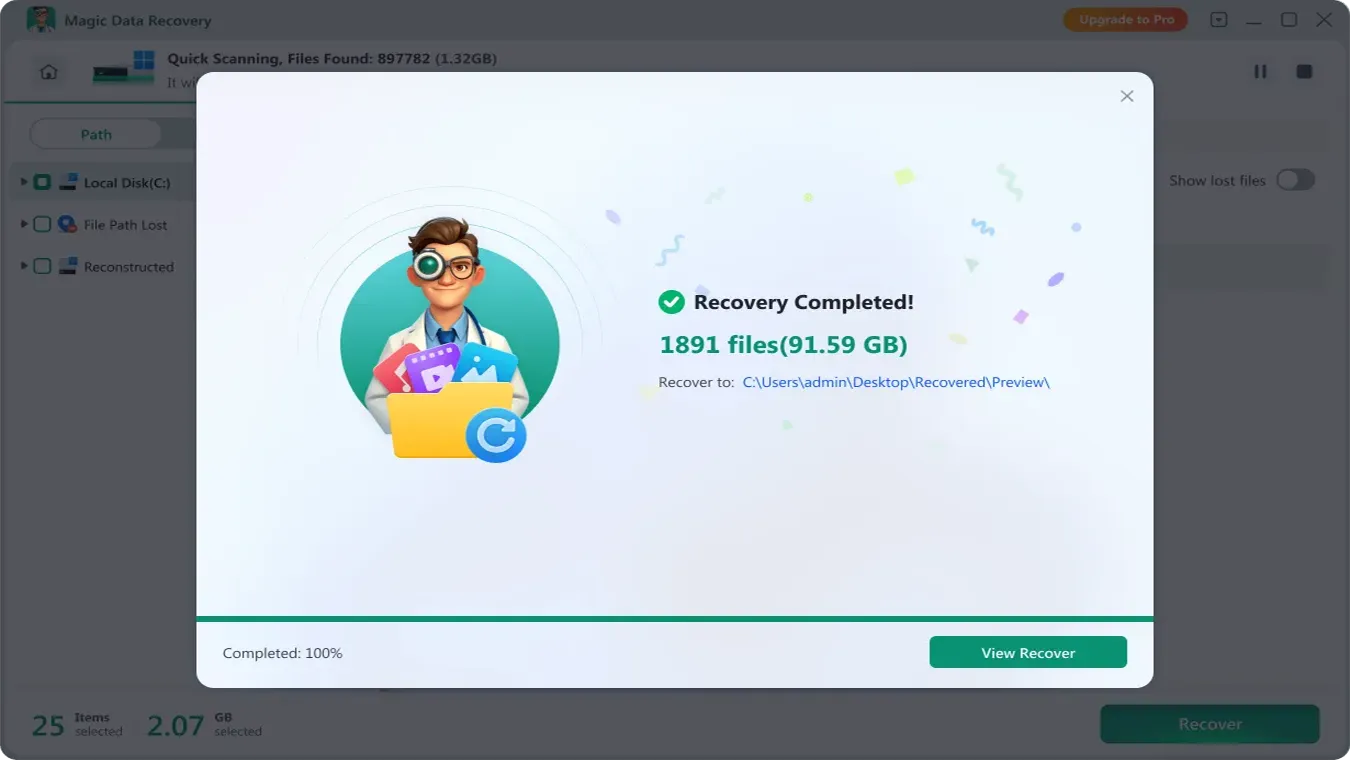
5. Recover the File: Select the desired files and save them to a safe location.
Tips to Prevent Word Document Loss
Although a word document recovery tool can help restore files, prevention remains the best strategy.
Consider these practical tips:
- Enable AutoSave in Microsoft Word
- Save files to cloud storage such as OneDrive
- Create regular backups
- Avoid sudden system shutdowns
- Safely remove external drives
These simple habits reduce the risk of permanent document loss.
Conclusion
Word document loss happens more often than most users expect. Accidental deletion, formatting errors, and system crashes can all remove important files.
Fortunately, many documents remain recoverable. Built-in Word features may restore recently unsaved files. However, complex scenarios often require a professional word document recovery tool.
Solutions like Magic Data Recovery provide deeper scanning capabilities and support multiple recovery scenarios, including deleted files, formatted drives, and file system errors. For users who need a reliable Microsoft Word document recovery tool, this approach offers a practical and efficient recovery solution.
If you are currently dealing with lost Word documents, using the right recovery method quickly can significantly increase your chances of restoring them.
Supports Windows 7/8/10/11 and Windows Server
FAQs
What is the best word document recovery tool?
The best word document recovery tool depends on the recovery scenario. Built-in Word features can restore unsaved files after crashes, while specialized tools scan storage devices to locate deleted documents. For more complex data loss situations such as formatting or file system errors, professional recovery software often provides deeper scanning and higher recovery success.
Is there a free word document recovery tool?
Yes, several options exist. Basic recovery methods include Microsoft Word AutoRecover, temporary file recovery, and the Windows Recycle Bin. These tools are free and built into the system. However, if the document was permanently deleted or the drive was formatted, you may need a more advanced free word document recovery tool with deeper scanning capabilities.
How does a Microsoft Word document recovery tool work?
A Microsoft Word document recovery tool scans the storage device for data fragments belonging to Word files. Even when a document is deleted, the data often remains on the disk until overwritten. Recovery software analyzes disk sectors and reconstructs these fragments to restore the original document whenever possible.
Can I recover a permanently deleted Word document?
Yes, permanent deletion does not always erase the file immediately. In many cases, the operating system simply marks the storage space as available. If no new data overwrites the area, a word document recovery tool can scan the disk and recover the document from the remaining data.
Can formatted drives still recover Word files?
Formatting removes the file system structure but often leaves the underlying data intact. A professional word document recovery tool can scan the formatted drive and locate recoverable files. Recovery success depends on whether new data has overwritten the original Word document.
Where does Word store AutoRecover files?
Microsoft Word stores AutoRecover files in a designated folder defined in the application settings. Users can find this location by opening Word and navigating to File > Options > Save. The AutoRecover file path listed there contains temporary backups that may help restore unsaved documents.
How long does Word document recovery take?
Recovery time depends on the storage device size and scan depth. Quick scans usually take only a few minutes, while deep scans on large drives may require more time. Most word document recovery tool programs display scan progress and allow users to preview files as they appear.
What should I do immediately after losing a Word file?
Stop writing new data to the affected storage device immediately. Continued use may overwrite the deleted document. Then attempt recovery using built-in Word tools or a reliable word document recovery tool. Acting quickly greatly improves the chance of successful file restoration.

Jason is a data recovery and technical support specialist with over 15 years of hands-on experience. He has worked extensively with frontline users, troubleshooting difficult data loss cases and providing practical recovery solutions for accidental deletion, formatted drives, damaged file systems, lost partitions, system failures, and other recovery emergencies. His expertise also includes backup and restoration, file repair, and disaster recovery, with a strong emphasis on safe, reliable, and technically accurate guidance.