
Document Recovery Pane Excel: Recover Lost Files Fast

Losing an Excel file can be extremely frustrating, especially when hours of work disappear after a crash or unexpected shutdown. Fortunately, Microsoft Excel includes a built-in feature called the document recovery pane Excel users rely on to restore unsaved workbooks.
However, many users encounter situations where the document recovery pane in Excel does not appear or fails to recover their files. This can happen after accidental deletion, disk formatting, or file system errors.
This guide explains how Excel’s recovery feature works, when it appears, and how to use it effectively. More importantly, it also explores reliable recovery options when Excel’s built-in feature cannot restore your lost data.
By the end of this guide, you will know the best documents recovery methods to recover Excel files and prevent future data loss.
Table of Contents
What Is the Document Recovery Pane Excel Feature?
The document recovery pane Excel feature is an automatic recovery tool that appears after Excel closes unexpectedly. It lists versions of workbooks that Excel managed to save temporarily through AutoRecover.
These temporary versions allow users to restore files that were not manually saved.
When Excel restarts after a crash, the excel document recovery pane usually appears on the left side of the screen. The pane displays available file versions, including:
- Original versions
- Autosaved versions
- Recovered copies
Users can open these files and save the version they want to keep.
Why Excel Uses Document Recovery
The document recovery pane in Excel exists to reduce data loss in common situations such as:
- Power outages
- System crashes
- Excel freezing
- Forced application shutdowns
Because Excel automatically saves temporary versions every few minutes, users can often restore most of their recent work.
When Does the Document Recovery Pane in Excel Appear?
This recovery feature usually appears after Excel detects an abnormal shutdown.
Here are the most common triggers:
1. Excel Crash
If Excel crashes due to a software error, the next time you open Excel the excel document recovery pane will attempt to restore files.
2. Power Failure
Unexpected power outages can interrupt active Excel sessions. When Excel restarts, the document recovery pane in Excel may show recovered versions.
3. System Restart
A forced restart during editing can trigger the document recovery pane Excel tool.
4. Application Freeze
If Excel becomes unresponsive and must be closed through Task Manager, Excel may display the excel document recovery pane on the next launch.
How to Use the Recovery Pane Excel (Step-by-Step)
If the recovery panel appears after restarting Excel, follow these steps:
1: Restart Excel
Open Excel normally after the crash. In most cases, the recovery pane automatically appears.
2: Check Available Files
The recovery pane will list all available recovered versions. Each file typically shows:
- File name
- Recovery time
- Version type
3: Open the Recovered File
Click the file you want to restore. Excel will open the workbook so you can review it.
4: Save the File Immediately
Once the file opens, save it to a secure location.
Saving the file ensures the recovered version will not be lost again.
Why the Excel Document Recovery Pane May Not Appear
Although this built-in recovery feature is helpful, it does not always work.
Several reasons may prevent the recovery panel from showing up.
AutoRecover Is Disabled
If AutoRecover is turned off, Excel cannot generate temporary backup files.
File Was Never Saved
Excel only recovers files that have at least one saved instance.
Excel Closed Normally
If the application closes properly, Excel assumes the file was intentionally closed.
Temporary Files Were Deleted
Cleaning tools or system updates may remove the files used by Excel’s recovery system.
When these situations occur, you may need alternative recovery methods.
Other Ways to Recover Excel Files
Even if Excel’s built-in recovery feature fails, several built-in recovery options may still help.
Recover Unsaved Workbooks
Excel includes a built-in feature to recover unsaved files.
Steps:
- Open Excel
- Click File
- Select Info
- Choose Recover Unsaved Workbooks
This option may reveal files not listed in the recovery pane.
Check the Recycle Bin
If you accidentally deleted the file, the Recycle Bin might still contain it.
Search Temporary Files
Sometimes Excel stores files in temporary folders. Searching for .tmp files may reveal lost workbooks.
However, these solutions have limitations. They often fail when files are permanently deleted or when storage devices are damaged.
Recover Lost Excel Files When the Recovery Pane Excel Fails
Many users assume Excel’s recovery feature can restore all lost files. In reality, the document recovery pane in Excel only works for unsaved files created during a crash.
It cannot recover files that were:
- Permanently deleted
- Lost after disk formatting
- Damaged by file system errors
- Removed from external drives
In these scenarios, professional recovery software becomes necessary.
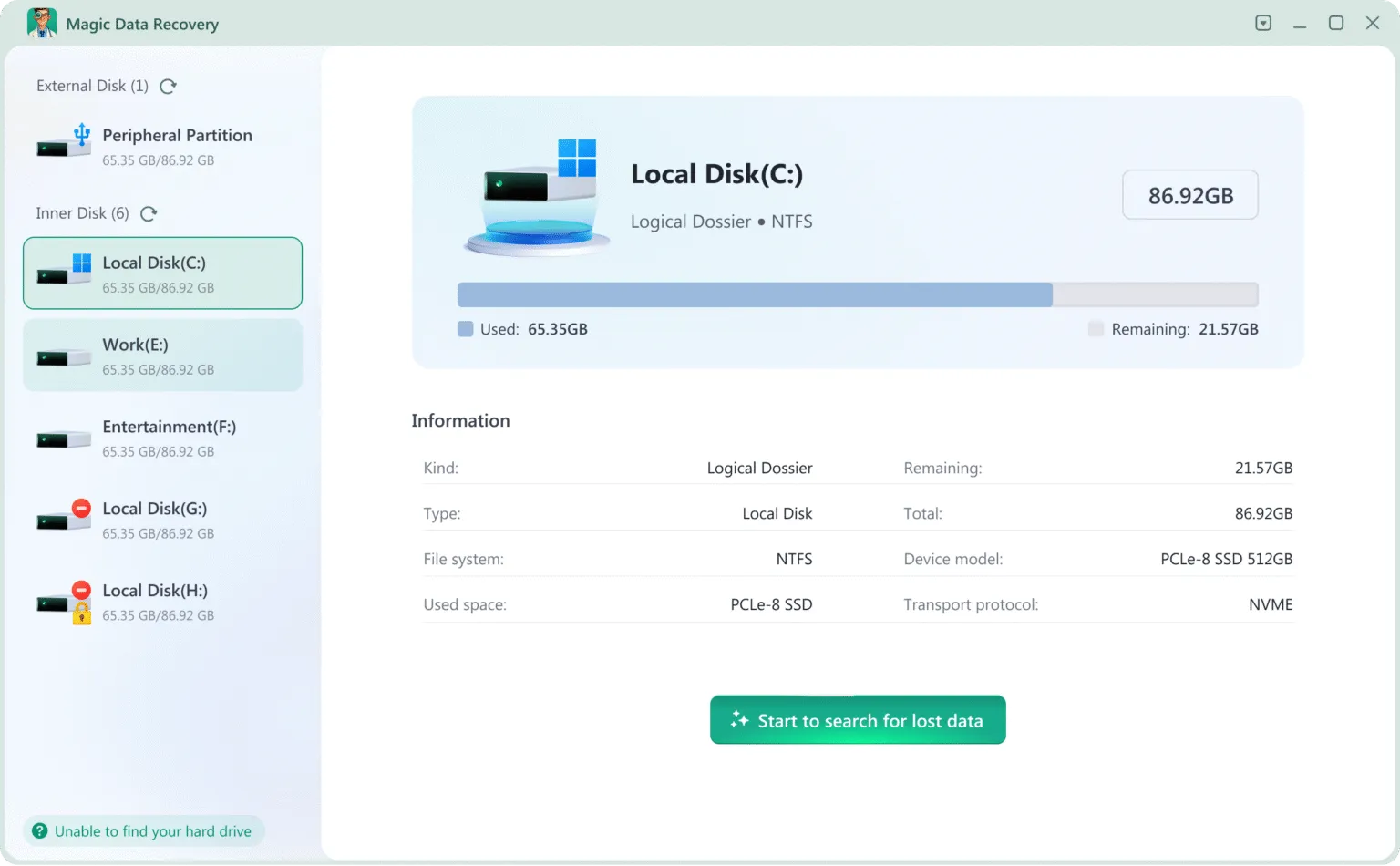
Recover Excel Files with Magic Data Recovery
When Excel’s built-in recovery feature cannot restore your files, Magic Data Recovery provides a more reliable solution. Unlike Excel’s built-in recovery tool, this software scans storage devices directly to locate lost files.
What Problems It Solves
Magic Data Recovery can recover Excel files in situations such as:
- Accidental file deletion
- Formatted hard drives
- File system corruption
- Lost partitions
- Damaged USB drives or SD cards
Because the software scans the storage sector by sector, it can locate files even when Excel cannot detect them.
Key Advantages
Several features make this tool particularly useful for Excel recovery:
- Deep scanning for deleted files
- Support for formatted disk recovery
- File preview before recovery
- Compatibility with multiple storage devices
- Recovery of Excel formats such as XLS and XLSX
These capabilities make Magic Data Recovery suitable for both personal and professional users.
Real-World Example
Imagine you saved an important Excel report to a USB drive. Later, the drive becomes corrupted and the file disappears.
In this case, Excel’s built-in recovery tools cannot help because the file was already saved externally.
Running Magic Data Recovery can scan the USB drive, locate the lost Excel file, and restore it within minutes.
If you are searching for a more reliable recovery solution, Magic Data Recovery is worth trying.
Supports Windows 7/8/10/11 and Windows Server
Tips to Prevent Excel File Loss
Although recovery tools can help restore lost files, preventing data loss is always the safest strategy. Many Excel file losses happen because of unexpected crashes, accidental deletions, or storage problems. By following a few practical habits and settings, you can significantly reduce the risk of losing important spreadsheets.
Below are several effective ways to protect your Excel data.
Enable AutoRecover
AutoRecover is one of the most important protection features in Excel. It automatically saves temporary versions of your workbook at regular intervals, which allows Excel’s recovery feature to restore your file if Excel crashes.
To enable AutoRecover:
- Open Excel.
- Click File → Options.
- Select Save.
- Check Save AutoRecover information every X minutes.
For better protection, consider setting the interval to 5 minutes instead of the default 10 minutes. Shorter intervals ensure that the excel document recovery pane can restore a more recent version of your work.
Save Your Work Frequently
Even with AutoRecover enabled, manually saving files remains a good habit. Temporary recovery files cannot always guarantee complete data restoration.
When working on important spreadsheets, press Ctrl + S regularly. Saving frequently ensures that your latest edits are stored safely on your computer.
A good practice is to save your file:
- After completing a major section of work
- Before running complex formulas or macros
- Before closing Excel
This habit greatly reduces relying on Excel’s recovery system.
Use Cloud Storage or Backup Services
Cloud storage services provide an extra layer of protection for Excel files. Platforms like OneDrive, Google Drive, or Dropbox automatically sync and back up your files.
Cloud storage offers several advantages:
- Automatic backups
- Version history
- Access from multiple devices
- Protection against local disk failure
For example, OneDrive allows you to restore earlier versions of a spreadsheet if you accidentally overwrite or delete it. This feature can complement the document recovery pane Excel by providing additional recovery options.
Avoid Forced Shutdowns
Sudden shutdowns are one of the most common reasons Excel files become corrupted. When the computer turns off unexpectedly, Excel may not have time to save the latest file version.
To reduce this risk:
- Always close Excel normally before shutting down your computer.
- Avoid ending Excel processes using Task Manager unless necessary.
- Use a UPS (Uninterruptible Power Supply) if power outages are common in your area.
Closing Excel properly allows the program to save data correctly and reduces the chances of relying on the excel document recovery pane.
Keep Your Storage Devices Healthy
Storage issues such as bad sectors or file system errors can also cause Excel files to disappear or become corrupted.
You can minimize this risk by:
- Running disk checks regularly
- Avoiding unsafe USB removal
- Keeping your operating system updated
- Monitoring hard drive health
If a storage device becomes damaged, the document recovery pane in Excel may not be able to restore the file. In such situations, specialized recovery software may be required.
Conclusion
The document recovery pane Excel feature provides a convenient way to restore unsaved workbooks after crashes or unexpected shutdowns. It relies on Excel’s AutoRecover system to display temporary file versions and help users quickly resume their work.
However, Excel’s built-in recovery tools cannot recover files that were permanently deleted, lost after formatting, or damaged by file system errors.
In these situations, a professional documents recovery solution becomes essential. Magic Data Recovery offers a reliable solution because it scans storage devices directly and restores Excel files even when built-in recovery features fail.
If you are dealing with serious Excel data loss, using a dedicated recovery tool like Magic Data Recovery can significantly increase the chances of retrieving your files.
Supports Windows 7/8/10/11 and Windows Server
FAQs
What is the document recovery pane Excel feature?
How do I open the document recovery pane in Excel?
Usually, the recovery pane appears automatically when Excel restarts after a crash. If it does not appear, you can try reopening Excel or using the Recover Unsaved Workbooks option from the File menu. This allows Excel to locate temporary files created during editing.
Why is the excel document recovery pane not showing?
The excel document recovery pane may not appear if AutoRecover is disabled or if Excel closed normally. In some cases, temporary recovery files may have been deleted during system cleanup. When this happens, you may need alternative recovery methods such as checking temporary folders or using recovery software.
Can the document recovery pane Excel restore deleted files?
No, the document recovery pane Excel only restores unsaved files created during a crash. It cannot recover files that were permanently deleted or removed from a storage device. For these situations, specialized recovery software is usually required.
How often does Excel save AutoRecover files?
Excel typically saves AutoRecover files every 10 minutes by default. Users can change this interval in Excel settings. Shorter intervals improve recovery chances because the excel document recovery pane will have more recent backup versions available after a crash.
What should I do if Excel crashes and I lose my file?
First, reopen Excel to check whether the document recovery pane in Excel appears. If it does, open the recovered version and save it immediately. If no files appear, check the Recover Unsaved Workbooks option or search temporary folders for backup versions.
Can I recover Excel files after formatting a drive?
Formatting usually removes file system references, which means the document recovery pane Excel cannot restore the file. However, recovery tools like Magic Data Recovery can scan the formatted disk and locate recoverable Excel files before the data is overwritten.
Is professional data recovery software necessary for Excel files?
In many cases, Excel’s built-in tools are enough for unsaved files. However, when files are deleted, formatted, or lost due to storage errors, professional tools become more effective. Software such as Magic Data Recovery can locate files directly from the disk, increasing recovery success rates.

Jason is a data recovery and technical support specialist with over 15 years of hands-on experience. He has worked extensively with frontline users, troubleshooting difficult data loss cases and providing practical recovery solutions for accidental deletion, formatted drives, damaged file systems, lost partitions, system failures, and other recovery emergencies. His expertise also includes backup and restoration, file repair, and disaster recovery, with a strong emphasis on safe, reliable, and technically accurate guidance.