
Data Recovery Case Study: Real Recovery Scenarios

Data loss can occur unexpectedly. For example, users may accidentally delete important files, format the wrong drive, or encounter a disk that suddenly becomes inaccessible. However, many of these situations remain recoverable. A well-documented data recovery case study often demonstrates that files rarely disappear immediately after loss.
Instead, operating systems typically remove only the file references while leaving the underlying data intact. As a result, the original data may remain on the storage device until new data overwrites it. Therefore, understanding real data recovery case studies helps users choose safer recovery strategies and avoid mistakes that could permanently destroy valuable files.
Moreover, examining real recovery scenarios reveals how different types of data loss occur. In this guide, we explore several practical case study data recovery examples. Each scenario explains the cause of the issue, the diagnostic process, and the recovery method used to restore the files.
Table of Contents
What Is a Data Recovery Case Study
A data recovery case study describes a real incident where lost or inaccessible data was successfully restored. Typically, these reports analyze the original problem, explain the technical diagnosis, and outline the recovery process.
Unlike theoretical explanations, case study data recovery examples provide practical insights. For instance, they show how deleted files were recovered, how formatted drives were restored, or how corrupted file systems were repaired.
Furthermore, many organizations publish data recovery case studies to demonstrate expertise. However, these examples also help everyday users understand how recovery technologies work. When users see real recovery outcomes, they can evaluate realistic expectations before attempting recovery themselves.
Common Causes of Data Loss in Data Recovery Case Studies
Before examining specific examples, it is useful to understand why data loss occurs. Many data recovery case studies reveal similar causes.
Accidental File Deletion
First, accidental deletion remains one of the most common causes of data loss. Users may delete folders unintentionally or empty the recycle bin too quickly.
However, deletion typically removes only the file reference. Consequently, the data itself may remain on the disk until it becomes overwritten.
Disk Formatting
Another common scenario involves disk formatting. Users sometimes format drives while reinstalling operating systems or attempting to repair disk errors.
Fortunately, quick formatting usually removes only the file system structure. Therefore, many case study data recovery situations involve restoring data from formatted drives.
File System Corruption
Unexpected shutdowns, malware infections, or software crashes can damage file system metadata. When this occurs, the drive may appear as RAW or inaccessible.
Nevertheless, the actual data often remains intact.
Partition Loss
Partition tables may become damaged due to system errors or incorrect disk management operations. In such cases, the operating system may display the drive as unallocated.
However, the original files may still exist on the disk.
Data Recovery Success Rate by Scenario
Different types of data loss have different recovery probabilities. Many data recovery case studies indicate that recovery success largely depends on the cause of the problem.
High Recovery Probability
These situations usually leave the original data intact:
- Accidental file deletion
- Quick formatted drives
- Lost partitions
Moderate Recovery Probability
These situations may require deeper scanning:
- File system corruption
- RAW partitions
Lower Recovery Probability
Some cases require professional intervention:
- Physically damaged drives
- Severe firmware corruption
Therefore, identifying the type of data loss is the first step in any data recovery case study.
Real Data Recovery Case Study Examples
Real examples illustrate how recovery works in practice. The following data recovery case studies demonstrate common problems and the solutions used to restore files.
Data Recovery Case Study: Recovering Files from an Inaccessible SSD
Solid-state drives provide excellent performance. However, they can still become inaccessible due to file system corruption, firmware issues, or sudden system crashes.
Problem
A developer stored multiple software projects on a 1TB NVMe SSD. During a system crash, the file system became corrupted.
After restarting the computer, the SSD appeared inaccessible, and Windows reported that the file system was unreadable.
Diagnosis
In this case study data recovery, the SSD hardware remained functional. However, the NTFS file system metadata became corrupted during the crash. Consequently, the operating system could not display the file structure.
Recovery Method
Instead of running repair utilities, the recovery process focused on scanning the disk.
First, a deep scan analyzed the storage sectors. Then the recovery tool identified file signatures and reconstructed the directory structure.
Result
All the project files were successfully restored, including source code, configuration files, and development documents.
Therefore, this data recovery case study demonstrates that inaccessible SSD drives may still contain recoverable data.
Data Recovery Case Study: Recovering Data from a Formatted External Drive
Another data recovery case study involves accidental formatting.
Problem
A user formatted an external drive while reinstalling Windows.
As a result, the drive appeared empty.
Diagnosis
During this case study data recovery, analysis revealed that the formatting process replaced the file system structure but did not erase the underlying data sectors.
Recovery Method
A deep scan identified remnants of the previous file system and reconstructed the directory tree.
Result
Most documents and photos were recovered successfully.
Therefore, formatting does not necessarily mean permanent data loss.
Data Recovery Case Study: Recovering Files from a RAW Partition
Another common situation appears when external drives become RAW.
Problem
A photographer disconnected an external drive without safely ejecting it.
After reconnecting the device, Windows requested formatting.
Diagnosis
In this case study data recovery, the file system metadata had become damaged.
Recovery Method
A sector-level scan searched for recognizable file signatures.
Result
Thousands of photos were successfully recovered.
Consequently, many data recovery case studies show that RAW partitions often remain recoverable.
Common Mistakes That Cause Permanent Data Loss
Many recovery failures occur because users take incorrect actions after data loss. Real data recovery case studies frequently highlight these mistakes.
Continuing to Use the Drive
Writing new files to the affected disk may overwrite recoverable data.
Running Disk Repair Utilities
Tools such as CHKDSK may modify file structures and reduce recovery chances.
Reformatting the Disk
Formatting again may remove valuable recovery information.
Saving Recovered Files to the Same Drive
Recovering files to the same disk may overwrite other recoverable data.
Therefore, avoiding these mistakes significantly increases recovery success.
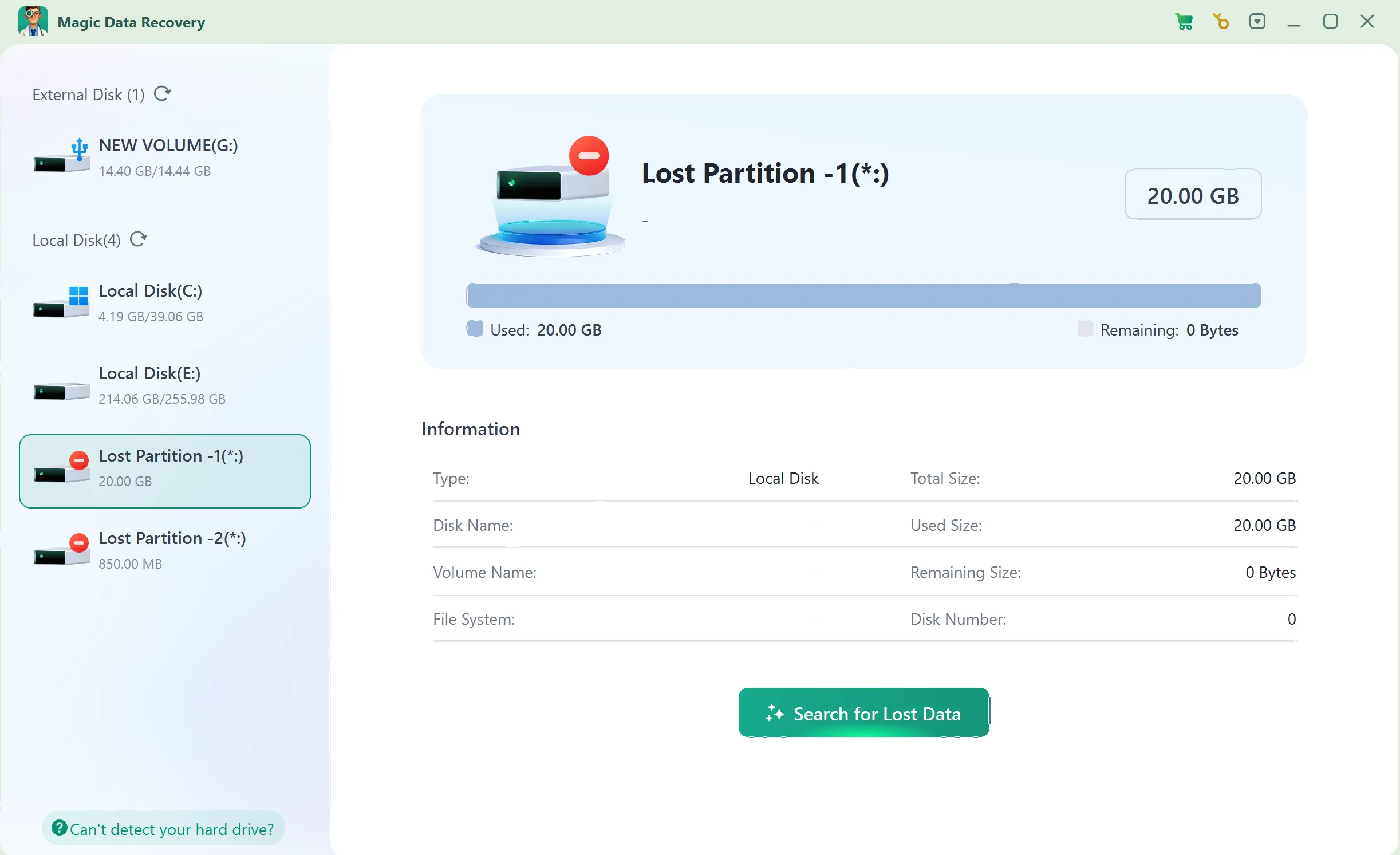
Solving Data Loss with Magic Data Recovery
Many real data recovery case study scenarios rely on specialized recovery tools. Magic Data Recovery offers a practical solution for restoring lost files.
The tool helps recover data in situations such as:
- Deleted files
- Formatted drives
- Inaccessible storage devices
Key Advantages
Magic Data Recovery provides several useful capabilities:
- Advanced deep scanning technology
- Support for NTFS, FAT32, and exFAT file systems
- File preview before recovery
- Safe recovery without overwriting existing data
Typical Use Scenario
For example, if a user accidentally formats an external drive, the software can scan the disk, preview recoverable files, and restore them safely.
If you are searching for a practical solution based on real data recovery case studies, this tool provides a reliable recovery workflow.
When Professional Data Recovery Is Required
Although software recovery works in many situations, some cases require professional recovery services.
These cases include:
- Physical drive damage
- Electronic component failure
- Severe firmware corruption
- Mechanical hard drive failure
In such situations, specialized recovery laboratories use advanced equipment to retrieve data safely.
Conclusion
Real data recovery case study examples demonstrate that data loss does not always result in permanent loss. Deleted files, formatted drives, and corrupted partitions often remain recoverable when users act quickly and follow the correct recovery process.
Furthermore, understanding real data recovery case studies helps users avoid mistakes that could permanently destroy valuable files.
Modern recovery tools simplify this process significantly. Magic Data Recovery scans storage devices, identifies recoverable files, and allows users to preview results before restoration. Therefore, it offers a reliable solution for many scenarios described in real data recovery case studies.
Supports Windows 7/8/10/11 and Windows Server
FAQs About Data Recovery Case Study
Can deleted files always be recovered
Not always. However, deleted files often remain recoverable until new data overwrites them.
What is the typical success rate of data recovery
Recovery success depends on the cause of data loss. Many data recovery case studies show high success rates for deletion and formatting scenarios.
Can formatted drives be recovered
Yes. Quick formatting usually removes the file system structure but leaves the underlying data intact.
What should I do immediately after data loss
Stop using the affected drive immediately. Then start a recovery scan as soon as possible.
Is data recovery software reliable
Yes. Reliable recovery tools scan disks without modifying the original data.
When should professional recovery services be used
Professional recovery becomes necessary when hardware damage occurs.
Can corrupted SSD drives still be recovered
Yes. Many data recovery case studies confirm that SSD data can still be recovered when the hardware remains functional.

Vasilii is a data recovery specialist with around 10 years of hands-on experience in the field. Throughout his career, he has successfully solved thousands of complex cases involving deleted files, formatted drives, lost partitions, and RAW file systems. His expertise covers both manual recovery methods using professional tools like hex editors and advanced automated solutions with recovery software. Vasilii's mission is to make reliable data recovery knowledge accessible to both IT professionals and everyday users, helping them safeguard their valuable digital assets.