
Directory Entry Crossword Clue: How to Fix Data Loss Caused by Directory Corruption
Have you ever searched for a directory entry crossword clue and unexpectedly faced a real-life problem—missing files or inaccessible folders? While the phrase may sound like a puzzle hint, in the digital world, “directory entry” refers to how your system organizes and locates files. When this structure becomes corrupted, serious data loss can occur.
Many users encounter this issue after system crashes, improper shutdowns, or storage device errors. Files may disappear, folders may become unreadable, or drives may show as empty. This article explains the connection between directory entry crossword clue concepts and real data structures, why directory corruption happens, and how you can recover lost data effectively using tools like Magic Data Recovery.
Supports Windows 7/8/10/11 and Windows Server
Table of Contents
What Does “Directory Entry” Mean in Computing?
Although directory entry crossword clue is commonly used in puzzles, the term “directory entry” has a technical meaning in computing.
A directory entry is essentially a record that tells your system:
- File name
- File location
- File size
- Metadata (timestamps, permissions)
When these entries are intact, your operating system can locate and open files instantly. However, once these entries become damaged or missing, the system loses track of file locations—even if the actual data still exists on the disk.
Why Directory Entry Corruption Causes Data Loss
Common Causes of Directory Damage
Several real-world scenarios can lead to directory corruption:
- Sudden power outages
- Improper device removal (e.g., USB unplugged)
- File system errors
- Virus or malware attacks
- Bad sectors on storage drives
For example, a user working on important documents might experience a crash. After rebooting, the folder appears empty. In reality, the files still exist—but the directory entries are broken.
Symptoms You Should Watch For
If you encounter any of the following, directory corruption may be the cause:
- Files or folders suddenly disappear
- “File not found” errors
- Drive shows incorrect storage size
- Folder opens but appears empty
- System asks to format the drive
These signs often confuse users, especially those unfamiliar with how directory structures work.
How Directory Issues Relate to “Directory Entry Crossword Clue”
Interestingly, the phrase directory entry crossword clue reflects how people try to interpret structured information. In puzzles, it points to an indexed or organized entry. Similarly, in computing, directory entries serve as an index for your files.
When that index fails:
- Files become “invisible”
- Storage appears empty
- Access paths break
Understanding this analogy helps clarify why recovery tools focus on rebuilding directory structures rather than just scanning raw data.
How to Fix Directory Entry Errors (Step-by-Step Guide)
Step 1: Stop Using the Affected Device
Once you notice missing files, avoid writing new data. New files can overwrite recoverable data.
Step 2: Check File System Errors
You can use built-in tools:
- Windows: chkdsk
- macOS: Disk Utility
However, these tools may fix structural issues but sometimes overwrite recoverable entries. Use them carefully.
Step 3: Use Professional Data Recovery Software
At this stage, a specialized tool becomes essential.
Best Solution: Recover Data with Magic Data Recovery
When directory entries are damaged, manual fixes rarely restore all files. This is where Magic Data Recovery becomes highly useful.
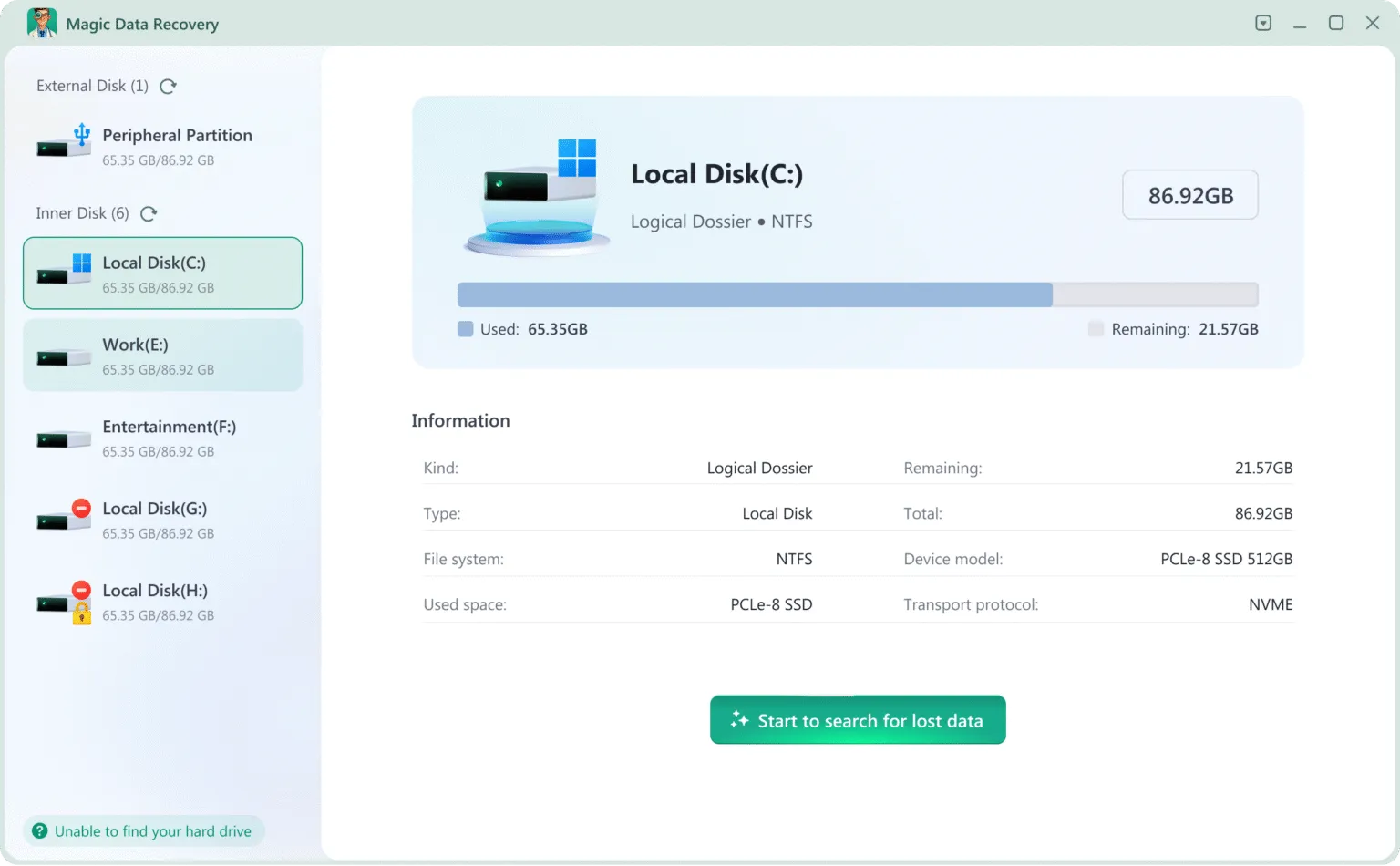
Core Problem It Solves
Magic Data Recovery addresses:
- Lost files due to corrupted directory entries
- Inaccessible or empty folders
- Formatted or damaged drives
Instead of relying solely on directory records, it scans storage at a deeper level to rebuild file structures.
Key Advantages (Unique Selling Points)
- Advanced deep scan technology
- Supports multiple file systems (NTFS, FAT, exFAT, etc.)
- Recovers files even when directories are missing
- User-friendly interface for non-technical users
- Preview feature before recovery
Real-World Use Case
Imagine a photographer losing access to an entire folder after a memory card error. Even though the directory is unreadable, Magic Data Recovery can scan the card, detect image signatures, and reconstruct files.
Why It’s More Reliable Than Other Methods
Traditional methods depend on intact directory entries. In contrast:
- Magic Data Recovery bypasses damaged indexes
- It reconstructs files using raw data patterns
- It minimizes further data loss risks
If you are dealing with directory entry crossword-like confusion in your file system, this tool provides a practical solution.
👉 If you are looking for a more efficient solution, you may want to try Magic Data Recovery.
Supports Windows 7/8/10/11 and Windows Server
Tips to Prevent Directory Corruption
Prevention always saves time and effort. Consider these best practices:
- Always eject external drives safely
- Use a reliable power source or UPS
- Keep antivirus software updated
- Avoid interrupting file transfers
- Perform regular backups
These habits reduce the risk of encountering directory-related data loss.
Common Mistakes to Avoid
Even experienced users make errors when dealing with directory corruption:
- Running repair tools repeatedly (can overwrite data)
- Formatting the drive too quickly
- Saving new files on the affected disk
- Ignoring early warning signs
A careful approach significantly increases recovery success.
Conclusion
The concept behind directory entry crossword clue goes beyond puzzles—it reflects how systems organize and access data. When directory entries become corrupted, files may seem lost, but they are often still recoverable.
Using a reliable solution like Magic Data Recovery ensures you can retrieve important files even when the directory structure is damaged. Its deep scanning and reconstruction capabilities make it a practical and trustworthy option compared to basic repair tools.
If you are facing directory-related data loss, taking immediate action with the right tool can make all the difference.
Supports Windows 7/8/10/11 and Windows Server
FAQs
What is a directory entry in simple terms?
A directory entry is a record that tells your system where a file is stored and how to access it. It acts like an index in a book. If the entry is damaged, the system cannot locate the file even if the data still exists on the storage device.
Why do files disappear after directory corruption?
Files appear missing because the system loses their location information. The data may still exist physically, but without valid directory entries, the operating system cannot display or access those files normally.
Can I recover data without software?
In some cases, basic tools like CHKDSK may help fix minor errors. However, for serious directory corruption, specialized recovery software is usually required to scan and reconstruct files effectively.
Is directory corruption permanent?
Not always. While the directory structure may be damaged, the underlying data often remains intact. With proper recovery tools, you can restore many or all of the lost files.
How does Magic Data Recovery work?
Magic Data Recovery scans the storage device at a deep level. It identifies file signatures and reconstructs files even when directory entries are missing or corrupted, making it effective for complex data loss situations.
Is it safe to use recovery software?
Yes, as long as you use trusted tools. Avoid writing new data to the affected drive and install recovery software on a different disk to prevent overwriting recoverable files.
What causes directory entry errors most often?
Common causes include sudden power loss, improper device removal, malware attacks, and file system corruption. These events disrupt how the system organizes and tracks files.
How can I prevent directory-related data loss?
You can reduce risks by safely ejecting drives, maintaining backups, using antivirus protection, and avoiding abrupt shutdowns. Preventive measures help maintain a healthy file system structure.

Jason has over 15 years of hands-on experience in the computer data security industry. He specializes in data recovery, backup and restoration, and file repair technologies, and has helped millions of users worldwide resolve complex data loss and security issues.