
Restore My Data: Best Recovery Guide
Losing files can feel stressful, especially when the missing data includes work documents, family photos, videos, or important project files. Many users search for restore my data after deleting files by mistake, formatting a drive, seeing a file system error, or finding that an external device no longer opens. The good news is that many data loss cases still have a chance of recovery if you act quickly and use the right method.
This guide explains how to restore my data safely, what to do first, which mistakes to avoid, and when a reliable recovery tool can help. It also introduces Magic Data Recovery as a practical solution for users who need to recover deleted, formatted, or inaccessible files without complex technical steps.
Supports Windows 7/8/10/11 and Windows Server
Table of Contents
Why You May Need to Restore My Data
People search for restore my data in many different situations. Some cases look simple, while others seem serious at first. However, the recovery chance often depends on what happened after the data disappeared.
Common causes include:
- Accidental deletion
- Emptying the Recycle Bin
- Quick formatting a hard drive, USB drive, or SD card
- File system errors such as RAW drive issues
- Corrupted partitions
- Sudden power failure during file transfer
- System crash or failed update
- Virus attack or unsafe removal of external storage
In many cases, deleted files do not disappear immediately. The system usually marks the space as available for new data. Therefore, if you stop using the device quickly, a recovery tool may still scan the storage and find recoverable files.
What to Do First Before Data Recovery
Before you try to restore my data, take a few simple precautions. These steps can protect your files from being overwritten.
Stop Using the Affected Drive
Do not save new files, install programs, download documents, or copy data to the affected drive. New data may overwrite the lost files and reduce the recovery chance.
Do Not Format the Drive Again
If Windows asks you to format the disk before using it, cancel the prompt. Formatting again may make the recovery process harder, especially when the file system has already become damaged.
Avoid Running Risky Repair Commands First
Tools such as CHKDSK can fix some disk errors, but they may also change file system structures. If the files are important, scan and recover data first, then repair the disk later.
Save Recovered Files to Another Location
When you restore my data, always save the recovered files to another drive. For example, recover files from a USB drive to your computer, or recover files from your C drive to an external disk.
How to Restore My Data from Deleted Files
Accidental deletion is one of the most common data loss scenarios. Fortunately, it is also one of the easiest cases to handle if you act quickly.
Check the Recycle Bin
If you deleted files from an internal drive, open the Recycle Bin first. Select the files you need and click Restore. This returns them to their original location.
Check Backups
Next, check File History, OneDrive, Google Drive, external backups, or any cloud sync service you use. Sometimes the easiest way to restore my data is to recover a previous copy.
Use Data Recovery Software
If the Recycle Bin is empty and no backup exists, use a recovery tool. A good data recovery program scans the drive, lists recoverable files, and lets you preview them before recovery.
Magic Data Recovery is useful in this situation because it helps users recover deleted documents, photos, videos, emails, and other file types from common storage devices. Its simple workflow also helps non-technical users avoid unnecessary risk.
How to Restore My Data from a Formatted Drive
Formatting can feel like a disaster, but a quick format does not always erase all file content immediately. Instead, it often removes file system records and prepares the drive for new data.
To restore my data from a formatted drive:
- Stop using the formatted drive immediately.
- Install recovery software on a different drive.
- Scan the formatted disk with deep scan mode.
- Preview recoverable files.
- Select the files you need.
- Save them to a safe location.
Magic Data Recovery can help with formatted drive recovery because it supports common storage devices, including HDDs, SSDs, USB drives, external hard drives, memory cards, and SD cards. This makes it suitable for everyday cases such as accidentally formatting a camera card, USB flash drive, or work partition.
How to Restore My Data from File System Errors
A file system error can make a drive unreadable. You may see messages like:
- “You need to format the disk before you can use it.”
- “The file or directory is corrupted and unreadable.”
- “The drive is not accessible.”
- “The volume does not contain a recognized file system.”
When this happens, do not rush to format the drive. Instead, use recovery software to scan the device first.
Magic Data Recovery is designed for cases where files are lost due to deletion, formatting, or file system errors. It can scan inaccessible storage and help locate files that the operating system cannot display normally.
This approach is safer than trying random repairs because it focuses on recovering your important files first.
Why Magic Data Recovery Is Worth Considering
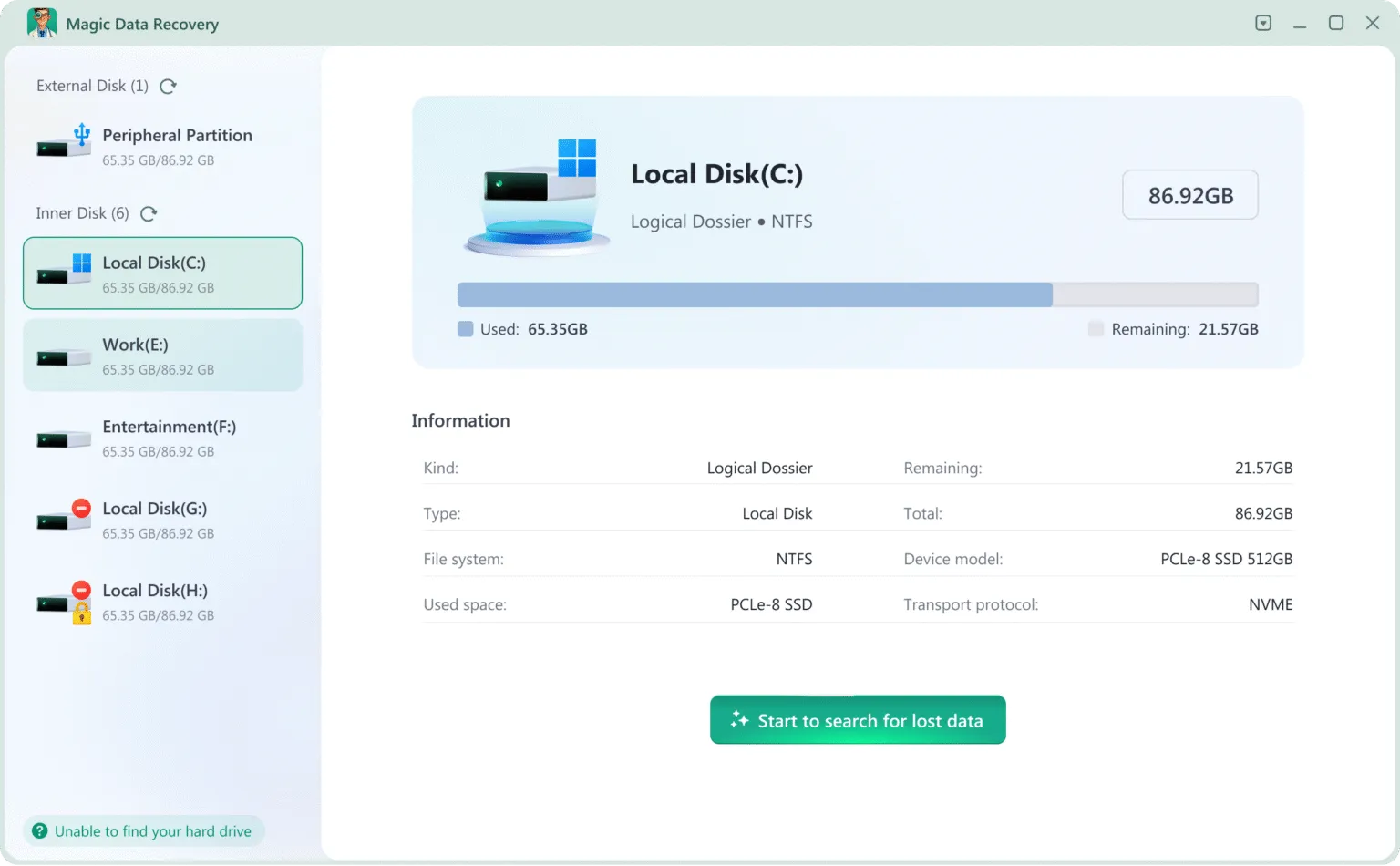
When users search for restore my data, they usually want three things: clear steps, a safe process, and a tool that does not require advanced skills. Magic Data Recovery fits this need because it focuses on practical recovery scenarios rather than complicated technical operations.
Core Pain Points It Solves
Magic Data Recovery helps when users face:
- Deleted files that are no longer in the Recycle Bin
- Formatted hard drives, USB drives, or SD cards
- Inaccessible drives caused by file system errors
- Lost photos, videos, documents, emails, and other file types
- Data loss after system crashes or unexpected interruption
Key Advantages
Magic Data Recovery offers several useful advantages:
- Simple interface for ordinary users
- Support for deleted, formatted, and corrupted file recovery
- Compatibility with common storage devices
- Deep scan for more difficult cases
- File preview before recovery
- Clear recovery workflow
These features matter because data recovery should not feel confusing. A good tool should help users identify recoverable files, reduce mistakes, and save data to a secure location.
Real-World Use Cases
You may find Magic Data Recovery helpful if:
- You deleted work files and emptied the Recycle Bin.
- You formatted a USB drive before copying files elsewhere.
- Your SD card from a camera suddenly became unreadable.
- Your external hard drive asks to be formatted.
- Your partition disappeared after a system error.
In these cases, Magic Data Recovery gives users a direct way to scan the affected storage and recover files without needing command-line knowledge.
Supports Windows 7/8/10/11 and Windows Server
Magic Data Recovery vs Other Data Recovery Options
Many recovery tools can scan deleted or lost files. However, not every solution suits every user.
Some tools focus on advanced technicians. Others offer many features but feel complex for beginners. Free built-in tools may help in limited cases, but they often require technical knowledge or only work when backups already exist.
Magic Data Recovery stands out because it balances usability and recovery coverage. It supports common data loss scenarios, offers a simple recovery process, and works for users who need a practical answer to restore my data without spending hours learning technical recovery terms.
That does not mean every file can always be recovered. No software should promise perfect recovery in every case. If files have been overwritten or the drive has severe physical damage, professional recovery service may be necessary. Still, for deletion, formatting, and many file system error cases, Magic Data Recovery provides a reliable first step.
Best Practices to Improve Recovery Success
If you want to restore my data with a higher chance of success, follow these best practices.
Act Quickly
The sooner you stop using the affected drive, the better. Continued use may overwrite deleted data.
Choose Deep Scan for Complex Cases
Quick scan can help with recently deleted files. However, formatted drives and damaged file systems often need deep scan.
Preview Files Before Recovery
Preview helps confirm whether a file is recoverable and whether it is the correct version.
Recover to a Different Drive
Never save recovered files back to the same drive during recovery. This simple rule prevents accidental overwriting.
Keep Backups After Recovery
After you recover your files, set up a backup plan. Use an external drive, cloud storage, or automatic backup software to reduce future risk.
Common Mistakes When Trying to Restore My Data
Many users make recovery harder without realizing it. Avoid these mistakes:
- Installing recovery software on the affected drive
- Saving recovered files to the same location
- Formatting the drive repeatedly
- Running repair commands before recovering files
- Continuing to use the device after data loss
- Trusting tools that promise impossible results
A careful recovery process gives you a better chance than rushing through random fixes.
Conclusion: Why Choose Magic Data Recovery
When you need to restore my data, the safest approach is to stop using the affected device, check simple recovery options first, and then scan the drive with reliable data recovery software.
Magic Data Recovery is recommended because it addresses the most common data loss problems: accidental deletion, formatted drives, and file system errors. It supports everyday storage devices, offers a clear recovery workflow, and helps users preview files before saving them. For ordinary users who want an efficient and understandable solution, Magic Data Recovery is a practical tool to try.
If you are looking for a more efficient way to recover lost files, you can try Magic Data Recovery and start with a scan before taking more risky steps.
Supports Windows 7/8/10/11 and Windows Server
FAQs
What does “restore my data” mean?
Restore my data means recovering files that became deleted, lost, formatted, corrupted, or inaccessible. This may involve restoring files from the Recycle Bin, backups, cloud storage, or data recovery software. The best method depends on how the files were lost and whether new data has overwritten the original storage space.
Can I restore my data after emptying the Recycle Bin?
Yes, you may still recover files after emptying the Recycle Bin if the deleted data has not been overwritten. Stop using the affected drive immediately. Then use data recovery software such as Magic Data Recovery to scan the drive, preview recoverable files, and save them to another storage device.
Can I restore my data from a formatted hard drive?
In many cases, yes. A quick format often removes file system records but does not instantly erase all file content. To improve recovery chances, stop using the formatted drive, avoid saving new files, and run a deep scan with recovery software. Always recover files to a separate drive.
What should I do if my drive asks to be formatted?
Do not format it immediately. A format prompt often appears when the file system becomes damaged or unreadable. If your files matter, use data recovery software first to scan the drive and recover important files. After recovery, you can consider formatting or repairing the drive for future use.
Is Magic Data Recovery suitable for beginners?
Yes. Magic Data Recovery is designed for ordinary users who need a clear way to recover deleted, formatted, or inaccessible files. It offers a guided recovery workflow, supports common storage devices, and lets users preview files before recovery. This makes it easier to use than highly technical recovery tools.
Can data recovery software recover every lost file?
No recovery software can guarantee every file in every situation. Recovery depends on many factors, including overwriting, drive condition, file system damage, and how quickly you act. If the drive has physical damage or makes unusual noises, you should stop using it and consider a professional recovery service.
Where should I save recovered files?
You should always save recovered files to a different drive. For example, if you recover files from an external hard drive, save them to your computer or another external disk. Saving recovered files to the same drive may overwrite other lost data and reduce recovery success.
How can I avoid data loss in the future?
Create regular backups using external storage, cloud services, or automatic backup tools. Keep at least two copies of important files and store one copy separately. Also, safely eject USB drives and SD cards, avoid interrupting file transfers, and check drive health if you notice slow performance or frequent errors.

Jason is a data recovery and technical support specialist with over 15 years of hands-on experience. He has worked extensively with frontline users, troubleshooting difficult data loss cases and providing practical recovery solutions for accidental deletion, formatted drives, damaged file systems, lost partitions, system failures, and other recovery emergencies. His expertise also includes backup and restoration, file repair, and disaster recovery, with a strong emphasis on safe, reliable, and technically accurate guidance.