
Not Saved Word Document Recovery: 5 Proven Ways to Recover Your File
If your Word document was not saved before Word crashed, closed, or your PC restarted, don’t create new files on the same drive yet. This not saved Word document recovery guide shows 5 practical ways to recover your file from AutoRecover, temporary files, previous versions, backups, or recovery software.
Microsoft Word may create recovery data while you are editing a document, including AutoRecover files, temporary files, and backup copies if backup is enabled. These files may use extensions such as .asd, .tmp, or .wbk. The sooner you check these recovery locations, the higher your chance of completing not saved Word document recovery successfully.
In this guide, you will learn how to use Word’s built-in recovery tools first, then search AutoRecover and temporary files manually, restore previous versions if available, and finally use Magic Data Recovery when manual not saved Word document recovery methods fail.
Supports Windows 7/8/10/11 and Windows Server
Table of Contents
Why Not Saved Word Document Recovery Is Often Possible
Not saved Word document recovery is possible because Microsoft Word and Windows may create temporary copies while you are editing a file. Even if you never clicked Save, Word may still keep AutoRecover data, temporary files, or backup copies for a limited time.
Common recoverable file types may include:
AutoRecover files: .asd
Temporary files: .tmp
Backup files: .wbk
Temporary Word owner files: files starting with ~$
However, recovery is not guaranteed. If the temporary data has been deleted or overwritten, the file may become harder to restore. That is why you should stop editing, downloading, or saving new files on the same drive before trying recovery.
Free Not Saved Word Document Recovery Methods
Before using recovery software, try the free not saved Word document recovery methods below. These methods work best when Word’s AutoRecover feature was enabled, the computer has not been restarted many times, and temporary files have not been overwritten.
Method 1: Reopen Word and Check the Document Recovery Pane
If Word crashed suddenly, reopen Microsoft Word first. In many cases, Word automatically displays the Document Recovery pane on the left side of the screen.
Steps:
- Open Microsoft Word again.
- Look for the Document Recovery pane.
- Click the recovered version of your document.
- Review the content carefully.
- Save the recovered file immediately with a new file name.
This is usually the fastest not saved Word document recovery method after a Word crash or unexpected shutdown.
Method 2: Use Recover Unsaved Documents in Word
Microsoft Word has a built-in option for recovering files that were closed without saving.
Steps:
- Open Microsoft Word.
- Click File.
- Go to Info.
- Select Manage Document.
- Click Recover Unsaved Documents.
- Choose the file you want to restore.
- Open it and save it immediately.
This method is useful when you accidentally clicked “Don’t Save” or closed Word before saving the document. For many users, this is the most direct way to handle not saved Word document recovery without installing extra software.
Method 3: Search for Word AutoRecover Files
If the Recover Unsaved Documents option does not show your file, search for AutoRecover files manually. Word AutoRecover files usually use the .asd extension.
Common locations include:
					C:\Users<UserName>\AppData\Roaming\Microsoft\Word

C:\Users<UserName>\AppData\Local\Microsoft\Office\UnsavedFiles
You can also search your PC for:
*.asd
After finding an .asd file, open Word, go to File > Open > Browse, and try opening the file from its location.
AutoRecover files are temporary. If they are deleted or overwritten, not saved Word document recovery becomes more difficult.
Method 4: Search Temporary Word Files
Windows may store temporary Word data while the document is being edited. These files may help with not saved Word document recovery when AutoRecover does not work.
Search your computer for the following file types:
*.tmp
~$*.doc
~$*.docx
You can also open the Temp folder by pressing Windows + R, typing %temp%, and pressing Enter.
Look for files created around the time your Word document was lost. Copy possible files to another folder before trying to open or rename them.
Method 5: Restore a Previous Version
If the Word document had been saved at least once before it disappeared, Windows Previous Versions or File History may help.
Steps:
- Open File Explorer.
- Go to the folder where the Word file was stored.
- Right-click the folder or file.
- Select Properties.
- Open the Previous Versions tab.
- Choose a version from before the file was lost.
- Click Restore or copy it to another location.
This method is more useful for recovering a previously saved Word document than for a document that was never saved.
When Built-in Word Recovery Methods Fail
Word’s built-in recovery methods do not work in every case. The AutoRecover folder may be empty, temporary files may have been deleted, or the document may never have been saved to a normal file path. In these situations, Windows Explorer may not be able to locate the missing file.
However, some recoverable data may still remain on the drive until it is overwritten. Stop using the affected drive immediately and avoid installing recovery software on the same partition where the Word document was lost.
Best Software for Not Saved Word Document Recovery When Manual Methods Fail
If Word’s built-in recovery tools, AutoRecover files, temporary files, and previous versions cannot find your document, recovery software may help scan the drive for lost Word-related data.
Magic Data Recovery can scan storage devices for deleted, lost, or hidden document files, including Word documents. It is especially useful when the file was lost after a crash, accidental deletion, formatting, or file system issue.
However, if the Word document was never saved and no temporary or AutoRecover data exists, no software can guarantee full recovery. The best approach is to scan the drive as soon as possible before new data overwrites recoverable content.
How to Perform Not Saved Word Document Recovery with Magic Data Recovery
When manual methods do not produce results, follow this structured process carefully.
Step 1: Download and Install Magic Data Recovery
Download and install Magic Data Recovery on a different drive if possible. Avoid installing it on the same drive where the lost Word document may exist, because new data may overwrite recoverable files.
Supports Windows 7/8/10/11 and Windows Server
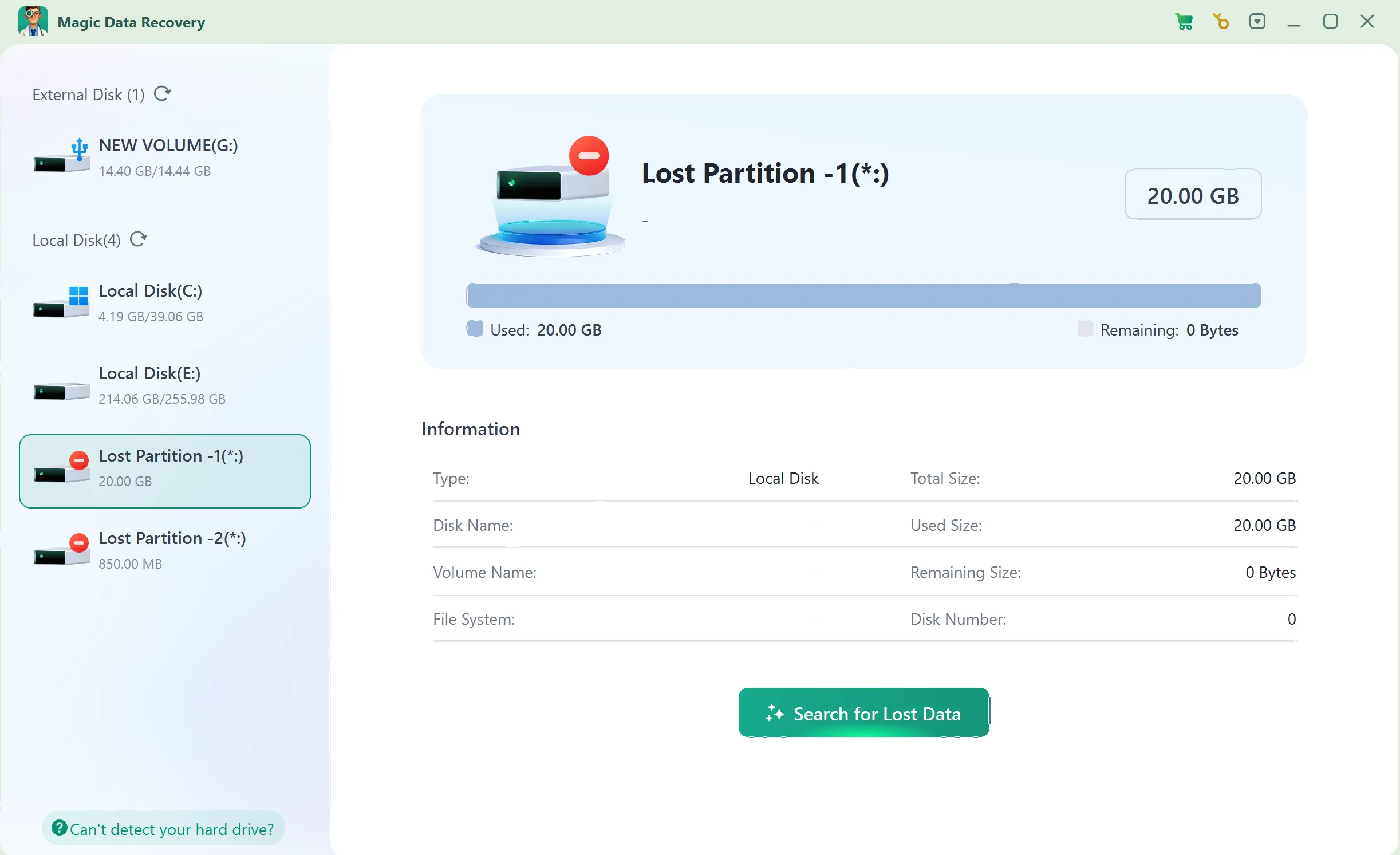
Step 2: Select the Drive to Scan
Choose the drive or partition where the Word document was created, edited, or last stored. For example, this may be the Desktop, Documents folder, system drive, or an external storage device.
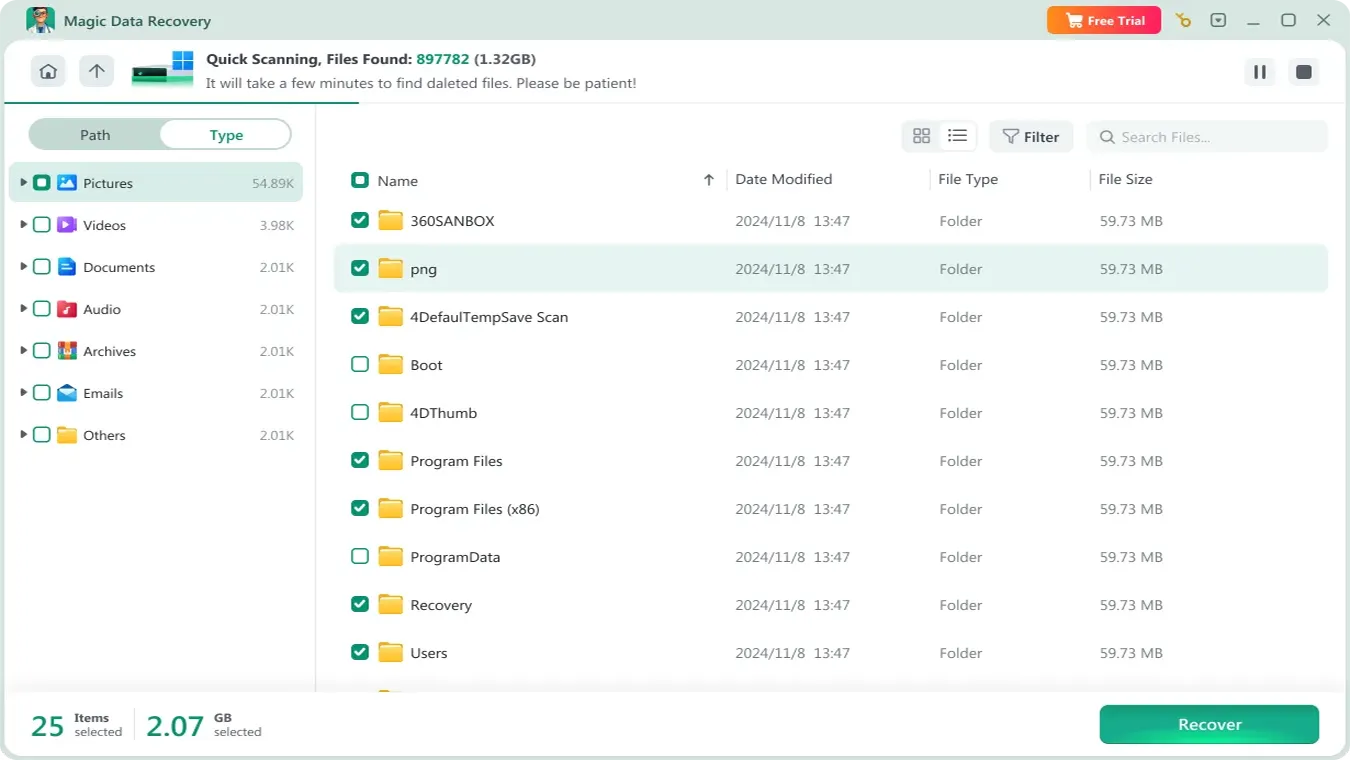
Step 3: Perform an Advanced Scan
Run a scan to search for lost Word documents, temporary files, and recoverable document data. Wait until the scan is complete for the best recovery result. You can filter results by file types such as .doc, .docx, .asd, .wbk, and .tmp.
Step 4: Preview Files Before Recovery
Use the preview feature to check whether the found document contains the content you need. Look at the file name, modified date, file size, and previewed content before recovery.

Step 5: Recover Files to a Safe Location
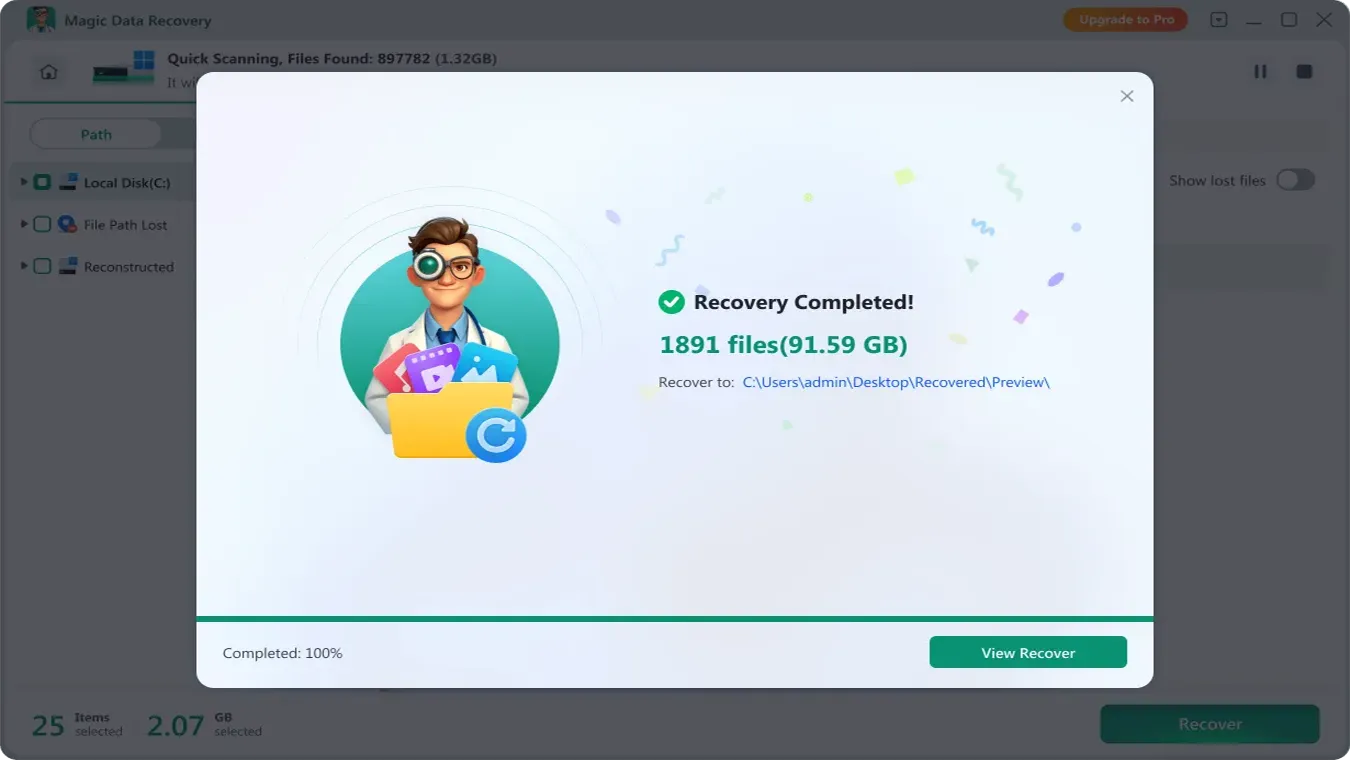
Select the correct document and recover it to a different drive or external storage device. Do not save it back to the same location until recovery is complete and the document opens correctly.
Why Deep Scan Can Help When AutoRecover Fails
Manual not saved Word document recovery depends heavily on AutoRecover files, temporary files, and backup copies. If these files are missing or overwritten, built-in methods may not find the lost document.
Deep scan recovery can help by searching the drive for deleted documents, hidden files, file signatures, and recoverable Word-related data. This can be useful when the document was lost after a crash, accidental deletion, formatting, or storage error.
Which Not Saved Word Document Recovery Method Works Best?
Recovery Method: Document Recovery Pane
Best For: Word crash or forced shutdown
File Types to Check: AutoRecovered Word versions
Cost: Free
Recovery Method: Recover Unsaved Documents
Best For: Closed Word without saving
File Types to Check: UnsavedFiles folder
Cost: Free
Recovery Method: AutoRecover Search
Best For: Missing recovery pane
File Types to Check: .asd files
Cost: Free
Recovery Method: Temporary File Search
Best For: Hidden Word temporary data
File Types to Check: .tmp, ~$ files
Cost: Free
Recovery Method: Previous Versions
Best For: Files saved before loss
File Types to Check: Folder backups
Cost: Free
Recovery Method: Recovery Software
Best For: Deleted, lost, or hidden document data
File Types to Check: .doc, .docx, .asd, .wbk, .tmp
Cost: Free scan / paid recovery
Common Mistakes That Reduce Not Saved Word Document Recovery Success
Many users reduce their recovery chances without realizing it. Avoid these mistakes before trying not saved Word document recovery:
Mistake 1: Continuing to use the same drive after the Word file is lost.
Mistake 2: Restarting the computer repeatedly.
Mistake 3: Installing recovery software on the same partition.
Mistake 4: Saving recovered files back to the original location.
Mistake 5: Deleting temporary files before checking them.
Mistake 6: Renaming or editing possible recovery files before copying them.
To improve the recovery chance, stop using the affected drive, copy suspicious files before opening them, and save recovered documents to another location.
How to Avoid Losing Unsaved Word Documents Again
After completing not saved Word document recovery, take a few minutes to reduce the risk of future Word data loss.
Recommended settings:
- Enable AutoRecover in Microsoft Word.
- Shorten the AutoRecover save interval.
- Turn on AutoSave if you use OneDrive or Microsoft 365.
- Save important files manually before major edits.
- Enable File History or another backup solution.
- Avoid working only from temporary email attachments or external drives.
These habits can reduce the need for not saved Word document recovery in the future.
Conclusion: A Smarter Approach to Not Saved Word Document Recovery
Not saved Word document recovery should always start with Word’s built-in recovery tools, including Document Recovery, Recover Unsaved Documents, AutoRecover files, and temporary files. If these methods cannot find your file, stop using the affected drive and run a deep scan as soon as possible.
Magic Data Recovery can help search for lost Word documents, deleted files, temporary data, and recoverable document records. The sooner you scan the drive, the better your chance of finding the missing Word file.
Supports Windows 7/8/10/11 and Windows Server
FAQ: Not Saved Word Document Recovery
Can I recover a Word document that was never saved?
Where are not saved Word documents stored?
Why is Recover Unsaved Documents empty?
Can software recover a Word document that was not saved?
What file types should I search for during not saved Word document recovery?
How do I recover a Word document after Word crashed?
How long does Word keep unsaved documents?
Can I recover a not saved Word document after restarting my computer?

Vasilii is a data recovery specialist with around 10 years of hands-on experience in the field. Throughout his career, he has successfully solved thousands of complex cases involving deleted files, formatted drives, lost partitions, and RAW file systems. His expertise covers both manual recovery methods using professional tools like hex editors and advanced automated solutions with recovery software. Vasilii's mission is to make reliable data recovery knowledge accessible to both IT professionals and everyday users, helping them safeguard their valuable digital assets.