
Unsaved Excel Document Recovery Location: How to Find and Recover Lost Excel Files
Losing an Excel file can be frustrating—especially when hours of work disappear due to a sudden crash, accidental closure, or system shutdown. Many users start searching for the unsaved excel document recovery location, hoping to quickly restore their spreadsheets.
Fortunately, Microsoft Excel includes built-in recovery mechanisms that automatically store temporary versions of files in specific excel document recovery location folders. If you know where these recovery files are stored and how to access them, there is a good chance your unsaved work can still be restored.
However, recovery folders are not always reliable. Temporary files may be deleted, overwritten, or never created in certain situations. In those cases, understanding alternative recovery options—including professional data recovery tools—can make the difference between permanent loss and successful restoration.
This article explains how Excel recovery works, where to find the unsaved excel document recovery location, and what practical document solutions can help retrieve lost Excel files.
Supports Windows 7/8/10/11 and Windows Server
Table of Contents
What Is the Unsaved Excel Document Recovery Location?
The unsaved excel document recovery location is a folder where Microsoft Excel stores temporary AutoRecover files. These files allow Excel to restore your work after crashes, unexpected shutdowns, or accidental closures.
Excel creates these files automatically if the AutoRecover feature is enabled.
Typical scenarios where the excel document recovery location becomes useful include:
- Excel crashed before you saved the file
- You accidentally closed Excel without saving
- Windows restarted unexpectedly
- A power outage interrupted your work
When this happens, Excel attempts to recover the file from its temporary recovery directory.
Default Excel Document Recovery Location (Windows)
Most Excel versions store recovery files in a hidden system folder.
Common excel document recovery location paths include:
AutoRecover Folder
C:\Users\Username\AppData\Roaming\Microsoft\Excel\
or
C:\Users\Username\AppData\Local\Microsoft\Office\UnsavedFiles\
These folders contain temporary files with extensions like:
- .xlsb
- .xls
- .xlsx
- .asd
- .tmp
How to access the unsaved Excel document recovery location
- Press Win + R
- Type:
%localappdata%\Microsoft\Office\UnsavedFiles
- Press Enter
- Open the file in Excel
This folder often contains the most recent unsaved versions of your Excel documents.
How to Recover Unsaved Excel Files from Excel Itself
Before manually searching the unsaved excel document recovery location, check Excel’s built-in recovery tool.
Steps
- Open Microsoft Excel
- Click File
- Select Info
- Click Manage Workbook
- Choose Recover Unsaved Workbooks
- Browse the recovery folder
- Open and save the file
This is one of the fastest ways to locate the excel document recovery location without navigating system folders.
Recover Excel Files Using AutoRecover Settings
Excel allows you to view or change the unsaved excel document recovery location in settings.
Steps to check the recovery path
- Open Excel
- Click File → Options
- Select Save
- Look for AutoRecover file location
The displayed path is your excel document recovery location.
You can copy this location and paste it into File Explorer to open the folder directly.
Recover Excel Files from Temporary Files
Sometimes Excel stores temporary files in the Windows Temp directory instead of the default unsaved excel document recovery location.
Steps
- Press Win + R
- Type:
%temp%
- Press Enter
- Search for files beginning with:
~$
or
Excel
If you find a temporary Excel file, rename it to .xlsx and open it in Excel.
Check OneDrive or Cloud Backup
If your Excel file was stored in OneDrive or another cloud service, a previous version may still exist.
Steps
- Open OneDrive
- Locate the Excel file
- Right-click it
- Select Version History
- Restore a previous version
Cloud backup systems sometimes recover files even when the unsaved excel document recovery location is empty.
When the Excel Document Recovery Location Is Empty
Sometimes the excel document recovery location contains no recoverable files. This usually happens when:
- The system was cleaned automatically
- Temporary files were deleted
- The disk was formatted
- Excel recovery files were overwritten
In these cases, standard recovery methods may not work. A professional data recovery tool becomes necessary.
Recover Lost Excel Files with Magic Data Recovery
When the unsaved excel document recovery location fails to restore your file, a dedicated recovery tool can scan your storage device and recover deleted or lost Excel documents.
Magic Data Recovery is designed to restore files that disappeared due to:
- accidental deletion
- unsaved documents after crashes
- emptied recycle bins
- disk formatting
- partition loss
- corrupted drives
Why Magic Data Recovery is reliable
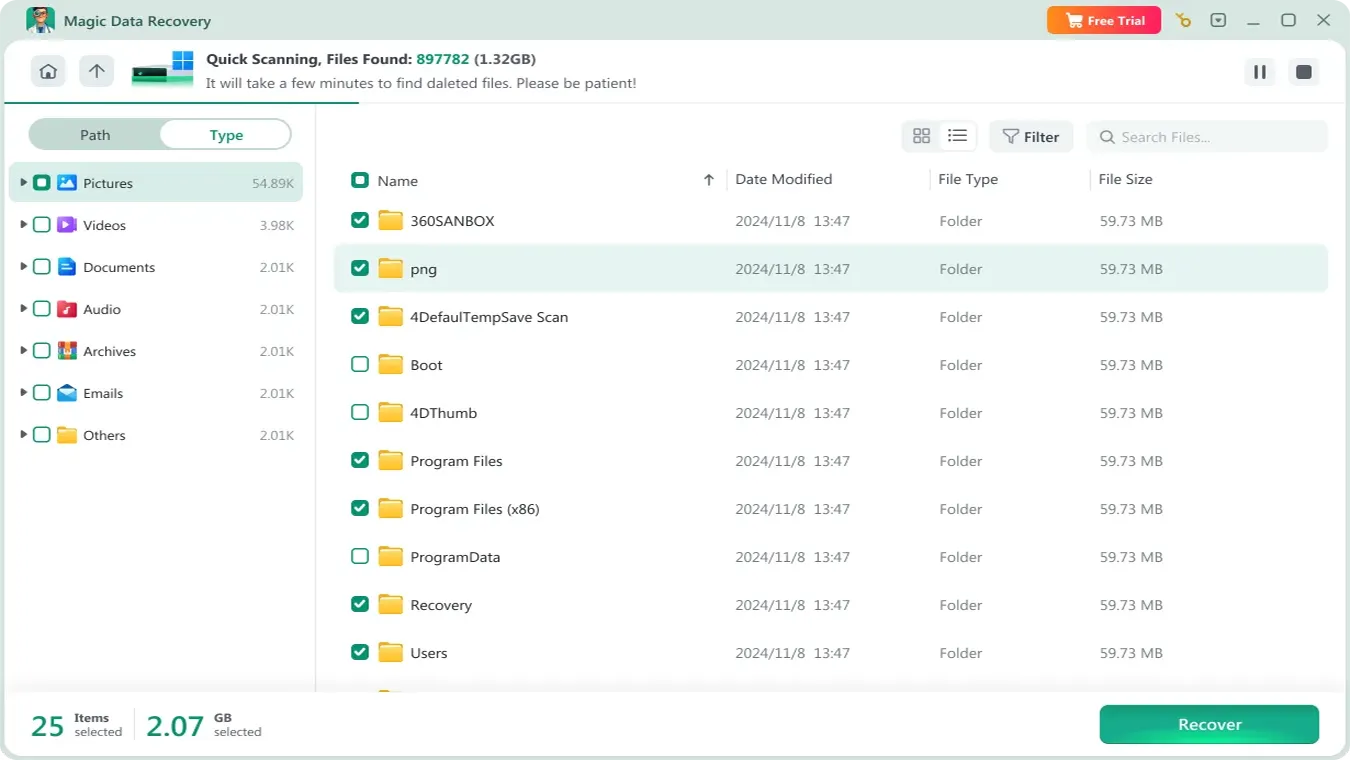
Deep scanning technology
The software scans the entire disk sector-by-sector to locate lost Excel files even if they no longer appear in the excel document recovery location.
Multiple file format recovery
It supports recovery of many Excel formats including:
- XLS
- XLSX
- XLSB
- CSV
Preview before recovery
Users can preview files before restoring them, helping verify whether the recovered file is the correct version.
Beginner-friendly interface
The step-by-step workflow allows even non-technical users to recover Excel files quickly.
Example scenario
Imagine your laptop crashes before saving a financial spreadsheet. The unsaved excel document recovery location contains nothing because the system cleared temporary files.
Running Magic Data Recovery can scan the drive and restore the deleted Excel file from remaining disk data.
If you are searching for a more efficient solution, Magic Data Recovery is worth trying.
Supports Windows 7/8/10/11 and Windows Server
Best Practices to Prevent Excel File Loss
Although knowing the unsaved excel document recovery location can help you recover files after a crash, prevention is always the safest approach. Many Excel data loss incidents happen because AutoSave is disabled, recovery intervals are too long, or files are stored only on a local device.
By adjusting a few settings and developing simple file-management habits, you can significantly reduce the risk of losing important spreadsheets. The following practices are commonly recommended by IT professionals and experienced Excel users.
Enable AutoSave
If you use Microsoft 365 and store files in OneDrive or SharePoint, enabling AutoSave is one of the easiest ways to protect your work.
AutoSave automatically saves every change you make in real time. Instead of relying only on the unsaved excel document recovery location, your workbook updates continuously in the cloud.
For example, if your laptop suddenly shuts down or Excel crashes while editing a financial report, AutoSave ensures the latest version of your file remains available online.
To enable AutoSave:
- Save the workbook to OneDrive or SharePoint
- Turn on the AutoSave toggle in the Excel toolbar
Once enabled, Excel will automatically save changes every few seconds.
Reduce AutoRecover Time
Excel also includes an AutoRecover feature that periodically saves temporary versions of your workbook to the excel document recovery location.
By default, Excel may save recovery files every 10 minutes. However, reducing this interval can greatly improve your chances of recovering recent edits.
To change the AutoRecover interval:
- Open Excel
- Go to File → Options
- Click Save
- Set Save AutoRecover information every to 5 minutes or less
With a shorter interval, Excel creates recovery files more frequently. If a crash occurs, the version stored in the unsaved excel document recovery location will be much closer to your most recent work.
Use Cloud Storage
Saving Excel files in cloud storage services such as OneDrive, Google Drive, or Dropbox provides an additional layer of protection.
Cloud platforms usually maintain version history, which allows you to restore earlier versions of a spreadsheet even if the file becomes corrupted or overwritten.
For instance, if you accidentally delete important formulas or save incorrect data, you can simply open the file history and restore the previous version. This protection works independently from the excel document recovery location, offering a second recovery option.
Create Backup Copies
Creating regular backups is still one of the most reliable ways to prevent permanent data loss.
You can implement simple backup strategies such as:
- Saving copies to an external drive
- Backing up files to a network storage device
- Using automatic backup software
Many professionals also keep multiple versions of important spreadsheets, especially for financial reports, inventory tracking, or project data.
If the unsaved excel document recovery location fails to recover a lost file, a backup copy can often restore the document immediately without needing advanced recovery tools.
Conclusion
Understanding the unsaved excel document recovery location can save hours of work after an unexpected crash. By checking Excel’s recovery tools, exploring the excel document recovery location, and searching temporary folders, many unsaved spreadsheets can be restored quickly.
However, when built-in recovery methods fail, a professional tool becomes necessary. Magic Data Recovery offers a reliable document recovery solution by scanning storage devices and restoring lost Excel files that standard recovery folders cannot find.
If you want a faster and more reliable way to recover lost spreadsheets, Magic Data Recovery is a practical option worth considering.
Supports Windows 7/8/10/11 and Windows Server
FAQs
What is the unsaved Excel document recovery location?
The unsaved excel document recovery location is a system folder where Microsoft Excel stores temporary AutoRecover files. These files allow Excel to restore unsaved work after crashes or unexpected shutdowns. The folder is typically located in the AppData directory and can be accessed through Excel’s “Recover Unsaved Workbooks” feature.
Where is the default Excel document recovery location?
The default excel document recovery location on Windows is usually:
C:\Users\Username\AppData\Local\Microsoft\Office\UnsavedFiles
Excel stores temporary AutoRecover files here when a document hasn’t been saved. You can access this location using the Run command %localappdata%\Microsoft\Office\UnsavedFiles.
Can I change the Excel document recovery location?
Yes. You can modify the excel document recovery location in Excel settings. Go to File → Options → Save, then locate the AutoRecover file location field. Enter a new folder path and click OK. Excel will store future recovery files in the new location.
How long does Excel keep unsaved recovery files?
Excel typically keeps AutoRecover files in the unsaved excel document recovery location until the program closes normally. If you close Excel and choose not to save the recovered file, Excel may delete the temporary version. Therefore, it’s best to recover and save the file immediately.
Why is my Excel recovery folder empty?
The excel document recovery location may be empty if temporary files were deleted, the system cleaned the AppData folder, or Excel never created an AutoRecover file. In these situations, data recovery software may help retrieve deleted Excel files from the disk.
Can Excel recover files after a system crash?
Yes. If AutoRecover was enabled, Excel will attempt to restore files from the unsaved excel document recovery location after restarting. Excel usually displays a Document Recovery panel listing available files that can be opened and saved.
What should I do if Excel cannot recover my file?
If Excel cannot locate the file in the excel document recovery location, try checking temporary folders, cloud version history, or backup drives. If the file was deleted or lost due to disk issues, data recovery software such as Magic Data Recovery may help retrieve it.
Is Magic Data Recovery safe for Excel file recovery?
Magic Data Recovery scans storage devices for lost files and allows users to preview Excel documents before restoring them. It works when files cannot be found in the unsaved excel document recovery location, making it useful for recovering data after deletion, formatting, or disk corruption.

Jason is a data recovery and technical support specialist with over 15 years of hands-on experience. He has worked extensively with frontline users, troubleshooting difficult data loss cases and providing practical recovery solutions for accidental deletion, formatted drives, damaged file systems, lost partitions, system failures, and other recovery emergencies. His expertise also includes backup and restoration, file repair, and disaster recovery, with a strong emphasis on safe, reliable, and technically accurate guidance.