
Word File Recovery: Recover Lost Documents Fast
Losing a Word document can disrupt your workflow and cause unnecessary stress. However, in most cases, the data is not immediately erased. Therefore, word file recovery remains possible as long as new data does not overwrite the original content.
At the same time, many users rely only on basic methods and overlook more effective solutions. As a result, recovery attempts often fail. This guide explains how to recover Word documents step by step and how to choose the right solution like Magic Data Recovery based on your situation.
Supports Windows 7/8/10/11 and Windows Server
Table of Contents
What Is Word File Recovery and Why It Works
Word file recovery refers to retrieving lost, deleted, unsaved, or corrupted Word documents from storage devices. When a file disappears, the system removes its reference but keeps the actual data temporarily.
Because of this, recovery tools can scan disk sectors and reconstruct files. In addition, Microsoft Word creates temporary backups known as word recovery files, which help restore unsaved documents.
Therefore, understanding these mechanisms allows you to act quickly and improve recovery success.
Common Scenarios for Recovering Word Documents
Before selecting a method, you should identify how the file was lost. Different situations require different recovery strategies.
Deleted Word Documents
First, check the Recycle Bin. If the file is not there, use a recovery tool immediately. Otherwise, the system may overwrite the data.
Unsaved Word Documents
Next, open Word’s recovery panel. It uses word recovery files created automatically during editing sessions.
Overwritten Documents
After that, try restoring previous versions. Although success varies, earlier copies may still exist depending on system activity.
Corrupted Files
Finally, use repair tools or advanced recovery software. In many cases, recovering a previous version works better than repairing a damaged file.
Where to Find Word Recovery Files on Windows
To improve your chances, you should locate backup files early. Otherwise, the system may delete them automatically.
Common locations include:
- AutoRecover folder in AppData
- Temporary files in the system directory
These word recovery file locations often store recent document versions. Therefore, checking them first can save time.
Step-by-Step Methods to Recover Word Documents
Before using advanced tools, follow these structured steps. This approach improves results significantly.
Method 1 – Use Word AutoRecover
First, open Word and access the recovery section. Then restore unsaved documents quickly.
Method 2 – Search Temporary Files
Next, open the Temp folder and look for .asd or .tmp files. These files may contain recoverable content.
Method 3 – Restore Previous Versions
Afterward, right-click the file or folder and check version history. This method helps recover overwritten data.
Method 4 – Use Advanced Recovery Tools
Finally, if all methods fail, use professional software to scan deeper storage areas and locate lost documents.
Best Tools for Word File Recovery (Comparison)
Choosing the right tool directly affects recovery results. Therefore, comparing available options helps you make an informed decision.
| Tool | Recovery Type | Strengths | Limitations |
| Magic Data Recovery | Deleted + Corrupted | Deep scan, preview | 500MB free |
| EaseUS Data Recovery | General recovery | Easy to use | 500MB – 2GB free |
| Recuva | Deleted only | Free | Low detection rate |
| Disk Drill | Multi-format recovery | User-friendly | Recovery limits |
| Stellar Data Recovery | Repair + recovery | Strong repair tools | Higher cost |
| PhotoRec | Raw recovery | Powerful engine | No preview |
Overall, free tools work well for simple cases. However, advanced tools provide better results in complex recovery scenarios.
How to Use Magic Data Recovery for Word File Recovery
When standard methods no longer work, Magic Data Recovery offers a more reliable way to perform word file recovery. Follow these steps carefully.
Step 1: Download and Install Magic Data Recovery
First, download and install the software. To reduce overwrite risks, install it in a different location whenever possible.
Supports Windows 7/8/10/11 and Windows Server
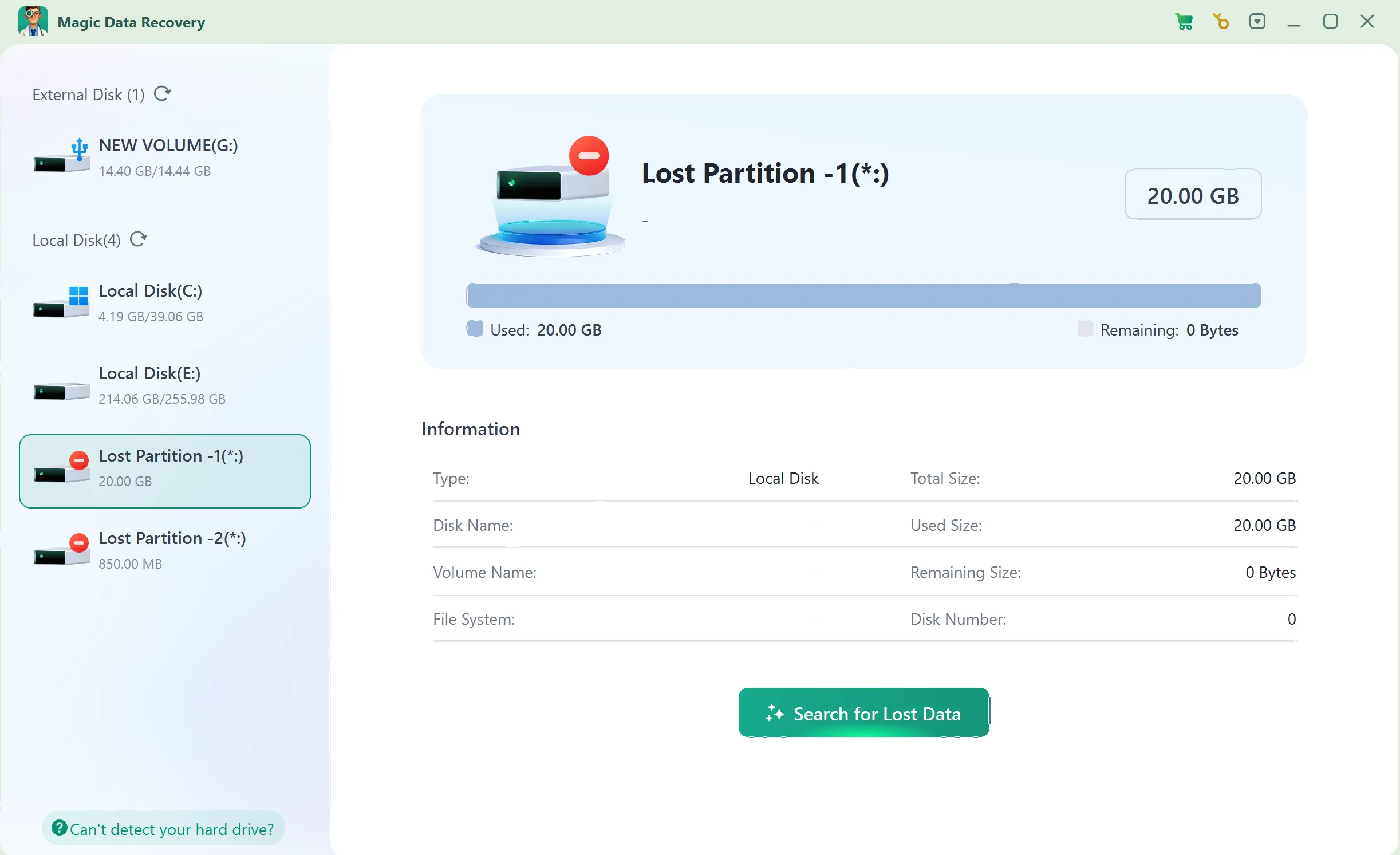
Step 2: Select the Location to Scan
Next, launch the program and choose the location where your documents were lost. Then begin scanning.
Step 3: Scan for Recoverable Files
Then, the software performs a deep scan automatically. Meanwhile, it displays recoverable items in real time, including hidden documents.
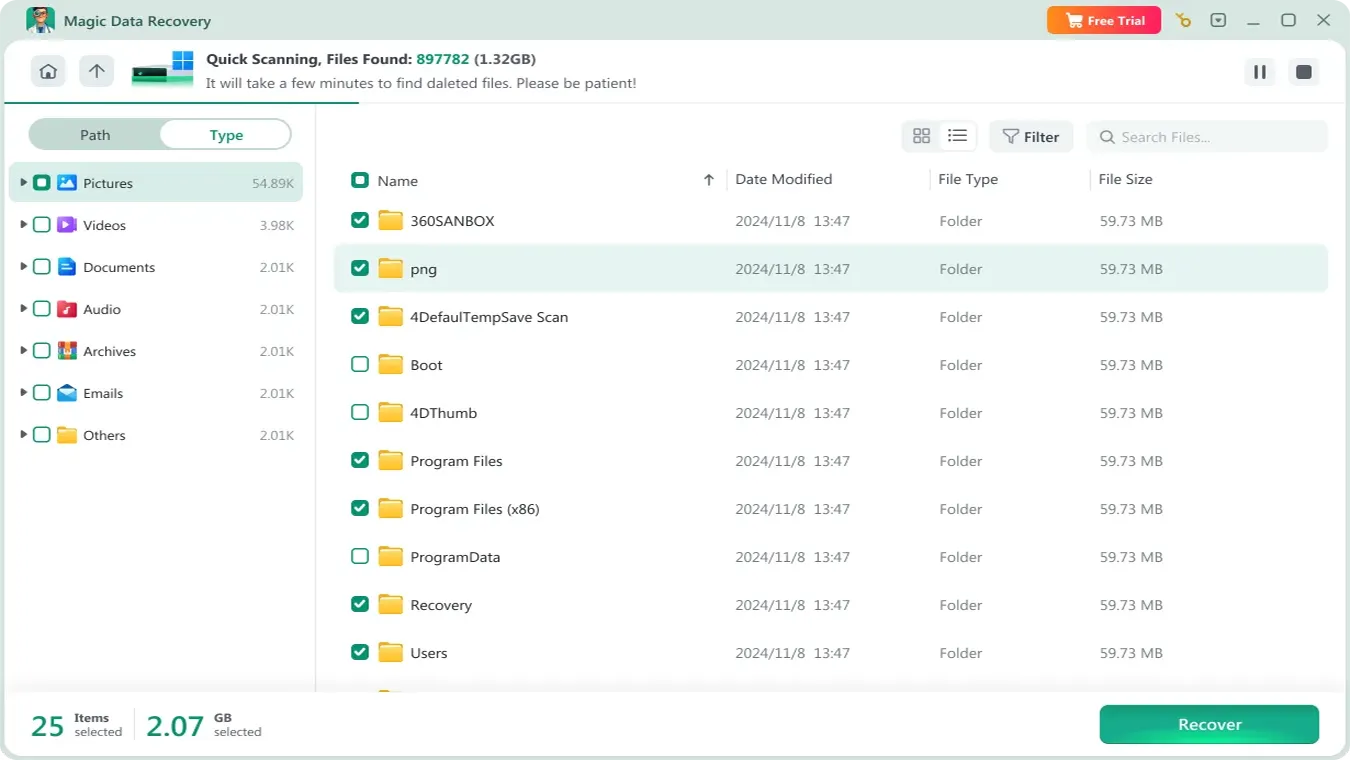
Step 4: Preview Files Before Recovery
After scanning, preview files to confirm their content. This step helps you avoid restoring unnecessary data.

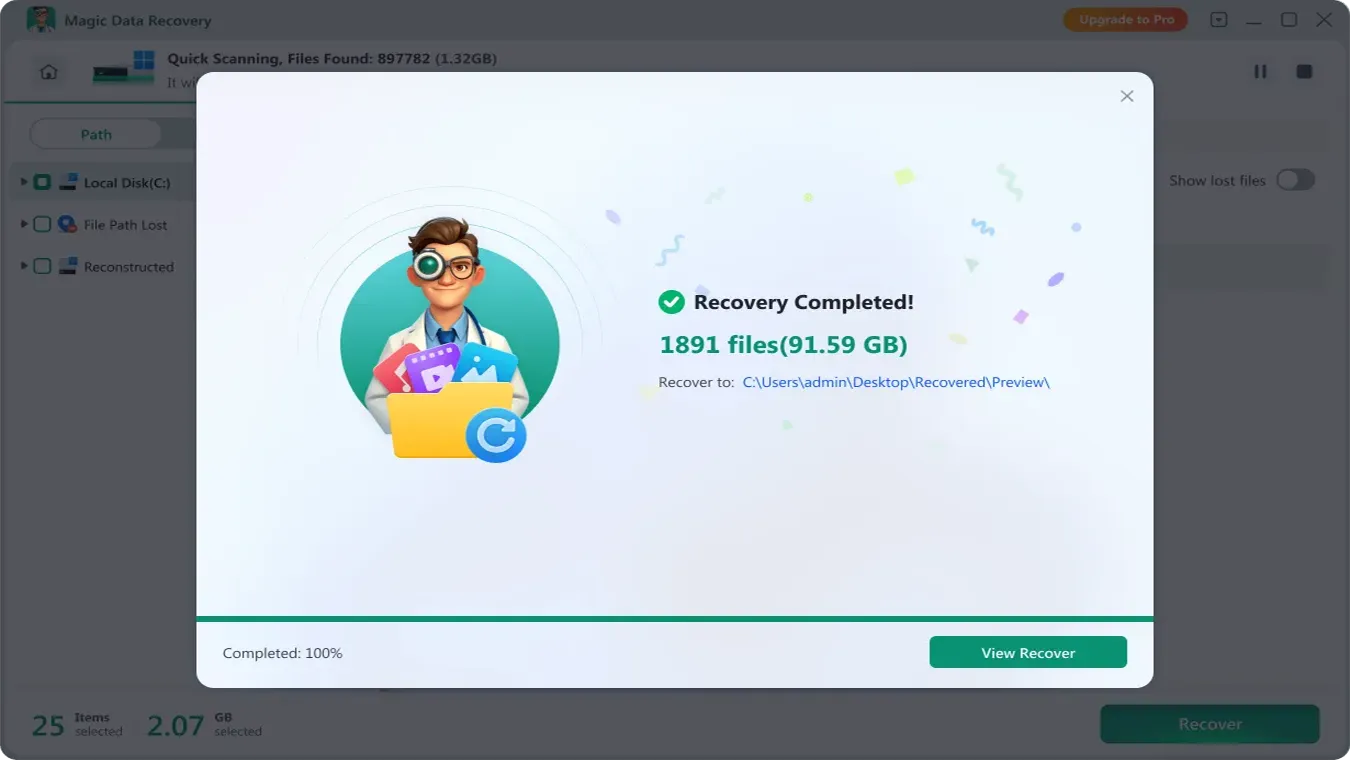
Step 5: Recover Files to a Safe Location
Finally, save the selected files to a safe location. Avoid restoring them to the original path, because this may overwrite existing data.
Why Magic Data Recovery Is a Reliable Choice for Word File Recovery
Many users try basic tools first. However, these methods often fail in complex situations. Therefore, using a professional solution becomes necessary.
Problems It Solves
- Restores permanently deleted documents
- Recovers files from inaccessible or corrupted partitions
- Detects hidden or lost data
Key Advantages
- Deep scanning improves detection
- Preview ensures accurate recovery
- Supports multiple recovery scenarios
Practical Example
For example, after emptying the Recycle Bin, built-in tools cannot restore files. However, this software scans disk sectors and retrieves earlier document versions.
Why It Stands Out
Unlike basic tools, it analyzes deeper storage structures. As a result, it identifies more recoverable data and improves success rates.
Recovery vs Repair: What You Should Know
It is important to distinguish between recovery and repair. Recovery retrieves lost files, while repair fixes damaged ones.
In many cases, restoring an earlier version provides better results. Therefore, recovery tools remain the preferred option.
Tips to Improve Recovery Success
To improve your chances:
- First, stop using the affected drive
- Next, avoid saving new files
- Then, act as soon as possible
- Finally, use deep scanning tools
As a result, you significantly increase the likelihood of success.
Conclusion
Word file recovery becomes much easier when you follow the right process and act quickly. First, try built-in methods. Then, move to advanced solutions if needed.
Magic Data Recovery stands out because it handles complex scenarios effectively. Therefore, it offers a more reliable document recovery option when standard methods no longer work.
Supports Windows 7/8/10/11 and Windows Server
FAQs About Word File Recovery
Can Word documents be recovered after deletion?
Yes, recovery is often possible if the data has not been overwritten. When a file is deleted, the system removes its reference but keeps the content temporarily. Therefore, recovery tools can scan the disk and reconstruct the document before new data replaces it.
Where are Word recovery files stored?
Word stores backup files in AutoRecover and temporary directories. These files act as safety copies created during editing. Therefore, checking these locations early increases your chances of restoring unsaved documents successfully.
Can overwritten files be restored?
Overwritten files are harder to recover because new data replaces the original content. However, previous versions or recovery tools may still locate earlier copies depending on system activity and timing.
What is the best way to recover Word documents?
The best method depends on your situation. Built-in features work for simple cases. However, advanced tools provide deeper scanning and better detection in complex scenarios.
Is AutoRecover enough for data recovery?
AutoRecover helps restore unsaved files, but it has limitations. It depends on settings and save intervals. Therefore, combining it with other methods improves overall success rates.
Can corrupted Word files be recovered?
Yes, recovery tools can often retrieve earlier versions of corrupted files. While repair tools attempt to fix damage, recovery software focuses on locating usable data instead.
How long do recovery files remain available?
Recovery files remain available until overwritten or deleted by the system. Because temporary data may be cleared automatically, acting quickly is essential for successful recovery.

Vasilii is a data recovery specialist with around 10 years of hands-on experience in the field. Throughout his career, he has successfully solved thousands of complex cases involving deleted files, formatted drives, lost partitions, and RAW file systems. His expertise covers both manual recovery methods using professional tools like hex editors and advanced automated solutions with recovery software. Vasilii's mission is to make reliable data recovery knowledge accessible to both IT professionals and everyday users, helping them safeguard their valuable digital assets.