
USB Files Disappeared? 7 Ways to Recover
You plug in a flash drive to print a document or copy some photos, only to find that its folders are empty. Sometimes Windows still reports several gigabytes of used space. In other cases, the entire drive seems blank. If your USB files disappeared, do not format the device or copy anything new to it. The data may be hidden, inaccessible because of file system damage, or deleted but still recoverable. This guide helps you identify which situation you have, try the safest fixes first, and recover genuinely lost files. For more device-specific advice, see Amagicsoft’s USB flash drive recovery solutions.
Table of Contents
Why Did My USB Files Disappear?
When files disappear from a USB, “missing” does not always mean erased. Damaged directory records, changed attributes, or a poor connection can hide data that remains on the memory chips.
Common causes include:
- Hidden or system attributes: Malware, a script, or another computer may mark folders as hidden.
- File system corruption: Unsafe removal, interrupted transfers, failing flash memory, or a power loss can damage FAT32, exFAT, or NTFS metadata.
- Accidental deletion or formatting: Files deleted directly from removable media often do not go to the Windows Recycle Bin.
- Malware: Shortcut malware can hide real folders and replace them with deceptive shortcuts.
- Mounting or path problems: Windows may not assign a drive letter, or an application may have saved the file elsewhere.
- Counterfeit or failing capacity: A flash drive may report more storage than it contains, so newer files vanish after reconnection.
In practice, USB files disappeared reports often come down to one of three states: hidden data, logical data loss, or physical device failure. The next clue is what Windows can still see.
Use these symptoms to narrow down why files disappeared from USB storage:
What you see | Likely explanation | Best first action |
Empty drive, but space is still used | Hidden files or damaged directory records | Show hidden items, then scan if needed |
Only shortcuts appear | Malware changed file attributes | Scan for malware, then restore attributes |
Drive appears as RAW or asks to be formatted | File system damage | Cancel formatting and recover data first |
Drive appears in Disk Management only | Missing/conflicting drive letter or damaged partition | Check the drive letter and partition status |
Files vanish after ejecting and reconnecting | Incomplete writes, failing flash, or false capacity | Stop using the drive and recover what remains |
Drive is absent from Disk Management | Port, controller, or physical hardware failure | Try another computer; consider a recovery lab |
What to Do First When USB Drive Files Disappeared
If files disappeared from USB drive storage, stop writing to it. Do not rerun a transfer, initialize the disk, or accept Windows’ Format prompt. New writes can reuse deleted-file space and reduce recovery chances.
Next, press Win + X, choose Disk Management, and locate the USB by its capacity. Note whether it has a drive letter and whether its status is Healthy, RAW, or Unallocated. Do not create a volume if it appears Unallocated.
If the USB disconnects repeatedly, becomes unusually hot, shows the wrong capacity, or is not detected on two computers, stop DIY attempts. Those signs suggest hardware trouble, and repeated scans may stress an unstable device.
7 Ways to Fix USB Files Disappeared on Windows
1. Reconnect the USB and Rule Out a Display Problem
- Eject the USB safely, then connect it directly to another port rather than through a hub.
- Open File Explorer and type the drive letter, such as E:\, into the address bar.
- Search the drive for a known filename or extension, such as *.docx or *.jpg.
- Test the device on another trusted computer.
If the files appear elsewhere, copy them immediately to a healthy disk. In this case, USB drive files disappeared because of a connection or mounting problem, which may still warn of early failure.
2. Show Hidden Files in File Explorer
If USB flash drive files disappeared while the used-space figure remained unchanged, the folders may simply be hidden. In Windows 11, open the USB in File Explorer and select View > Show > Hidden items. Microsoft documents the same setting in its File Explorer guidance.
Hidden items appear slightly faded. Copy them to another drive. If this explains why your USB files disappeared, secure the copy before changing attributes. Unfamiliar .lnk shortcuts, however, point to possible malware.
3. Remove Incorrect Attributes with ATTRIB
When USB flash drive files disappeared after their attributes changed, File Explorer may not reveal every folder. The Windows attrib command removes hidden, read-only, and system flags, but it cannot undelete or rebuild a damaged file.
- Confirm the USB’s drive letter in Disk Management.
- Search for Command Prompt, right-click it, and choose Run as administrator.
- Enter the following command, replacing E: with the correct letter:
attrib -h -r -s /s /d E:\*.*
- Reopen the USB in File Explorer.
Double-check the letter before pressing Enter. If files disappeared from USB drive because of deletion or corruption, ATTRIB will not bring them back; move on to a recovery scan.
4. Scan the USB and Computer for Malware
If USB files disappeared and look-alike shortcuts replaced them, shortcut malware is a strong possibility. Do not open suspicious links, since the infection can spread to another PC.
Open Windows Security > Virus & threat protection > Scan options > Custom scan, then select the USB. Microsoft confirms that a custom scan can target chosen files and folders. Scan the computer too, or it may infect the USB again.
Antivirus software may quarantine infected files; it is not a data recovery tool. Review quarantine results carefully, and use recovery software if legitimate files remain missing after cleanup.
5. Check Whether the Files Were Moved, Renamed, or Saved Elsewhere
If only one or two files have disappeared from the USB, search both the USB and computer by type or date. Try kind:=document, *.xlsx, or date:today, then inspect the application’s Recent list and default save folder.
If a folder was dragged accidentally, search from the root of the USB rather than browsing its old location. If you find a temporary or autosaved copy, open it from the healthy computer and save a new copy there—not on the suspect USB.
6. Recover Lost Files with Magic Data Recovery
If your USB drive files disappeared after deletion, quick formatting, a RAW file system, or directory corruption, the directory entry may be gone while file content remains. At this point, Magic Data Recovery is more appropriate than display settings or repair commands.
The software supports USB drives and more than 5,000 file types, including documents, photos, videos, archives, and email data. It searches for data lost through deletion, formatting, and file system errors. Its preview workflow also helps you verify candidates before recovery, even when some names or paths are damaged.
How to Recover When Files Disappeared from a USB
1. Install the program on the PC. Never install recovery software on the affected USB.
Supports Windows 7/8/10/11 and Windows Server
2. Connect and select the flash drive. Check the capacity carefully so you scan the correct device.
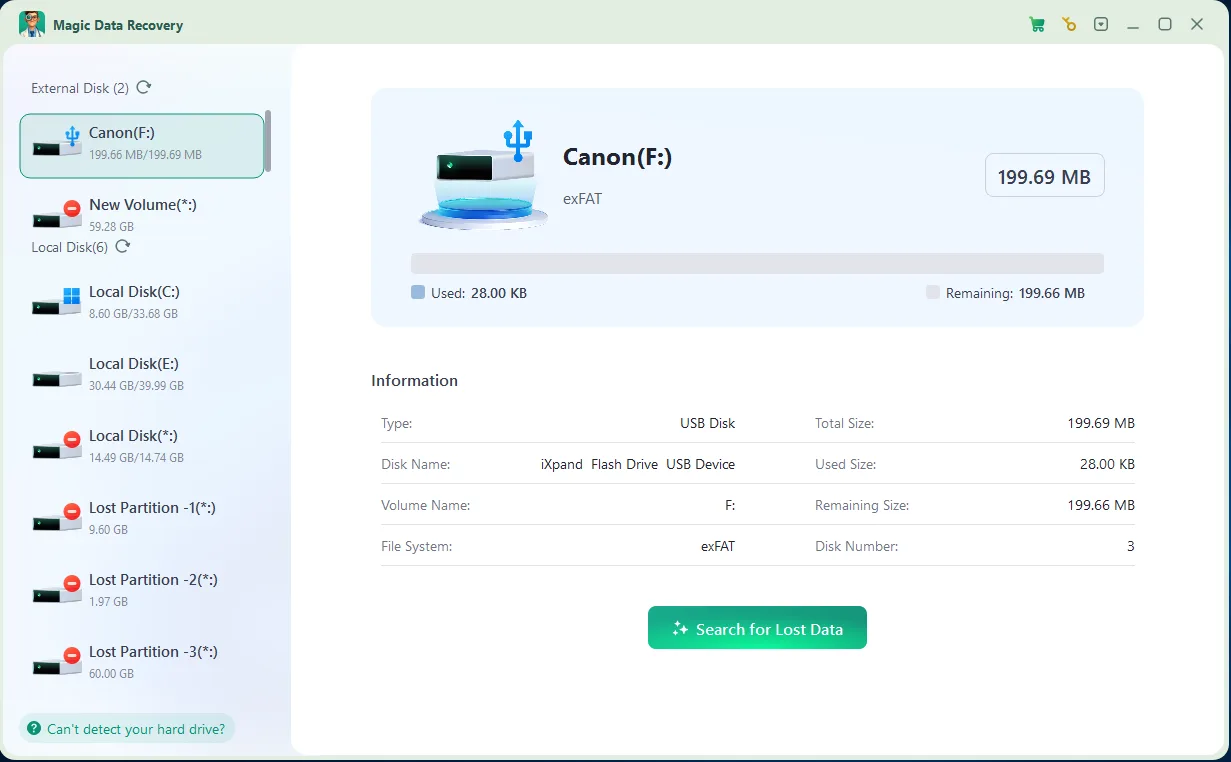
3. Start the scan. Let it finish, especially if a quick result does not contain the missing folder.
4. Filter and preview the results. Search by filename or narrow the list by file type, size, and date where available. A working preview is a useful indication that the file can be reconstructed.

5. Recover to another disk. Save the results to the computer’s internal drive or a separate external disk, never to the source USB.
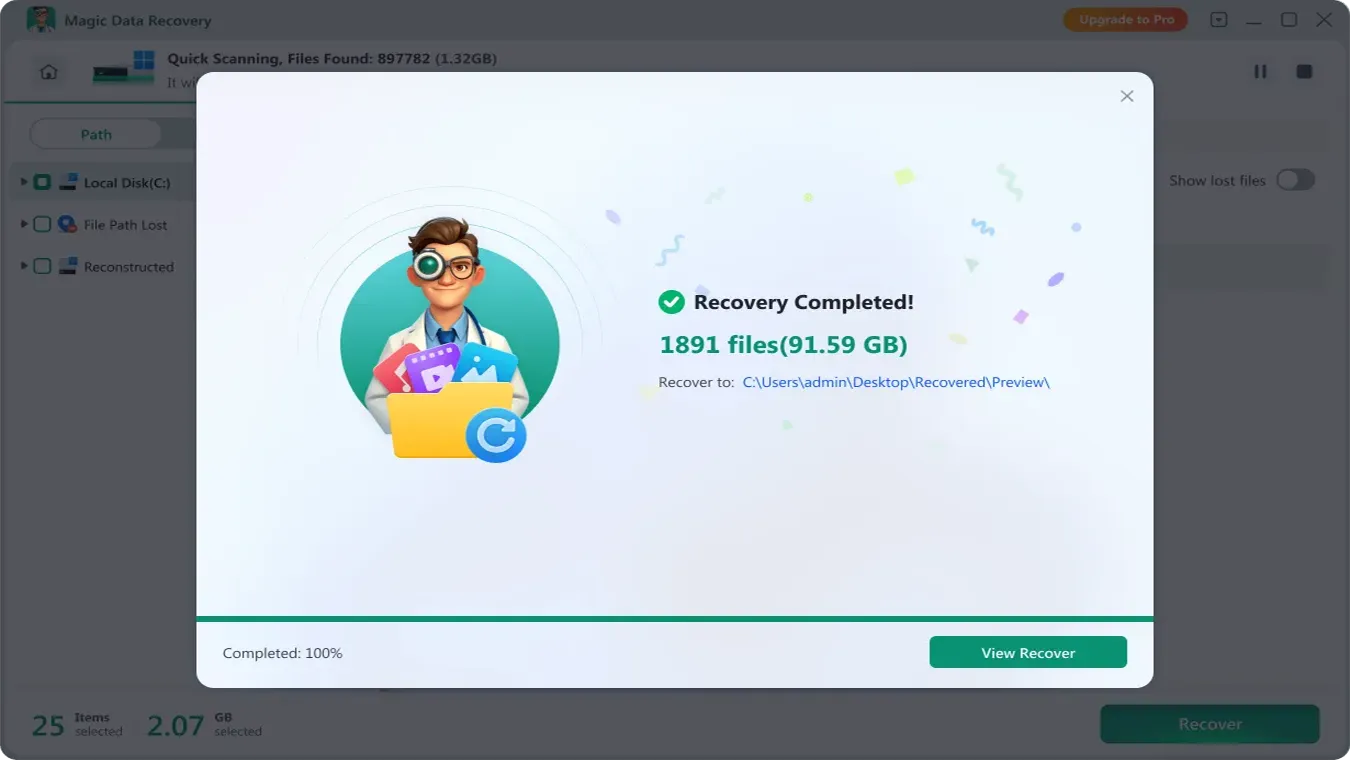
For example, if a photographer’s flash drive becomes RAW after an interrupted copy, formatting would change the device before the photos are rescued. Scanning first can locate data without relying on the damaged directory. See the RAW flash drive recovery guide for that condition.
No program can restore overwritten sectors, and physically dead media may require a specialist. For a USB that Windows detects, however, software recovery is the logical next step once visibility checks fail.
7. Repair File System Errors Only After the Data Is Safe
CHKDSK checks a volume’s file system and metadata for errors. Microsoft notes that chkdsk without repair parameters reports status, while /f changes the volume to fix errors in its command reference.
CHKDSK aims to make the file system consistent, not preserve every missing name or folder. It may turn orphaned fragments into .chk files. Therefore, if valuable USB drive files disappeared, scan and recover them before running a repair.
After securing the data, open Command Prompt as administrator and run:
chkdsk E: /f
Replace E: with the actual letter. If this repairs the case where files disappeared from USB drive, check any FOUND.000 folder too. Retire the device if errors return.
Which Solution Fits Your Situation?
Situation | Manual visibility fix | Recovery software | Professional lab |
Files are hidden but the USB works normally | Best choice | Usually unnecessary | No |
Files were deleted or the USB was quick-formatted | Cannot undelete them | Best first recovery choice | Usually unnecessary |
Drive is RAW but detected correctly | Unlikely to help | Recover before repair | Consider for vital data |
USB disconnects, overheats, or shows no capacity | Not suitable | Avoid repeated scans | Best choice |
The practical rule is simple: use visibility fixes for intact but hidden files, recovery software for logical data loss, and a lab for physical failure. Do not format merely because Windows recommends it.
How to Prevent USB Drive Files from Disappearing Again
Once data is safe, reformat or replace the device. To prevent USB files from disappearing again:
- Keep at least one additional copy of important files on a different device or trusted cloud service.
- Use Safely Remove Hardware and wait for transfers to finish.
- Avoid editing the only copy of a document directly on a flash drive.
- Scan shared USB drives before opening unfamiliar shortcuts.
- Buy from a reputable seller and verify capacity only after backing up; full tests may overwrite the device.
- Replace a drive that repeatedly becomes RAW or disconnects.
Conclusion
When USB files disappeared, begin by protecting what remains. Stop using the device, check whether the files are hidden, rule out malware and path mistakes, and recover data before attempting file system repairs. Magic Data Recovery is a sensible choice when files were deleted, the USB was formatted, or damaged metadata prevents File Explorer from listing them. It supports a broad range of file types, offers preview-based selection, and keeps the process manageable for nontechnical Windows users. If you need more help choosing the right approach, return to the USB flash drive recovery solutions.
Supports Windows 7/8/10/11 and Windows Server
FAQs About USB Files Disappeared
Why did my USB files disappear but the space is still used?
The files may carry hidden or system attributes, or damaged directory records may prevent File Explorer from listing them. Enable Hidden items first. If that fails, stop writing to the USB and scan it with recovery software before running CHKDSK or formatting.
Can a virus make files disappear from a USB drive?
Yes. Shortcut malware commonly hides real folders and creates misleading .lnk files. Do not open those shortcuts. Scan both the USB and the computer with current security software, restore file attributes if appropriate, and recover any files that remain inaccessible.
Where do deleted USB files go in Windows?
Files deleted from removable USB media commonly bypass the Recycle Bin. Windows marks their occupied storage as available, while some underlying content may remain until overwritten. Stop using the drive and start recovery promptly to preserve the best chance of retrieving it.
Will CHKDSK recover files that disappeared from USB?
CHKDSK repairs file system inconsistencies; it is not an undelete tool. It may restore access in some corruption cases, but it can also change metadata or place fragments in FOUND.000. Recover valuable data first, then use CHKDSK to repair the device.
Can I recover files from a USB that asks to be formatted?
Often, yes, if Windows still detects the correct device capacity and the flash memory has not failed. Cancel the Format prompt and scan the USB first. Formatting changes the file system and may make the original folder structure harder to reconstruct.
Why do copied files vanish after I eject the USB?
The transfer may not have finished, the flash memory may be failing, or the device may report a false capacity. Recover existing data first. Afterward, test the full capacity with a reputable verification tool, because such tests may overwrite the USB.
Can Magic Data Recovery restore the original filenames and folders?
It may preserve names and folder paths when enough file system metadata remains. If that metadata is badly damaged, the software can still identify some files by their signatures, although reconstructed items may have generic names. Preview important results before recovery.
What if the USB is not detected in Disk Management?
Try another port and a second computer without using a USB hub. If the device remains absent, becomes hot, or disconnects repeatedly, software cannot communicate with it reliably. Stop testing and consult a professional recovery service for irreplaceable data.

Jason has over 15 years of hands-on experience in the computer data security industry. He specializes in data recovery, backup and restoration, and file repair technologies, and has helped millions of users worldwide resolve complex data loss and security issues.