
What Is the EXT File System? EXT2, EXT3, EXT4, Structure, and Recovery
The EXT file system is a family of Linux file systems used to store and organize data on Linux partitions, servers, NAS devices, and external drives. The most common versions are EXT2, EXT3, and EXT4. Unlike NTFS, which is native to Windows, EXT is designed for Linux, so Windows cannot read most EXT partitions without third-party software.
If you have ever connected a Linux-formatted hard drive, NAS disk, or external storage device to a Windows computer, you may have noticed that the drive cannot be opened normally. This usually happens because Windows does not support EXT file systems by default.
In this guide, you will learn what the EXT file system is, how EXT2, EXT3, and EXT4 differ, how EXT compares with NTFS, whether Windows can read EXT drives, and what to do if data is lost from an EXT partition.
Table of Contents
What Is the EXT File System?
The EXT file system, also known as the Extended File System, is a Linux file system family used to manage how files are stored, named, accessed, and organized on a disk partition. The EXT family includes EXT, EXT2, EXT3, and EXT4, with EXT4 being the most common modern version on many Linux distributions.
A file system controls how data is written to a storage device. It decides where files are placed, how directories are organized, how permissions are managed, and how the operating system tracks available and used space. In Linux environments, EXT file systems have been widely used because they are stable, efficient, and well integrated with Linux permissions and storage management.
For Windows users, EXT can be confusing because EXT-formatted partitions usually cannot be opened directly in File Explorer. If a Linux drive appears as unreadable or Windows asks you to format it, the drive may simply be using an EXT file system that Windows does not recognize.
EXT File System Structure Explained
The EXT file system uses several key structures to organize and manage data on a storage device. These structures allow Linux to locate files, track free space, manage directories, and recover from certain types of system errors.
Superblock
The superblock stores important information about the file system, including the total number of blocks, block size, inode count, free space, and file system status. If the superblock is damaged, the operating system may not be able to mount the EXT partition correctly.
Inode Table
An inode stores metadata about a file or directory. This metadata may include file size, ownership, permissions, timestamps, and pointers to the data blocks where the file content is stored. File names are not stored directly inside inodes; they are managed through directory entries.
Data Blocks
Data blocks store the actual contents of files. When you save a document, image, video, or system file on an EXT partition, the file content is written into data blocks.
Block Groups
EXT file systems divide the disk into block groups. Each block group contains its own metadata and data blocks. This design helps improve performance and reduces fragmentation by keeping related data closer together.
Directory Entries
Directory entries connect file names with inode numbers. When you open a folder, the system uses directory entries to find the corresponding inodes and then locate the actual file data.
Why the EXT File System Structure Matters
Because metadata and file content are managed separately, EXT file systems can locate files efficiently and maintain better consistency. This structure also affects data recovery. In some cases, deleted files may still exist in data blocks until they are overwritten by new data.
Overview of the EXT2 File System
What Is the EXT2 File System?
EXT2 is the second generation of the Extended File System family. It was designed as an improvement over the original EXT file system and became widely used in early Linux systems.
The biggest feature of EXT2 is that it does not use journaling. This makes it lightweight and fast in some scenarios, but it also means that recovery after a crash or sudden power failure may take longer. Without journaling, the system may need to scan the file system more thoroughly to check for errors.
EXT2 can still be useful for small removable media, embedded systems, or storage environments where journaling is not necessary. However, for modern Linux desktops and servers, EXT3 or EXT4 is usually a better choice because they provide better reliability.
Key Characteristics of EXT2
- No journaling support
- Lower overhead compared to journaling systems
- Efficient for removable or flash-based storage
When EXT2 Is Still Used
The EXT2 file system is often chosen for USB drives, SD cards, or embedded systems where minimizing write operations is important. However, the lack of journaling means a higher risk of data corruption after unexpected shutdowns.
What Is the EXT3 file system?
EXT3 is the third generation of the EXT file system family. It was developed as an upgrade to EXT2 and introduced journaling support.
Journaling helps protect the file system by recording changes before they are fully written to disk. If the system crashes or loses power, the journal can help restore the file system to a consistent state more quickly. This makes EXT3 safer and more reliable than EXT2 in many everyday situations.
Another advantage of EXT3 is backward compatibility with EXT2. In many cases, an EXT2 file system can be upgraded to EXT3 without reformatting the entire partition. This made EXT3 a practical upgrade path for older Linux systems.
Journaling Modes in EXT3
The EXT3 file system supports three journaling modes:
Ordered: Ensures metadata is journaled before data is written.
Writeback: Improves performance but provides weaker consistency protection.
Journal: Journals both metadata and data for stronger safety.
This flexibility made EXT3 a popular default choice in Linux distributions for many years, although EXT4 has become the more common choice for modern Linux systems.
What Is the EXT4 File System?
EXT4 is the fourth generation of the Extended File System family and is widely used as the default file system on many modern Linux distributions. It was designed to improve performance, scalability, and reliability compared with EXT2 and EXT3.
EXT4 supports journaling, large storage volumes, large individual files, extents, delayed allocation, and improved block allocation. These features make it more suitable for modern hard drives, SSDs, servers, NAS devices, and large storage environments.
Key features of EXT4 include:
Journaling support: Helps reduce the risk of file system corruption after crashes or power failures.
Large file and volume support: Suitable for modern high-capacity drives and servers.
Extents: Improves how large files are stored and helps reduce fragmentation.
Delayed allocation: Improves performance by optimizing how blocks are allocated.
Backward compatibility: EXT4 can support older EXT2 and EXT3 formats in many Linux environments.
For most modern Linux desktops, servers, and NAS environments, EXT4 is usually the best choice among EXT2, EXT3, and EXT4 because it offers a better balance of performance, reliability, and compatibility.
EXT2 vs EXT3 file system: Key Differences
EXT2, EXT3, and EXT4 all belong to the same EXT file system family, but they are designed for different generations of Linux storage needs.
Feature: Journaling
EXT2: No
EXT3: Yes
EXT4: Yes
Feature: Crash Recovery
EXT2: Slower
EXT3: Faster than EXT2
EXT4: Fast and more reliable
Feature: Performance
EXT2: Lightweight
EXT3: Stable but older
EXT4: Best overall performance
Feature: Best Use Case
EXT2: Small removable media or embedded systems
EXT3: Older Linux systems
EXT4: Modern Linux desktops, servers, and NAS devices
Feature: Data Safety
EXT2: Lower
EXT3: Better due to journaling
EXT4: Best among the three
In short, EXT2 is simple but lacks journaling, EXT3 adds journaling for better crash recovery, and EXT4 improves performance, scalability, and reliability for modern Linux systems.
EXT vs NTFS: Which File System Should You Use?
EXT and NTFS are designed for different operating systems. EXT is mainly used in Linux, while NTFS is the standard file system for Windows.
If you are setting up a Linux system drive, EXT4 is usually a strong choice because it is stable, efficient, and natively supported by Linux. If you are setting up a Windows system drive, NTFS is the better choice because Windows supports it by default.
For external drives that need to be shared between Windows and Linux, EXT may not be the most convenient option because Windows cannot read EXT partitions natively. In that case, NTFS or exFAT may be easier to use across different operating systems.
Scenario: Linux system drive
Recommended file system: EXT4
Reason: Native Linux support and strong performance
Scenario: Windows system drive
Recommended file system: NTFS
Reason: Native Windows compatibility
Scenario: NAS mainly used with Linux
Recommended file system: EXT4 or another Linux-compatible file system
Reason: Better Linux integration
Scenario: External drive shared between Windows and Linux
Recommended file system: exFAT or NTFS
Reason: Better cross-platform compatibility
For users who mainly work in Linux, EXT4 is usually a practical choice. For users who need native Windows access, NTFS or exFAT may be easier to manage.
Where Is the EXT File System Commonly Used?
The EXT file system is most commonly used in Linux-based environments. You may find EXT partitions on Linux desktops, Linux servers, NAS devices, embedded systems, external hard drives, and old Linux system disks.
Common EXT file system use cases include:
Linux operating system partitions
Linux home directories
Server storage partitions
NAS storage disks
External drives formatted under Linux
Embedded Linux devices
Backup drives used in Linux environments
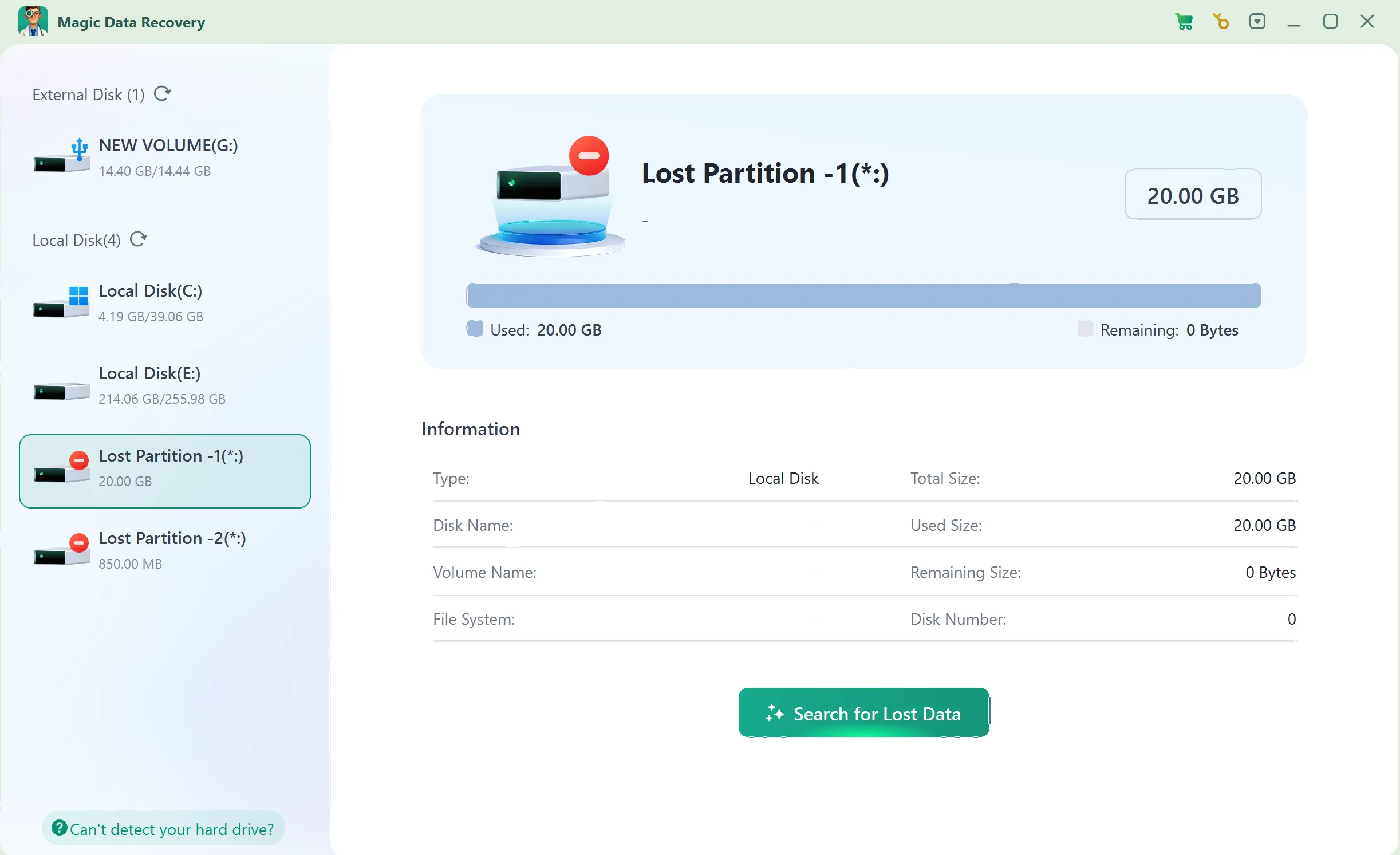
Because EXT is closely connected with Linux, it is not always convenient for users who mainly work on Windows. When a Linux disk is connected to Windows, the partition may appear missing, unreadable, or unallocated even though the data still exists on the drive.
Can Data Be Recovered from an EXT File System?
Yes, data recovery is possible in many EXT scenarios, but success depends on several factors.
Common EXT Data Loss Situations
- Accidental file deletion
- Formatting an EXT partition
- Partition table damage
- Power failure during write operations
Because deleted files are not immediately erased, recovery may be possible before blocks are overwritten.
How Magic Data Recovery Helps with EXT File System Data Loss
When files are lost from an ext file system, using a reliable recovery tool becomes critical. Magic Data Recovery can address these situations efficiently.
Core Problems It Solves
- Recovering deleted files from EXT2 and EXT3 file system partitions
- Accessing EXT-formatted drives from Windows
- Handling formatted or damaged EXT partitions
Why Magic Data Recovery Is Reliable
- Supports EXT-based file systems commonly used in Linux
- Allows scanning disks connected to a Windows PC
- Uses read-only scanning to prevent further data damage
Practical Usage Scenario
For example, if a Linux hard drive fails to boot, you can remove the disk, connect it to a Windows computer, and use Magic Data Recovery to scan and retrieve accessible files.
If you are looking for an efficient and practical solution, Magic Data Recovery is worth considering.
Conclusion
The ext file system remains a foundational technology in Linux environments. By understanding its structure, along with the differences between the EXT2 file system and EXT3 file system, users can manage storage more effectively and avoid compatibility issues.
When data loss occurs, choosing a dependable solution matters. Magic Data Recovery provides a practical way to retrieve lost files from EXT-based disks without unnecessary complexity.
If you need a reliable recovery solution for EXT file systems, Magic Data Recovery offers a balanced combination of safety, compatibility, and ease of use.
Supports Windows 7/8/10/11 and Windows Server
FAQ
What is the EXT file system in Linux?
What is the difference between EXT2, EXT3, and EXT4?
Is EXT4 better than EXT3?
Can Windows read EXT4 drives?
Why does Windows ask me to format an EXT drive?
Can I recover deleted files from an EXT file system?
Is EXT the same as NTFS?
What is an EXT hard disk?

Vasilii is a data recovery specialist with around 10 years of hands-on experience in the field. Throughout his career, he has successfully solved thousands of complex cases involving deleted files, formatted drives, lost partitions, and RAW file systems. His expertise covers both manual recovery methods using professional tools like hex editors and advanced automated solutions with recovery software. Vasilii's mission is to make reliable data recovery knowledge accessible to both IT professionals and everyday users, helping them safeguard their valuable digital assets.