
Windows How to Recover Deleted Files: Complete Guide

Accidentally deleting important data is one of the most common problems Windows users face. Many people immediately search for windows how to recover deleted files after realizing that valuable documents, photos, or work files have disappeared from their computers.
However, file deletion does not always mean permanent data loss. In most cases, Windows only removes the file reference while keeping the actual data on the storage device until it is overwritten. By understanding how Windows File Recovery works and knowing when to use professional recovery software, you can significantly improve your chances of restoring deleted files successfully.
This guide explains practical recovery methods built into Windows and introduces reliable solutions for more complex data loss scenarios.
Table of Contents
Why Files Get Deleted in Windows (And What Happens Next)
Before learning windows how to recover deleted files, it is important to understand how Windows handles file deletion.
When you delete a file:
- Windows removes the file entry from the file system.
- The storage space becomes available for new data.
- The actual file data remains intact until overwritten.
As a result, deleted files can often be recovered if you act quickly. However, once Windows writes new data to the same location, recovery becomes much more difficult.
Common reasons for file loss include:
- Accidental deletion
- Emptying the Recycle Bin
- Disk formatting
- File system corruption
- Unexpected system shutdowns
Built-In Windows Methods to Recover Deleted Files
Windows provides several native options that you should try first.
Recover Deleted Files from the Recycle Bin
The Recycle Bin is the fastest way to restore deleted files.
This method works when:
- You deleted files normally (not using Shift + Delete).
- The Recycle Bin has not been emptied.
Steps to restore files:
- Open the Recycle Bin.
- Locate the deleted file.
- Right-click and select Restore.
Windows immediately returns the file to its original location. However, this method does not help with permanently deleted files.
Restore Files Using File History
File History allows users to restore files from backups.
Requirements:
- File History must be enabled in advance.
- A backup drive or network location must be configured.
How to restore files:
- Open Control Panel.
- Select File History.
- Click Restore personal files.
- Choose the desired file version.
Although effective, many users never activate File History. Therefore, this option often fails in real-world situations.
Use Windows File Recovery (Microsoft Official Tool)
Microsoft offers Windows File Recovery as a command-line utility for advanced file recovery.
Key characteristics:
- No graphical interface
- Best performance on NTFS file systems
- Supports FAT and exFAT using Extensive mode
How to Install Windows File Recovery
- Open Microsoft Store.
- Search for Windows File Recovery.
- Install the tool.
Example Command
winfr C: D: /regular /n *.pdf
This command attempts to recover PDF files from drive C to drive D.
Recovery Modes Explained
- Regular Mode – For recently deleted NTFS files
- Extensive Mode – For formatted drives or corrupted file systems
However, Windows File Recovery requires technical knowledge and does not allow file preview, which limits its practicality for many users.
When Windows Recovery Methods Fail
Built-in Windows tools do not always succeed. For example:
- Files deleted long ago
- Formatted USB drives
- RAW file system errors
- SSD data loss affected by TRIM
In these situations, professional recovery software becomes necessary.
Magic Data Recovery: A More Reliable Windows File Recovery Solution
When users search for windows how to recover deleted files, they often need a solution that balances effectiveness with ease of use. Magic Data Recovery addresses both needs.
Problems It Solves
- Permanently deleted files
- Formatted partitions
- File system errors
- Lost or inaccessible drives
- External storage recovery
Key Advantages
- Intuitive graphical interface
- Deep scan technology
- Supports NTFS, FAT32, and exFAT
- File preview before recovery
- Compatible with Windows 10 and Windows 11
Practical Use Case
For example, a user who accidentally formats a USB flash drive may find Windows File Recovery difficult to use. Magic Data Recovery can scan the device, reconstruct file structures, and recover documents with recognizable filenames.
Why Magic Data Recovery Is More Reliable
- No command-line operations
- Higher success rate in complex scenarios
- Designed for both beginners and professionals
If you need a more efficient recovery solution, Magic Data Recovery offers a dependable alternative.
How to Use Magic Data Recovery
To get started, follow these simple steps to recover your deleted files using Magic Data Recovery:
1. Download and Install Magic Data Recovery: Begin by downloading the software from the official website and installing it on your computer.
Supports Windows 7/8/10/11 and Windows Server
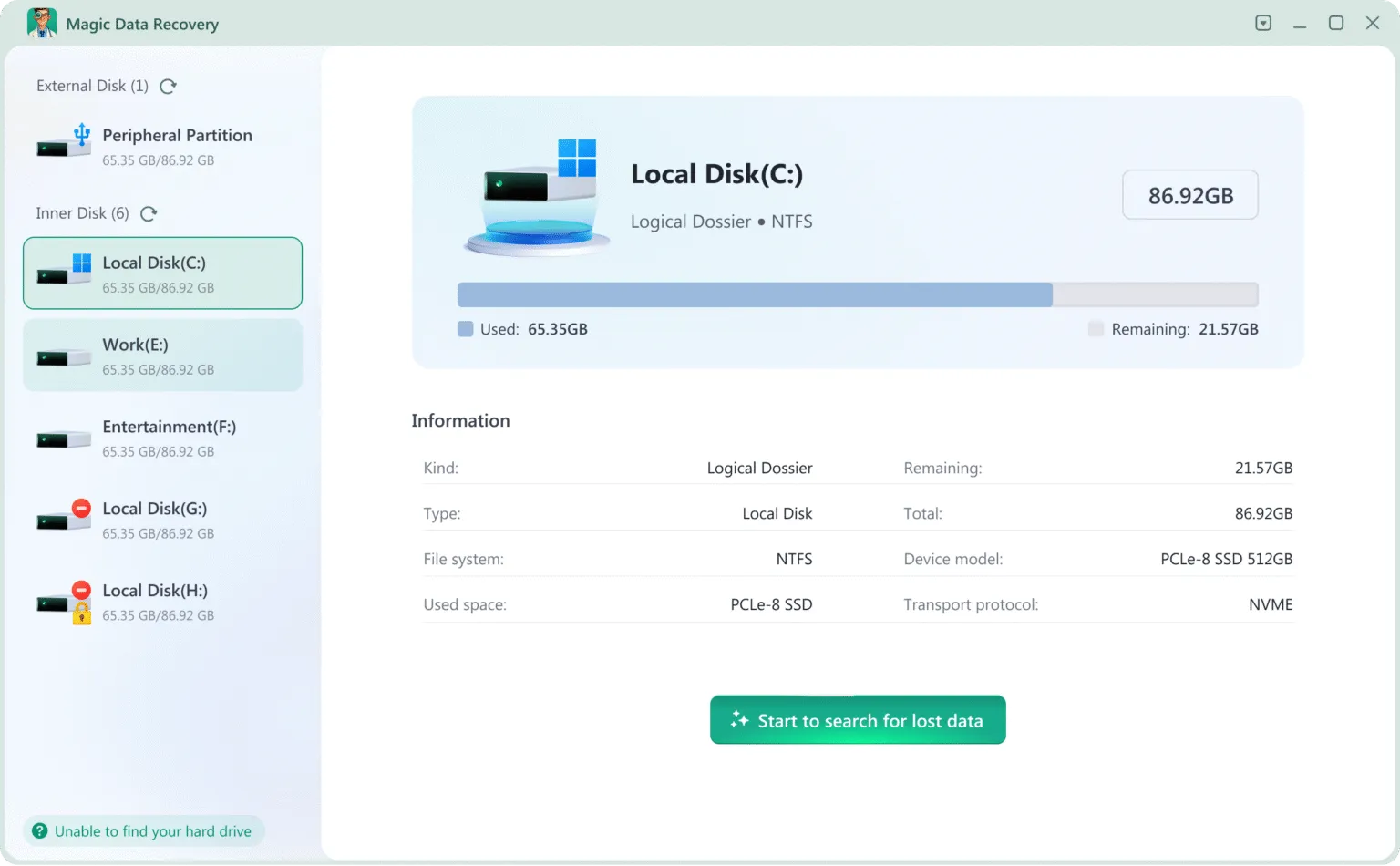
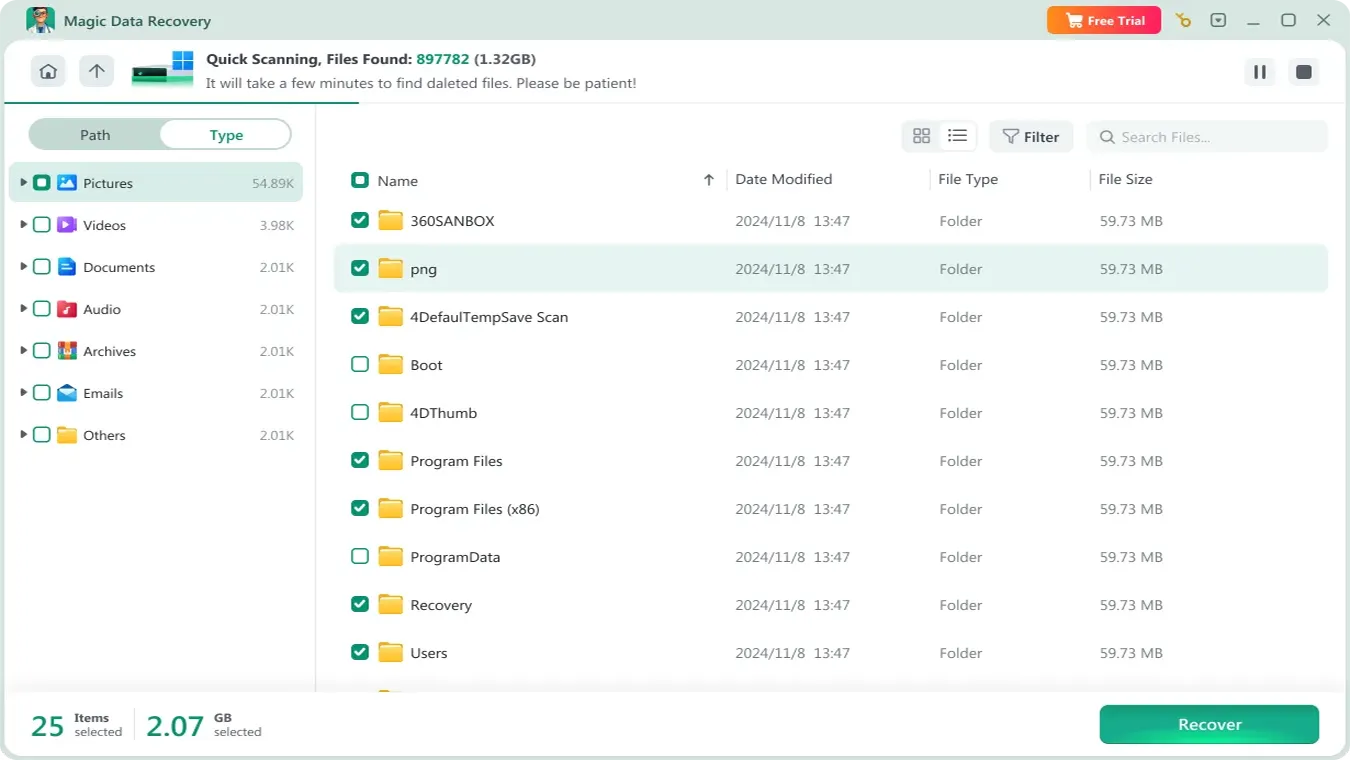
2. Launch the Software: Open the software, and you’ll be greeted with an easy-to-use interface.
3. Select the Drive: Choose the drive or partition where your deleted file was stored. The program supports internal and external storage devices.

Windows File Recovery vs Magic Data Recovery
Feature | Windows File Recovery | Magic Data Recovery |
Interface | Command-line | Graphical UI |
Ease of Use | Low | High |
File Preview | No | Yes |
Formatted Drive Recovery | Limited | Strong |
External Devices | Basic | Advanced |
This comparison shows why many users move beyond native tools.
Tips to Increase File Recovery Success
To improve recovery results:
- Stop using the affected drive immediately.
- Avoid installing software on the same disk.
- Recover files to a separate storage device.
- Act quickly to prevent data overwriting.
Following these best practices significantly improves recovery success.
Conclusion
Understanding windows how to recover deleted files allows users to respond calmly and effectively to data loss. While Windows provides basic recovery options, these methods often struggle with complex scenarios such as formatting or file system corruption.
Magic Data Recovery offers a practical and reliable solution for users who need higher recovery success without technical complexity. By combining deep scanning capabilities with an easy-to-use interface, it delivers better results when built-in Windows tools fall short.
If you are looking for a more efficient deleted file recovery solution, Magic Data Recovery is worth considering.
Supports Windows 7/8/10/11 and Windows Server
FAQs About Windows Deleted File Recovery
How do I recover permanently deleted files from my PC?
How can I recover accidentally deleted files?
How do you restore a deleted file in Windows?
Are permanently deleted files really gone?
Where do permanently deleted files go in Windows?
Can we recover permanently deleted?
Are things deleted from recently deleted gone forever?
Can we recover permanently deleted files in Windows 11?
How to recover a deleted file not in the Recycle Bin?

Jason is a data recovery and technical support specialist with over 15 years of hands-on experience. He has worked extensively with frontline users, troubleshooting difficult data loss cases and providing practical recovery solutions for accidental deletion, formatted drives, damaged file systems, lost partitions, system failures, and other recovery emergencies. His expertise also includes backup and restoration, file repair, and disaster recovery, with a strong emphasis on safe, reliable, and technically accurate guidance.