
Page Directory Entry: Complete Guide for SEO & Data Safety

A well-structured page directory entry plays a critical role in website organization, SEO performance, and user navigation. However, many users overlook how directory issues, accidental deletions, or system crashes can disrupt these entries—and even lead to data loss.
This guide explains how to optimize a page directory entry, avoid common mistakes, and recover lost data efficiently. If you’ve ever faced missing files or broken directory structures, tools like Magic Data Recovery can provide a reliable solution without unnecessary complexity.
Table of Contents
What Is a Page Directory Entry?
A page directory entry refers to how a webpage or file is organized and indexed within a directory structure—either on a website server or within a file system.
Key Functions of a Page Directory Entry
- Defines file or page location
- Supports navigation and indexing
- Helps search engines crawl your site
- Maintains internal linking structure
In simple terms, it acts as a “map reference” that ensures users and systems can locate content quickly.
Why Page Directory Entry Matters for SEO
Optimizing a page directory entry improves both search engine visibility and user experience.
Improved Crawlability
Search engines rely on structured directories to:
- Discover new pages
- Understand site hierarchy
- Index content efficiently
Better User Experience
A clean directory structure:
- Reduces navigation confusion
- Improves page load paths
- Supports logical content grouping
Example of Good vs Bad Structure
Good:
/blog/seo/page-directory-entry-guide
Bad:
/folder1/temp123/page?id=456
The first example clearly reflects a meaningful page directory entry, while the second lacks clarity and SEO value.
Common Issues with Page Directory Entries
Even well-designed systems can face problems. Here are the most frequent issues:
1. Accidental Deletion
Users may delete folders or files unintentionally, breaking the page directory entry structure.
2. Corrupted File Systems
Disk errors or software crashes can damage directory entries, making files inaccessible.
3. Broken Links
If a directory changes without proper redirects, it leads to:
- 404 errors
- SEO ranking drops
- Poor user experience
4. Malware or System Failures
Malicious attacks or system failures can remove or alter directory entries.
How to Optimize Page Directory Entry for SEO
To get the best results, follow these proven strategies:
Use Clean and Descriptive URLs
- Include the primary keyword: page directory entry
- Avoid random strings or unnecessary parameters
Maintain Logical Hierarchy
Structure your directories like this:
- /category/subcategory/page
- Keep depth within 3–4 levels
Implement Internal Linking
Link related pages within the same directory to strengthen SEO signals.
Use Consistent Naming Conventions
- Lowercase letters
- Hyphen-separated words
- Avoid special characters
Add Redirects When Changing Structure
Use 301 redirects to preserve SEO value when modifying a page directory entry.
What Happens When a Page Directory Entry Is Lost?
When a page directory entry is missing or corrupted:
- Files may still exist but become invisible
- Websites may show broken pages
- Important data can appear permanently lost
This situation often occurs due to:
- Formatting errors
- Partition loss
- System crashes
- Accidental deletion
Fortunately, in many cases, the data is still recoverable.
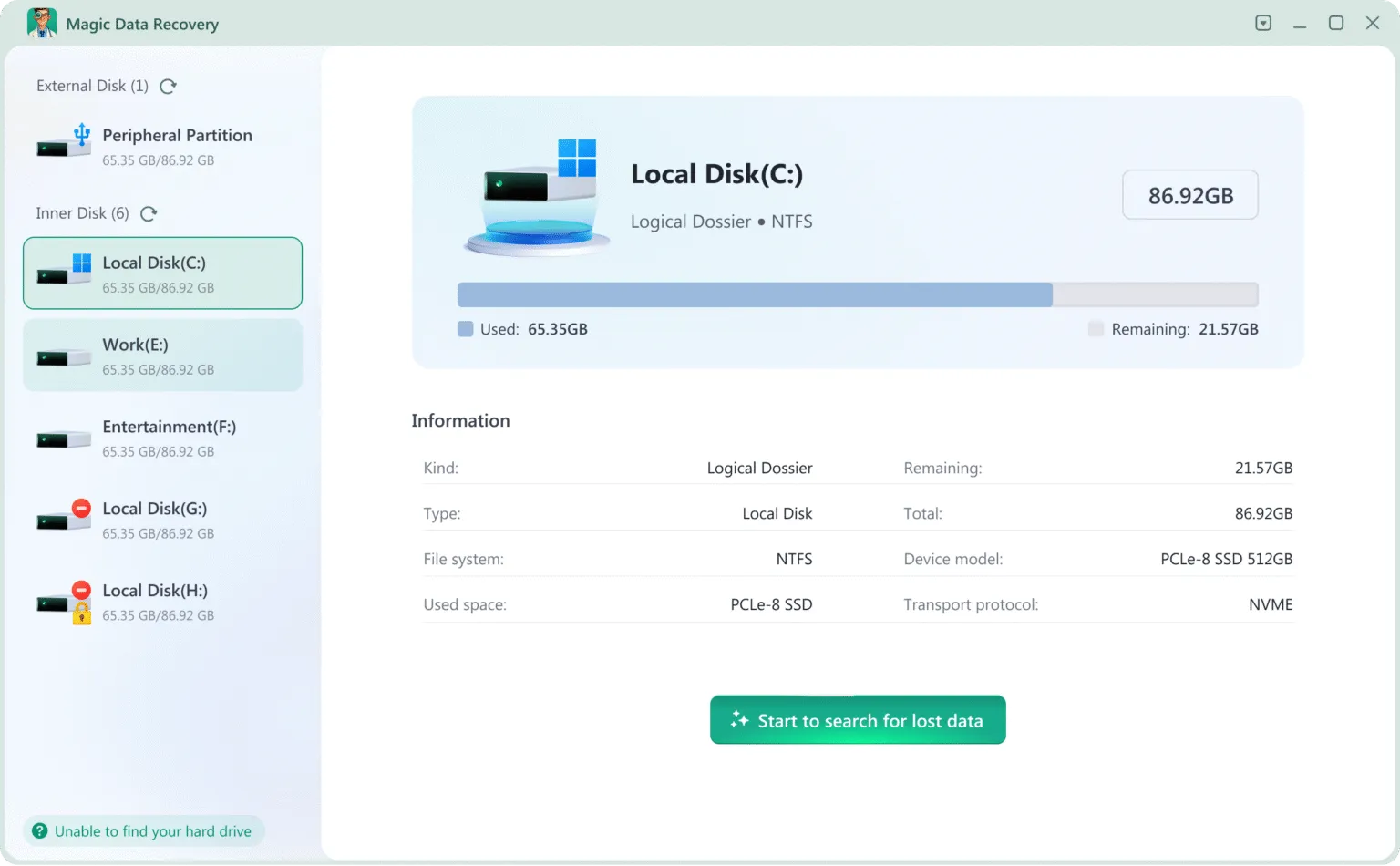
Reliable Solution: Recover Lost Directory Entries with Magic Data Recovery
When directory structures fail, you need a solution that focuses on both accuracy and safety.
Core Problem It Solves
Magic Data Recovery helps retrieve:
- Lost or deleted directory entries
- Missing files from corrupted systems
- Data from formatted or damaged drives
Key Advantages (Unique Selling Points)
- Supports multiple scenarios: deletion, formatting, crashes
- Deep scan technology to locate hidden files
- User-friendly interface for non-technical users
- Compatible with various storage devices
Real-World Use Cases
- Recovering website files after server crash
- Restoring deleted folders affecting page directory entry
- Retrieving documents from damaged hard drives
Why It’s More Reliable
Compared to manual recovery or basic tools:
- It minimizes overwrite risks
- It detects files beyond visible directories
- It provides preview before recovery
If you are dealing with missing directory structures, this tool offers a practical and efficient solution.
If you’re looking for a smarter way to recover lost data, consider trying Magic Data Recovery.
Supports Windows 7/8/10/11 and Windows Server
Best Practices to Prevent Directory Entry Loss
Prevention is always better than recovery. Here are key tips:
Regular Backups
- Use automated backup systems
- Store copies in cloud or external drives
Monitor File System Health
- Run disk checks regularly
- Watch for unusual errors
Avoid Sudden Shutdowns
Improper shutdowns can corrupt directory entries.
Use Reliable Security Tools
Protect your system from malware that may alter directory structures.
Page Directory Entry vs URL Structure: Key Differences
Aspect | Page Directory Entry | URL Structure |
Function | File system organization | Web address format |
Scope | Backend/system level | Frontend/user level |
SEO Impact | Indirect but critical | Direct ranking factor |
Visibility | Not always visible | Always visible |
Both work together to ensure smooth navigation and indexing.
Conclusion
A well-optimized page directory entry is essential for maintaining a structured, SEO-friendly website and ensuring smooth data management. However, real-world scenarios such as accidental deletion or system failure can disrupt directory structures and cause data loss.
This is where Magic Data Recovery stands out. It offers a reliable, user-friendly way to recover lost files and restore directory integrity without unnecessary complexity. For anyone managing digital content or sensitive data, having a dependable recovery solution is not optional—it’s essential.
Supports Windows 7/8/10/11 and Windows Server
FAQs
How does a page directory entry affect SEO?
A page directory entry helps search engines understand your website structure. A clear hierarchy improves crawlability and indexing. When directories are well organized, search engines can better interpret content relationships, which can indirectly boost rankings and enhance user navigation experience.
Can deleted directory entries be recovered?
Yes, in many cases, deleted directory entries can be recovered because the data still exists on the storage device. Tools like Magic Data Recovery scan deeply to locate hidden or inaccessible files and restore them without damaging existing data.
What causes page directory entry corruption?
Common causes include system crashes, improper shutdowns, disk errors, malware attacks, and accidental deletions. These issues can disrupt how files are indexed and stored, making them inaccessible even though they still exist physically on the drive.
Is a page directory entry the same as a URL?
No, they are different. A page directory entry refers to backend file organization, while a URL is the visible web address. However, both are connected, as a well-structured directory often leads to cleaner, SEO-friendly URLs.
How often should I back up directory data?
You should back up your data regularly, ideally daily or weekly depending on usage. Frequent backups ensure that even if a directory entry is lost or corrupted, you can restore your files quickly without relying solely on recovery tools.
What is the safest way to recover lost files?
The safest method is to stop using the affected device immediately and use a reliable recovery tool. Magic Data Recovery is designed to minimize overwrite risks and provides a structured process for retrieving lost files safely.
Can directory entry issues affect website performance?
Yes, broken or missing directory entries can lead to 404 errors, slow loading times, and poor navigation. These issues negatively impact user experience and may reduce search engine rankings if not resolved quickly.
Why choose Magic Data Recovery over other tools?
Magic Data Recovery offers a balance of ease-of-use and advanced recovery capabilities. It supports multiple data loss scenarios and provides accurate results without requiring technical expertise, making it a dependable choice for both beginners and professionals.

Jason has over 15 years of hands-on experience in the computer data security industry. He specializes in data recovery, backup and restoration, and file repair technologies, and has helped millions of users worldwide resolve complex data loss and security issues.