
How to Recover Deleted Files on a USB Drive: 4 Safe Methods
Files deleted from a USB drive usually bypass the Windows Recycle Bin, but that does not always mean they are gone permanently. If the storage space has not been overwritten, you may still be able to recover deleted files on a USB drive.
Stop using the USB drive immediately. Do not copy new files to it, format it, run CHKDSK, or save recovered files back to the same device. Every new write may overwrite the deleted data and reduce the chance of recovery.
This guide explains four practical recovery methods: checking for hidden files, restoring a backup, using Windows File Recovery, and scanning the USB drive with Magic Data Recovery. Start with the method that matches your situation, or explore our USB flash drive recovery solutions for other USB errors.
Supports Windows 7/8/10/11 and Windows Server
Table of Contents
Can Deleted Files Be Recovered from a USB Drive?
Yes, deleted USB files may be recoverable as long as their storage space has not been overwritten. Windows normally removes the file-system reference and marks the occupied space as available. Recovery software can scan that space and reconstruct files that remain intact.
However, the correct method depends on whether the files were actually deleted, hidden by malware, lost after formatting, or made inaccessible by file-system damage.
| USB Data Loss Scenario | Recommended First Action |
|---|---|
| Files suddenly disappear, but the USB drive still shows used space | Show hidden files and check for malware |
| Files were deleted using Delete or Shift + Delete | Use Windows File Recovery or Magic Data Recovery |
| The USB drive was quick-formatted | Run a deep scan with Magic Data Recovery |
| The USB drive appears as RAW or asks to be formatted | Recover the data first; do not run CHKDSK |
| The USB drive is not detected in Disk Management | Check for physical damage or contact a professional recovery service |
Method 1: Show Hidden Files on the USB Drive
Use this method only when files have disappeared but the USB drive still shows used storage space. It can reveal files hidden by malware or incorrect attributes, but it cannot restore files that were actually deleted.
- Connect the USB drive and note its drive letter.
- Open Command Prompt as Administrator.
- Enter the following command:
attrib -h -r -s /s /d X:\*.*
Replace X with the USB drive letter and press Enter. Reopen the drive in File Explorer and check whether the files are visible.
Method 2: Restore Deleted USB Files from a Backup
Check whether the deleted USB files also exist in OneDrive, Google Drive, another computer, an external backup drive, or a Windows backup. If the files were originally copied from your computer to the USB drive, search the original folder before running a recovery scan.
File History only helps if the original files were included in a previously configured backup. It does not automatically create a backup of every removable USB drive.
Method 3: Recover Deleted USB Files with Windows File Recovery
Windows File Recovery is a free Microsoft command-line tool for Windows 10 and Windows 11. It supports USB drives formatted with NTFS, FAT, or exFAT, but it does not provide a graphical interface or file preview.
First, install Windows File Recovery from the Microsoft Store. Suppose the affected USB drive is E: and you want to save the recovered files to the computer’s C: drive.
For a recently deleted file on an NTFS USB drive, use:
winfr E: C: /regular /n *.docx
For a FAT32 or exFAT USB drive, or when the files were deleted some time ago, use Extensive mode:
winfr E: C: /extensive /n *.jpg /n *.png /n *.docx
Replace the extensions with the file types you need. When prompted, type Y to begin recovery. Windows will create a recovery folder on the destination drive.
The source and destination must be different drives. Never recover files back to the affected USB drive because doing so may overwrite other deleted data.
Method 4: Recover Deleted Files with Magic Data Recovery
If the files were permanently deleted, the USB drive was formatted, or Windows File Recovery is too difficult to use, Magic Data Recovery provides a graphical recovery process for Windows.
It supports deleted, formatted, RAW, and logically corrupted USB drives, along with more than 5,000 file types. The preview and filtering features help you identify the files you need before saving them.
How to Recover Deleted Files from USB Using Magic Data Recovery
Step 1: Install Magic Data Recovery Safely
Download and install Magic Data Recovery on your computer’s internal drive. Do not install it on the affected USB drive.
Supports Windows 7/8/10/11 and Windows Server
Step 2: Select the USB Drive
Connect the USB drive, launch the software, and select the affected device from the drive list.
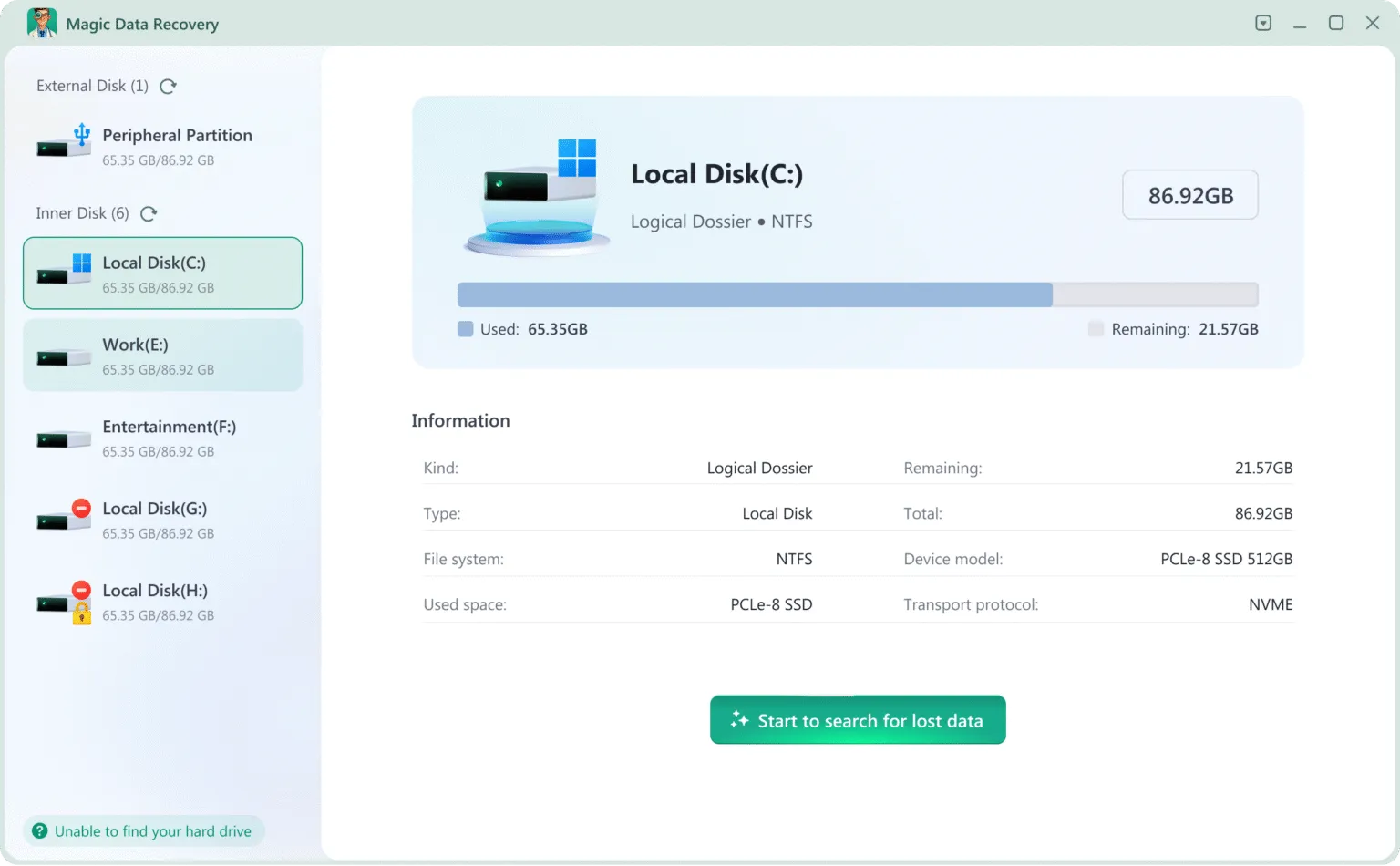
Step 3: Scan for Deleted Files
Click “Search for Lost Data.” Allow the scan to finish, especially if the files were permanently deleted or the USB drive was formatted.
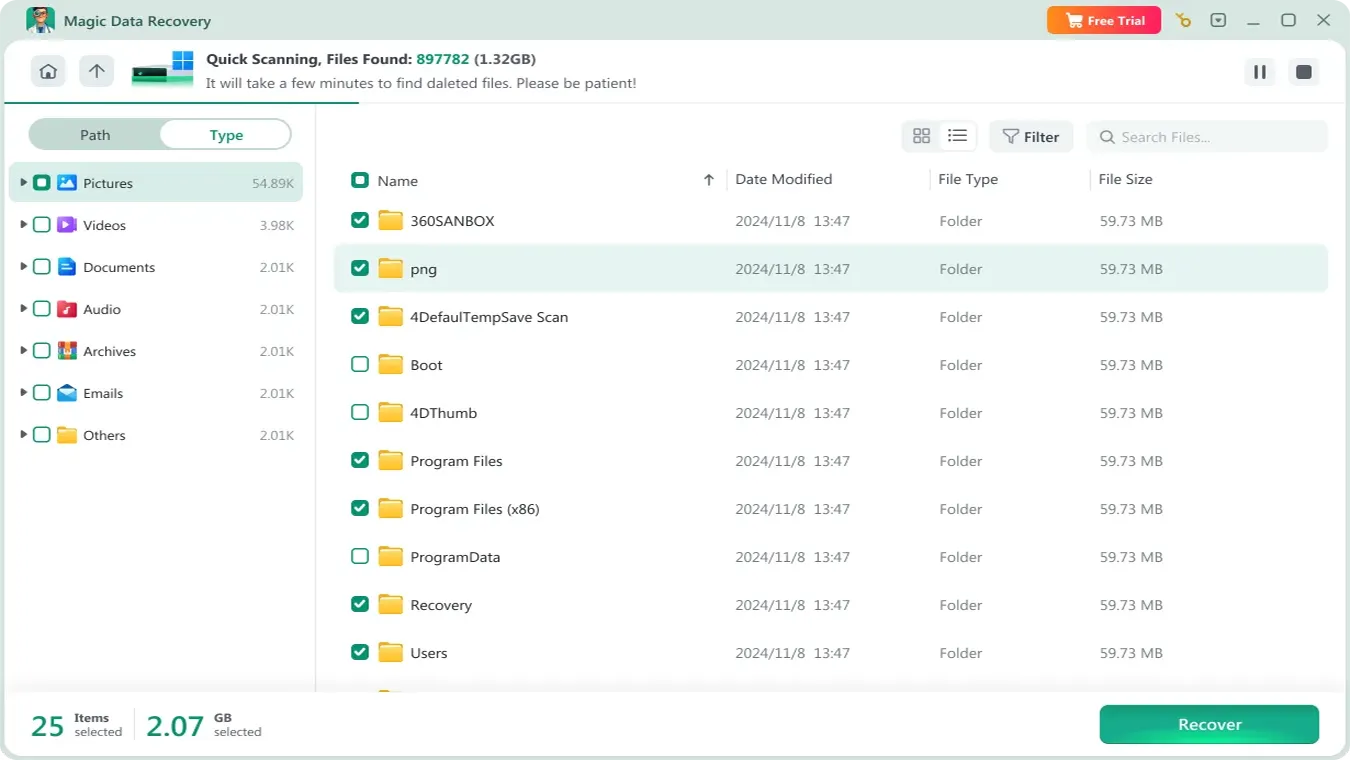
Step 4: Filter and Preview the Results
Filter the results by file type, name, size, or original path. Preview important documents, photos, and other supported files to check their condition.

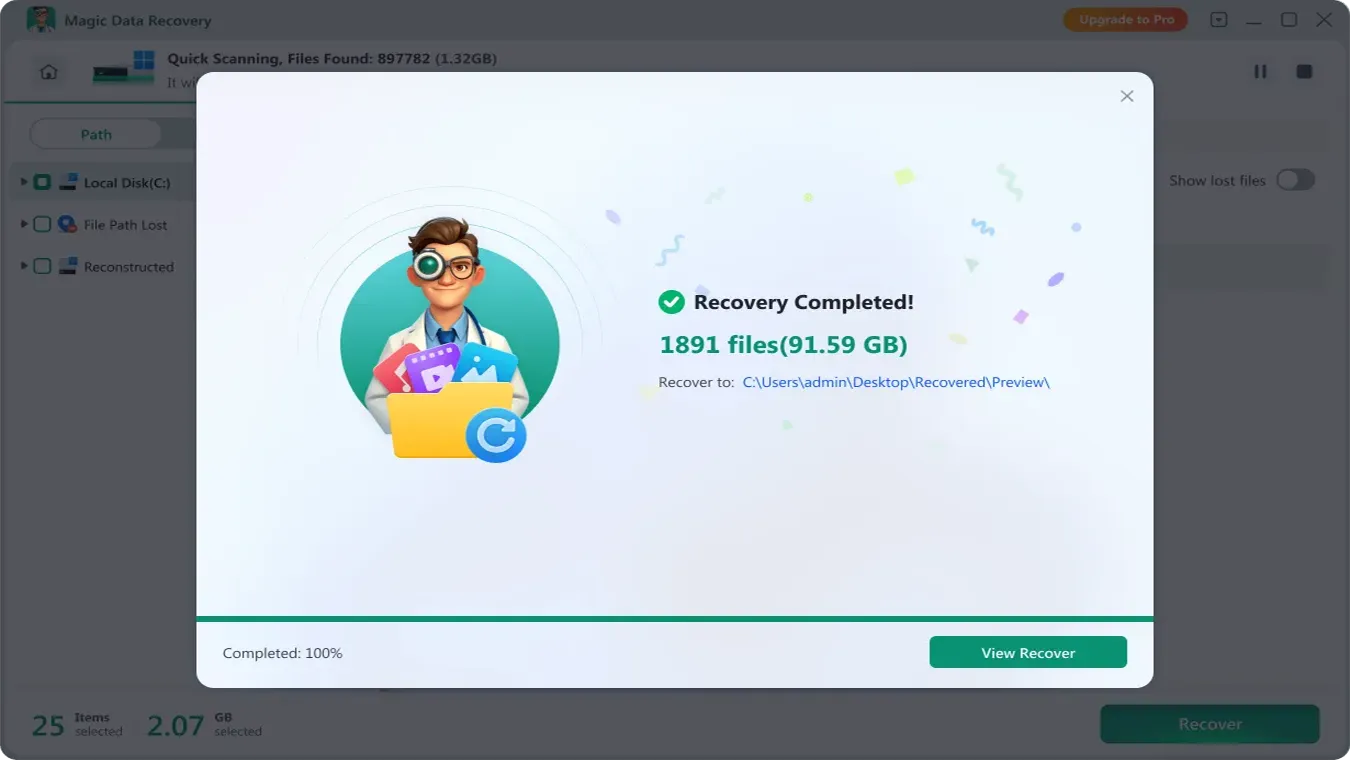
Step 5: Recover Files to Another Drive
Select the files you need and click “Recover.” Save them to the computer or another external drive—not to the affected USB device.
Comparing Recovery Options: Built-in Tools vs. Professional Software
| Method | Best for | Main limitation |
|---|---|---|
| ATTRIB command | Files hidden by malware or attributes | Cannot recover deleted files |
| Backup restoration | Files with an existing backup copy | Requires a backup created before deletion |
| Windows File Recovery | Deleted files on a readable USB drive | Command-line interface and no preview |
| Magic Data Recovery | Deleted, formatted, RAW or logically corrupted USB drives | Cannot repair physically damaged hardware |
| Recovery service | Bent, broken or electrically damaged USB drives | Usually expensive and time-consuming |
Choose the method based on how the files were lost. For actual deletion without a backup, a recovery scan is usually more relevant than ATTRIB or other file-visibility commands.
What Not to Do Before USB File Recovery
- Do not copy new files to the USB drive.
- Do not format the drive, even if Windows prompts you to do so.
- Do not run CHKDSK before recovering important data.
- Do not install recovery software on the affected USB drive.
- Do not save recovered files back to the same device.
- Stop using software and seek professional help if the USB drive is physically damaged.
Conclusion
You can often recover deleted files on a USB drive if you stop using the device before the deleted data is overwritten. ATTRIB can reveal hidden files, while backups and Windows File Recovery may help in specific situations. For permanently deleted, formatted, or logically inaccessible USB data, Magic Data Recovery provides a more visual scan, preview, and recovery process.
Always save recovered files to another drive. For help with formatting errors, RAW drives, missing files, and USB detection problems, visit our USB flash drive recovery solutions.
Supports Windows 7/8/10/11 and Windows Server
FAQs
Can I recover deleted files from a USB drive?
Where do deleted files from a USB drive go?
Can I recover deleted USB files without software?
Can CMD recover permanently deleted files from a USB drive?
Can I recover files after formatting a USB drive?
Why are deleted USB files not in the Recycle Bin?
Can files be recovered from a RAW USB drive?
Can software recover files from a physically damaged USB drive?

Jason is a data recovery and technical support specialist with over 15 years of hands-on experience. He has worked extensively with frontline users, troubleshooting difficult data loss cases and providing practical recovery solutions for accidental deletion, formatted drives, damaged file systems, lost partitions, system failures, and other recovery emergencies. His expertise also includes backup and restoration, file repair, and disaster recovery, with a strong emphasis on safe, reliable, and technically accurate guidance.