
Samsung USB Drive Not Recognized? Best Fix & Data Recovery Guide
Supports Windows 7/8/10/11 and Windows Server
Table of Contents
Understanding Why Your Samsung USB Drive Is Not Showing Up
Before attempting fixes, it helps to understand the “why.” When Windows fails to recognize your Samsung flash drive, it’s usually due to logical issues rather than immediate hardware death.
Common technical reasons include:
- File System Corruption: The drive’s file system (NTFS, exFAT, FAT32) may be damaged, causing Windows to label it as RAW. A RAW drive is one the OS cannot read.
- Partition Loss or Damage: The partition table, which tells the system where data is stored, can become corrupted or deleted. This makes the drive appear “unallocated” in Disk Management.
- Driver Conflicts: Outdated, corrupted, or conflicting USB drivers can prevent proper communication between the drive and your computer.
- Drive Letter Conflict: Another device may be using the assigned drive letter, hiding your USB.
- Physical Connection Issues: A faulty USB port, cable (for OTG adapters), or minor internal damage can interrupt detection.
Important First Step: Always check Disk Management (diskmgmt.msc). If your Samsung USB drive appears here but is “Unallocated” or “RAW,” the problem is logical. If it’s not listed at all, try different USB ports and computers to rule out a port issue.
How to Fix a Samsung USB Drive Not Recognized in Windows
Follow these troubleshooting steps in order, starting with the simplest.
Step 1: Basic Hardware and Connection Checks
- Try a different USB port on your computer, preferably one directly on the motherboard (back of a desktop).
- Connect to another computer. This helps determine if the issue is with the drive or your specific PC.
- Inspect the drive physically for any obvious damage. Gently clean the USB connector.
Step 2: Resolve Driver and Recognition Issues in Windows
Often, the Samsung flash drive not recognized error stems from Windows itself.
- Update or Reinstall USB Drivers:
- Press
Windows + Xand select Device Manager. - Expand Disk drives and Universal Serial Bus controllers.
- Right-click your Samsung drive (if listed) or the USB controllers, and select Uninstall device. Then restart your PC; Windows will reinstall drivers automatically.
- Press
- Change the Drive Letter:
- Open Disk Management.
- If your drive has a partition but no letter, right-click it and choose Change Drive Letter and Paths.
- Click Add and assign a new, unused letter (e.g., G: or H:).
Step 3: Repair Partition and File System (Data Loss Warning)
Caution: These steps in Disk Management can lead to data loss. Only proceed if you have no data on the drive or have already recovered your files.
- For a RAW or Corrupted Drive (Using CMD):
- Open Command Prompt as Administrator.
- Type
chkdsk X: /f(replaceXwith your drive’s letter) and press Enter. This attempts to fix file system errors.
- For an Unallocated Drive:
- In Disk Management, right-click the unallocated space and select New Simple Volume. This will format the drive, making it usable again but erasing all previous data.
If your data is important, do not format or create new volumes. Instead, move directly to data recovery.
Recovering Data from an Unrecognized or RAW Samsung USB Drive
When your drive shows as RAW, unallocated, or is inaccessible, your primary goal should be data recovery first, repair later. This is where professional recovery software like Magic Data Recovery becomes essential.
Why Choose Magic Data Recovery for This Problem?
Magic Data Recovery is specifically designed to handle complex data loss scenarios where standard Windows tools fail. It addresses the core pain points when your Samsung USB is not recognized:
- Core Solution: It can deep-scan storage devices that are RAW, have lost partitions, or are invisible in File Explorer, rebuilding the file structure to locate your files.
- Key Advantages: The software operates in a read-only mode, ensuring your original data is not overwritten. It supports recovery from formatted, corrupted, and virus-attacked drives.
- Ideal Use Case: Imagine you have a Samsung FIT Plus drive with critical work documents. It suddenly becomes RAW. Instead of risking further damage with
chkdsk, you use Magic Data Recovery to scan and extract all documents safely to another drive. Only after successful recovery would you consider formatting the USB for reuse. - Reliability Factor: Compared to free tools with deep scan limitations, Magic Data Recovery offers a more robust scanning engine and preview functionality, allowing you to verify files before recovery, ensuring a higher success rate for complex cases.
Step-by-Step Guide to Recover Data with Magic Data Recovery
1. Download and install Magic Data Recovery on your computer.
Supports Windows 7/8/10/11 and Windows Server
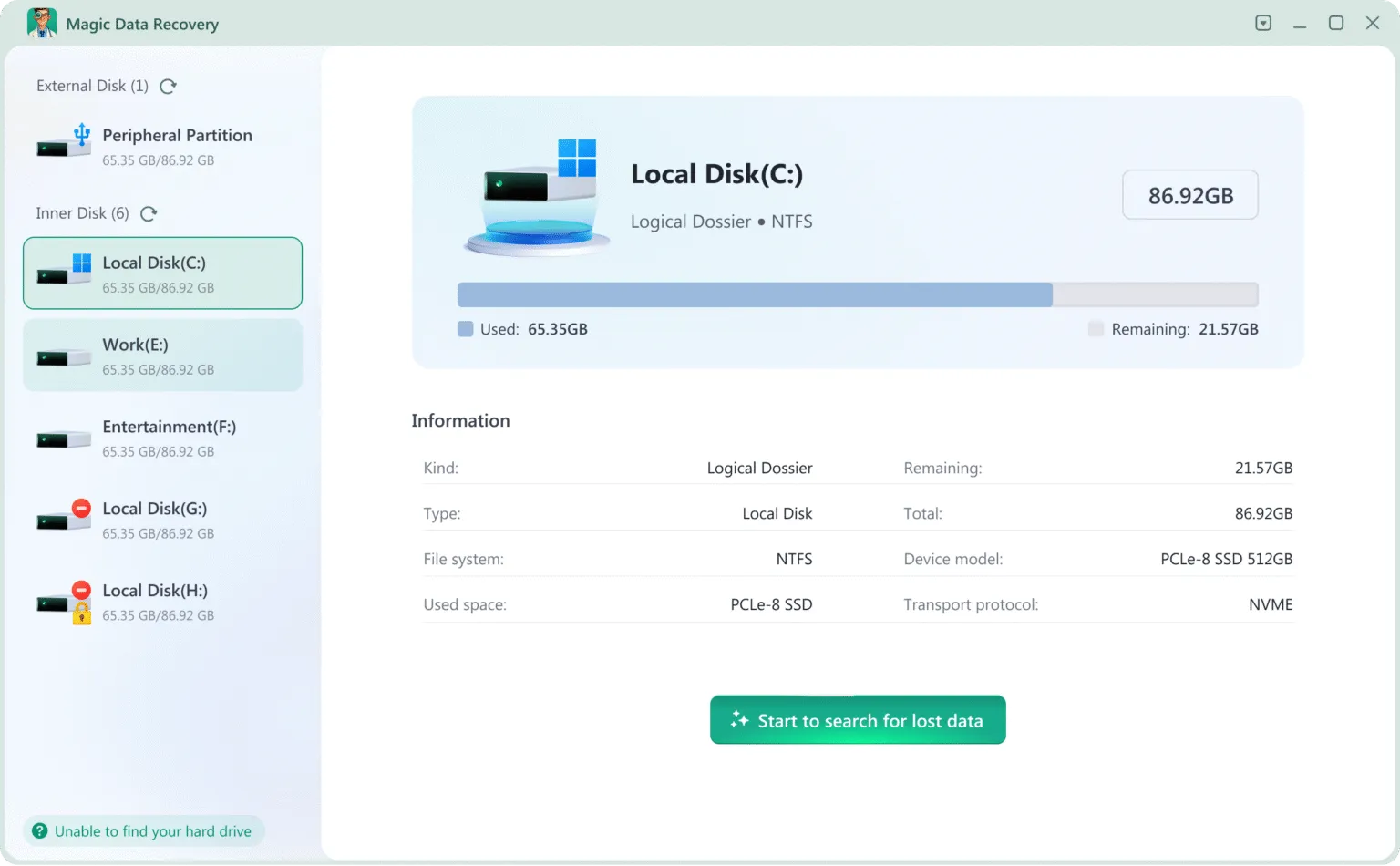
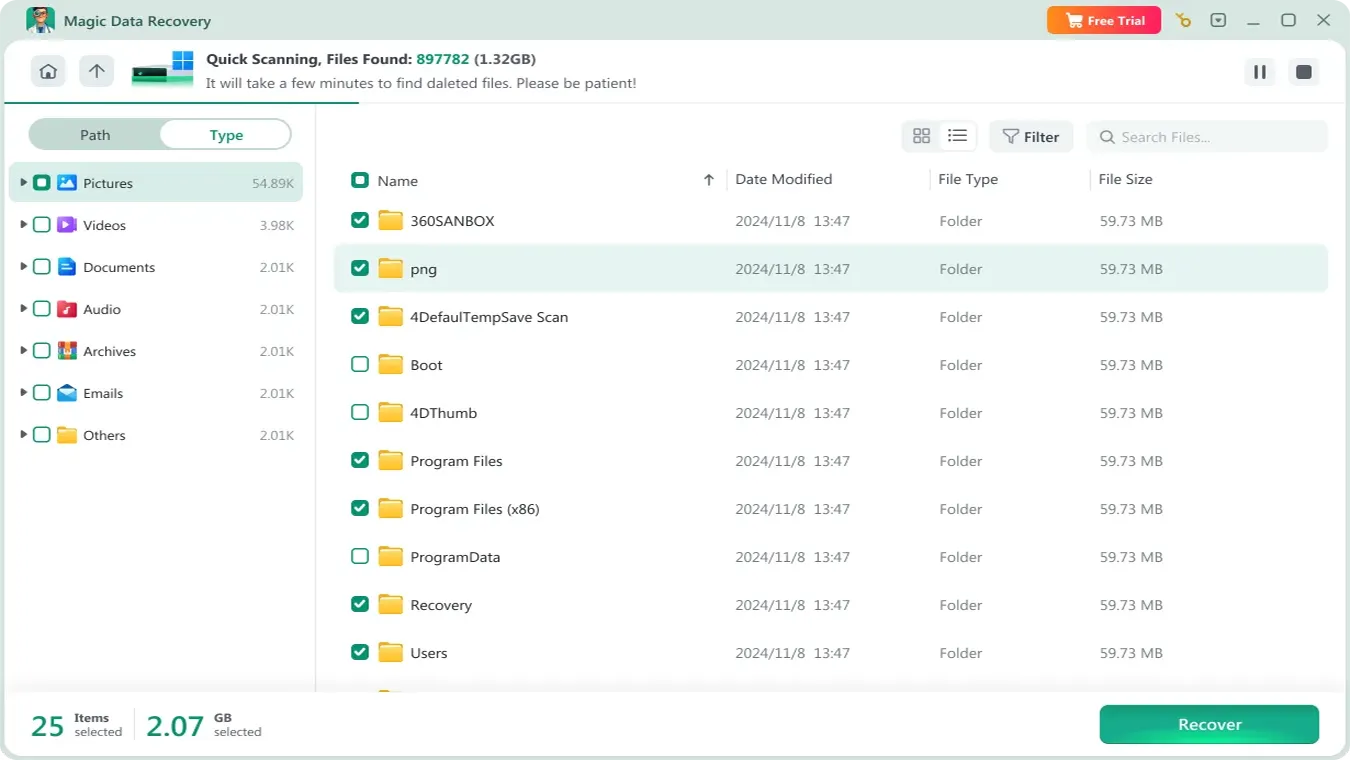

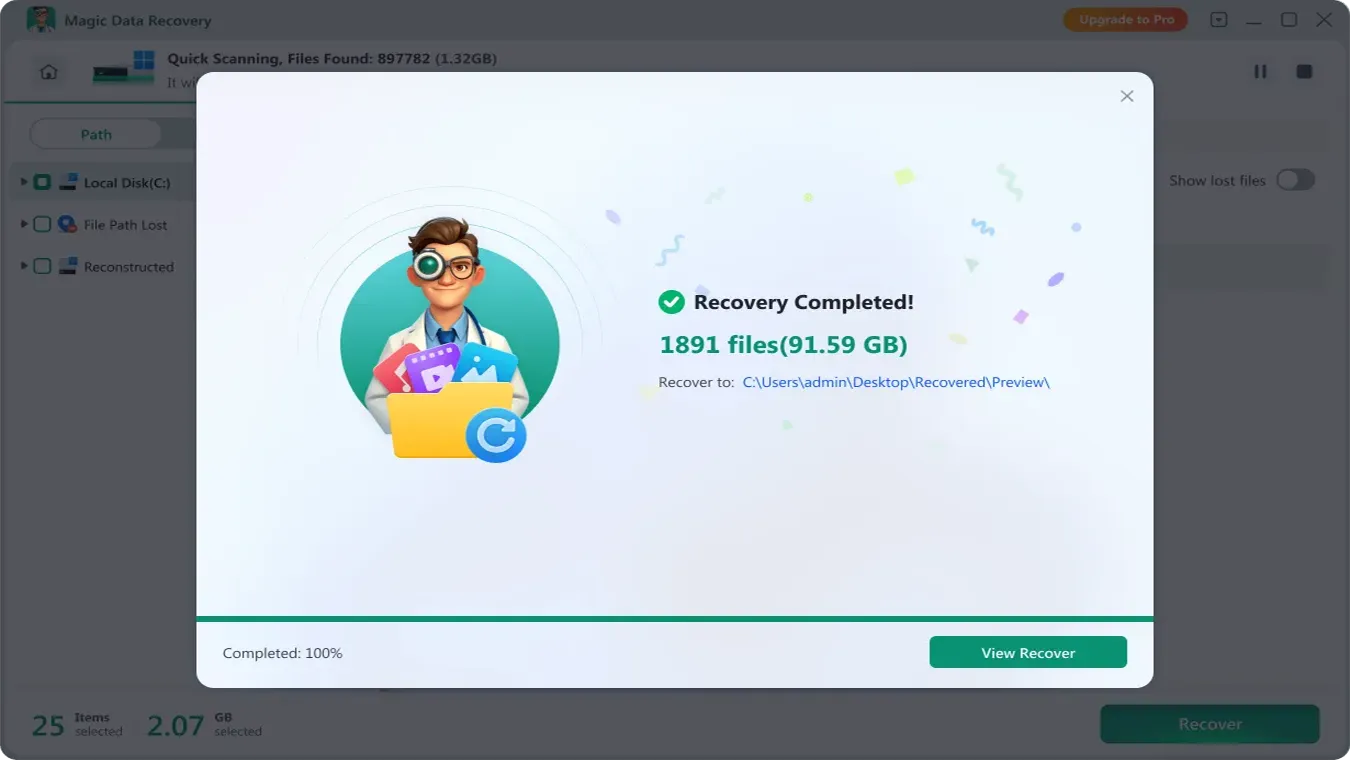
Best Practices to Prevent Future USB Drive Problems
Prevention is always better than cure. Protect your Samsung USB drive with these habits:
- Safely Eject: Always use the “Safely Remove Hardware” option before unplugging.
- Avoid Physical Stress: Don’t bend, drop, or expose the drive to liquids and extreme temperatures.
- Use Reliable Antivirus Software to prevent corruption from malware.
- Regular Backups: Never store the only copy of critical data on a USB drive. Use cloud storage or a second external drive for backups.
Conclusion
A Samsung USB drive not recognized error can stem from partition loss, RAW file system errors, or driver conflicts. While basic Windows tools like Disk Management and chkdsk can sometimes repair the drive, they carry a high risk of permanent data loss.
For anyone facing this issue with important files at stake, the most reliable and safe course of action is to perform data recovery first. Magic Data Recovery provides a specialized, user-friendly solution for precisely these scenarios, allowing you to recover your data before attempting any repair or format commands that could overwrite it.
If you are looking for an effective solution to retrieve your files from an inaccessible Samsung USB, consider trying Magic Data Recovery. Its deep scan capability for RAW and partition-loss cases makes it a dependable tool in your data recovery toolkit. Once your data is secure, you can confidently use Windows tools to reformat and reuse your flash drive.
Supports Windows 7/8/10/11 and Windows Server
FAQs
Why is my Samsung not detecting my USB drive?
Why is my USB flash drive not recognized?
Why is my USB plugged in but not showing up?
Why is my Samsung external hard drive not showing up?
How to reset USB port on Samsung?
How do I manually detect a USB device?
How to repair a dead USB flash drive?

Jason is a data recovery and technical support specialist with over 15 years of hands-on experience. He has worked extensively with frontline users, troubleshooting difficult data loss cases and providing practical recovery solutions for accidental deletion, formatted drives, damaged file systems, lost partitions, system failures, and other recovery emergencies. His expertise also includes backup and restoration, file repair, and disaster recovery, with a strong emphasis on safe, reliable, and technically accurate guidance.