
Best Program for Recovering Deleted Files (Complete Guide)
Deleting important files by mistake is more common than most people expect. In everyday use, a wrong click, an emptied Recycle Bin, a formatted drive, or a sudden system crash can instantly remove photos, documents, videos, or work files that matter. Fortunately, in many situations, deleted file recovery is still possible. With the right program for recovering deleted files, it is possible to restore data before it gets overwritten.
This guide explains how file recovery works, what to look for in recovery software, and why many users choose Magic Data Recovery as a practical and reliable solution.
Supports Windows 7/8/10/11 and Windows Server
Wondering if your files can be recovered? Find out in seconds with our quick check below.
Data Recovery Assessment
Answer 3 quick questions to estimate your recovery chances
Table of Contents
How a Program for Recovering Deleted Files Works
Before choosing recovery software, it helps to understand what happens when a file is deleted. In addition, this knowledge allows you to set realistic expectations about what recovery tools can and cannot do.
What Happens After Deletion
When you delete a file:
- The operating system removes its reference from the file system
- The actual data remains on the storage device
- The space is marked as available for new data
Until new data overwrites that space, a program for recovering deleted files can scan the disk and rebuild the file structure. Because of this, timing plays a critical role in recovery success.
Key Recovery Technologies Explained
Most professional programs for recovering deleted files rely on two main methods:
- Quick Scan – Locates recently deleted files using file system records
- Deep Scan – Analyzes raw disk sectors to recover files without metadata
Understanding these methods helps explain why recovery speed and disk usage matter after data loss. As a result, choosing the right scan mode becomes an important decision.
How to Choose the Right Program for Recovering Deleted Files
Not all recovery tools offer the same level of reliability. However, knowing what to look for makes the selection process much easier. Choosing the right solution requires looking beyond brand names.
Essential Features to Look For
A trustworthy program for recovering deleted files should offer the following features. Most importantly, these elements directly affect recovery reliability:
- Support for common file types (documents, photos, videos, archives)
- Compatibility with HDDs, SSDs, USB drives, and memory cards
- Preview functionality before recovery
- Read-only scanning to avoid data overwrite
- Clear scan results with file condition indicators
Common Mistakes to Avoid
Many users reduce recovery success by:
- Installing recovery software on the affected drive
- Continuing to use the device after deletion
- Relying on outdated or overly limited tools
Following best practices significantly improves recovery outcomes when using programs for recovering deleted files. Therefore, avoiding these mistakes is just as important as selecting the right tool.
Comparing Popular Programs for Recovering Deleted Files
To help users choose the right program for recovering deleted files, the table below compares several widely used recovery tools based on common decision factors. This overview focuses on practical differences rather than marketing claims.
Program | Supported Systems | Recovery Capabilities | Ease of Use | Best For |
Windows | Deep scan, quick scan, preview before recovery | Very easy | Balanced performance and reliability | |
Windows, macOS | Multiple scan modes, wide file support | Easy | General-purpose recovery | |
Windows, macOS | Step-by-step recovery, basic preview | Very easy | Beginners | |
Windows | Fast scan, raw recovery | Moderate | Simple recovery cases |
Unlike many programs for recovering deleted files that focus on either simplicity or technical depth, Magic Data Recovery offers a practical balance. It provides advanced scanning features while remaining accessible to non-technical users.
Why Magic Data Recovery Is a Reliable Program for Recovering Deleted Files
Among available programs for recovering deleted files, Magic Data Recovery focuses on solving real-world recovery challenges without unnecessary complexity. As a result, it fits both everyday and professional recovery needs.
Core Problems It Solves
Magic Data Recovery helps users recover data after:
- Accidental deletion
- Disk formatting
- Partition loss
- File system corruption
- System crashes
These scenarios represent the most common causes of data loss for everyday users.
Key Advantages of Magic Data Recovery
This program for recovering deleted files offers several practical strengths:
- Advanced deep scan technology for fragmented data
- Clear file preview before recovery
- Support for a wide range of file systems
- Stable performance on large storage devices
- Intuitive workflow suitable for non-technical users
Rather than focusing on aggressive marketing claims, Magic Data Recovery emphasizes consistent recovery results. For this reason, many users consider it a dependable long-term solution.
Real-World Usage Scenarios
For example:
- A photographer restores deleted RAW images from a formatted SD card
- An office user recovers lost documents after a system update
- A student retrieves deleted project files from a USB drive
These everyday cases highlight why a dependable program for recovering deleted files matters. Overall, real-world performance is what users value most.
Step-by-Step: How to Use Program for Recovering Deleted Files
Using a program for recovering deleted files correctly is just as important as choosing the right tool. Therefore, following a clear and safe process can significantly improve recovery results. Below is a practical, safe workflow based on real recovery scenarios, using Magic Data Recovery as an example.
Step 1: Download and Install Magic Data Recovery
First, download Magic Data Recovery from the official website and complete the installation. For best results, install the software on a system location that does not contain the deleted files. As a result, you reduce the risk of overwriting recoverable data. This precaution helps avoid accidental overwriting and keeps recoverable data intact.
Supports Windows 7/8/10/11 and Windows Server
Step 2: Select the Drive or Partition to Scan
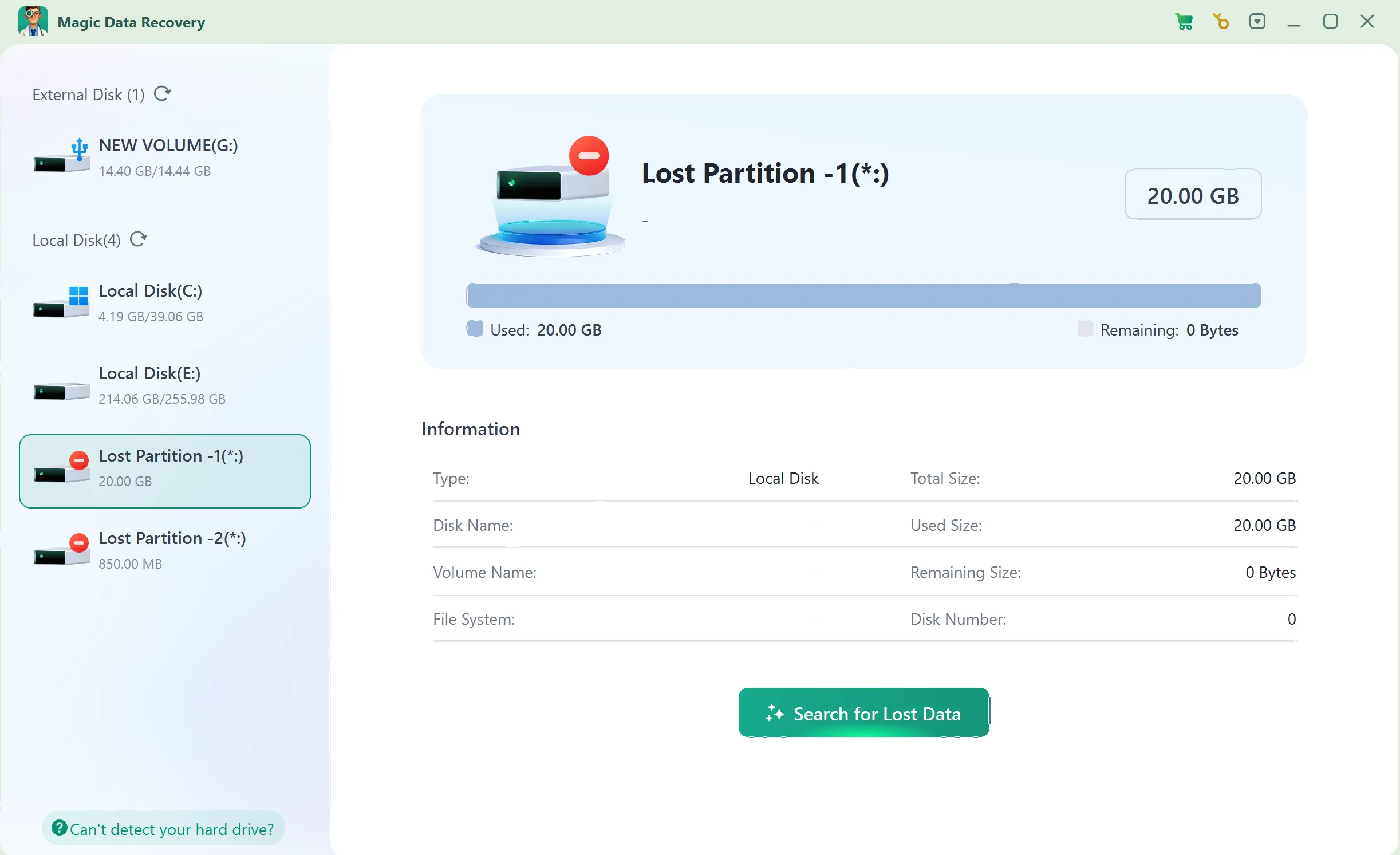
After launching the program, you will see a list of available drives and partitions. At this stage, take a moment to identify the location where data loss occurred. Select the location where the lost files located, then start the scan process from the main interface.
Step 3: Scan for Deleted Files
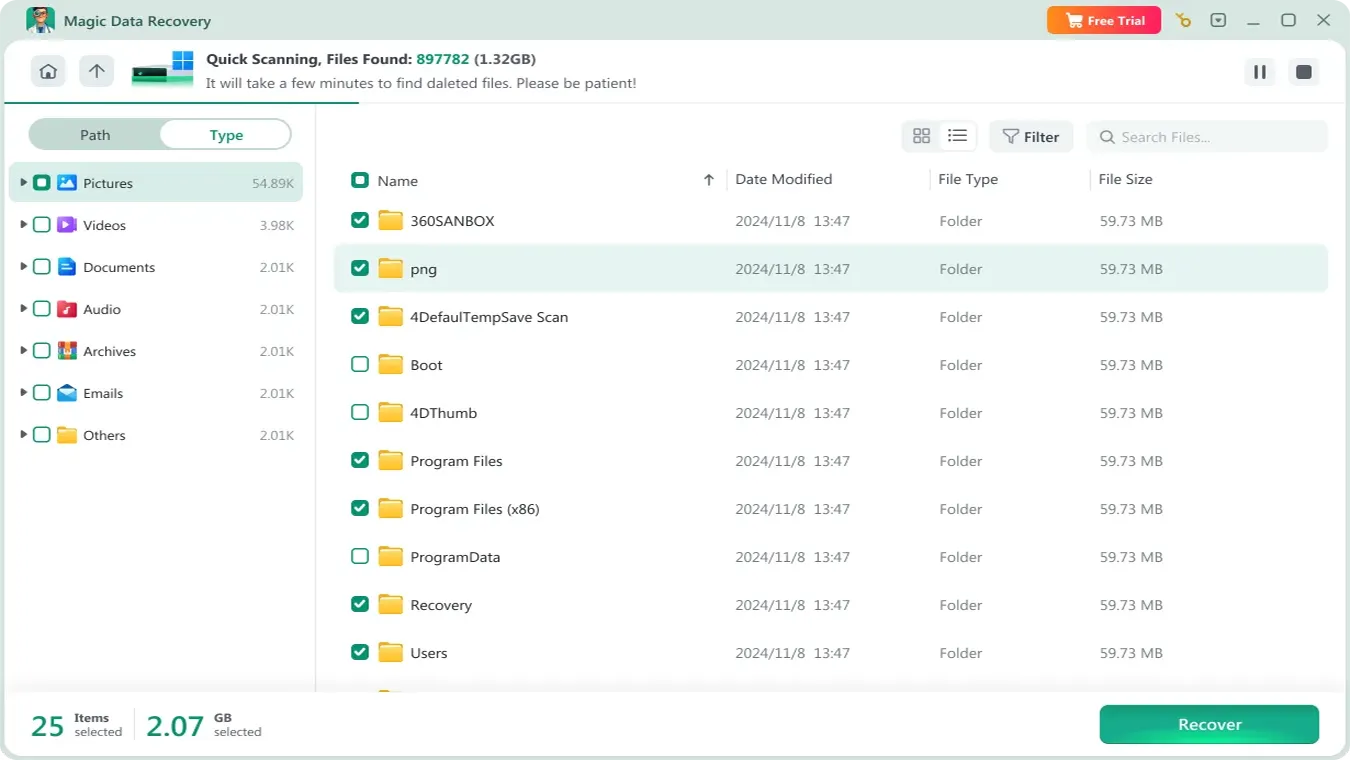
Magic Data Recovery automatically performs an advanced scan to locate deleted and lost files. During the scan, recoverable items appear in real time, allowing you to monitor progress and assess results as they are found.
Step 4: Preview Files Before Recovery
Once the scan completes, use the built-in preview feature to verify file contents. In addition, this step helps you avoid restoring unnecessary or corrupted files. Previewing helps ensure accuracy and allows you to focus only on the files you actually need to restore.

Step 5: Recover Files to a Safe Location
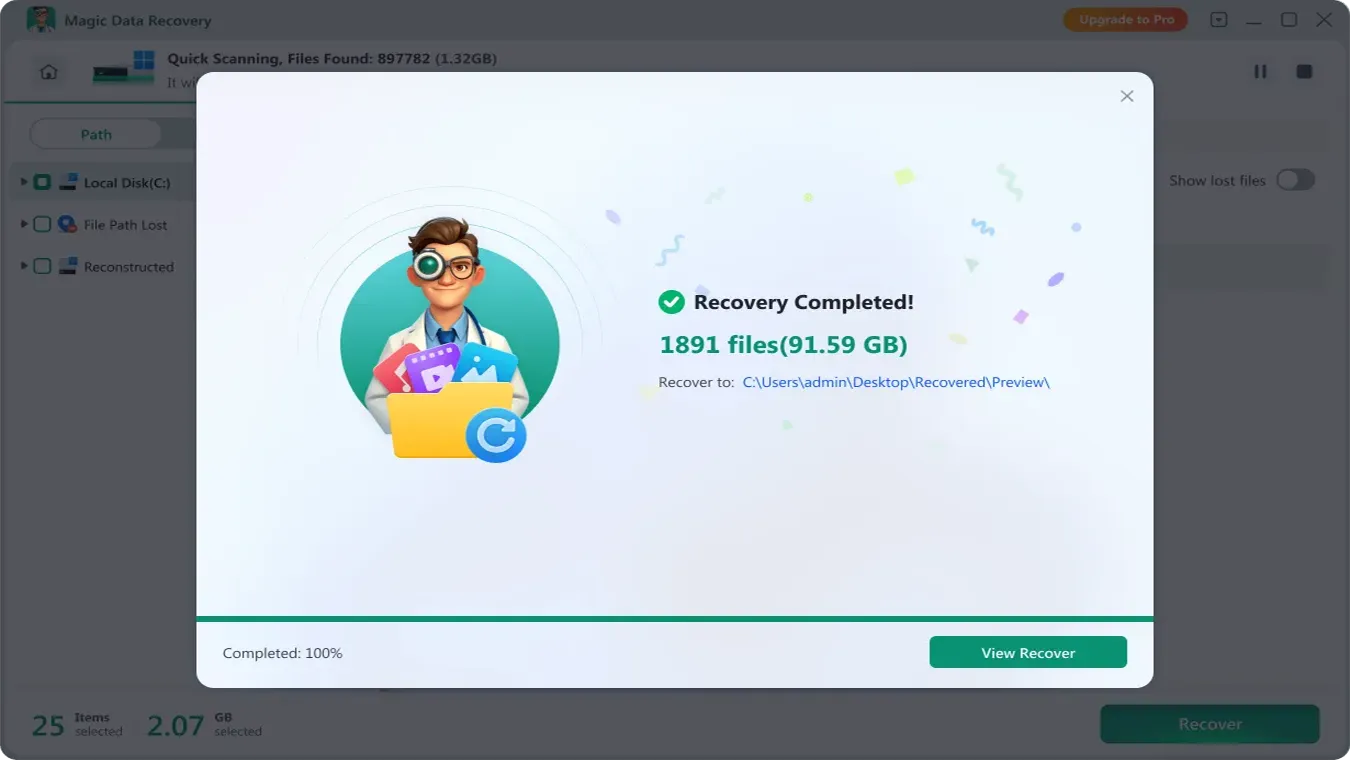
Finally, select the files you want to recover and choose a secure save location. Most importantly, saving files to a different location protects remaining recoverable data. Avoid restoring data to the same drive where the files were lost, as this could overwrite remaining recoverable data and reduce success rates.
Best Practices to Maximize Recovery Success
Even the best programs for recovering deleted files cannot overcome overwritten data. That said, following proven techniques can still improve your chances. To improve results:
- Avoid installing software on the same drive
- Do not create new files on the affected device
- Use deep scan when quick scan finds incomplete results
- Act as soon as possible after deletion
Small actions often make a large difference.
Conclusion
Data loss can happen at any time, but permanent loss is often avoidable. In most cases, the outcome depends on the recovery approach you choose. Choosing the right program for recovering deleted files plays a critical role in restoring important data safely.
Magic Data Recovery stands out among modern programs for recovering deleted files because it combines professional scanning technology with a user-friendly experience. It addresses common recovery scenarios without exaggeration and follows industry best practices for data safety. If you are looking for a practical and dependable deleted file recovery solution, Magic Data Recovery is worth considering as your next step toward restoring lost files.
Supports Windows 7/8/10/11 and Windows Server
FAQ – Program for Recovering Deleted Files
Is it possible to recover permanently deleted files?
How long does file recovery usually take?
Are free programs for recovering deleted files reliable?
Can I recover files from a formatted drive?
Will file recovery damage my device?
What file types can be recovered?
When should I stop trying to recover files myself?

Vasilii is a data recovery specialist with around 10 years of hands-on experience in the field. Throughout his career, he has successfully solved thousands of complex cases involving deleted files, formatted drives, lost partitions, and RAW file systems. His expertise covers both manual recovery methods using professional tools like hex editors and advanced automated solutions with recovery software. Vasilii's mission is to make reliable data recovery knowledge accessible to both IT professionals and everyday users, helping them safeguard their valuable digital assets.