
External Hard Disk File System: A Practical Guide
An external hard disk file system determines how the system stores, organizes and accesses files on an external drive. For most users, it works quietly in the background—until something goes wrong.
You may suddenly see error messages such as “The drive is not accessible” or “You need to format the disk,” or discover that files are missing after connecting the drive to a different computer—only to realize that the computer is not recognizing the external drive. These issues often trace back to file system incompatibility or corruption.
This guide explains how an external hard disk file system works, which options are best for different scenarios, and how to fix common problems safely. It also introduces a reliable external hard drive solution for recovering data when the file system becomes inaccessible.
Table of Contents
What Is an External Hard Disk File System?
An external hard disk file system provides a logical structure that helps an operating system store, read, modify, and manage files on an external storage device. It defines:
- How the system name the files
- Where the system physically stores data
- How free space is tracked
- How errors are handled
Without a compatible file system, your computer cannot properly communicate with the drive—even if the hardware itself is still working. The same concept applies to an external hdd file system, which specifically refers to traditional mechanical external hard drives rather than SSDs or flash drives.
How External HDD File Systems Work in Real Use
From practical experience, file systems become relevant in several everyday situations:
- Connecting one external drive to multiple devices
- Transferring large video or backup files
- Using a drive for long-term storage
- Recovering data after accidental data loss
Each file system handles these scenarios differently, which explains why choosing the right one matters.
Common Types of External Hard Disk File System
FAT32: Maximum Compatibility, Limited Capacity
FAT32 is one of the oldest and most widely supported file systems.
Pros
- Works on almost all operating systems
- Compatible with TVs, game consoles, and car systems
Cons
- Single file size limit of 4GB
- Less reliable for large external drives
FAT32 is suitable for small files but not ideal for modern storage needs.
exFAT: Best Balance for External Drives
Developers designed exFAT specifically for removable storage.
Why users choose exFAT
- Supports large files and partitions
- Excellent cross-platform compatibility
- Minimal performance overhead
For many users, exFAT is the most practical external hard disk file system, especially when switching between Windows and macOS.
NTFS: Powerful but Platform-Dependent
NTFS is the default Windows file system.
Strengths
- Supports permissions and encryption
- Handles very large files efficiently
Limitations
- macOS offers limited write support
- Not ideal for cross-platform use
NTFS works best when the external drive is mainly used on Windows systems.
APFS and HFS+: macOS-Focused File Systems
Apple optimizes file systems are optimized for macOS environments.
They offer:
- Strong performance on Apple hardware
- Advanced data protection features
However, Windows cannot natively read these formats, which limits their flexibility.
How to Choose the Right External HDD File System
Choosing the correct external hdd file system depends on how you plan to use the drive.
Consider these factors:
- Which operating systems you use
- File size requirements
- Long-term storage vs. frequent transfers
- Compatibility with non-computer devices
Best practice:
If cross-platform compatibility is important, exFAT is often the safest choice.
Common External Hard Disk File System Problems
Even with the right file system, problems can still occur.
1. File System Corruption
This often happens due to:
- Unsafe ejection
- Sudden power loss
- System crashes
When corruption occurs, users often see the drive appear as “RAW” or unreadable.
2. Accidental Formatting
Many users format a drive by mistake when prompted by the system. While formatting rewrites the file system, the data is not immediately erased.
3. Incompatible File System Errors
Connecting an NTFS drive to macOS or an HFS+ drive to Windows can cause access issues that look like data loss.
4. Logical Errors Without Hardware Damage
In many real-world cases, the drive hardware is healthy, but the external hard disk file system is damaged. This distinction matters because logical issues are often recoverable.
Can Data Be Recovered from a Damaged External HDD File System?
Yes. Based on common recovery scenarios, data is often still present even when the drive has disk errors. Recovery is usually possible if:
- The system can still detect the drive
- There is no severe physical damage
- The data has not been overwritten
The key is to stop using the drive immediately and avoid formatting or repairing it with built-in tools that may overwrite metadata.
Practical Data Recovery Solution for File System Issues
When facing file system-related data loss, many users look for a solution that balances safety, simplicity, and effectiveness.
Why Magic Data Recovery Is a Practical Choice
Magic Data Recovery is designed to handle common external hard disk file system problems without requiring advanced technical knowledge.
It helps solve issues such as:
- Corrupted or missing file systems
- Accidental formatting
- Drives showing as RAW
- Inaccessible external HDDs
Key Advantages
- Supports major file systems, including FAT32, exFAT, NTFS and HFS+
- Works with external hard drives, USB drives, and memory cards
- Allows file preview before recovery
- Focuses on read-only scanning to reduce risk
Unlike manual repair methods, Magic Data Recovery does not attempt to modify the original external hdd file system, which improves safety.
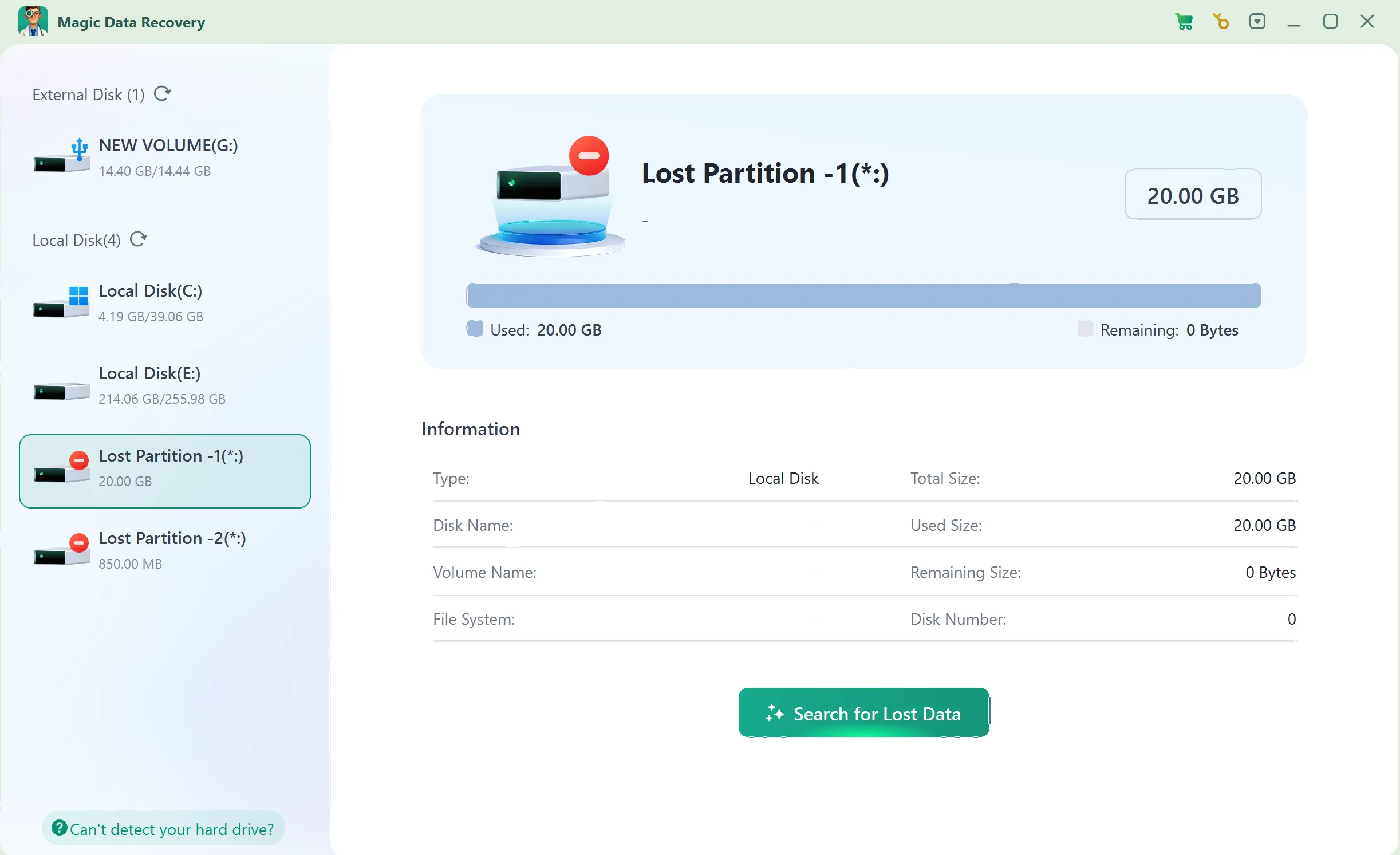
Real-World Use Case
Imagine an external hard drive that suddenly asks to be formatted after being unplugged incorrectly. The system cannot read the file system, but the drive still appears in Disk Management.
In this scenario:
1. The drive is scanned without formatting
2. Files are detected by structure and signature
3. Important data can be recovered to another device
This approach avoids further damage and aligns with industry best practices.
Tips to Prevent External Hard Disk File System Issues
While recovery tools are useful, prevention is always better.
Best practices include:
- Always eject drives safely
- Avoid unplugging during file transfers
- Use a stable power source
- Back up critical data regularly
These habits significantly reduce file system corruption risks.
Conclusion
An external hard disk file system is more than a technical detail—it directly affects how safe and accessible your data is. Understanding file system types, compatibility limits, and common failure scenarios helps you make better decisions.
When problems occur, avoiding panic and using a reliable external recovery solution is essential. Magic Data Recovery stands out because it focuses on solving real file system-related data loss issues without unnecessary risk.
If you are dealing with an external HDD file system error and need a practical, user-friendly solution, Magic Data Recovery is worth considering.
Supports Windows 7/8/10/11 and Windows Server
FAQs About External Hard Disk File System
Should I format my external SSD to exFAT or NTFS?
How to tell if an external hard drive is FAT32 or NTFS?
What file system is used for external hard drives?
How to change file system on an external hard drive?
Is there a downside to using exFAT?
What happens if I format my external hard drive to NTFS?
Which format is best for an external hard drive?
Can any external hard drive be formatted to FAT32?

Vasilii is a data recovery specialist with around 10 years of hands-on experience in the field. Throughout his career, he has successfully solved thousands of complex cases involving deleted files, formatted drives, lost partitions, and RAW file systems. His expertise covers both manual recovery methods using professional tools like hex editors and advanced automated solutions with recovery software. Vasilii's mission is to make reliable data recovery knowledge accessible to both IT professionals and everyday users, helping them safeguard their valuable digital assets.