
Word Temp File Recovery Guide

Losing a Word document can feel frustrating, especially when you spent hours writing it and the file suddenly disappears after a crash, accidental closure, deletion, or disk issue. That is why word temp file recovery matters.
In many cases, Word creates temporary or backup files that can help you get content back. However, temporary files do not solve every loss scenario. When no usable temp file remains, a professional solution such as Magic Data Recovery becomes the safer next step. This guide explains how word temp file recovery works, where to find temporary files, when word tmp file recovery can help, and when you need a deeper recovery method.
Supports Windows 7/8/10/11 and Windows Server
Table of Contents
What Is Word Temp File Recovery?
Word temp file recovery means restoring a Word document from temporary, backup, or AutoRecover files created while you edit or save content. Word may generate different file types during normal use, including:
- .tmp temporary files
- .asd AutoRecover files
- .wbk backup copies
These files exist to reduce data loss after an unexpected shutdown, software crash, or power interruption. Still, they are not full replacements for regular saving. Sometimes a temp file contains the latest content. Other times it only includes part of the document or does not open at all.
So, before you start, it helps to know one simple rule: word temp file recovery works best for unsaved or recently interrupted work. If the file was deleted permanently, lost after formatting, or damaged by a file system error, you usually need a recovery tool instead of a temp-file-only method.
When Word TMP File Recovery Works Best
Word tmp file recovery is most useful in these situations:
- Word crashed before you saved the latest edits
- You closed Word by mistake without saving
- Your PC restarted unexpectedly
- AutoRecover was enabled
- A temporary file still exists in the local folder
In contrast, temp file recovery often fails in these cases:
- You pressed Shift + Delete
- You emptied the Recycle Bin
- The drive was formatted
- The storage device developed a file system error
- New data overwrote the original file area
- A cleanup tool removed the temp files
That difference matters. Many users waste time searching for .tmp files when the real issue is file deletion or partition-level damage. A better workflow starts with identifying the loss type first.
Before You Recover: 4 Smart Steps
Before trying word temp file recovery, take these precautions:
1. Stop saving new files to the same drive
New data can overwrite the lost Word document or its temporary files.
2. Do not install recovery software on the affected partition
If you need a recovery tool, install it on another drive.
3. Check whether the file was unsaved or deleted
This small distinction helps you choose the right method faster.
4. Note where the file was stored
Recovery chances differ for local disks, USB drives, SSDs, SD cards, and external hard drives.
These steps improve recovery safety and prevent avoidable mistakes.
How to Do Word Temp File Recovery
Below are the most practical ways to recover a lost Word file from temporary or backup sources.
Method 1: Recover Unsaved Documents in Word
This is the easiest built-in option for word temp file recovery.
Steps
- Open Microsoft Word.
- Click File.
- Go to Info.
- Select Manage Document.
- Click Recover Unsaved Documents.
- Open the available file and save it immediately.
This method works well after an unexpected close or crash. If the document appears, save it with a new filename right away.
Method 2: Search for AutoRecover Files (.asd)
Word often stores unsaved work as an AutoRecover file. This makes it one of the most useful options for word tmp file recovery.
How to find it
- Open File Explorer.
- Search for *.asd.
- Check common AutoRecover folders.
- Sort files by Date modified.
- Open the newest relevant file in Word.
Why this helps
AutoRecover files usually hold content from the most recent editing session. If you lost changes after a crash, this is often the first place to check.
Method 3: Look for Backup Files (.wbk)
Some Word setups create backup copies automatically. These files use the .wbk extension.
Steps
- Search your computer for *.wbk.
- Find the most recent backup copy.
- Open it with Word.
- Save it as a new .docx file.
Backup files can help when the main file becomes damaged or disappears after a failed save.
Method 4: Search for Temporary Files (.tmp)
This is the direct path for word temp file recovery and word tmp file recovery.
Steps
- Open File Explorer.
- Search for *.tmp.
- Also search for files starting with ~.
- Sort results by modification date.
- Copy likely files to another folder before opening them.
- Try opening them in Word.
Important tip
Not every .tmp file belongs to Word. Some temporary files come from other programs. Therefore, focus on the time period when the file was lost and test only the most relevant items.
Method 5: Check Document Recovery After Restarting Word
If Word crashed, restart the application and look for the Document Recovery panel on the left side.
Best use case
This method helps when:
- the system froze
- Word stopped responding
- Windows restarted during editing
If you see recovered items, open the newest version first. Then compare it with older copies before saving.
Where Are Word Temporary Files Stored?
The exact location varies by Word version and system settings. Still, users commonly find temporary Word-related files in:
- the UnsavedFiles folder
- the Roaming Microsoft Word folder
- the local temp folder
- folders related to the original document path
A practical method works better than memorizing one path. Search by file extension, then sort by date, then preview the likely file. That approach saves time and reduces confusion.
Word Temp File Recovery vs. File Recovery Software
This is where many articles stay too general. In real use, these two solutions solve different problems.
Use word temp file recovery when:
- the document was not saved normally
- Word crashed during editing
- a recent temp, AutoRecover, or backup file still exists
Use file recovery software when:
- the file was deleted
- the drive was formatted
- a partition became inaccessible
- the file system reported errors
- temp files are missing or unusable
That is why a built-in recovery attempt should come first, but it should not be the only strategy.
When Temp Files Are Missing, Use Magic Data Recovery
If you cannot find a valid .tmp, .asd, or .wbk file, the problem is no longer just a temporary-file issue. In that case, Magic Data Recovery offers a more complete solution.
Magic Data Recovery helps restore lost files in situations that built-in Word methods usually cannot handle well, including:
- accidental deletion
- permanent deletion
- drive formatting
- file system errors
- sudden storage corruption
- missing documents on USB drives, memory cards, and hard disks
Why users choose Magic Data Recovery
The core pain point is simple: temporary file methods depend on leftover working copies, but many loss events remove or damage those copies. Magic Data Recovery scans the storage device itself and looks for recoverable file records and document data. That makes it useful even when word temp file recovery fails.
Key advantages of Magic Data Recovery
- Recovers deleted Word documents and many other file types
- Supports formatted drives and file system error scenarios
- Works across common storage devices
- Helps find lost data when no temp file exists
- Offers a clearer path for deeper recovery cases
A practical example
Imagine you wrote a report, saved it to a USB drive, and later found the drive asking for repair. In this case, word tmp file recovery may not help because the temp file may never have been stored there or may already be gone. Magic Data Recovery is more reliable here because it targets the damaged storage situation directly, not just Word’s temporary working files.
Why it can be more reliable than other methods
Manual temp-file searches depend on luck, timing, and system behavior. Basic built-in Word recovery also works only in limited cases. By contrast, Magic Data Recovery fits broader real-world loss scenarios, especially when files were deleted, the drive was formatted, or the file system broke. That wider recovery range is the main reason to recommend it as the next step.
If you are looking for a more efficient solution after temp-file methods fail, it is worth trying Magic Data Recovery.
How to Recover Deleted or Formatted Word Files with Magic Data Recovery
When word temp file recovery no longer applies, follow this workflow:
1. Download and install Magic Data Recovery to your computer: Please download it from Amagicsoft website or the following download button to get the software.
Supports Windows 7/8/10/11 and Windows Server
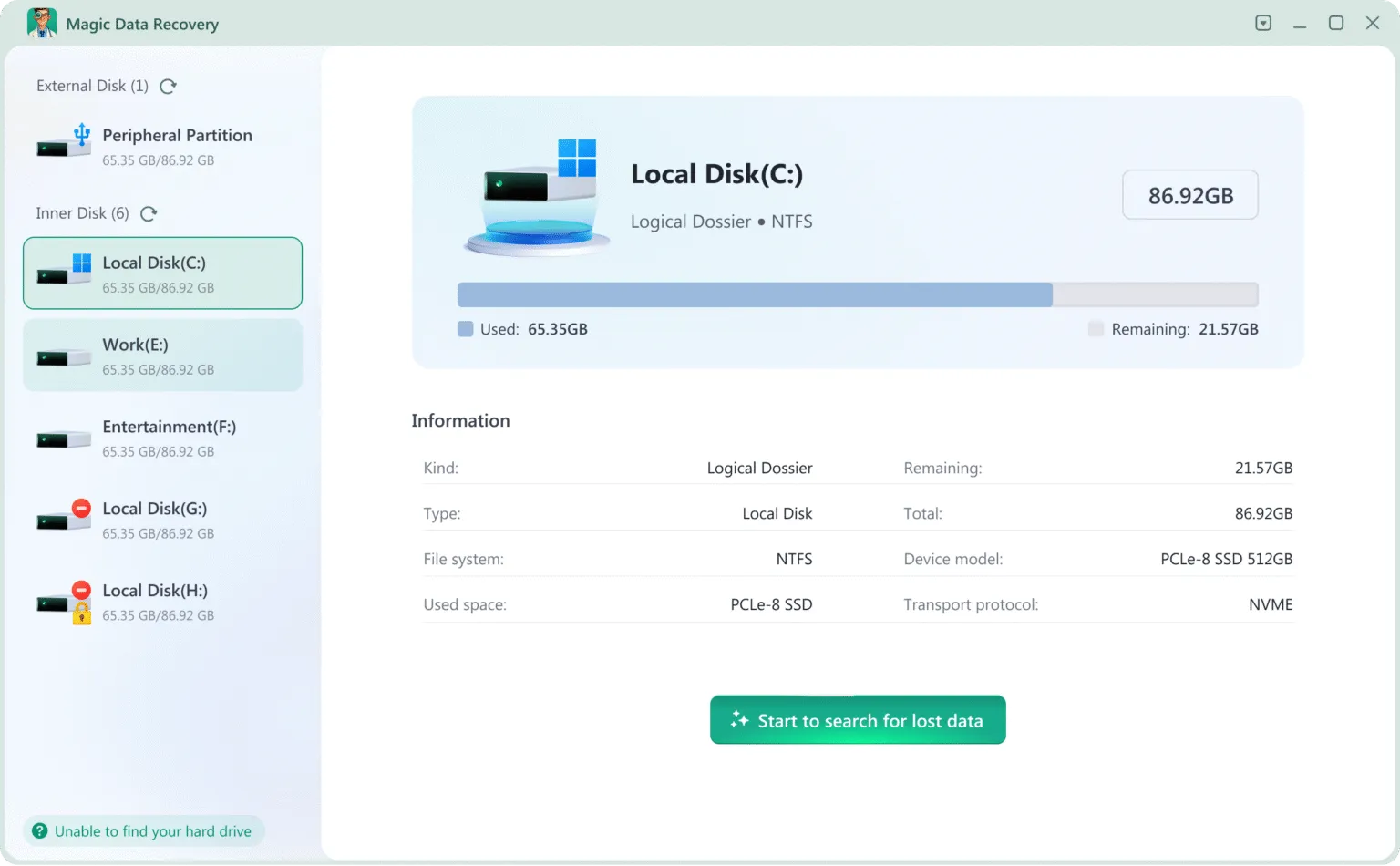
2. Connect the Flash Drive and Launch Magic Data Recovery: Connect the drive to your computer, then run the software to select the drive from the device list.
3. Start a Scan: Click the “Search for lost data” button to search for your lost files.
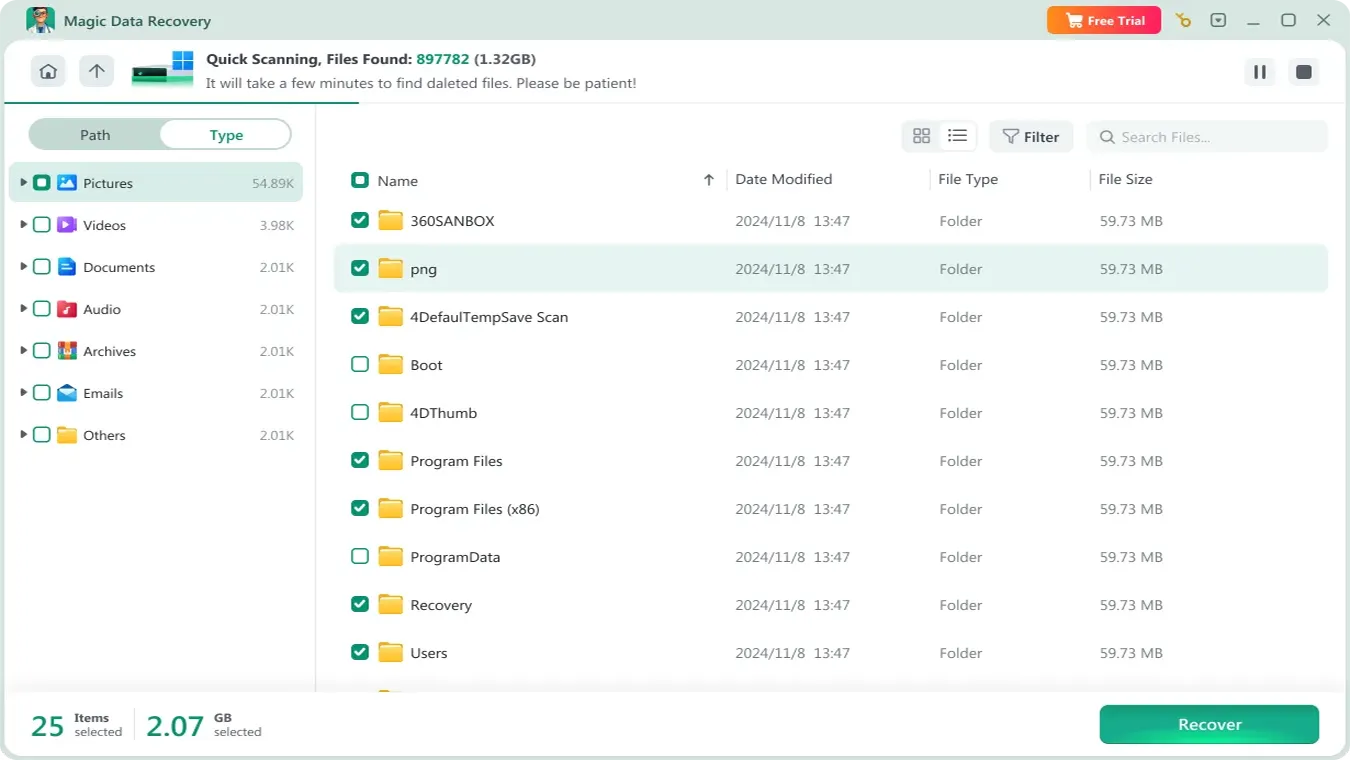
4. Preview Recoverable Files: Filter by file type and preview before recovery.
5. Recover Files Safely: Save recovered files to a different storage device.

This process works well for people who cannot recover files through Word itself and need a more complete recovery path.
Common Reasons Word TMP File Recovery Fails
Understanding failure points helps you avoid false expectations.
AutoRecover was disabled
If Word never created an AutoRecover file, there may be nothing to restore.
The temp file was overwritten
New activity on the disk can replace the old data quickly.
Cleanup tools removed the file
System cleaners often delete temp folders automatically.
The file was actually deleted, not just unsaved
In that case, you need file recovery software instead of a temp file search.
The storage device has logical errors
A file system issue can hide or damage document records and temporary files alike.
Best Tips to Prevent Word File Loss Next Time
Prevention matters just as much as recovery. These habits help reduce future loss:
- Save manually at regular intervals
- Turn on AutoSave if available
- Keep AutoRecover enabled
- Store important drafts in more than one location
- Back up active work to cloud storage or an external drive
- Avoid editing critical files directly from unstable removable media
These simple habits lower the risk of needing word temp file recovery in the first place.
Conclusion
Word temp file recovery is a useful first solution when a document disappears after a crash, unsaved exit, or interrupted session. Temporary files, AutoRecover records, and backup copies can often restore recent work quickly. However, this method has clear limits. It does not handle every deleted, formatted, or file-system-damaged scenario well.
That is why Magic Data Recovery is a sensible recommendation. It addresses the broader recovery problems that temp-file methods often cannot solve, including deleted files, formatted storage, and file system errors. In other words, it fills the gap between basic Word recovery and real-world data loss. If built-in methods cannot bring your file back, Magic Data Recovery gives you a more reliable way forward.
Supports Windows 7/8/10/11 and Windows Server
FAQs
What is word temp file recovery?
Word temp file recovery means restoring a Word document from temporary, AutoRecover, or backup files created while you edit or save content. It works best after a crash, sudden shutdown, or unsaved exit. If the file was deleted permanently or lost after formatting, a file recovery tool is usually the better option.
Is word tmp file recovery the same as recovering unsaved Word documents?
Not exactly. Word tmp file recovery focuses on temporary files such as .tmp, while unsaved Word recovery may also involve .asd AutoRecover files or built-in Word recovery features. In practice, these methods overlap, but they are not always the same. A missing temp file does not always mean the document is unrecoverable.
Where can I find temporary Word files?
You can usually find temporary Word-related files in Word’s unsaved files location, Microsoft Word roaming folders, or the local temp folder. A practical way is to search for .tmp, .asd, or .wbk files and sort them by date modified. That helps you identify the most relevant file faster.
Can I recover a deleted Word file if no temp file exists?
Yes, but not through word temp file recovery alone. If the document was deleted and no .tmp, .asd, or .wbk file is available, use a data recovery tool. Magic Data Recovery can help in this situation because it scans the storage device for deleted or lost file data directly.
Does word temp file recovery work after formatting a drive?
Usually, no. Formatting changes the storage structure and often removes access to the temporary files that Word created earlier. In that case, a dedicated data recovery solution is more suitable. Magic Data Recovery is more practical here because it supports recovery after formatting and related storage-level issues.
What is the difference between .tmp, .asd, and .wbk files?
A .tmp file is a general temporary file that may hold partial Word data. A .asd file is typically an AutoRecover file for unsaved work. A .wbk file is a backup copy created under specific settings. Each one serves a different purpose, so checking all three gives better recovery coverage.
Why does word tmp file recovery fail sometimes?
It may fail because Word did not create a usable temp file, the file was overwritten, a cleanup tool deleted it, or the real issue involves deletion or file system damage. In many cases, users search for temp files even though the file is no longer present as a temporary copy.
Why is Magic Data Recovery recommended after temp-file methods fail?
Magic Data Recovery is useful because it addresses wider data loss scenarios, not just unsaved Word sessions. It can help recover deleted files, formatted partitions, and data lost due to file system errors. That makes it a more reliable next step when built-in Word recovery methods no longer return useful results.

Jason is a data recovery and technical support specialist with over 15 years of hands-on experience. He has worked extensively with frontline users, troubleshooting difficult data loss cases and providing practical recovery solutions for accidental deletion, formatted drives, damaged file systems, lost partitions, system failures, and other recovery emergencies. His expertise also includes backup and restoration, file repair, and disaster recovery, with a strong emphasis on safe, reliable, and technically accurate guidance.