
GetDataBack Guide: Recover Lost Data
Data loss can strike anyone, from professionals to home users. Accidental formatting, virus attacks, or file system errors make recovering your important files stressful. Tools like GetDataBack, whether for NTFS drives, simple recovery, or portable use, can help you restore lost data. In this guide, we also introduce Magic Data Recovery, a reliable solution for complex data loss situations.
Supports Windows 7/8/10/11 and Windows Server
Table of Contents
Understanding GetDataBack and Its Variants
Before diving into the specifics of each GetDataBack version, it’s important to understand why multiple variants exist. Different versions target different file systems and user needs, from beginners requiring simple interfaces to professionals needing deep recovery options. This section explains the main differences and how each variant is designed to address specific data loss scenarios, setting the stage for a more effective recovery workflow.
1. GetDataBack Overview
GetDataBack is a popular data recovery suite that restores lost files from multiple file systems. Its versions include:
- GetDataBack for NTFS: Focused on Windows NTFS drives.
- GetDataBack Simple: Designed for users seeking an intuitive interface.
- GetDataBack Portable: Allows running without installation on the affected drive.
While effective for basic recovery, some users report limitations with severely corrupted or formatted drives, especially when deep reconstruction is needed.
2. Common Limitations
- Struggles with SSDs using TRIM and highly corrupted drives.
- Requires technical knowledge for portable workflows.
- Advanced scanning and file reconstruction options are limited compared to modern alternatives.
Why Magic Data Recovery Is a Superior Choice
Magic Data Recovery addresses the challenges many face with GetDataBack. Its advantages include:
- Comprehensive Recovery Engine: Handles deleted, formatted, corrupted, and virus-damaged files.
- Supports Multiple File Systems: NTFS, FAT, exFAT, EXT, HFS+, APFS.
- Intuitive Interface: Suitable for beginners, while still providing advanced features.
- Deep Scan and Reconstruction: Restores folder structures and original filenames more reliably.
- File Preview: Allows users to select the exact files to recover.
Use Case Example:
Accidentally formatting an NTFS drive containing essential documents and videos can be catastrophic. Magic Data Recovery scans deeply and reconstructs directories efficiently, restoring your files with minimal effort.
Supports Windows 7/8/10/11 and Windows Server
Scenarios Where Magic Data Recovery Excels
Magic Data Recovery proves highly effective across a wide range of real-world data loss situations. Its versatile recovery engine and user-friendly interface make it suitable for both casual users and IT professionals. Here are the key scenarios where it excels:
- Accidental Deletion: Whether you mistakenly deleted important documents, photos, or videos, Magic Data Recovery quickly scans your drive and identifies recoverable files. Unlike basic tools, it reconstructs the original folder structure, saving time and effort when restoring multiple files.
- Formatted Drives: Accidental formatting can be catastrophic, but Magic Data Recovery can restore files from drives that have been formatted or repartitioned. Its deep scan algorithm analyzes the disk thoroughly, recovering data even when directory structures are missing.
- System Corruption: Drives affected by file system errors, sudden crashes, or improper shutdowns can become inaccessible. Magic Data Recovery bypasses these barriers, reconstructing the damaged structures to recover lost files safely.
- Virus Attacks: Malware or ransomware can corrupt or encrypt files, making them appear lost. Magic Data Recovery identifies and restores files damaged by viruses, providing a reliable way to recover essential data without further risk.
Unlike GetDataBack, which requires different versions for NTFS, FAT, or portable workflows, Magic Data Recovery offers a single, unified solution. Users can address a variety of data loss problems with one tool, reducing complexity and minimizing the risk of errors during recovery. Its intuitive workflow ensures that even non-technical users can recover their files efficiently, while professionals benefit from advanced scanning and reconstruction capabilities.
Step-by-Step Guide to Recovering Files
Magic Data Recovery works for any lost data case with the following steps.
1. Connect the affected drive to a healthy computer.
2. Launch Magic Data Recovery and start quick scan then deep scan to find all your lost files.
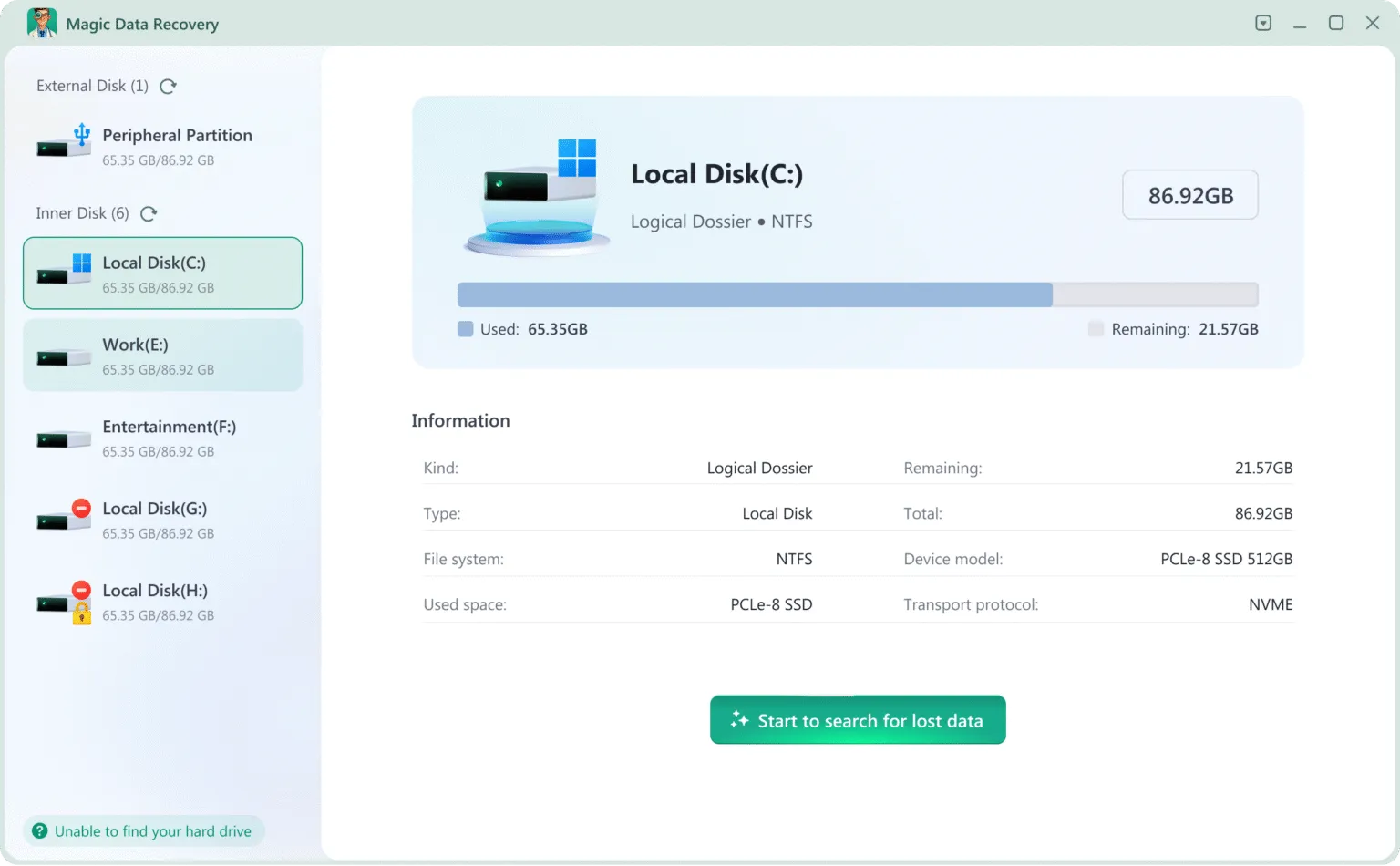
3. Preview the recovered files to select what you need.

4. Save recovered files to a separate, safe drive.
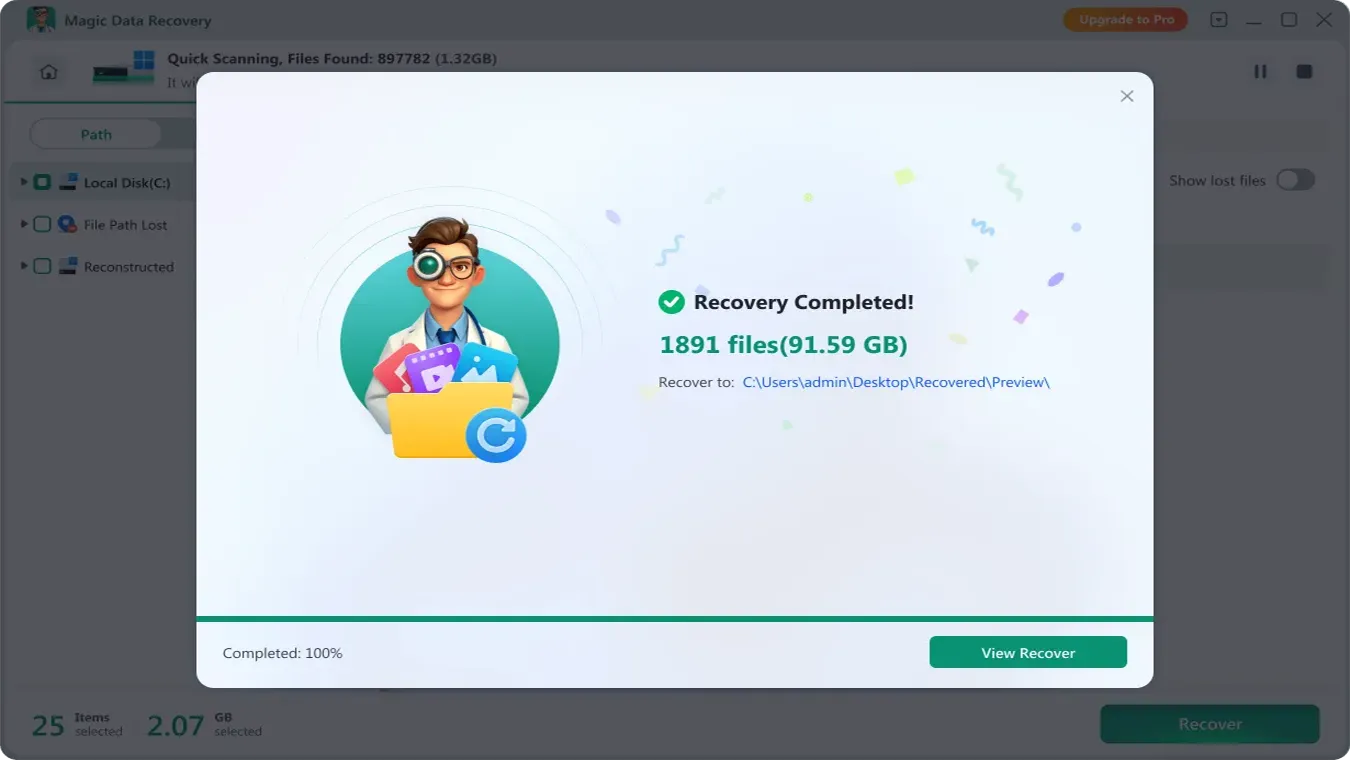
This workflow minimizes risk and simplifies recovery compared to managing multiple GetDataBack versions.
Best Practices for Data Recovery
Recovering lost data can be delicate, and following best practices significantly increases the chance of successful recovery. Here are essential guidelines to follow when using Magic Data Recovery or any professional recovery software:
- Stop Using the Affected Drive Immediately:
Continuing to write new files or install programs on the affected drive can overwrite the areas where your lost data resides, reducing the chance of successful recovery. Always disconnect the drive if possible and avoid modifying it.
- Recover Files to a Separate Storage Device:
Never restore recovered files to the same drive that experienced data loss. Using a different drive, such as an external HDD, SSD, or USB drive, ensures that recovered files do not overwrite remaining lost data, improving overall recovery success.
- Choose the Appropriate Scan Mode:
Magic Data Recovery offers both quick scan and deep scan options. Quick scan is ideal for recently deleted files, while deep scan thoroughly analyzes the disk structure, which is essential for formatted drives, corrupted partitions, or virus-damaged data.
- Preview Files Before Recovery:
Take advantage of the preview function to identify and select only the files you need. This saves time, avoids unnecessary data recovery, and ensures important files are prioritized.
- Regular Backups Are Essential:
Preventing data loss is always better than recovering it. Regularly backing up critical files to cloud storage or external drives reduces the reliance on recovery software and minimizes potential stress.
- Avoid DIY Recovery on Complex Cases:
For severely corrupted drives, RAID arrays, or virus-encrypted partitions, professional software like Magic Data Recovery is preferable over trial-and-error DIY methods. Using the right tool and workflow reduces the risk of permanent data loss.
Following these best practices not only maximizes the effectiveness of Magic Data Recovery but also safeguards your files from accidental overwriting or further corruption. Proper planning and careful execution are the keys to a successful data recovery experience.
Conclusion
While GetDataBack and its variants are suitable for basic recovery, Magic Data Recovery stands out for reliability, versatility, and user-friendliness. It can handle deleted, formatted, virus-damaged, and corrupted files more efficiently, restoring folder structures and filenames accurately. For anyone seeking a comprehensive, trustworthy recovery solution, Magic Data Recovery is the recommended choice.
Supports Windows 7/8/10/11 and Windows Server
FAQs
What makes Magic Data Recovery better than GetDataBack?
Magic Data Recovery supports more file systems, provides deep scanning and folder reconstruction, and is easier to use. It recovers files in cases where GetDataBack may struggle, such as severe corruption or virus-damaged drives.
Can Magic Data Recovery restore formatted drives?
Yes. Its deep scan reconstructs lost files and folders even after formatting, outperforming basic recovery tools in both accuracy and speed.
Does Magic Data Recovery handle virus-damaged files?
Absolutely. It safely recovers corrupted files caused by malware, often restoring data that other tools cannot retrieve.
Is it beginner-friendly?
Yes. The intuitive interface guides users step-by-step while still offering advanced features for professionals.
Can I preview files before recovery?
Yes. Users can preview documents, images, and media files, allowing selective recovery of essential data.
Which storage devices are supported?
Magic Data Recovery supports HDDs, SSDs, USB drives, memory cards, and external drives across NTFS, FAT, exFAT, EXT, HFS+, and APFS.
How does it handle heavily corrupted drives?
Its deep scan engine analyzes drives at a low level, reconstructing folder structures and restoring file integrity better than many standard recovery tools.
Can it recover large media files?
Yes. It efficiently restores large documents, videos, and high-resolution images, making it suitable for both professional and personal use.

Jason is a data recovery and technical support specialist with over 15 years of hands-on experience. He has worked extensively with frontline users, troubleshooting difficult data loss cases and providing practical recovery solutions for accidental deletion, formatted drives, damaged file systems, lost partitions, system failures, and other recovery emergencies. His expertise also includes backup and restoration, file repair, and disaster recovery, with a strong emphasis on safe, reliable, and technically accurate guidance.