
Recover Accidentally Deleted Files: Best Guide

Accidentally deleting a work document, family photo, school project, or client file can feel stressful. The good news is that you still have several ways to recover accidentally deleted files if you act quickly and avoid overwriting the lost data. This guide explains what to do first, how built-in recovery options work, and when professional data recovery software becomes the safer data recovery solution.
You will learn how to recover accidentally deleted files from the Recycle Bin, backups, external drives, formatted disks, and file system error situations. When simple methods are not enough, Magic Data Recovery can help scan the affected storage device, preview recoverable files, and save them to a safe location without requiring advanced technical skills.
Supports Windows 7/8/10/11 and Windows Server
Table of Contents
Why You Can Still Recover Accidentally Deleted Files
To recover accidentally deleted files, you first need to understand what deletion really means. In many cases, deleting a file does not immediately wipe the file content from the disk. Instead, the operating system removes the file reference and marks that storage space as available for new data.
That is why timing matters. If you keep downloading apps, saving documents, editing videos, or installing tools on the same drive, new data may overwrite the deleted file. Once overwriting happens, recovery becomes much harder and sometimes impossible. Therefore, your first move should always be simple: stop using the affected drive.
Common Scenarios Behind Deleted File Loss
Users usually search for how to recover accidentally deleted files after one of these situations:
- Emptying the Recycle Bin or Trash too soon
- Using Shift + Delete on Windows
- Formatting a USB drive, SD card, HDD, or SSD by mistake
- Losing files after a Windows update or system reinstallation
- Seeing a drive turn RAW or inaccessible because of file system errors
- Deleting photos from a camera card before copying them
Each case needs a different approach. For example, a file still in the Recycle Bin requires only a few clicks. However, formatted drive recovery or corrupted partition recovery needs deeper scanning.
What to Do Before You Try Any Recovery Method
Before you recover accidentally deleted files, protect the remaining data. A wrong action can reduce your chance of success.
First, stop saving new files to the original drive. Next, avoid installing recovery tools on the same partition where the files disappeared. Also, do not format a RAW drive just because Windows asks you to. Formatting may make the device usable again, but it can also change file system records and complicate recovery.
If the device makes clicking noises, overheats, smells burnt, or does not spin up, stop immediately. Software cannot fix physical damage. In that case, a professional data recovery lab is the safer option.
Method 1: Recover Accidentally Deleted Files from Recycle Bin or Trash
The fastest way to recover accidentally deleted files is to check the Recycle Bin on Windows or Trash on macOS.
On Windows
- Open the Recycle Bin.
- Search for the deleted file name or browse by date.
- Right-click the file.
- Choose Restore.
- Check the original folder.
On Mac
- Open Trash from the Dock.
- Locate the deleted file.
- Right-click the file.
- Choose Put Back.
- Confirm that the file returned to its original location.
This method works only when the file still exists in the bin. If you emptied it, deleted files from removable storage, or used permanent deletion, move to the next methods.
Method 2: Use Built-In Backup Options
Backups offer one of the safest ways to recover accidentally deleted files because they restore an earlier copy instead of scanning deleted disk space.
Windows File History and Previous Versions
If File History was enabled before deletion, you can restore previous versions of files and folders. Right-click the folder where the file existed, choose Restore previous versions, and select a version from before the deletion.
Time Machine on Mac
Mac users can open the original folder, launch Time Machine, browse older snapshots, and restore the missing file. This works best when your Time Machine backup drive was connected before the deletion.
Cloud Trash and Version History
OneDrive, Google Drive, Dropbox, and similar services often keep deleted files in a cloud trash folder for a limited time. Some services also offer version history, which helps when a file was overwritten rather than deleted.
Method 3: Use Windows File Recovery for Command-Line Recovery
If you feel comfortable with commands, Windows File Recovery can help recover accidentally deleted files from local storage devices when Recycle Bin recovery fails. However, it uses command syntax, so it may feel confusing for ordinary users.
This method suits users who know the source drive, destination drive, and file type. For example, you may use it to scan a USB drive and save found documents to another disk. Still, command-line tools can produce mistakes if you choose the wrong mode or path. If you want a clearer workflow, use a visual recovery tool instead.
Method 4: Recover Accidentally Deleted Files with Magic Data Recovery
When files are permanently deleted, the drive was formatted, or the file system shows errors, a dedicated recovery tool gives you more control. Magic Data Recovery is designed to help users recover accidentally deleted files and restore data from common loss scenarios without requiring complex commands.
What Problems Does Magic Data Recovery Solve?
Magic Data Recovery focuses on real data loss cases, including:
- Deleted file recovery after Recycle Bin emptying or permanent deletion
- Formatted drive recovery from HDDs, SSDs, USB drives, and memory cards
- File loss caused by file system errors, RAW drives, or inaccessible partitions
- Lost files after system reinstallation, virus damage, or corrupted partitions
- Recovery of documents, photos, videos, audio, archives, and other file types
This matters because many free or built-in methods only work in narrow situations. A Recycle Bin restore cannot help after formatting. A backup cannot help if you never enabled it. Command-line recovery can work, but it often demands more technical confidence.
Why Magic Data Recovery Is More Reliable Than Guesswork
Magic Data Recovery gives users a safer, guided process. You choose the location, scan the drive, preview found files, and recover selected data to another storage device. This workflow reduces risky trial-and-error actions, especially when you deal with a formatted drive or a corrupted file system.
It also helps ordinary users understand what can be recovered before they save anything. Preview support is important because it lets you check whether photos, documents, and videos appear intact. In practical terms, that means you do not waste time restoring random damaged files.
How to Use Magic Data Recovery
Follow these steps to recover accidentally deleted files safely:
1. Install Magic Data Recovery on a different drive, not the drive with lost files.
Supports Windows 7/8/10/11 and Windows Server
2. Launch the software and select the affected disk, partition, USB drive, SD card, or external device.
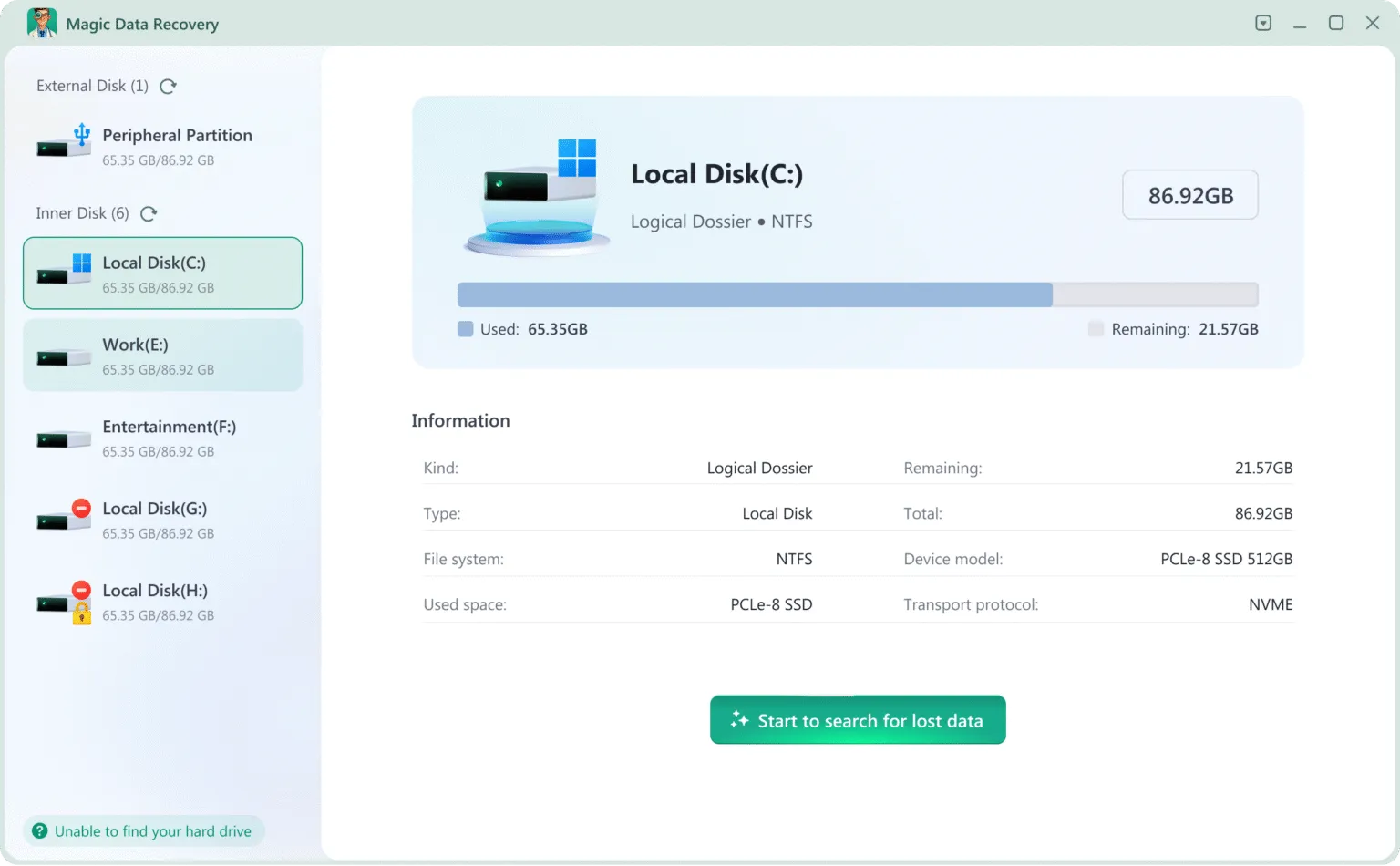
3. Start the scan and wait for recoverable files to appear.
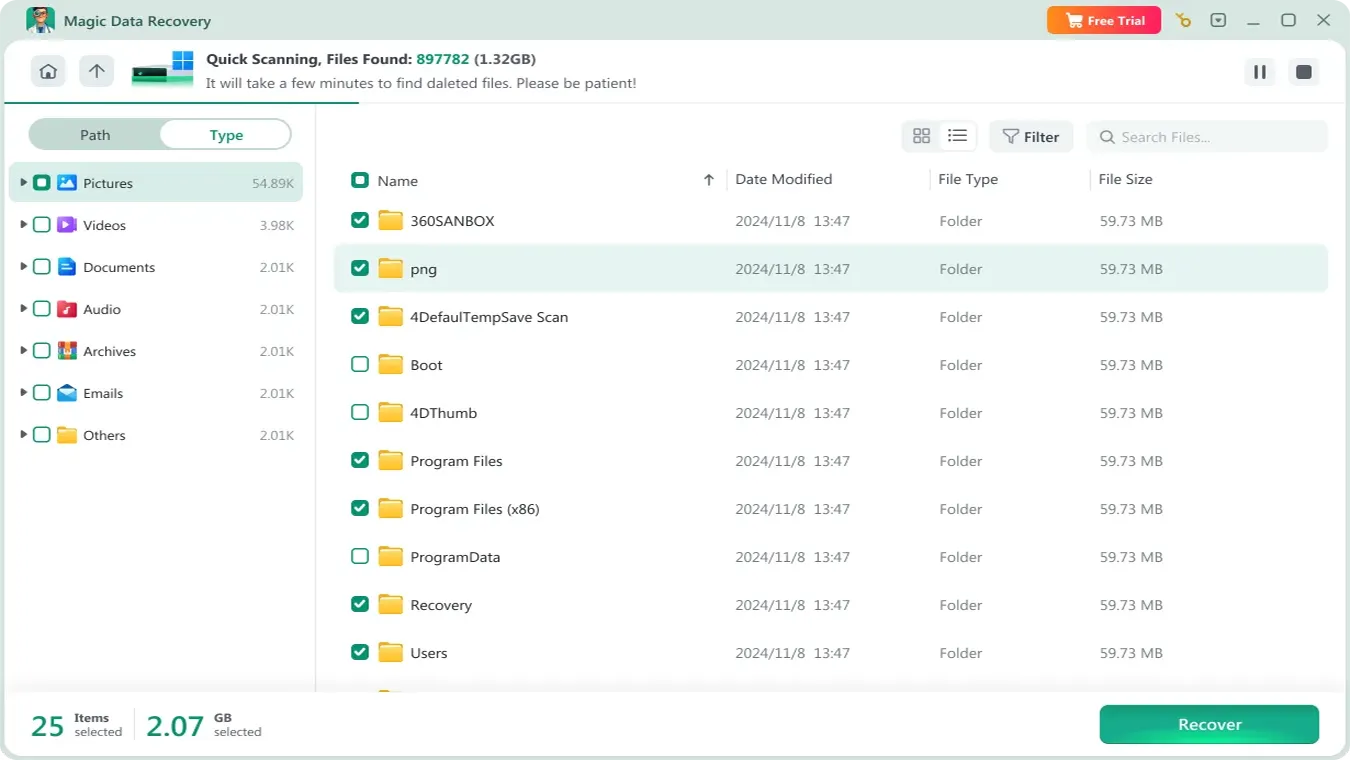
4. Use filters, file type views, or search to locate the missing items.
5. Preview files when possible.

6. Select the files you need.
7. Recover them to a separate healthy drive.
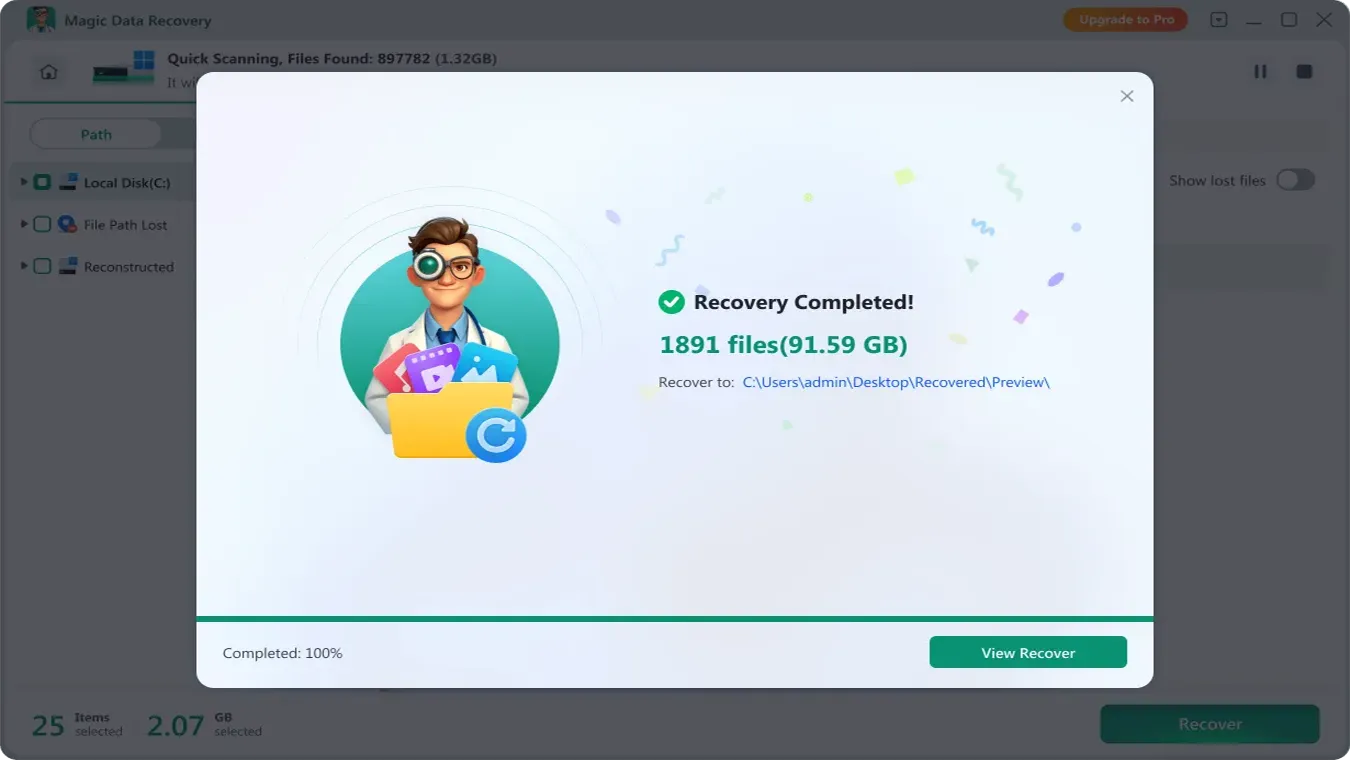
This process helps protect the original storage device. Moreover, it keeps recovery focused on what you actually need, instead of forcing you to restore everything.
Magic Data Recovery vs Other Recovery Methods
Choosing the best way to recover accidentally deleted files depends on the loss scenario. The comparison below can help you decide.
Method | Best For | Limitations |
Recycle Bin or Trash | Recently deleted files still in the bin | Cannot help after emptying or permanent deletion |
File History or Time Machine | Files backed up before deletion | Requires backup setup before data loss |
Cloud trash | Synced files from cloud storage | Retention periods vary by service |
Windows File Recovery | Technical users who prefer commands | Command-line workflow may confuse beginners |
Magic Data Recovery | Deleted, formatted, corrupted, RAW, and external drive cases | Cannot repair physically damaged hardware |
For many users, the most practical solution is to start with free built-in options. Then, when those fail, use Magic Data Recovery before making risky changes to the drive.
Tips to Improve Your File Recovery Success Rate
If you want to recover accidentally deleted files with better results, follow these best practices:
- Act quickly after deletion.
- Do not save recovered files to the original drive.
- Avoid running disk cleanup tools before recovery.
- Do not format a drive that contains missing files.
- Use deep scan when quick scan cannot find what you need.
- Check file previews before final recovery.
- Keep regular backups after you finish recovery.
These tips sound simple, yet they prevent the most common recovery mistakes. For example, many users download recovery software to the same drive where the lost file existed. That action can overwrite the very data they want back.
When Recovery Software May Not Be Enough
Although software can recover accidentally deleted files in many logical data loss cases, it cannot solve every problem. If your drive has physical damage, keeps disconnecting, appears with the wrong capacity, or produces unusual sounds, stop using it. Continuing to scan a failing device can make damage worse.
You should also stay realistic with SSD recovery. Many modern SSDs use TRIM, which may clear deleted data more quickly than traditional HDDs. Recovery may still be possible in some situations, but you should act immediately and avoid unnecessary writes.
Conclusion
The best way to recover accidentally deleted files is to start with the safest method that matches your situation. Check the Recycle Bin or Trash first. Then review File History, Time Machine, cloud trash, and version history. If those options fail, use a dedicated tool before you overwrite the drive.
Magic Data Recovery is worth recommending because it addresses more than simple deletion. It can help with permanently deleted files, formatted drives, file system errors, corrupted partitions, inaccessible storage devices, and external media. Its scan-preview-recover workflow gives users a practical balance of simplicity and technical depth. If you need a clearer and more efficient solution, try Magic Data Recovery before writing new data to the affected drive.
Supports Windows 7/8/10/11 and Windows Server
FAQs
Can I recover accidentally deleted files after emptying the Recycle Bin?
Yes, you may still recover accidentally deleted files after emptying the Recycle Bin if the data has not been overwritten. Stop using the drive immediately, install recovery software on another disk, scan the original location, preview the results, and save recovered files to a separate storage device.
What is the safest first step after deleting important files?
To recover accidentally deleted files safely, stop writing new data to the affected drive. Do not download apps, copy files, run cleanup utilities, or format the device. Then check the Recycle Bin, Trash, backups, and cloud trash. If those options fail, scan the drive with reliable recovery software.
Can Magic Data Recovery restore files from a formatted drive?
Magic Data Recovery can help restore files from many formatted drives, especially after a quick format. It scans the storage device for remaining file records and file signatures, then lets you preview recoverable files. However, success depends on whether new data has overwritten the original file content.
Is it possible to recover deleted files from a USB drive or SD card?
Yes, deleted files from USB drives and SD cards may be recoverable. These devices often bypass the Recycle Bin, so you should stop using them immediately. Connect the device to a computer, run a recovery scan, preview found files, and save recovered data to another drive.
Why should I not save recovered files to the same drive?
You should not save recovered files to the same drive because the recovery process may overwrite other lost data that still exists on the disk. Always choose a different healthy drive, external disk, or USB device as the destination. This keeps the original source safer during recovery.
Can file system errors cause deleted or missing files?
Yes, file system errors can make files disappear, turn a drive RAW, or prevent a partition from opening. In this situation, avoid formatting the drive first. A recovery-first approach is safer because it focuses on extracting your files before you attempt repair, rebuilding, or reformatting.
Do I need technical skills to use data recovery software?
Not always. Command-line tools require more technical confidence, but visual recovery software guides you through selecting a drive, scanning, previewing, and restoring files. Magic Data Recovery is built for ordinary users who need a clear workflow while still handling deletion, formatting, and file system error cases.
When should I contact a professional data recovery lab?
Contact a professional lab if the drive has physical damage, clicking sounds, burning smells, severe overheating, or repeated disconnections. Software works best for logical data loss, not hardware failure. If the files are extremely valuable, stop using the device and get expert help before further damage occurs.

Jason is a data recovery and technical support specialist with over 15 years of hands-on experience. He has worked extensively with frontline users, troubleshooting difficult data loss cases and providing practical recovery solutions for accidental deletion, formatted drives, damaged file systems, lost partitions, system failures, and other recovery emergencies. His expertise also includes backup and restoration, file repair, and disaster recovery, with a strong emphasis on safe, reliable, and technically accurate guidance.