
How to Recover Data from a Dead Hard Drive
Discovering that your computer no longer recognizes your storage disk is a nightmare scenario. Whether it contains a decade of family photos or critical business documents, the urge to panic is real. However, a crashed drive is not always a permanent data tomb. Depending on the type of failure, you can actually recover data from dead hard drive units if you use the right HDD recovery approach.
Consequently, this comprehensive guide will walk you through identifying drive failure symptoms. We will explore safe DIY fixes and demonstrate exactly how to recover data from dead hard drives using Magic Data Recovery securely. Since time is of the essence, let us begin with the diagnosis.
Supports Windows 7/8/10/11 and Windows Server
Table of Contents
Is Your Hard Drive Really "Dead"? Understanding the Symptoms
Before you attempt to recover data from dead hard drive systems, you must identify why the drive failed. Using the wrong method on a physically damaged disk can lead to permanent data loss. Generally, drive failures fall into two categories: logical failure and physical failure.
Signs of Logical Failure
A logical failure occurs when the drive’s mechanical components work, but the operating system cannot access the data. You might notice:
- The drive appears in Disk Management but shows as “RAW” or “Unallocated.”
- Frequent “Format Disk” prompts or “Access Denied” errors prevent file access.
- The system recognizes the internal/external HDD failure signs like extreme slowness or frequent crashes.
- Files or folders have mysteriously disappeared or turned into gibberish.
Signs of Physical Failure
Physical damage is far more dangerous. Therefore, if you notice the following, you cannot safely use software to recover data from dead hard drive enclosures yourself:
- Clicking, grinding, or whirring noises: This usually indicates a “head crash” where the read/write arm is scraping the platters.
- The drive is completely silent: The motor may have seized, or the PCB (Printed Circuit Board) is burnt out.
- Burning smell: This is a clear sign of an electrical short-circuit.
Expert Warning: If your drive is making physical noises, do not use dead hard drive recovery software. Software cannot fix broken hardware. Furthermore, running the disk could physically destroy the data layers. It is recommended to send the drive to a local repair lab.
Preliminary Fixes: How to Fix Corrupted Hard Disk Connections
Sometimes, the drive isn’t dead; rather, the “bridge” to your computer is broken. Before moving to advanced methods to recover data from dead hard drive data files, try these basic solution steps to save time:
- Change the Cable: SATA cables and USB cords fail more often than the drives themselves. Swap them out first.
- Try a Different Port: Plug the drive directly into the motherboard or a different USB bus.
- Use a Hard Drive Enclosure: If a laptop won’t boot, remove the internal drive and place it in an external USB enclosure. This allows you to test the drive on a healthy computer.
- Check BIOS Settings: Ensure the BIOS detects the drive. If the BIOS cannot see it, trying to recover data from dead hard drive disks via software is unlikely to work without hardware repair.
The Safest Way to Recover Data from a Logically Dead Hard Drive
If your computer detects the drive but you cannot open the files, you are dealing with a logical issue. At this stage, the most reliable fix involves professional-grade software. However, many users make the mistake of scanning the failing drive directly for hours. This is dangerous because it can cause further stress to the hardware.
The industry’s best practice is to create a disk image first. By making a bit-for-bit copy of the disk, you can recover data from dead hard drive images safely. Thus, you keep the original hardware safe from further wear during the scanning process.
A Reliable Professional Solution–Magic Data Recovery
To recover data from dead hard drive partitions effectively, we recommend Magic Data Recovery. This tool is specifically engineered to handle disks that are failing or have become “unreadable” by Windows.
Why Magic Data Recovery is more reliable than other options:
- Superior File System Reconstruction: It doesn’t just look for files; it rebuilds damaged NTFS, FAT32, and exFAT partitions during the process.
- Non-Destructive Scanning: The software operates in a read-only mode. Consequently, it ensures no data is overwritten while you recover data from dead hard drive storage.
- Advanced Scan Technology: Even if the file table is wiped, the software can identify files based on unique binary “signatures.”
- 500MB Free Recovery: You can test the efficacy of the tool and see your files in the preview window before committing to a purchase.
If you are looking for a more efficient and safer way to handle your data, you should choose this advanced software to recover data from dead hard drive.
Step-by-Step Guide: How to Recover Data from a Dead Hard Drive Successfully
Once you have confirmed your drive is spinning and recognized by the system, follow these tips to start the recovery process:
Step 1: Install the Software Safely
Never install recovery software on the drive you are trying to save. This will overwrite the very data you want to rescue. Instead, always install it on a healthy, secondary drive.
Supports Windows 7/8/10/11 and Windows Server
Step 2: Select the Target Drive for Analysis
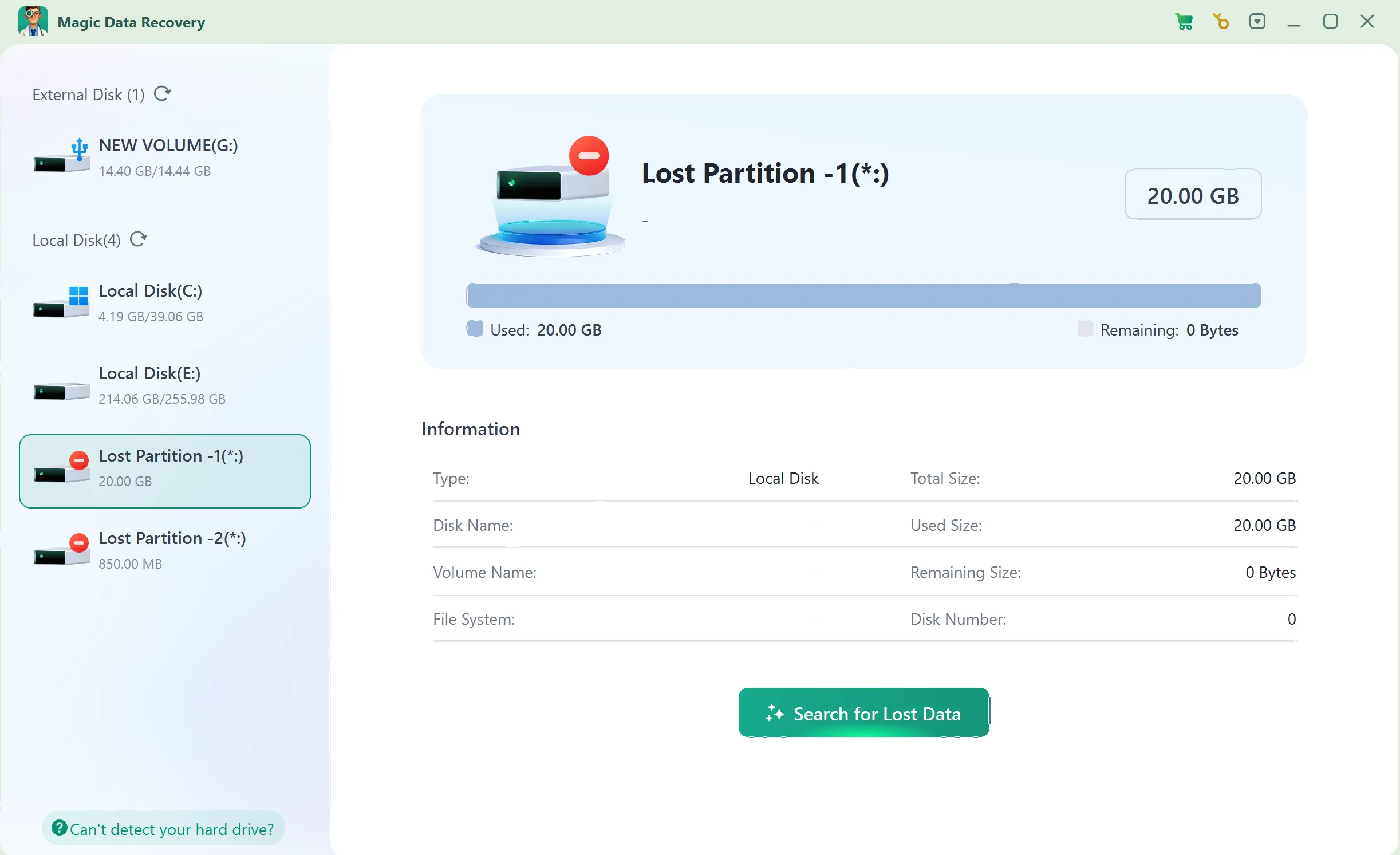
Open the software and locate the drive in the list. Even if the drive has no drive letter, Magic Data Recovery should detect the physical disk successfully so you can begin to recover data from dead hard drive sectors.
Step 3: Wait till the Scan Completes
For a drive that is “dead” or corrupted, a “Quick Scan” might not be enough. Magic Data Recovery runs Advanced Scan automatically. This method scans every sector of the disk to find fragmented data. It will list all the files on the drive after the scan.
Step 4: Preview and Filter Results
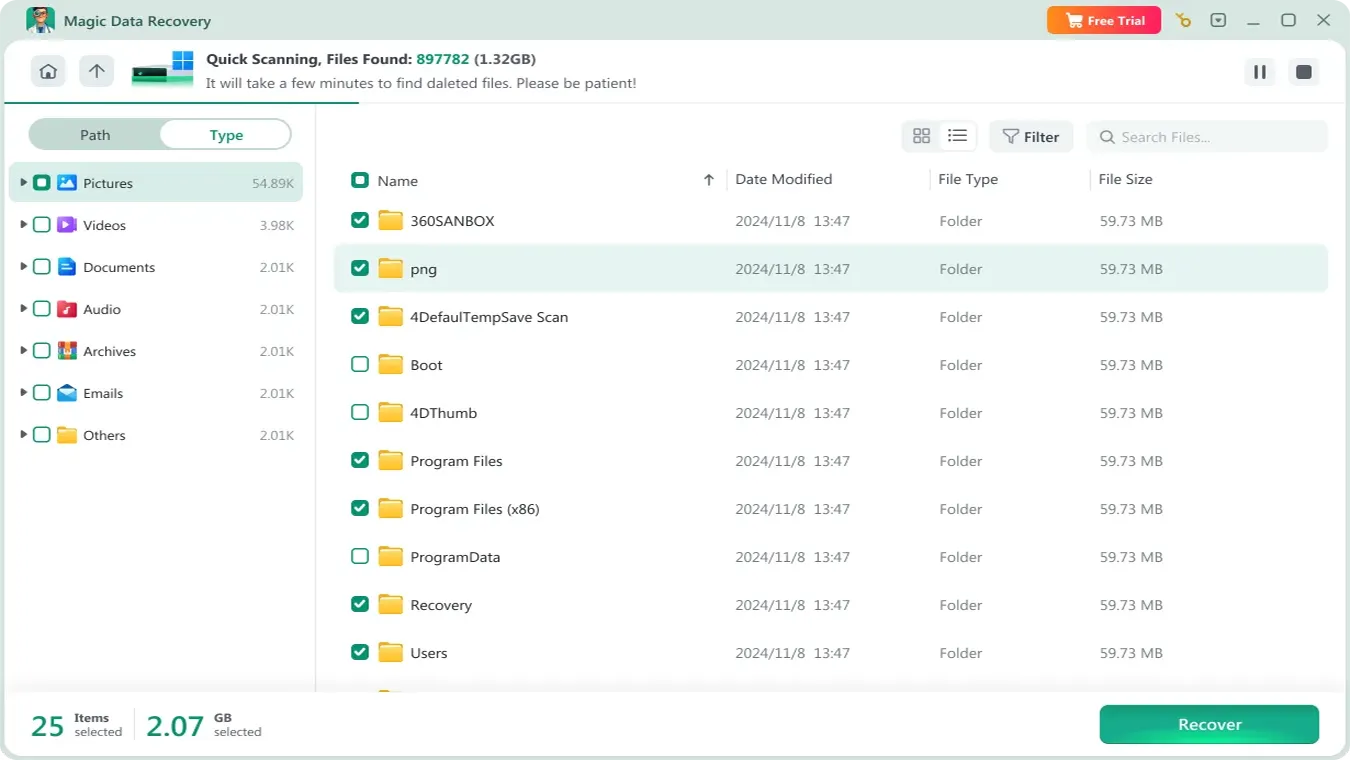
Professional tools allow you to filter results by file type. Use the preview feature to ensure the files are intact. If the preview looks perfect, you will successfully recover data from dead hard drive partitions.

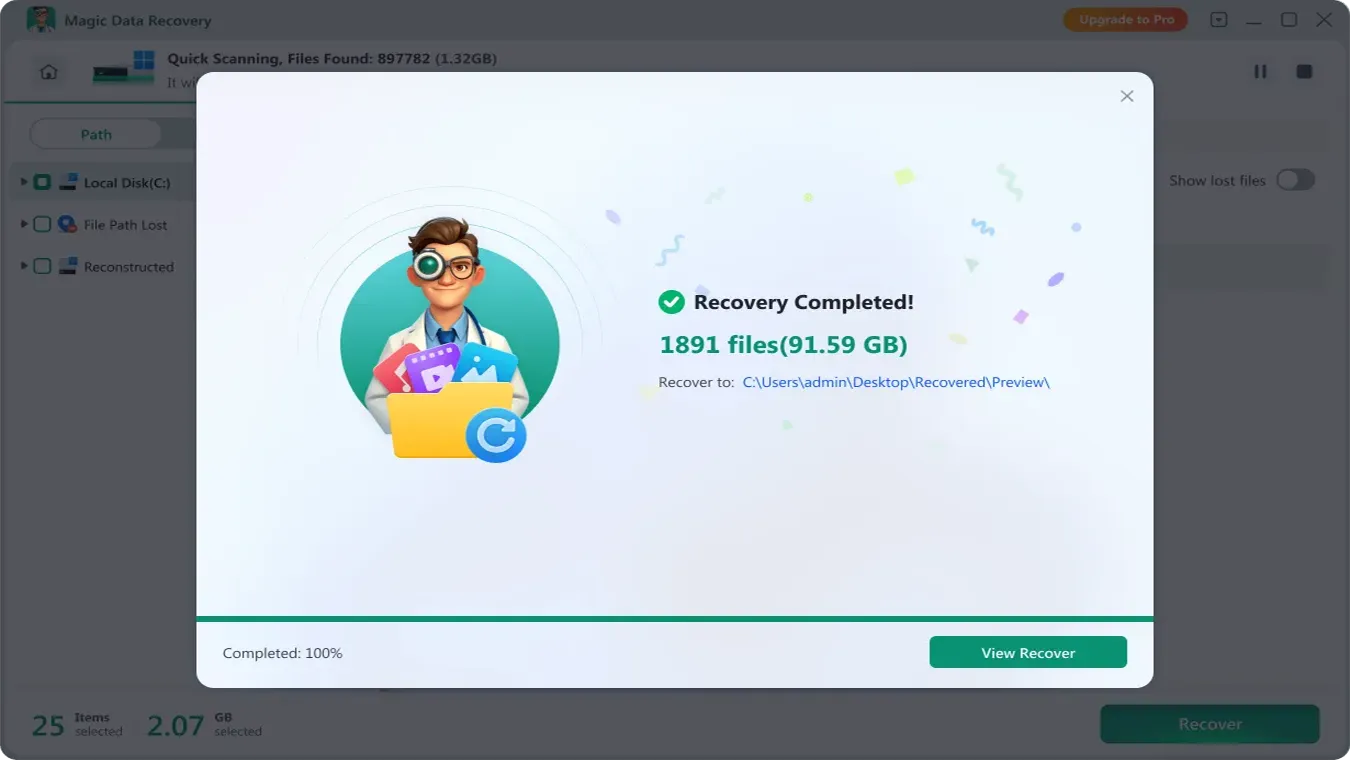
Step 5: Save Data to a New Location
Finally, always save the recovered files to a completely different device.
When Should You Stop and Call a Pro?
While software is a powerful solution, it has limits. You should seek a professional data recovery lab if the drive was submerged in water. Additionally, if the drive is making “the click of death,” software will not help you recover data from dead hard drive files. Moreover, if the data is of extreme legal importance, you cannot risk a single mistake.
Professional labs operate in “Clean Rooms.” In these environments, they can safely open the drive and replace internal components like the actuator arm or the motor.
Proactive Tips: Preventing Future Hard Drive Failures
The best way to recover data from dead hard drive units is to ensure you never have to. Follow these tips to protect your digital life:
- The 3-2-1 Rule: Keep 3 copies of your data, on 2 different media types, with 1 copy stored off-site.
- Monitor S.M.A.R.T. Status: Use free utilities to check your drive’s health periodically.
- Avoid Physical Shock: Never move a laptop or external drive while it is spinning.
- Use a Surge Protector: Electrical spikes are a leading cause of PCB failure in hard disks.
Conclusion
Successfully learning how to recover data from dead hard drives requires patience and the right strategy. First, diagnose whether the issue is a simple connection problem or a terminal physical breakdown. For most logical issues, a professional tool like Magic Data Recovery offers the highest chance of success by utilizing advanced deep-scanning algorithms.
Furthermore, remember that the moment you suspect a drive failure, you must minimize its usage. Every second the disk spins could be its last. By using a “read-only” recovery approach and keeping regular backups, you can ensure that you recover data on the drive smoothly.
Supports Windows 7/8/10/11 and Windows Server
FAQs -- How to Recover Data from a Dead Hard Drive
Can I recover data from a dead hard drive for free?
Yes, you can use specialized tools for this purpose. For instance, Magic Data Recovery offers a free version that allows you to scan the drive and preview files. Currently, you can recover data from dead hard drive disks up to 500MB at no cost, which is perfect for testing the tool's effectiveness before upgrading.
Does the "Freezer Trick" really work for dead drives?
In the past, freezing a drive could sometimes shrink metal parts enough to unstick a motor. However, with modern high-density drives, this causes condensation and permanent internal damage. Therefore, we do not recommend this method. Instead, you should rely on professional dead hard drive recovery software for logical issues or expert repair services.
How much does a professional recovery service cost?
Physical recovery usually starts at $300 and can exceed $1,000 depending on the severity of the damage. Because of these high costs, using software like Magic Data Recovery is always the preferred first step for logical errors. It allows you to recover data from dead hard drive partitions at a fraction of the professional price.
Why is my hard drive clicking and can I fix it?
A clicking sound usually indicates a mechanical failure of the read/write heads. Unfortunately, software cannot fix this physical issue. You should stop using the drive immediately to prevent the heads from scratching the internal platters. If the data is vital, your only safe option to recover data from dead hard drive platters is a professional service.
How long does it take to recover data from a dead drive?
The duration depends entirely on the drive's size and its physical condition. For a 1TB drive with logical corruption, a deep scan might take several hours. However, if the drive has many bad sectors, the process could take longer.
Can I recover data if the BIOS does not recognize the drive?
If the BIOS cannot see the drive, the issue is likely hardware-related, such as a dead PCB or motor. Consequently, standard software will not be able to access the disk. You might try replacing the PCB with an identical model, but this situation usually requires professional hardware repair services to recover data from dead hard drive platters.
Is SSD recovery different from HDD recovery?
Yes, SSDs use flash memory and do not have moving parts. When an SSD "dies," it often enters a "read-only" mode or fails due to controller issues. While the mechanical symptoms are absent, you can still recover data from dead hard drive software if the controller functions. Magic Data Recovery supports both traditional HDDs and modern SSD architectures.

Vasilii is a data recovery specialist with around 10 years of hands-on experience in the field. Throughout his career, he has successfully solved thousands of complex cases involving deleted files, formatted drives, lost partitions, and RAW file systems. His expertise covers both manual recovery methods using professional tools like hex editors and advanced automated solutions with recovery software. Vasilii's mission is to make reliable data recovery knowledge accessible to both IT professionals and everyday users, helping them safeguard their valuable digital assets.