
Memory Card Data Recovery Guide
Losing photos, videos, documents, or project files from a memory card can feel stressful, especially when the card was used in a camera, phone, drone, dashcam, or game console. If you need broader device-specific help, you can also explore Amagicsoft’s SD card recovery solutions. The good news is that memory card data recovery is often possible if you act quickly and avoid writing new data to the card.
This guide explains how memory card recovery works, what you should do first, which free methods are worth trying, and when recovery software becomes the better solution. It also explains why Magic Data Recovery can help in more complex cases, such as accidental deletion, formatting, file system errors, system reinstall issues, or virus-related data loss.
Supports Windows 7/8/10/11 and Windows Server
Table of Contents
What Causes Memory Card Data Loss?
Before starting memory card data recovery, it helps to understand why files disappear. Different causes require different recovery strategies. For example, deleted photos are different from a corrupted memory card that asks to be formatted.
Common causes include:
- Accidental deletion from a camera, phone, or computer
- Formatting the memory card by mistake
- File system errors, such as RAW, unreadable, or “card needs to be formatted”
- Interrupted file transfer
- Removing the card while files are being written
- Virus deletion or suspicious file changes
- Memory card not recognized by Windows
- System reinstall or device reset after files were stored locally
- Physical damage, bad sectors, or a failing card
In many cases, files are not removed immediately. Instead, the storage space may be marked as available. Therefore, the first rule is simple: stop using the memory card right away.
What to Do Before Memory Card Recovery
The steps you take before recovery can directly affect the result. If you continue taking photos, recording videos, or copying files to the card, new data may overwrite the lost files.
Follow these tips first:
- Stop using the memory card immediately.
- Remove it safely from the camera, phone, drone, or computer.
- Do not format the card, even if Windows asks you to.
- Do not run repair tools before recovering important files.
- Use a reliable card reader instead of connecting through an unstable device.
- Save recovered files to another drive, never back to the same memory card.
These steps may look simple, but they are important for successful memory card data recovery. Even a small write operation can reduce the chance of recovering complete photos, videos, or documents.
Can You Recover Files from a Memory Card?
Yes, memory card recovery is possible in many situations. For SD and microSD-specific examples, this recover data from SD card guide explains common deletion, formatting, and corruption scenarios in more detail.. However, the result depends on what happened to the card and whether the lost files have been overwritten.
You may still recover files when:
- Files were deleted recently.
- The card was formatted quickly.
- The memory card becomes RAW.
- The card shows an error but still appears in Disk Management.
- Photos or videos disappeared after a transfer failure.
- A virus deleted or hid files.
Recovery becomes harder when the card has physical damage, severe bad sectors, or encrypted storage from certain Android devices. In those cases, professional recovery service may be safer, especially when the files are extremely valuable.
Free Methods to Try Before Using Recovery Software
Not every case requires paid software first. If the data loss is simple, you can try several free methods. However, do not use repair commands that may modify the card before you recover important files.
Method 1: Check Another Card Reader or USB Port
Sometimes the memory card is not the real problem. A faulty card reader, loose adapter, damaged USB port, or unstable connection can make the card look unreadable.
Try this:
- Insert the memory card into another card reader.
- Use a different USB port.
- Test the card on another computer.
- Check whether Windows assigns a drive letter.
- Open Disk Management to see if the card appears.
If the card appears normally after changing the reader, copy your files to a safe location immediately. If files are missing, continue with memory card data recovery steps.
Method 2: Look for Hidden Files
A virus or file attribute issue may hide files instead of deleting them. In that case, the card may still show used space, but the folder looks empty.
On Windows:
- Open File Explorer.
- Click View.
- Enable Hidden items.
- Open the memory card again.
- Check whether your files appear.
You can also scan the memory card with antivirus software. However, avoid deleting suspicious files until you confirm whether they contain recoverable data.
Method 3: Check Backups from Phone, Camera, or Cloud
Many users forget that photos and videos may already exist in cloud backups. Before deeper memory card recovery, check whether the files were synced somewhere else.
Useful places to check include:
- Google Photos
- iCloud Photos
- OneDrive
- Dropbox
- Camera companion apps
- Phone gallery trash folder
- Windows backup or File History
- External drive backups
This method is safe because it does not write data to the memory card. If your files exist in backup, restore them from there first.
Method 4: Try Windows File Recovery
Windows File Recovery is a command-line tool from Microsoft. It can recover files from local storage devices, including external drives and USB storage. For FAT and exFAT storage, which are common on memory cards, the extensive mode is usually the relevant option.
A basic example may look like this:
winfr E: D:\Recovery /extensive /n *.jpg /n *.mp4
In this example, E: is the memory card, and D:\Recovery is the destination folder. The destination must be different from the source drive.
This method can help with some deleted files, but it is not the easiest option for beginners. If you want to compare more free options first, read this free SD memory card data recovery guide before moving to advanced recovery software. It also lacks a visual preview interface, so selecting the right files can be difficult.
When Free Methods Are Not Enough
Free methods may fail when the memory card is formatted, corrupted, or unreadable. They may also be difficult when you need to recover many file types, such as JPG, RAW photos, MP4 videos, documents, archives, and project files.
At this point, dedicated memory card data recovery software is usually more practical. A good recovery tool should help you:
- Scan deleted and lost files.
- Support common memory card file systems.
- Preview recoverable files before saving.
- Recover photos, videos, documents, and other file types.
- Handle formatted, RAW, or corrupted memory cards.
- Save recovered files to another safe location.
More importantly, recovery software should be easy enough for normal users. Many people looking for memory card recovery are not technicians. They need clear steps, visible results, and a lower risk of making the card worse.
Recommended Solution: Magic Data Recovery
If the common methods do not find your files, Magic Data Recovery is a practical option for deeper memory card data recovery. It is designed to recover lost data from different storage scenarios, including accidental deletion, formatting, file system errors, system reinstall situations, and virus deletion.
Why Magic Data Recovery Fits Memory Card Recovery
Magic Data Recovery helps solve the core problem: your files are missing, but the memory card may still contain recoverable data. Instead of relying on command lines or manual checks, the software scans the card and helps you locate lost files more clearly.
It is suitable for cases such as:
- Deleted camera photos
- Formatted SD or microSD card
- Memory card asking to be formatted
- Files lost after a transfer interruption
- Virus-deleted folders
- Memory card showing RAW file system
- Lost videos from drones, dashcams, or action cameras
- Files missing after using the card on different devices
The main advantage is that Magic Data Recovery focuses on recovery workflow. If you want to see the complete process before scanning your card, check the Magic Data Recovery user guide. You connect the memory card, scan it, preview files when possible, and recover selected items to another safe drive.
Key Advantages of Magic Data Recovery
Magic Data Recovery is worth recommending because it addresses several real recovery pain points.
First, it supports multiple data loss scenarios. Many users do not know whether the card was deleted, formatted, corrupted, or affected by a file system error. A broader recovery engine helps cover more possibilities.
Second, it supports different file types. Memory cards often store photos, videos, audio files, documents, and compressed files. A useful memory card recovery tool should not only search for one file type.
Third, it gives users a more visual process than command-line tools. This matters for beginners who want to preview and choose files before recovery.
Finally, it reduces the need for risky trial-and-error operations. Instead of formatting the card, running random repair commands, or copying new files onto it, users can scan the card first and recover data to another location.
Supports Windows 7/8/10/11 and Windows Server
How to Recover Data from a Memory Card with Magic Data Recovery
Follow these steps to perform memory card data recovery safely.
Step 1: Connect the Memory Card to Your Computer
Insert the memory card into a reliable card reader. Then connect it to your Windows computer. If the card appears with an error message, do not format it.
Step 2: Launch Magic Data Recovery
Open Magic Data Recovery and choose the memory card from the drive list. Make sure you select the correct card, especially if several removable drives are connected.
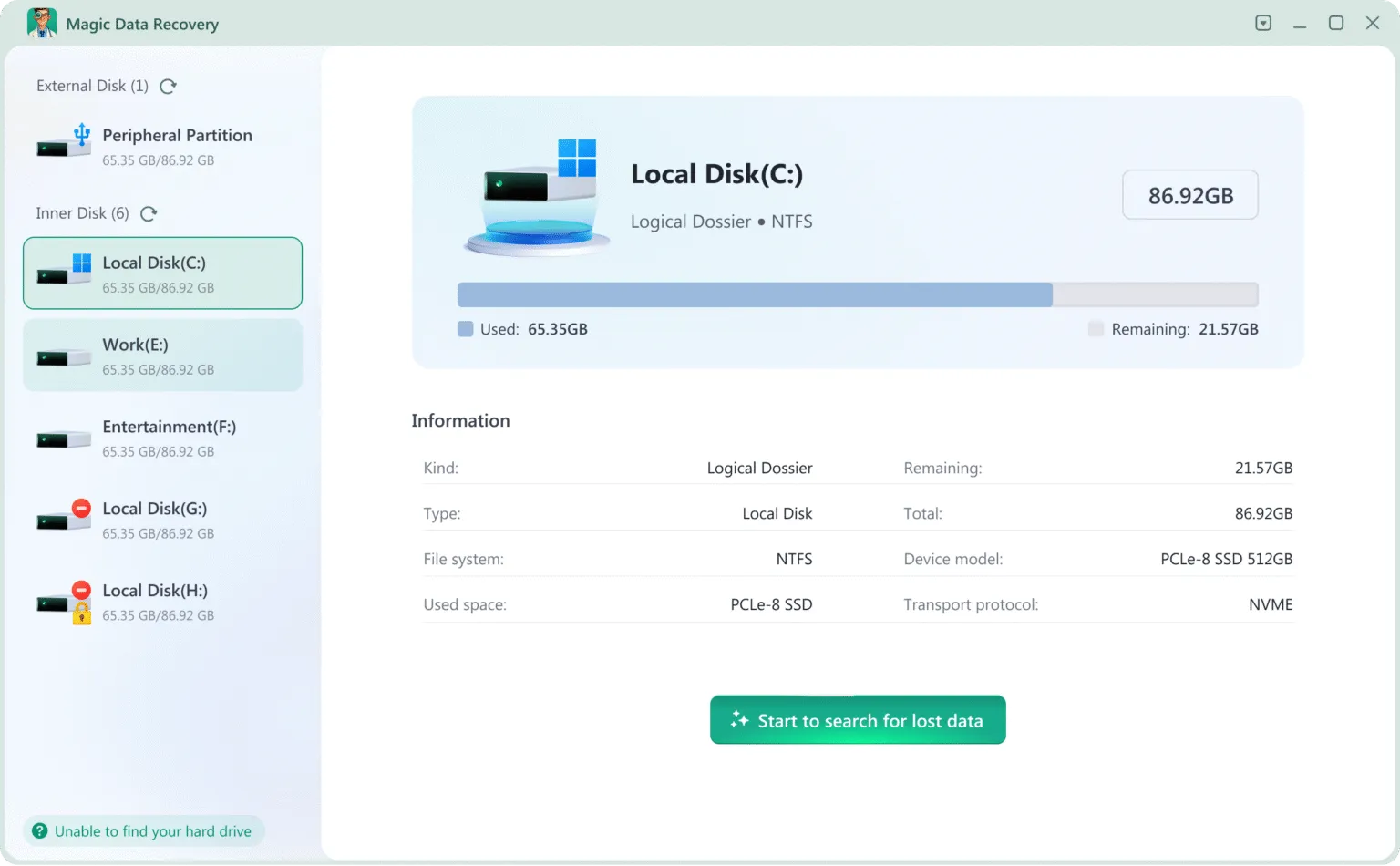
Step 3: Scan the Memory Card
Start the scan. The software will search for deleted, lost, formatted, or inaccessible files. The scan time depends on the card capacity, card condition, and connection speed.
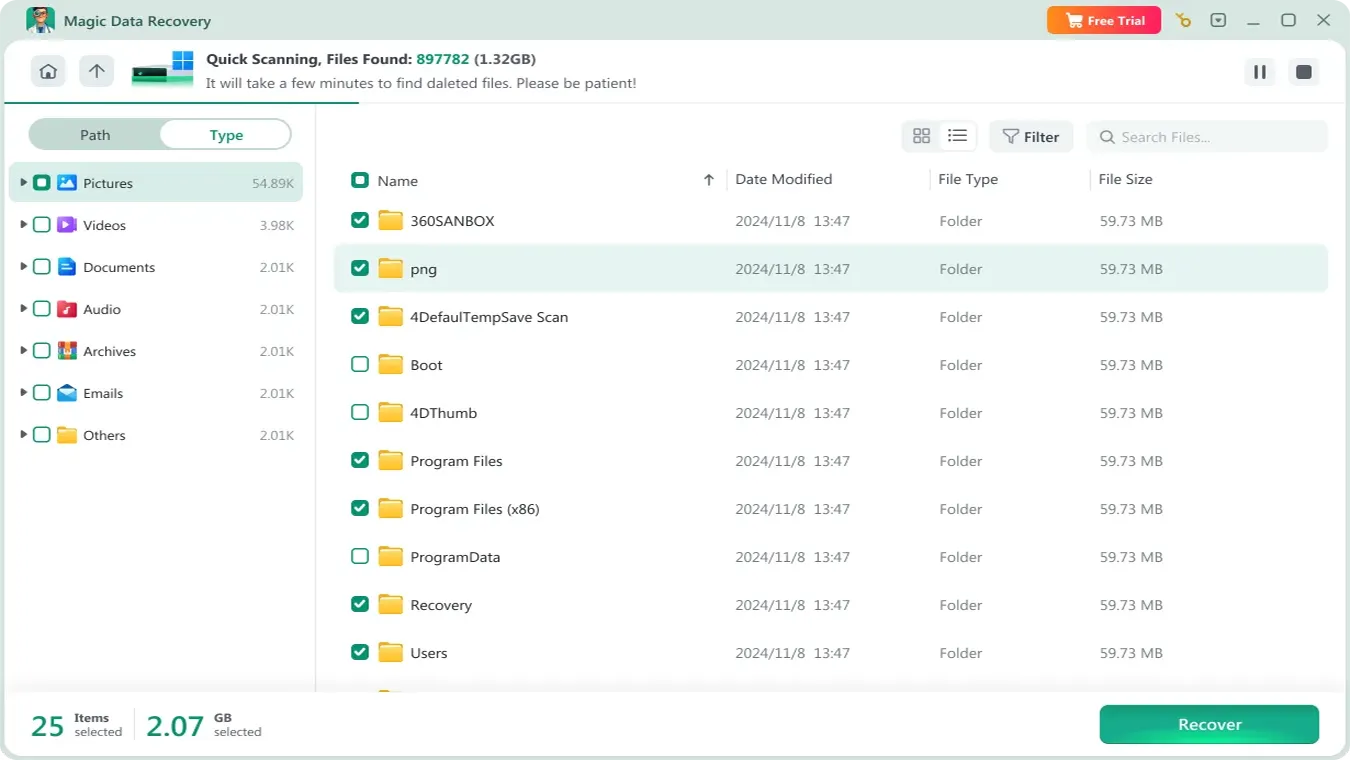
Step 4: Preview and Select Files
After scanning, review the found files. Use file names, file types, paths, and preview options to locate the data you need. This step helps avoid recovering unnecessary files.

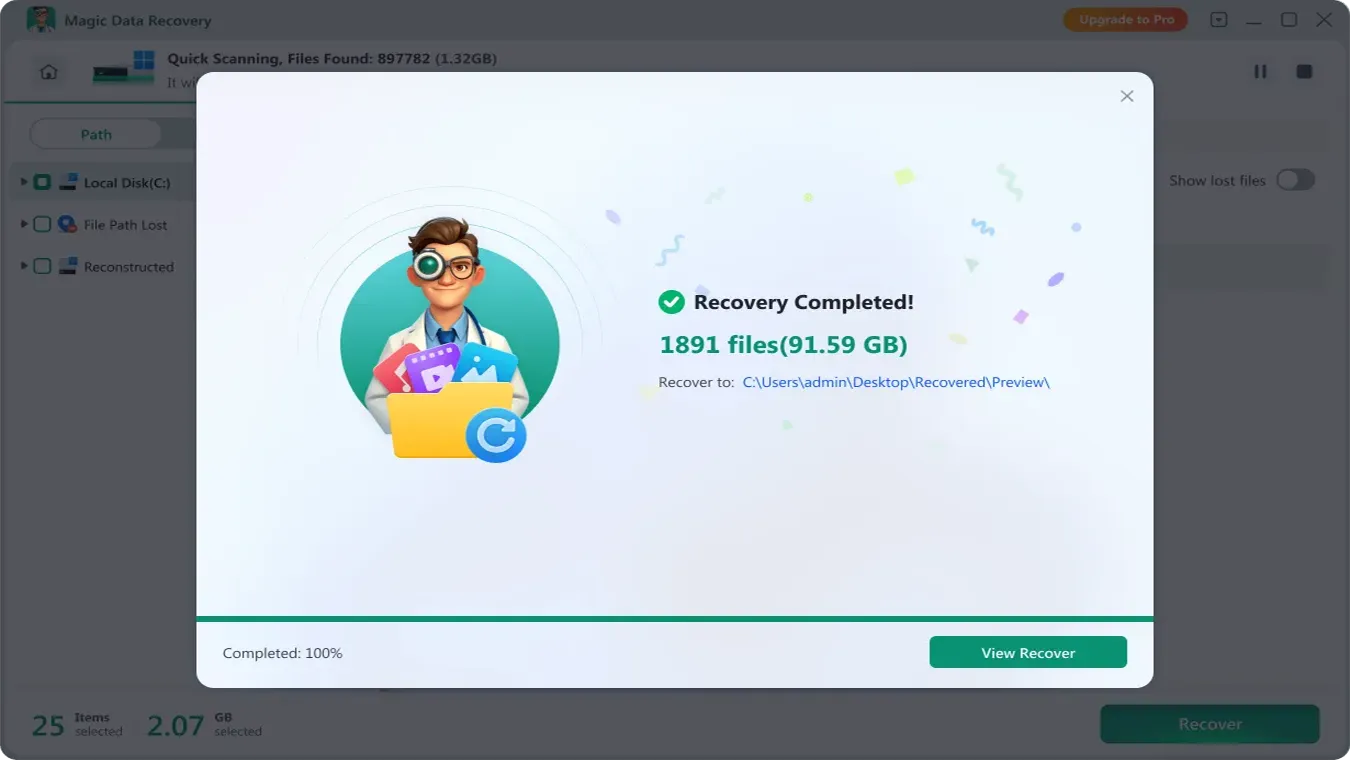
Step 5: Recover Files to Another Drive
Choose a safe destination on your computer or an external drive. Do not save recovered files back to the same memory card because that may overwrite other recoverable data.
Memory Card Recovery for Different Scenarios
Different data loss situations need different handling. Here are the most common cases.
Recover Deleted Files from a Memory Card
If you deleted files by mistake, stop using the card immediately. Deleted files may remain recoverable until new data overwrites them. Run a scan with Magic Data Recovery and save found files to another drive.
Recover a Formatted Memory Card
A quick format usually removes file system references, but it may not erase all file content immediately. For a more step-by-step diagnosis, this SD card recovery guide explains how to check the situation before recovering files. In this case, deep scanning gives you a better chance to find photos, videos, and documents.
Recover Data from a Corrupted Memory Card
If Windows says the memory card needs formatting, avoid clicking Format. Use recovery software first. After you recover important files, you can decide whether to repair, reformat, or replace the card.
Recover Files After Virus Deletion
Some viruses delete, hide, or rename files on removable storage. Run antivirus software carefully, then use Magic Data Recovery to scan for deleted or missing files. Always recover data to a clean drive.
Recover Files from an Unreadable Memory Card
If the card appears in Disk Management but does not open in File Explorer, recovery may still be possible. Select the card in recovery software and scan it. If the card does not appear anywhere, try another reader. If it still fails, the card may have physical damage.
Common Mistakes That Reduce Recovery Success
Many users make recovery harder without realizing it. Avoid these mistakes:
- Continuing to take photos or videos on the same card
- Formatting the card before recovery
- Saving recovered files back to the memory card
- Running repair commands before copying important data
- Using unreliable tools from unknown sources
- Removing the card during scanning or recovery
- Ignoring signs of physical damage
A careful recovery process gives you a better chance of getting complete files back.
How to Protect Memory Card Data in the Future
After completing memory card data recovery, take steps to prevent future loss.
Use these best practices:
- Back up important files regularly.
- Eject the card safely before removing it.
- Avoid using the same card across too many devices.
- Replace old or unstable memory cards.
- Do not fill the card to 100% capacity.
- Use high-quality card readers.
- Keep duplicate copies of important photos and videos.
- Format the card in the device where you use it most often.
Memory cards are convenient, but they are not ideal for long-term storage. If you want to understand how recovery works across SD cards, USB drives, cameras, and other storage media, read this media recovery explanation. For important data, keep at least one backup on another drive or cloud storage.
Conclusion
Memory card data recovery is possible in many common situations, including accidental deletion, quick formatting, file system errors, unreadable cards, and virus-related file loss. The most important rule is to stop using the card and avoid writing new data to it.
Free methods can help when the issue is simple. You can check another reader, look for hidden files, review backups, or try Windows File Recovery. However, these options may not be enough when the card is formatted, corrupted, RAW, or difficult to access.
That is why Magic Data Recovery is a reliable recommendation for deeper memory card recovery. It supports multiple data loss scenarios, offers a more visual recovery process, and helps users recover photos, videos, documents, and other files without unnecessary technical complexity. If you are looking for a more efficient solution, try Magic Data Recovery before giving up on your lost memory card files. You can also visit Amagicsoft’s SD card data recovery guide for more SD card and microSD card recovery solutions.
Supports Windows 7/8/10/11 and Windows Server
FAQs
Can memory card data recovery restore deleted photos?
Yes, memory card data recovery can often restore deleted photos if the deleted data has not been overwritten. Stop using the card immediately, connect it to a computer, and scan it with recovery software. Save recovered photos to another drive, not the same memory card, to avoid damaging other recoverable files.
Can I recover data from a formatted memory card?
Yes, recovery is often possible after a quick format. A quick format usually removes file system references rather than fully erasing every file. However, new data can overwrite old files. For better results, stop using the card and run a deep scan with a reliable memory card recovery tool.
What should I do if my memory card asks to be formatted?
Do not format the card if it contains important files. Formatting may make recovery harder. Instead, connect the card through a stable card reader and scan it with recovery software first. After you recover your files, you can decide whether to repair, reformat, or replace the card.
Is Windows File Recovery good for memory card recovery?
Windows File Recovery can help in some cases, especially for deleted files. However, it uses command-line operations, which may be difficult for beginners. It also does not provide the same visual preview experience as dedicated recovery tools. For formatted or corrupted cards, specialized software may be easier and more practical.
Why should I not save recovered files back to the same card?
Saving recovered files back to the same memory card may overwrite other lost files that are still recoverable. This can reduce the chance of complete recovery. Always choose a different destination, such as your computer’s internal drive or another external drive, when performing memory card data recovery.
Can Magic Data Recovery recover files deleted by a virus?
Magic Data Recovery can help recover files lost due to virus deletion, accidental deletion, formatting, and file system errors. Before recovery, use antivirus software carefully to reduce further damage. Then scan the memory card and recover found files to a clean, safe storage location.
What if my memory card is physically damaged?
If the card is physically damaged, not detected by any computer, or makes devices freeze, software recovery may not work. In that case, avoid repeated attempts because they may worsen the damage. For highly valuable data, consider a professional data recovery service before trying more repair operations.
How can I prevent memory card data loss?
Back up important files regularly, eject the card safely, avoid removing it during transfers, and replace unstable cards early. Also, do not use one memory card across too many devices. For photos, videos, and work files, keep at least one extra copy on a computer, external drive, or cloud service.

Jason has over 15 years of hands-on experience in the computer data security industry. He specializes in data recovery, backup and restoration, and file repair technologies, and has helped millions of users worldwide resolve complex data loss and security issues.