
Professional Data Recovery Software Review
When important files disappear, many users immediately search for professional data recovery solutions. The problem is that not every tool fits every data loss case. Some tools work well for simple deletion. Others focus on advanced file systems, damaged partitions, or technical recovery workflows.
Before you pay for a local recovery service, it makes sense to check whether your files can still be found with reliable software. If your main issue is accidental deletion, an emptied Recycle Bin, or lost documents after a common logical error, this deleted file recovery solution can be a practical first step.
This guide compares several well-known data recovery tools, explains when software recovery makes sense, and shows why Magic Data Recovery is a strong choice for Windows users who need a clear, safe, and efficient recovery process.
Table of Contents
What Does Professional Data Recovery Mean?
Professional data recovery usually means recovering lost files with reliable methods, safe workflows, and proper risk control. It does not always mean sending your hard drive to a laboratory.
In general, data loss falls into two main categories:
Logical data loss means the storage device still works, but files are missing because of deletion, formatting, file system errors, partition problems, virus damage, or system reinstallation.
Physical data loss means the device has hardware damage. For example, the drive clicks, does not spin, overheats, makes strange noises, or cannot be detected by the computer.
Software can help in many logical data loss cases. However, a physically damaged drive needs a cleanroom recovery service. Therefore, a good professional data recovery guide should not promise impossible results. It should help you choose the safest next step.
Quick Comparison: Professional Data Recovery Software
Software | Best For | Strengths | Possible Limitations |
Magic Data Recovery | Windows users who need simple recovery from deletion, formatting, file system errors, and virus damage | Clear scan-preview-recover workflow, supports common storage devices, beginner-friendly | Not designed for physically damaged drives |
EaseUS Data Recovery Wizard | General users who want a popular recovery tool | Modern interface, broad device support, multiple scan modes | Pricing may feel high for one-time recovery |
Disk Drill | Users who want extra disk utilities | Good interface, recovery chance information, extra disk tools | Some features may be unnecessary for basic users |
Stellar Data Recovery | Users who need a well-known recovery suite | Supports deleted, formatted, corrupted, and RAW drive cases | Some users may find scan speed or interface less direct |
R-Studio | Technicians and advanced users | Strong file system support, RAID-related features, technical recovery options | Too complex for many everyday users |
Recuva | Basic deleted file recovery | Free version, simple undelete workflow | Better for simple cases than complex formatted or corrupted drive recovery |
This comparison shows a key point: the best professional data recovery tool is not always the most technical one. For most home users, office workers, students, and small businesses, the better choice is the tool that reduces mistakes while still covering common data loss scenarios.
When Should You Use Professional Data Recovery Software?
You should consider professional data recovery software when the storage device still works and the lost files have not been overwritten.
Common recoverable situations include:
- You deleted files by mistake.
- You emptied the Recycle Bin.
- You formatted a drive without backup.
- A partition disappeared.
- A drive asks you to format it before use.
- A virus removed, hid, or damaged files.
- Files disappeared after system reinstallation.
- An external drive, USB drive, or memory card shows file system errors.
In these cases, the most important rule is simple: stop using the affected drive. Every new file, download, installation, or system operation may overwrite the lost data. Once overwriting happens, even advanced software may not recover the original files.
When Should You Avoid DIY Recovery?
Software is not the right solution for every case. You should avoid DIY recovery when the drive shows signs of physical failure.
Do not keep scanning the device if:
- The hard drive clicks or makes grinding noises.
- The disk disconnects repeatedly.
- The drive does not appear in Disk Management.
- The device overheats quickly.
- The computer freezes whenever the drive connects.
- The SSD has failed electronically and cannot be detected.
In these cases, using software may increase the risk. A real professional data recovery lab can inspect the hardware, clone unstable media, and work with specialized equipment. Although this option costs more, it is safer when hardware damage exists.
Best Professional Data Recovery Software Compared
Magic Data Recovery
Magic Data Recovery is designed for users who need a practical professional data recovery tool without a complicated technical interface. It focuses on the most common logical data loss cases and gives users a direct path: select the location, scan, preview, and recover files to a safe destination.
It can help recover files lost because of accidental deletion, formatting, file system errors, virus damage, inaccessible partitions, and system-related data loss. This makes it suitable for Windows users who need to recover documents, photos, videos, archives, and other common file types from hard drives, SSDs, USB drives, memory cards, and external storage devices.
The main advantage is balance. Magic Data Recovery does not force beginners into advanced disk terminology. At the same time, it gives enough scanning depth for serious recovery cases where basic undelete tools may fail.
Supports Windows 7/8/10/11 and Windows Server
You can learn the complete workflow from the Magic Data Recovery user guide.
Why Magic Data Recovery Fits Real-World Recovery Needs
Many users do not know whether their files still exist. That is why preview-based recovery matters. With Magic Data Recovery, you can scan the affected storage device and check recoverable files before deciding what to restore.
This helps in several real scenarios:
- A student deleted a project folder and emptied the Recycle Bin.
- A photographer formatted an SD card before copying all photos.
- An office user lost documents after a file system error.
- A small business computer lost files after virus damage.
- A Windows user reinstalled the system and found old files missing.
In these cases, Magic Data Recovery gives users a controlled first step. It does not replace a lab for physically damaged hardware, but it can solve many logical professional data recovery cases faster and at lower cost.
If you want to test the software first, you can visit the Magic Data Recovery product page.
EaseUS Data Recovery Wizard
EaseUS Data Recovery Wizard is one of the most widely known recovery tools. It supports common scenarios such as deleted files, formatted drives, system crashes, and lost partitions. Its interface also suits users who prefer guided recovery.
However, for users who only need a clean Windows recovery workflow, it may feel more expensive than necessary. It remains a strong option, but the best choice depends on whether you value brand familiarity, pricing, interface style, or recovery scope.
Disk Drill
Disk Drill is another popular option in the professional data recovery market. It offers a modern interface and includes extra disk utilities, such as drive monitoring and backup-related features.
These tools may help users who want more than file recovery. However, if your goal is simply to recover deleted, formatted, or lost files, some extra features may not be essential. For everyday Windows users, a more focused recovery tool may feel easier.
Stellar Data Recovery
Stellar Data Recovery has a long history in the recovery market. It supports many common cases, including deleted data, formatted drives, corrupted storage, and RAW partition issues.
It works well for users who want a familiar recovery brand. Still, users should compare scan workflow, preview convenience, pricing, and recovery scenarios before choosing it. In a professional data recovery task, convenience matters because the wrong operation can reduce recovery chances.
R-Studio
R-Studio is a more technical tool. It supports many file systems and includes advanced features that appeal to technicians, IT teams, and experienced recovery users. It can also help with complex storage structures.
The downside is complexity. A home user who only wants to recover deleted photos or documents may find the interface difficult. For advanced users, R-Studio can be powerful. For everyday users, Magic Data Recovery may provide a smoother path.
Recuva
Recuva is a well-known free recovery tool for Windows. It works best for simple deleted file recovery, especially when files were recently removed and the disk has not been overwritten.
However, Recuva is less ideal for complex cases such as formatted drives, serious file system errors, virus damage, or lost partitions. It can be a useful first attempt for simple deletion, but it may not be enough for broader professional data recovery needs.
Magic Data Recovery vs Other Recovery Tools
Magic Data Recovery stands out because it targets the gap between basic free undelete tools and highly technical recovery suites.
Ease of Use
A good professional data recovery tool should not make users guess what to do next. Magic Data Recovery offers a straightforward workflow:
- Select the drive or partition.
- Start scanning.
- Filter or search the scan results.
- Preview recoverable files.
- Save recovered files to another safe location.
This workflow reduces risk because users do not need to modify the source drive during recovery.
Recovery Scenario Coverage
Some tools handle only simple deletion well. Magic Data Recovery covers broader logical data loss cases, including:
- Deleted files
- Formatted drives
- File system errors
- Virus-damaged files
- Lost or inaccessible partitions
- Data loss after system problems
- Files missing from external devices
This broader coverage makes it useful when users do not know the exact reason files disappeared.
Safer Recovery Practice
Professional recovery depends on safety. Magic Data Recovery encourages users to recover files to a different storage location. This is important because saving recovered files back to the same drive may overwrite other recoverable data.
This small workflow detail matters. It reflects a more careful professional data recovery process and helps users avoid a common mistake.
Better Fit for Windows Users
Magic Data Recovery is especially suitable for Windows users who want a focused file recovery solution. It avoids unnecessary complexity while still supporting common storage devices and file loss scenarios.
For pricing and license options, you can check the Magic Data Recovery purchase page.
How to Use Magic Data Recovery Safely
Follow these steps before and during recovery.
Step 1: Stop Using the Affected Drive
Do not save, download, install, copy, or move files on the affected drive. This helps protect recoverable data from overwriting.
Step 2: Install the Software on Another Drive
If you lost files from drive C, install Magic Data Recovery on drive D or another computer. If you lost files from an external drive, install the software on your computer, not on the external device.
Supports Windows 7/8/10/11 and Windows Server
Step 3: Select the Lost File Location
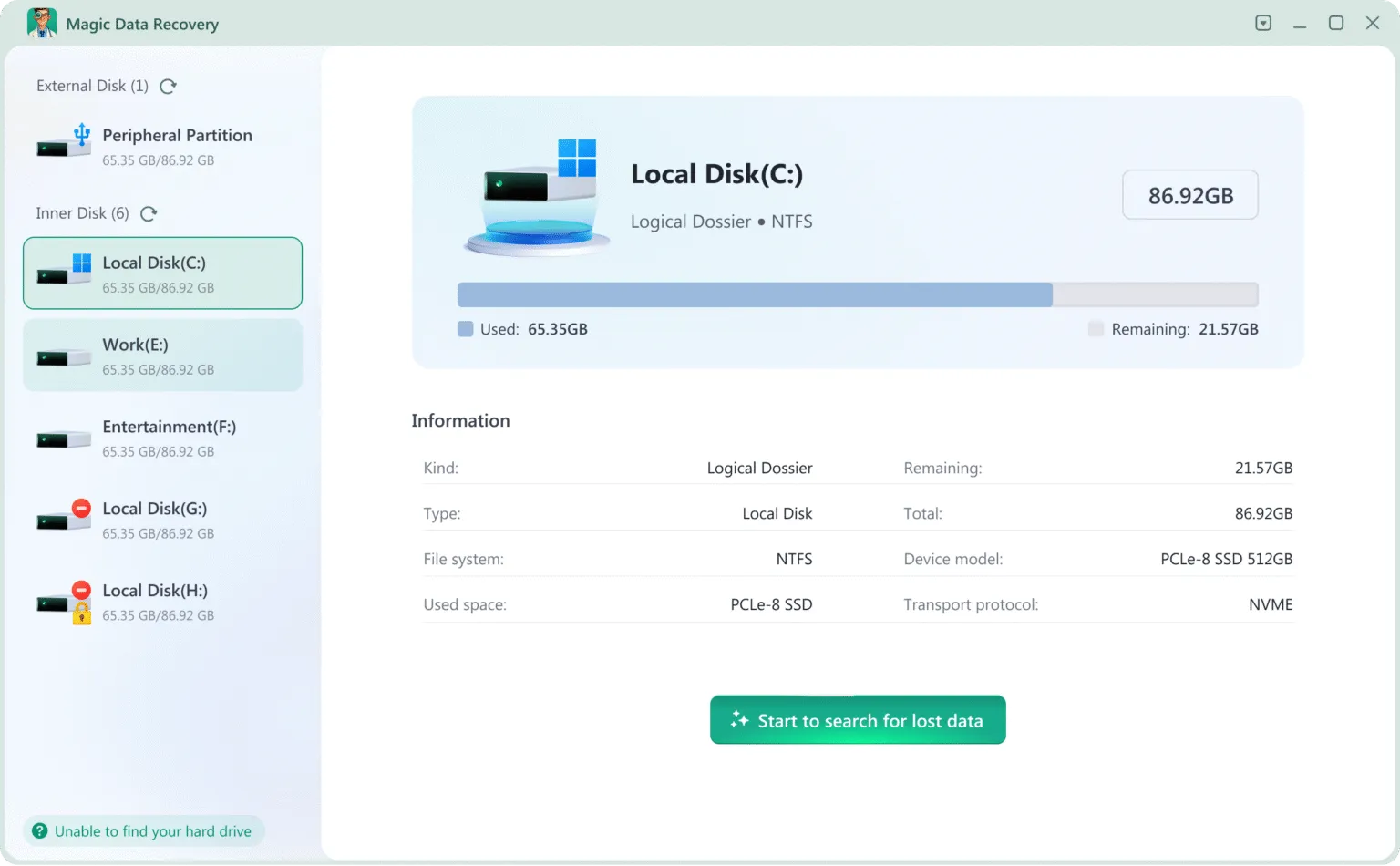
Open the software and choose the drive, partition, USB drive, memory card, or external device where the files were lost.
Step 4: Scan and Review Results
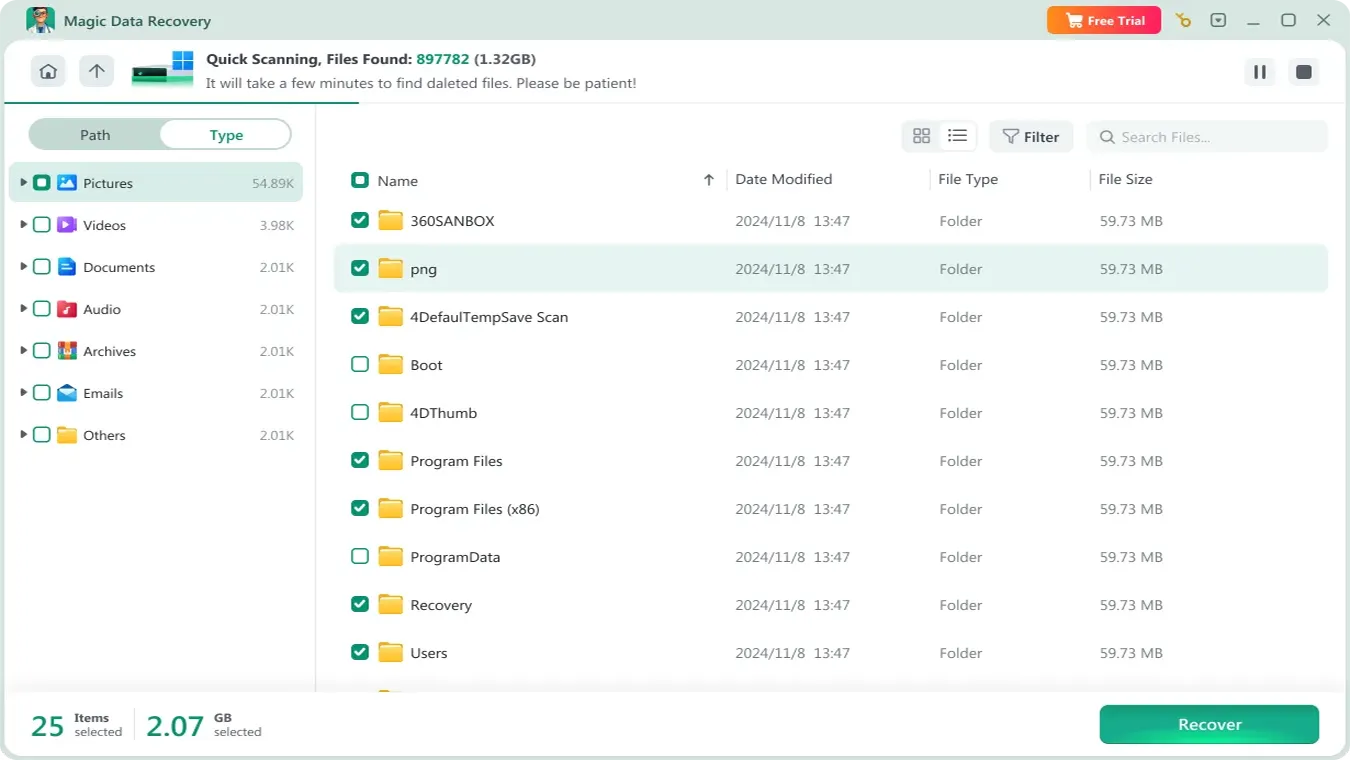
Let the scan finish. Then use filters, file type categories, search, and preview to locate the files you need.
Step 5: Recover to a Safe Location
Save recovered files to a different drive. This prevents new writes from damaging other recoverable files.
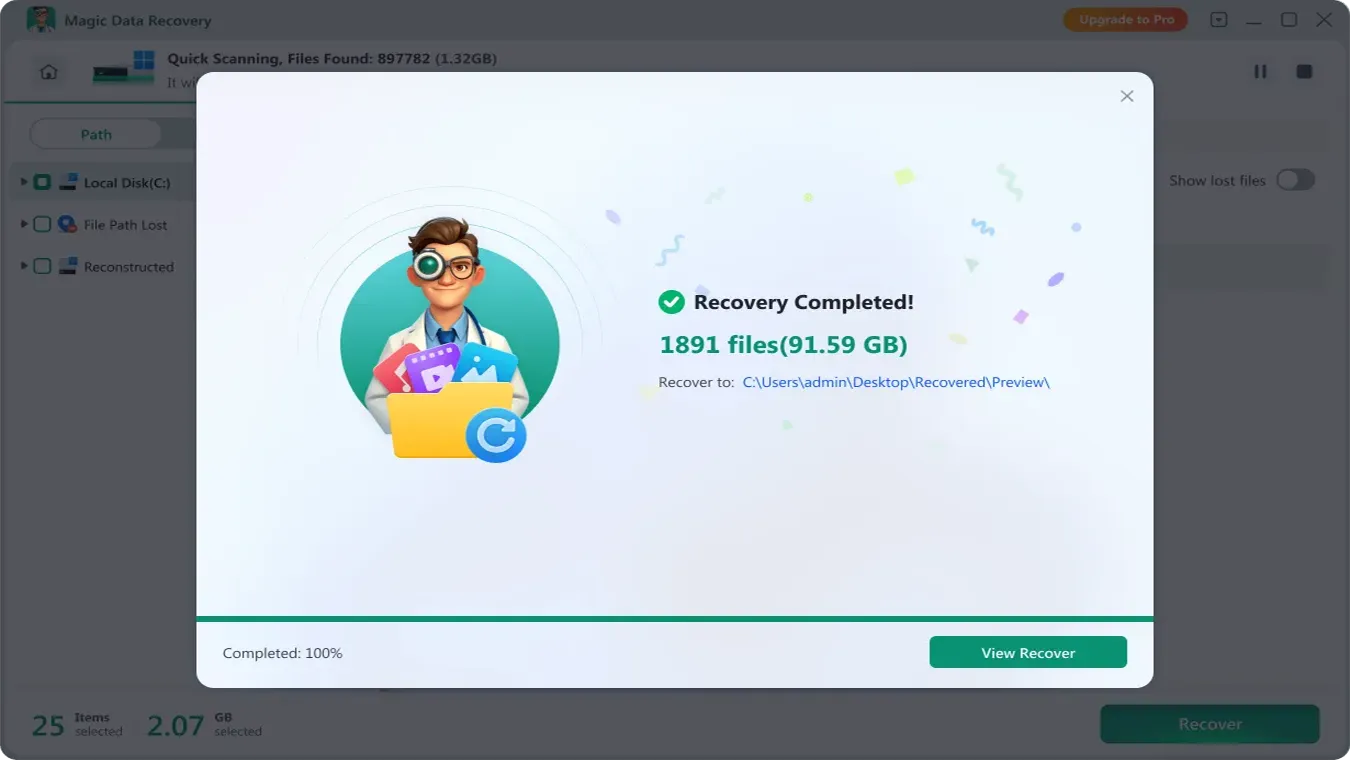
This process gives users a safer professional data recovery workflow without requiring technical training.
Common Mistakes That Reduce Recovery Success
Even the best data recovery software cannot undo every mistake. Avoid these actions:
- Do not install recovery software on the affected drive.
- Do not run CHKDSK before recovering important files from a damaged file system.
- Do not format the drive again.
- Do not save recovered files back to the same location.
- Do not keep using a failing drive.
- Do not expect recovery after complete overwriting.
These mistakes can turn recoverable files into permanently lost files. Therefore, the safest approach is to scan first, preview files, and recover them to another device.
Software Recovery vs Professional Lab Service
Both options have value, but they solve different problems.
Use software when the device works normally and data loss came from deletion, formatting, partition loss, virus damage, or file system errors.
Use a lab service when the storage device has physical damage, cannot be detected, makes abnormal noises, or contains extremely valuable data that cannot risk DIY attempts.
This distinction is important because professional data recovery is not just about using powerful tools. It is about choosing the safest method for the actual problem.
Why We Recommend Magic Data Recovery
Magic Data Recovery is the best recommendation for users who need a practical, Windows-focused professional data recovery solution. It covers common real-world data loss scenarios, including deleted files, formatted drives, file system errors, virus damage, and inaccessible partitions.
It also gives users a safer workflow. You can scan the device, preview recoverable files, and restore selected data to another location. This reduces guesswork and helps users avoid risky operations.
Compared with basic free tools, Magic Data Recovery handles broader recovery cases. Compared with highly technical tools, it is easier for non-specialists to use. That balance makes it a reliable choice for home users, office workers, students, photographers, and small businesses.
If you are looking for a more efficient recovery solution, you can try Magic Data Recovery and check whether your lost files are still recoverable.
Conclusion
Choosing the right professional data recovery software depends on the type of data loss. Recuva may help with simple deletion. R-Studio may suit technicians. EaseUS, Disk Drill, and Stellar offer broad recovery features. However, many everyday users need a tool that combines strong recovery coverage with a simple workflow.
That is why Magic Data Recovery is a strong choice. It supports deleted files, formatted drives, file system errors, virus-related loss, and other common logical recovery cases. More importantly, it helps users scan, preview, and recover files safely without unnecessary complexity.
If your files disappeared but the device still works, start with a controlled software scan before considering a costly lab service. For deleted file cases, you can also begin with this deleted file recovery solution and see whether your data can still be restored.
Supports Windows 7/8/10/11 and Windows Server
FAQs About Professional Data Recovery
What is professional data recovery?
Professional data recovery means using safe, reliable methods to recover lost files from storage devices. It may involve software recovery for logical data loss or lab recovery for physical damage. If the drive still works and files were deleted, formatted, or lost after file system errors, software is often the first practical option.
Is professional data recovery software safe?
Yes, reliable recovery software is safe when you use it correctly. The key is to avoid writing new data to the affected drive. Install the software on another drive, scan the original device, preview recoverable files, and save restored data to a different location to reduce overwrite risks.
Can Magic Data Recovery recover formatted drives?
Magic Data Recovery can help recover files from formatted drives when the original data has not been overwritten. After formatting, stop using the device immediately. Then scan the formatted drive, review recoverable files, and save the recovered data to another storage device for safer results.
Can professional data recovery recover virus-damaged files?
Software recovery may help when a virus deletes, hides, corrupts, or damages file system records. Magic Data Recovery can scan the affected device and locate recoverable files. However, you should remove active malware first or connect the drive to a clean computer before starting the recovery process.
Is data recovery possible after emptying the Recycle Bin?
Yes, recovery may still be possible after emptying the Recycle Bin. Windows usually marks the deleted file space as available instead of removing the data immediately. If new data has not overwritten that space, Magic Data Recovery may find and restore the missing files.
When should I choose a data recovery lab instead of software?
Choose a data recovery lab if the drive has physical damage. Warning signs include clicking noises, overheating, repeated disconnection, failure to spin, or no detection in Disk Management. In those cases, software scans may stress the device and reduce the chance of successful recovery.
Why should recovered files be saved to another drive?
Recovered files should be saved to another drive because writing them back to the original device may overwrite other lost data. This is one of the most important safety rules in professional data recovery. Always use a separate internal drive, external drive, or USB device as the recovery destination.
Which professional data recovery software is best for Windows users?
For many Windows users, Magic Data Recovery is a strong choice because it combines a simple workflow with broad recovery support. It handles deleted files, formatted drives, file system errors, virus damage, and inaccessible partitions. It also lets users scan and preview files before recovery, which helps reduce uncertainty.

Jason has over 15 years of hands-on experience in the computer data security industry. He specializes in data recovery, backup and restoration, and file repair technologies, and has helped millions of users worldwide resolve complex data loss and security issues.