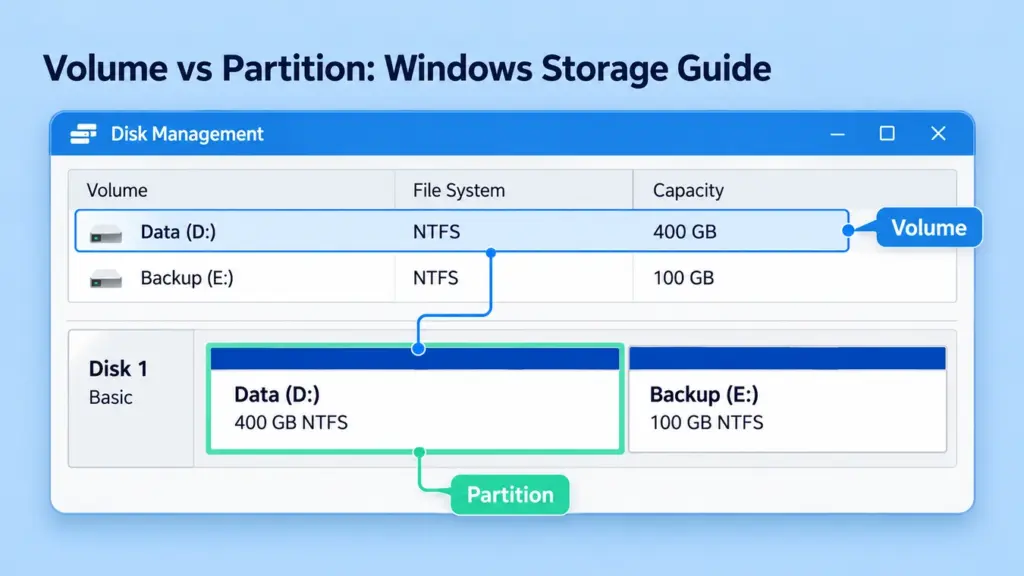
Volume vs partition describes two related aspects of Windows storage. A partition is a defined region in a disk’s layout. A volume is a logical storage unit that Windows presents and manages, normally with a file system for storing files. On an ordinary basic disk, a data partition and its volume usually occupy the same […]
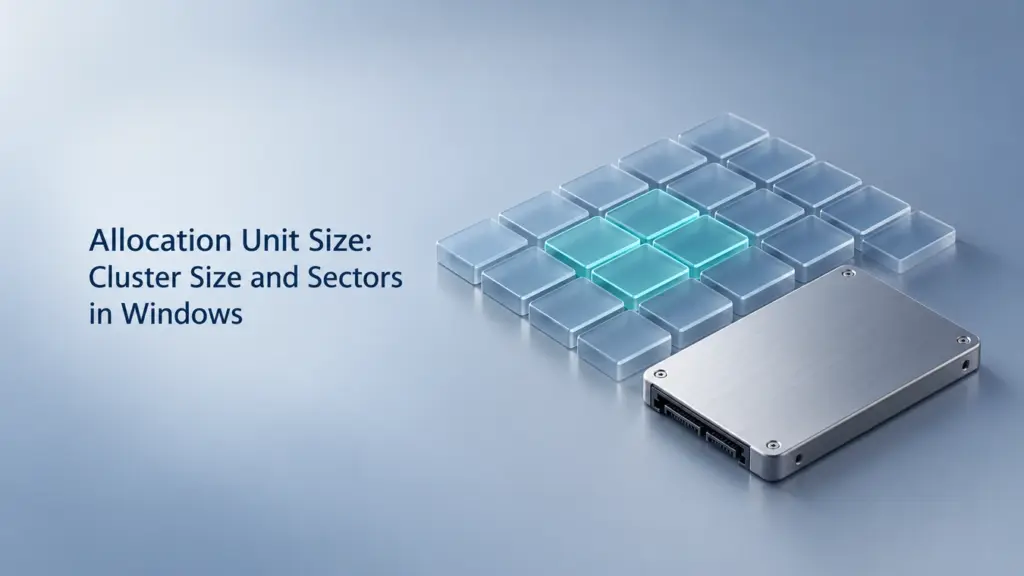
Allocation Unit Size: Cluster Size and Sectors in Windows
Allocation unit size is the size of a cluster—the unit a file system uses to allocate storage space on a volume. In Windows formatting tools, “allocation unit size” and “cluster size” describe the same setting. A cluster contains one or more logical sectors, but changing its size does not change the drive’s sector format. This […]
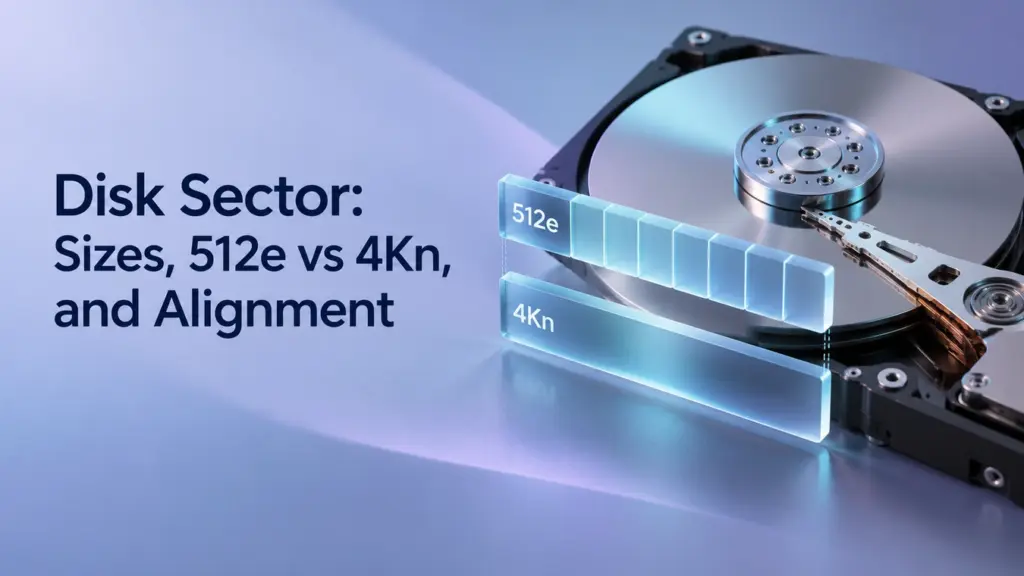
Disk Sector: Sizes, 512e vs 4Kn, and Alignment
A disk sector is a fixed-size unit used to organize and access data on a storage device. The operating system addresses logical sectors, while the device also reports physical sector information that matters for write alignment and compatibility. These sizes can differ: a 512e hard drive exposes 512-byte logical sectors over 4,096-byte physical sectors. Sector […]