
Western Digital Data Recovery Guide
Losing files from a Western Digital drive can feel urgent, especially when the drive stores work documents, family photos, videos, backups, or project files. The good news is that western digital data recovery is often possible when the problem comes from deletion, formatting, file system corruption, or a drive that still appears in Windows. For broader hard drive recovery knowledge, you can also visit the Amagicsoft Hard Drive Solutions before starting.
This guide explains how western digital data recovery works, what you should do first, which mistakes to avoid, and how to recover files from WD My Passport, WD Elements, WD My Book, and internal Western Digital HDDs. You will also learn when software recovery makes sense and when professional lab recovery becomes the safer choice.
Table of Contents
What Is Western Digital Data Recovery?
Western digital data recovery means restoring lost, deleted, formatted, corrupted, or inaccessible files from Western Digital storage devices. These devices may include WD My Passport, WD Elements, WD My Book, WD Blue, WD Black, WD Red, and other internal or external Western Digital hard drives.
In many cases, files do not disappear immediately after deletion or quick formatting. Instead, the file system marks the space as available. Until new data overwrites that space, recovery software may still locate and restore the original files.
However, recovery depends on the type of problem. Logical problems usually give you a better chance of DIY recovery. Physical problems require more caution.
Common Western Digital Drives Covered
Western digital data recovery may apply to many WD products, including:
- WD My Passport external hard drives
- WD Elements portable and desktop drives
- WD My Book desktop backup drives
- WD Blue internal HDDs
- WD Black performance drives
- WD Red NAS drives used in home or small office storage
- Older Western Digital SATA hard drives
Although these drives have different use cases, the recovery logic is similar. If Windows can still detect the drive, recovery software may help. If the drive clicks, spins down repeatedly, overheats, or does not appear in BIOS or Disk Management, stop using it and consider a professional service.
Common Causes of Western Digital Data Loss
Before choosing a recovery method, identify what happened. This helps you avoid risky steps and choose the right western digital data recovery solution.
Accidental Deletion
Many users lose files by deleting the wrong folder, emptying the Recycle Bin, or pressing Shift + Delete. In this case, the file content may remain on the WD drive until Windows writes new data over it.
For this reason, stop using the drive immediately. Do not copy new files to it. Also, avoid installing recovery software on the same drive where the lost files were stored.
Formatting the Wrong WD Drive
Formatting a WD external drive can make all files disappear within seconds. Fortunately, quick formatting usually removes file system references rather than every file’s actual content.
A formatted WD drive still has a recovery chance if you act quickly. Do not format it again. Do not create a new partition. Instead, scan the whole drive with recovery software.
File System Corruption or RAW Drive
A Western Digital drive may suddenly become RAW, inaccessible, or unreadable. Windows may show a message such as “You need to format the disk before you can use it.”
Do not click Format if the files matter. Formatting may make the drive easier to access, but it can reduce the chance of successful western digital data recovery.
WD Drive Not Recognized
Sometimes a WD external hard drive does not show up in File Explorer. The cause may be a loose cable, a faulty USB port, an outdated driver, a corrupted partition table, or hardware failure.
Start with simple checks. Try another USB cable, another USB port, or another computer. If the drive appears in Disk Management, software recovery may work. If the drive makes abnormal noises, stop testing it.
Virus, Malware, or System Errors
Malware can delete, hide, encrypt, or damage files on a Western Digital drive. Sudden shutdowns and system crashes can also corrupt the file system.
In these cases, recovery software can help locate deleted or inaccessible files. However, scan the computer for malware before restoring files to prevent reinfection.
What to Do Before Western Digital Data Recovery
The first few minutes after data loss matter. A safe workflow can improve your recovery chance.
- Stop using the affected WD drive.
- Do not save new files to the drive.
- Do not install recovery software on the same drive.
- Do not run CHKDSK before recovering important files.
- Do not format the drive when Windows asks.
- Use another healthy drive to save recovered files.
- Check whether the problem is logical or physical.
- Start with a preview scan before paying for recovery.
These steps apply to most western digital data recovery cases, including deleted files, formatted partitions, corrupted WD drives, and inaccessible external hard drives.
Software Recovery vs Professional Lab Recovery
Not every WD drive problem should be handled the same way. The table below helps you decide.
Situation | Try Recovery Software? | Use Professional Lab? | Reason |
Files deleted from WD drive | Yes | Usually no | Data may still exist until overwritten |
WD drive quick formatted | Yes | Usually no | File records may be lost, but data sectors may remain |
WD drive shows RAW | Yes, if detectable | Maybe | Logical corruption can often be scanned |
WD external drive asks to format | Yes | Maybe | Recover files before repair or formatting |
WD drive clicks or grinds | No | Yes | Mechanical damage can worsen with use |
Drive not detected in BIOS or Disk Management | No, in most cases | Yes | Software cannot scan a drive that is not detected |
WD NAS RAID failure | Be careful | Often yes | RAID recovery requires correct structure and disk order |
Burned, dropped, or water-damaged drive | No | Yes | Physical repair requires a controlled lab process |
For most logical cases, western digital data recovery software gives users a practical first step. For severe physical damage, a lab service is safer.
Best Solution for Western Digital Data Recovery: Magic Data Recovery
When your WD drive is still detectable by Windows, Magic Data Recovery offers a clear and practical way to recover lost files. It is designed for common real-world data loss cases, including deletion, formatting, file system errors, inaccessible partitions, and virus-related data loss.
You can learn more from the official Magic Data Recovery product page.
Supports Windows 7/8/10/11 and Windows Server
Core Problems It Solves
Magic Data Recovery helps with several western digital data recovery scenarios:
- Deleted files from WD My Passport, WD Elements, or internal WD drives
- Files lost after quick formatting
- Inaccessible or corrupted partitions
- RAW file system problems
- Missing folders after system errors
- Data loss caused by malware or improper shutdown
- Lost files from old WD hard drives connected to a Windows PC
Why It Is Useful for WD Drive Recovery
Magic Data Recovery is useful because it focuses on file recovery before disk repair. This is important because repair commands may change disk structures. If the files matter, recover them first and repair the drive later.
Its main advantages include:
- Read-focused scanning process that avoids writing recovered files back to the source drive
- Deep scan for deleted, formatted, and inaccessible data
- File preview before recovery
- Simple workflow for non-technical users
- Support for many file types, including documents, photos, videos, archives, and more
- Recovery from internal and external hard drives
- Clear scan, preview, and recover process
Compared with manual methods such as CHKDSK, Disk Management repair, or partition rebuilding, Magic Data Recovery gives users more control. You can confirm whether important files are recoverable before making changes to the drive.
How to Recover Data from a Western Digital Drive
Follow these steps for safer western digital data recovery.
Step 1: Connect the WD Drive Properly
Connect your Western Digital drive directly to your computer. Avoid unstable USB hubs. For external drives, try the original cable if available. For internal WD drives, connect the disk through SATA or a reliable USB-to-SATA adapter.
If Windows detects the drive, continue to the next step. If the drive makes clicking sounds or disconnects repeatedly, stop and consider a professional service.
Step 2: Install Magic Data Recovery on a Healthy Drive
Download and install Magic Data Recovery on a different drive, not on the affected WD drive. This prevents the installer from overwriting recoverable files.
Supports Windows 7/8/10/11 and Windows Server
For example, if you lost files from an external WD My Passport drive, install the software on your computer’s internal system drive. If you lost files from the internal C drive, use another computer or another healthy disk when possible.
Step 3: Select the Western Digital Drive
Launch Magic Data Recovery and choose the affected WD drive or partition. If your lost files were on a formatted partition, select that partition or the entire disk when needed.
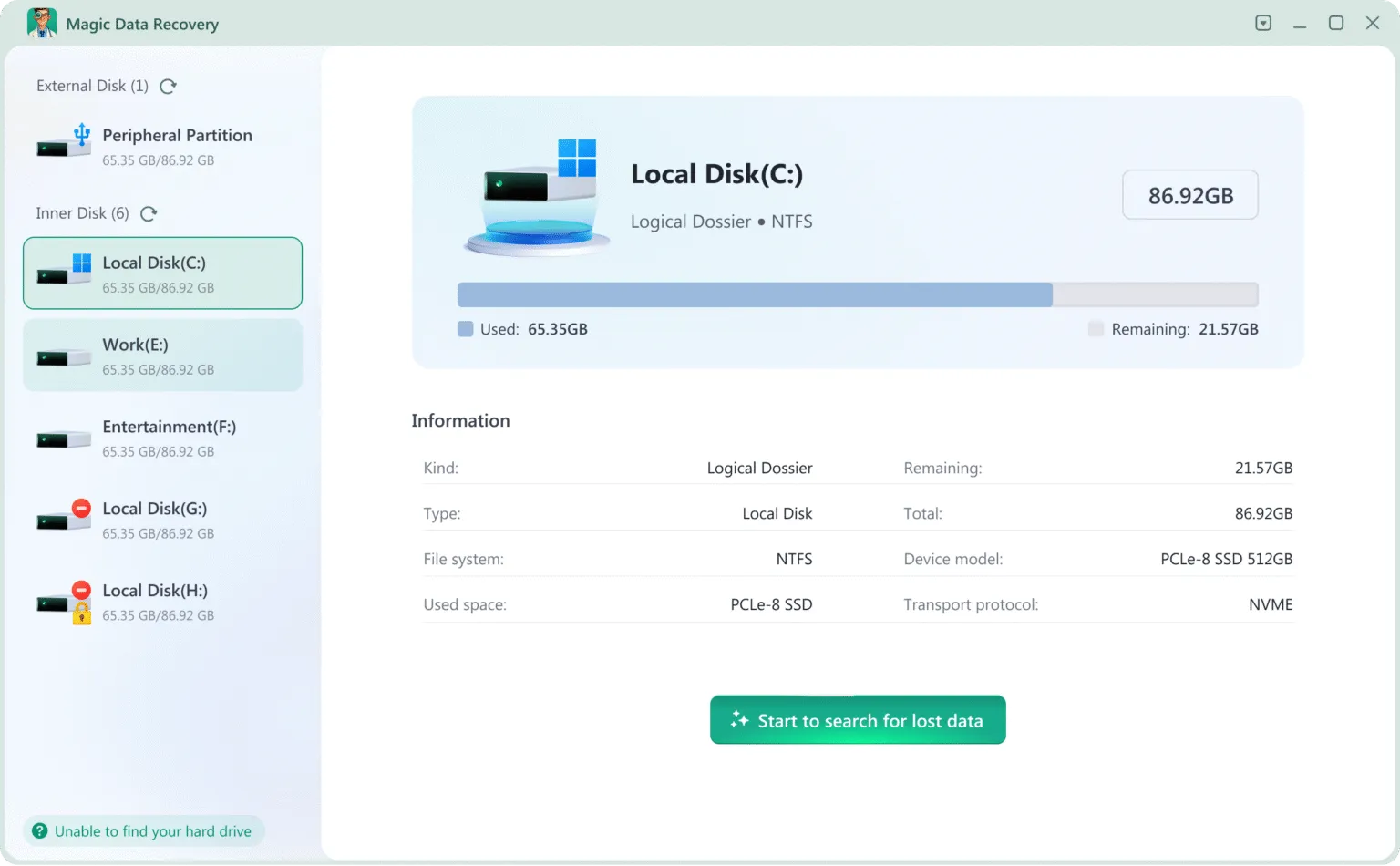
This step is important for western digital data recovery because lost partitions or corrupted file systems may not appear with normal folder names.
Step 4: Start a Deep Scan
Run a scan to search for deleted, formatted, or inaccessible files. The scan time depends on drive size, connection speed, and the amount of data.
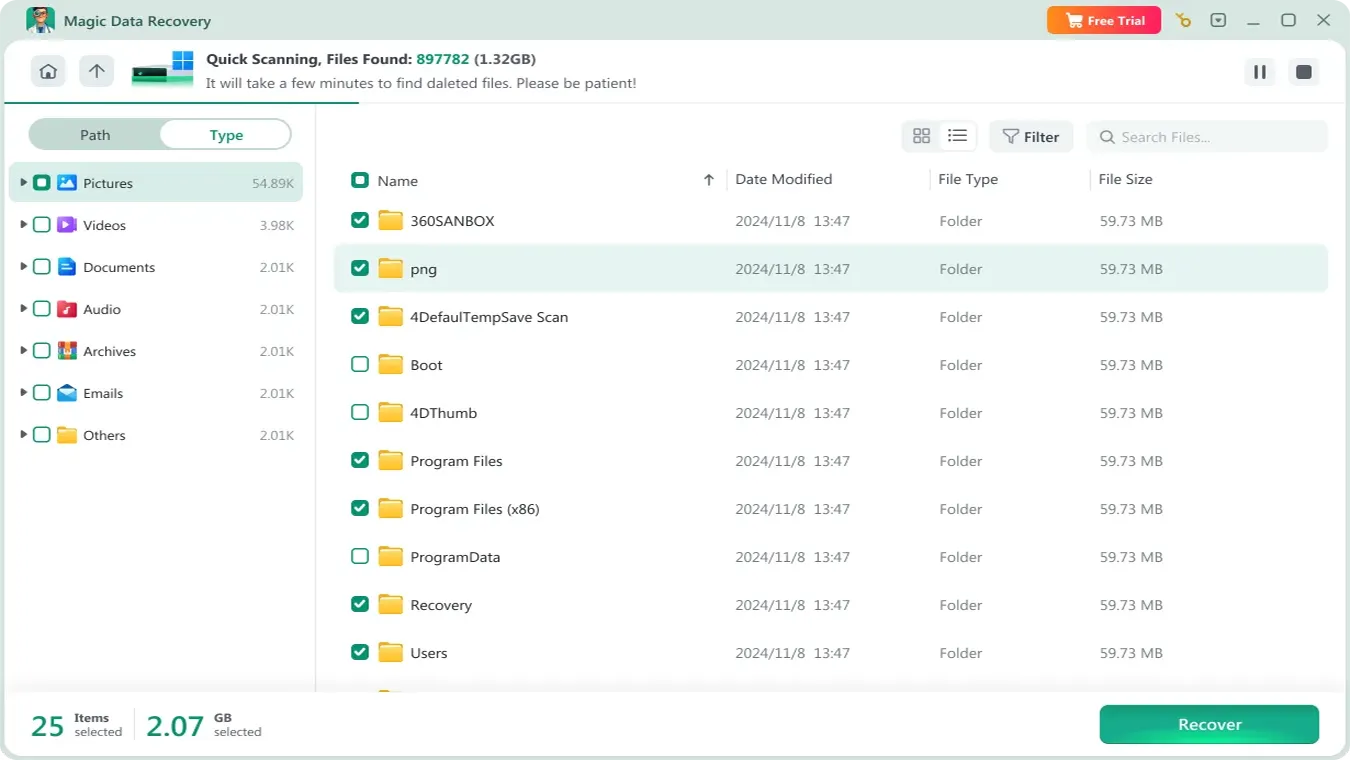
For large WD desktop drives, a deep scan may take longer. Keep the drive connected and avoid using it during the scan.
Step 5: Preview Recoverable Files
After the scan, preview the files you need. This helps you verify whether photos, documents, videos, or archives are usable before recovery.

Use filters such as file type, file name, path, or date when available. This can save time, especially when scanning a large WD external hard drive.
Step 6: Save Files to Another Drive
Never save recovered files back to the same Western Digital drive. Choose another healthy disk, external drive, or storage location.
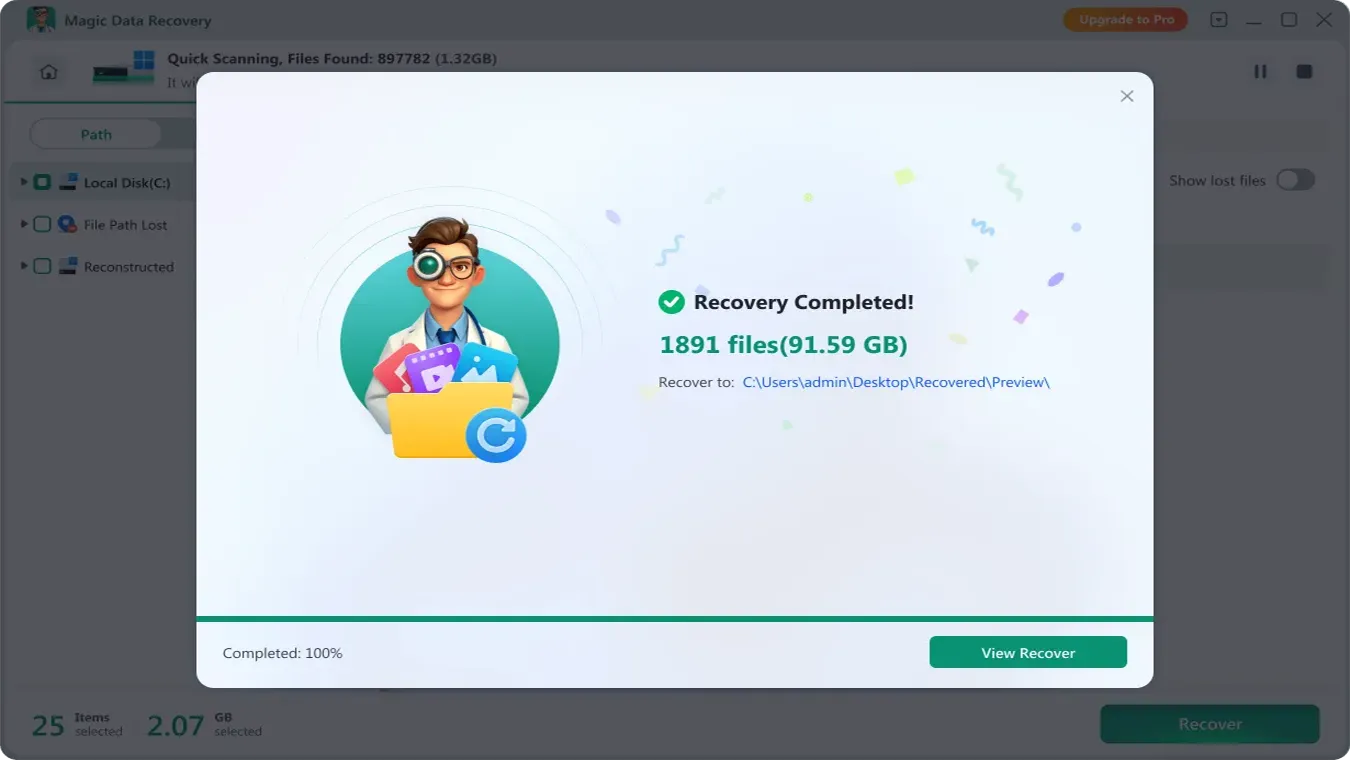
Saving files to the source drive may overwrite other recoverable data. This rule is essential for any western digital data recovery attempt.
Western Digital Data Recovery for Different WD Models
Different WD drives often fail in different ways. Here is how to approach common models.
WD My Passport Data Recovery
WD My Passport drives are portable and widely used for backups, photos, work files, and travel storage. Common problems include accidental deletion, file system corruption, connection issues, and formatting mistakes.
For WD My Passport data recovery, first check the cable and USB port. Then scan the drive with Magic Data Recovery if Windows still detects it. If the drive is password-protected or encrypted, unlock it first using the proper WD software or password before scanning.
WD Elements Recovery
WD Elements drives are often used as simple plug-and-play storage. Users may lose data after formatting the drive for Mac, Windows, TV, or game console use.
For WD Elements recovery, avoid reformatting the drive again. Connect it to a Windows PC and scan it as soon as possible. If the drive was reformatted to another file system, a deep scan can help locate lost files by file signatures.
WD My Book Data Recovery
WD My Book drives are desktop external drives often used for large backups. Because these drives may store years of data, users should be careful when errors appear.
If your WD My Book becomes inaccessible, do not initialize or format it. Check whether the drive appears in Disk Management. If it does, start with software recovery. If it does not power on or makes abnormal noises, seek professional help.
Internal WD Blue, Black, and Red Drive Recovery
Internal Western Digital drives may fail after system crashes, partition errors, Windows reinstallations, or malware attacks.
If the computer still boots, avoid saving new data to the affected partition. If Windows cannot boot, remove the WD drive and connect it to another working computer. Then run Magic Data Recovery to scan the drive and recover files to a separate location.
Can WD Drive Utilities Recover Lost Files?
WD Drive Utilities can help users test and manage supported Western Digital drives, but diagnostic utilities are not the same as file recovery software. They may check drive health, run tests, or manage settings, but they do not replace a dedicated western digital data recovery tool.
If your goal is to restore deleted, formatted, or inaccessible files, use recovery software first. After saving important files, you can run diagnostics or repair steps to evaluate the drive’s condition.
Mistakes to Avoid During Western Digital Data Recovery
Many recovery failures happen because users try to fix the drive before saving their files. Avoid these mistakes:
- Do not format the drive when Windows asks.
- Do not run CHKDSK before recovering important data.
- Do not initialize an unallocated disk.
- Do not rebuild partitions unless you have a backup.
- Do not save recovered files to the same WD drive.
- Do not keep testing a clicking or grinding drive.
- Do not open the hard drive casing at home.
- Do not assume warranty replacement includes file recovery.
A warranty replacement may help with the hardware, but it does not necessarily restore your lost files. Therefore, focus on data recovery first if the files matter.
When Should You Stop DIY Recovery?
Stop DIY western digital data recovery immediately if you notice signs of physical failure:
- Clicking, grinding, or beeping sounds
- Drive spins up and down repeatedly
- Drive overheats quickly
- Computer freezes when the drive connects
- Drive disappears during scanning
- Burnt smell or visible damage
- Severe drop or water damage
In these cases, continued use may make recovery harder. A professional lab can inspect the drive with specialized equipment.
Why Magic Data Recovery Is Recommended
Magic Data Recovery is recommended because it solves the most common Western Digital data loss problems in a safer order: scan first, preview files, recover data, and repair the drive later if needed.
It works well for users who want a practical western digital data recovery solution without using complex command-line tools. It is especially useful when files were deleted, the WD drive was formatted, the file system became corrupted, or the drive still appears in Windows but files are missing.
If you are looking for a more efficient solution, try Magic Data Recovery before attempting risky repair operations. It gives you a chance to confirm recoverable files before making changes to the drive.
Conclusion
Western digital data recovery is often possible when the drive has logical damage, deleted files, formatting errors, or file system corruption. The most important rule is simple: stop using the affected WD drive and recover important files before trying to repair the disk.
Magic Data Recovery is a strong choice because it supports deleted, formatted, corrupted, and inaccessible hard drive recovery in one workflow. It helps ordinary users scan Western Digital drives, preview recoverable files, and save them to a safe location without unnecessary technical steps.
For more hard drive recovery solutions and related guidance, visit the Amagicsoft Hard Drive Solutions.
Supports Windows 7/8/10/11 and Windows Server
FAQs About Western Digital Data Recovery
Is Western Digital data recovery possible after deletion?
Yes, western digital data recovery is often possible after deletion if the lost files have not been overwritten. When you delete a file, Windows usually removes the file reference rather than instantly erasing all content. Stop using the WD drive, avoid saving new data, and scan it with recovery software as soon as possible.
Can I recover data from a formatted WD external hard drive?
Yes, formatted WD external hard drive recovery may work, especially after quick formatting. The original files may still exist on the disk until new data overwrites them. Do not format the drive again or create new partitions. Use Magic Data Recovery to scan the whole drive and save recovered files to another storage device.
What should I do if my WD drive asks to be formatted?
Do not click Format if you need the files. That message often appears when the file system becomes corrupted or unreadable. Instead, connect the drive securely, check whether it appears in Disk Management, and run recovery software first. After you save important files, you can decide whether to repair or reformat the drive.
Can Magic Data Recovery recover files from WD My Passport?
Yes, Magic Data Recovery can help recover deleted, formatted, or inaccessible files from WD My Passport drives when the drive remains detectable by Windows. It can scan the drive, show recoverable files, and let you preview them before recovery. Always save restored files to another drive to prevent overwriting remaining data.
Is WD Drive Utilities enough for data recovery?
No. WD Drive Utilities can help test or manage supported Western Digital drives, but it is not a dedicated file recovery tool. It may help check drive health, yet it does not replace software designed to recover deleted, formatted, or inaccessible files. Use recovery software first if your main goal is file restoration.
Why is my Western Digital drive not recognized?
A WD drive may not be recognized because of a faulty cable, damaged USB port, outdated driver, corrupted file system, lost partition, or physical failure. Try another cable, port, or computer first. If the drive appears in Disk Management, software recovery may help. If it clicks or does not spin properly, seek professional help.
Should I run CHKDSK before Western Digital data recovery?
Avoid running CHKDSK before recovering important files. CHKDSK can repair file system errors, but it may also modify disk structures and make some lost files harder to recover. A safer approach is to scan and recover your files first. After that, you can run repair commands if you still want to reuse the drive.
When should I use a professional Western Digital recovery service?
Use a professional service if your WD drive has physical damage, clicking sounds, repeated disconnections, overheating, water damage, or no detection in BIOS or Disk Management. Software cannot recover data from a drive that the system cannot read reliably. In these cases, continued DIY attempts may reduce the chance of successful recovery.

Jason is a data recovery and technical support specialist with over 15 years of hands-on experience. He has worked extensively with frontline users, troubleshooting difficult data loss cases and providing practical recovery solutions for accidental deletion, formatted drives, damaged file systems, lost partitions, system failures, and other recovery emergencies. His expertise also includes backup and restoration, file repair, and disaster recovery, with a strong emphasis on safe, reliable, and technically accurate guidance.