Skip to content
amagicsoft logo icon
  • Home
  • Products
    • Magic Data Recovery
    • Magic Recovery Key
  • Store
  • Blog
  • More
    • About Amagicsoft
    • Contact US
    • Privacy Policy
    • Terms
    • License Agreement
    • Refund Policy
  • English
    • 日本語
    • 한국어
    • Deutsch
    • Français
    • 繁體中文
Wiki

Inaccessible Boot Device

27.11.2025 Eddie Comments Off on Inaccessible Boot Device
Inaccessible Boot Device

Table of Contents

Understanding the “Inaccessible Boot Device” Error

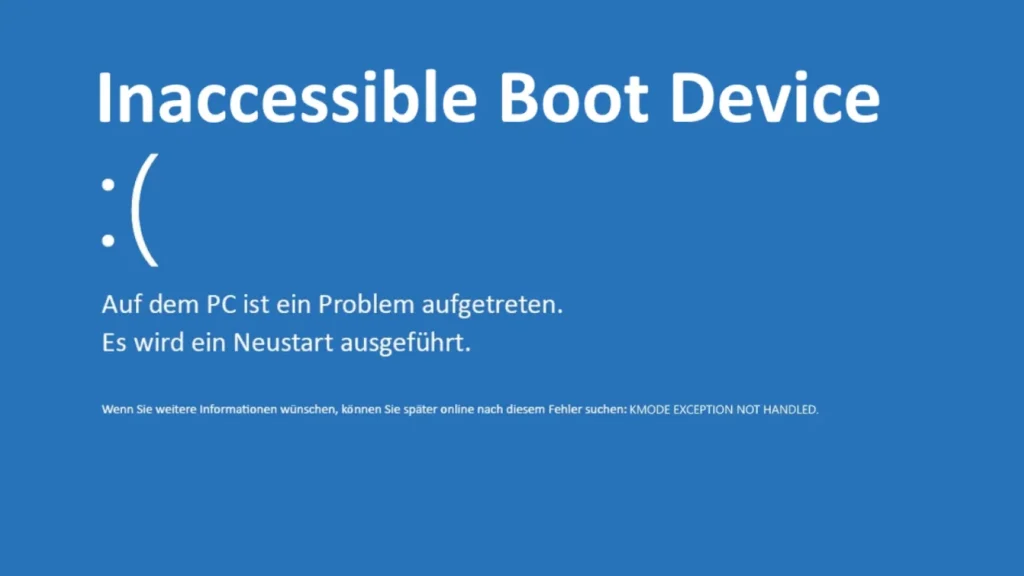
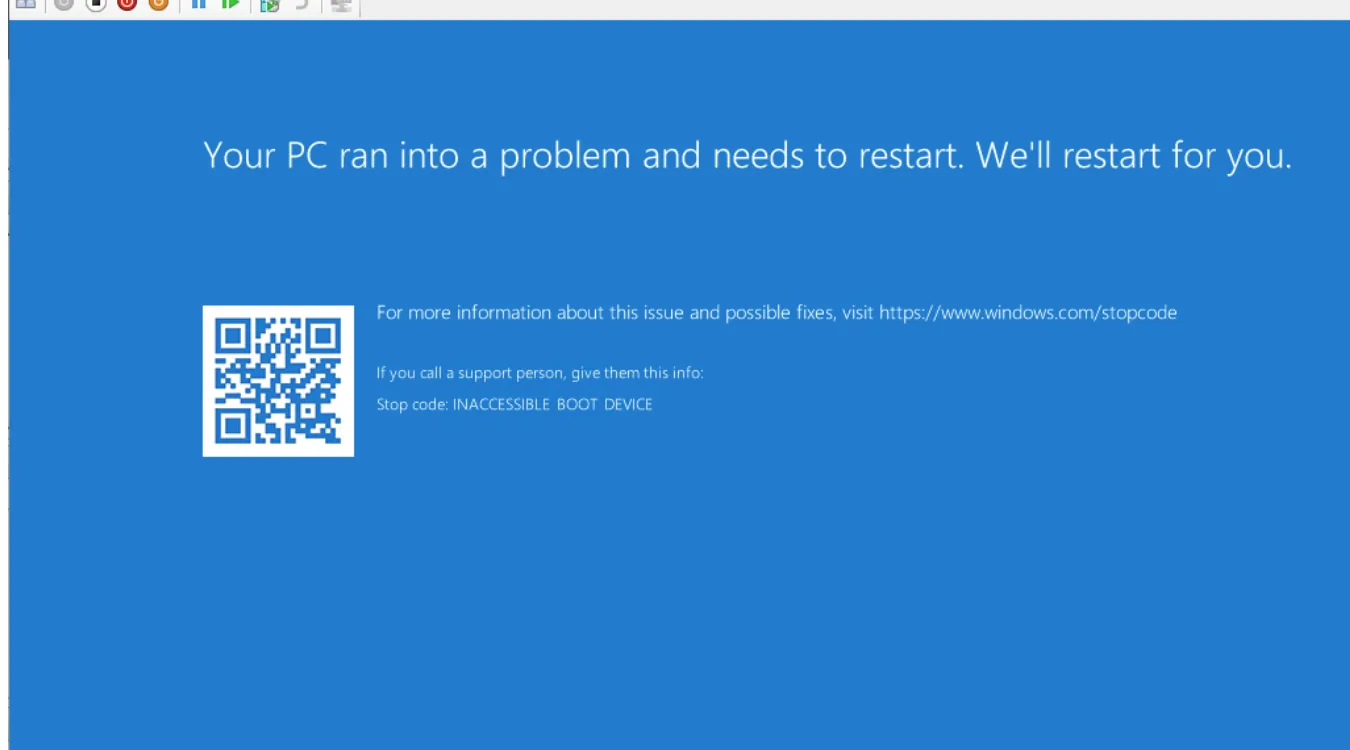
The “Inaccessible Boot Device” error appears as a blue screen (BSOD) with stop code 0x0000007B.
It means Windows cannot read the system volume during startup.

This error usually does not mean the drive has instantly failed completely.
Often, the problem is missing storage drivers, a damaged file system, or changes in disk configuration.
What is Inaccessible Boot Device

Typical Symptoms and Risk Assessment

When this error occurs, the system shows a BSOD before Windows loads.
You may see messages like “Your PC ran into a problem” with “INACCESSIBLE_BOOT_DEVICE.”

Common symptoms include:

  • Reboot loop as soon as Windows tries to start

  • BSOD after a driver, firmware, or Windows update

  • BSOD after cloning a system disk or changing SATA mode in BIOS

In many cases, user data is still present on the disk.
The main risk is overwriting or further damaging the file system during repair attempts.

How Windows Accesses the Boot Device (Technical Overview)

During startup, the firmware (BIOS or UEFI) initializes hardware and hands control to the boot loader.
On Windows, the process typically involves the following layers:

  1. Firmware identifies the boot disk (based on boot order or EFI entries).

  2. The firmware loads the Windows Boot Manager from the EFI System Partition or MBR boot code.

  3. Windows Boot Manager reads the Boot Configuration Data (BCD) to locate the system volume.

  4. The kernel loads storage drivers required for the disk controller and file system.

  5. The system volume (NTFS on MBR or GPT) is mounted and Windows starts services.

If any part of this chain fails — for example, missing storage drivers or corrupted NTFS metadata — Windows cannot mount the boot volume and raises 0x7B.

Common Root Causes

Several technical issues can trigger “Inaccessible Boot Device”:

  • Storage controller mode changed (IDE to AHCI or RAID) in BIOS

  • Outdated or missing disk controller drivers after a major update

  • Corrupted Boot Configuration Data (BCD) or partition table (MBR or GPT)

  • Damaged NTFS file system or RAW partition state

  • Disk cloning to a new SSD with different alignment or controller

  • Physical disk problems such as bad sectors or failing hardware

Understanding which category applies is essential before choosing a repair or data recovery strategy. 


Initial Recovery Actions Before Deep Repair

Before running advanced tools, it is important to stabilize the situation:

  1. Stop forced restarts. If the system loops, power it off cleanly using the power button.

  2. Check connections. For desktop systems, verify all SATA or NVMe cables and power connectors.

  3. Revert BIOS changes. If you recently changed SATA mode or boot order, restore the previous values.

  4. Disconnect extra drives. Leave only the system drive connected to simplify detection.

If the error started after a Windows update or driver installation, rolling back or using System Restore from recovery options can sometimes resolve it with minimal risk.

Advanced Repair Techniques for Experienced Users

Advanced users or technicians may attempt direct repair of the boot path and file system.
These methods carry risk, so they are typically performed after critical data is backed up or recovered.

Using Windows Recovery Environment (WinRE)

Boot from a Windows installation USB or recovery drive and choose Repair your computer.
Then use the following options:

  • Startup Repair: Automatically attempts to fix boot loader and BCD problems.

  • System Restore: Restores registry and drivers to an earlier, known-good state.

Command-Line Repair of Boot Records

From Command Prompt in WinRE:

  • Repair the boot records on BIOS/MBR systems:

    • bootrec /fixmbr

    • bootrec /fixboot

    • bootrec /rebuildbcd

  • Rebuild boot files on UEFI/GPT systems:

    • bcdboot C:\Windows /l en-us

These commands repair the links between firmware, BCD, and the system partition.

Checking File System Integrity

Run chkdsk on the system volume:

  • chkdsk C: /f /r

This scans for logical errors and attempts to reallocate bad sectors.
On heavily damaged disks, this can stress the drive, so data recovery should be considered first.

Offline Registry and Driver Correction

Some specialists edit the offline registry to enable generic storage drivers or disable faulty ones.
Tools like WinHex or advanced registry editors can modify the SYSTEM hive.
This is powerful but risky and is best left to professionals familiar with Windows internals.

Safe Data Recovery When Windows Will Not Boot

When boot errors persist, separating “system repair” from “data recovery” is critical.
Windows can be reinstalled at any time, but overwritten user data is often unrecoverable.

The safest order is:

  1. Identify signs of hardware failure (unusual noises, SMART errors, repeated I/O timeouts).

  2. If the drive is failing, consider creating a sector-by-sector image first.

  3. Use read-only data recovery software to scan the disk or its image.

  4. Copy important files to a different healthy disk.

A dedicated data recovery tool such as Amagicsoft Data Recovery scans at the file system and raw data level.
It rebuilds folder structures and recovers files even when the partition looks RAW or is not bootable.

Recovering Files with Amagicsoft Data Recovery (Step-by-Step)

The following workflow shows how to recover data from a system that shows “Inaccessible Boot Device.”
You will need a second working Windows machine and an external drive.

Step 1: Remove and Attach the Problem Drive

  1. Power off the affected PC and unplug it.

  2. Remove the system disk carefully (follow hardware safety guidelines).

  3. Connect the disk to a working PC using a SATA port, NVMe slot, or USB adapter.

  4. Ensure Windows detects the drive, even if it appears as RAW or unallocated.

Step 2: Install and Launch Amagicsoft Data Recovery

  1. On the working PC, download and install Amagicsoft Data Recovery on a healthy internal or external drive.

  2. Start Amagicsoft Data Recovery and wait for it to list all connected disks.

Step 3: Select the Source Disk

  1. Select the non-bootable system disk as the scan target.

  2. Choose a Full Scan or Deep Scan mode for maximum recovery on damaged file systems.

  3. Start the scan and allow it to complete without interrupting the process.

Step 4: Preview and Filter Recoverable Files

  1. Use file type filters (documents, photos, videos) to narrow results.

  2. Open the Preview panel to verify file integrity where available.

  3. Mark critical folders such as Users\YourName\Documents, Desktop, and Pictures for recovery.

Step 5: Save Data to a Safe Location

  1. Choose a different physical drive as the destination for recovered data.

  2. Start the recovery process and confirm that important files open correctly.

  3. Only after confirming backups should you attempt reinstalling or reformatting the original system disk.

Amagicsoft Data Recovery operates in read-only mode on the source disk, which helps protect remaining data during scanning and export.

Download Magic Data Recovery

Supports Windows 7/8/10/11 and Windows Server

Best Practices to Prevent Future Boot Device Errors

To reduce the chance of future 0x7B episodes:

  • Maintain regular system images and file backups to external or network storage.

  • Avoid changing SATA controller modes or RAID settings without planning.

  • Update storage drivers and firmware only after verifying compatibility.

  • Use reliable power protection to reduce sudden outages and write interruptions.

  • Monitor disk health using SMART tools and replace drives showing early failure signs.

Supports Windows 7/8/10/11 and Windows Server.

Conclusion

“Inaccessible Boot Device” indicates that Windows cannot read the system volume during boot, not that every file is lost.
By understanding how the boot chain works and separating repair from data recovery, users can avoid unnecessary data loss.

Advanced techniques such as BCD repair and offline registry edits can restore a bootable system.
When data is the highest priority, recovering files first with Amagicsoft Data Recovery is often the safest decision.
After data is secured, you can reinstall or repair Windows with confidence and rebuild a stable environment.

 FAQ

How do I fix an inaccessible boot device?

Start with simple checks. Reseat the drive cables, revert recent BIOS or SATA mode changes, and disconnect non-essential drives. Then boot into Windows Recovery Environment, run Startup Repair, and, if needed, use bootrec and chkdsk from Command Prompt. If errors persist, back up data with recovery software before reinstalling Windows.

Why is my Asus laptop blue screen inaccessible boot device?

On Asus laptops, this blue screen usually appears after driver updates, BIOS changes, or disk issues. A storage controller mode change, failed Windows update, or a degrading SSD/HDD can break access to the boot volume. Use WinRE Startup Repair, check BIOS boot order and SATA mode, then evaluate the disk’s health.

Do you press F5 or F8 for Safe Mode?

On older systems, F8 opens Advanced Boot Options and Safe Mode. On most modern UEFI systems, the F8 menu is disabled by default. Instead, interrupt boot three times or boot from installation media, then choose Troubleshoot > Advanced options > Startup Settings. In that menu, F4/F5/F6 select Safe Mode variants.

Should I reinstall Windows to fix boot issues?

Reinstalling Windows is a last resort, not the first step. Always try repair options first: Startup Repair, System Restore, bootrec, and driver rollback. Before any reinstall, recover important data to another drive. A clean installation can fix persistent boot errors but will remove existing system configuration and installed applications.

How do I repair a Windows boot device?

Use a Windows installation USB and select Repair your computer. Run Startup Repair to automatically fix common problems. If that fails, open Command Prompt and use bootrec /fixmbr, bootrec /fixboot, and bootrec /rebuildbcd. Then run chkdsk on the system partition. Always back up critical data before intensive repairs.

How to fix “The boot selection failed because a required device is inaccessible”?

This message indicates Windows cannot reach the configured boot device. Boot from installation media, then repair the BCD with bootrec or bcdboot. Verify that the system partition is active (MBR) or correctly referenced in UEFI, and confirm the drive appears healthy. If the disk is failing, image or recover data first.

What is the cause of no boot device?

“No boot device” means firmware cannot find a drive with valid boot code. Causes include disconnected or failed disks, incorrect boot order, corrupted MBR/GPT, or missing EFI entries. It may also follow cloning or repartitioning. Check BIOS detection, cables, and diagnostics, then repair or recreate the bootloader if the disk is intact.

How to fix stuck on boot screen?

First, disconnect external USB devices and unnecessary drives. Enter BIOS to confirm the system disk is detected and correctly ordered. If the logo hangs, force shutdown and boot into Windows Recovery Environment. Use Startup Repair, then chkdsk and sfc /scannow from Command Prompt. If hardware tests fail, suspect a failing drive.
  • WiKi
Eddie

Eddie is an IT specialist with over 10 years of experience working at several well-known companies in the computer industry. He brings deep technical knowledge and practical problem-solving skills to every project.

文章导航

Previous
Next

Search

Categories

  • Bitlocker Recovery
  • Deleted File Recovery
  • Format File Recovery
  • Hard Drive Recovery
  • License Key Recovery
  • Lost File Recovery
  • Memory Card Recovery
  • News
  • Photo Recovery
  • SSD Recovery
  • Uncategorized
  • USB Drive Recovery
  • User Guide
  • Wiki

Recent posts

  • The Pros and Cons of SSDs as External Hard Drives
    The Pros and Cons of SSDs as External Hard Drives
  • How to Use Target Disk Mode and Share Mode on Mac Computers
    How to Use Target Disk Mode and Share Mode on Mac Computers: A Complete Guide
  • Duplicate File Finder
    Duplicate File Finder

Tags

How to Magic Data Recovery Magic Recovery Key WiKi

Related posts

Duplicate File Finder
Wiki

Duplicate File Finder

02.12.2025 Eddie No comments yet

Table of Contents Duplicate Files Are Not Real Backups Many users keep “extra safety” copies of documents by dragging them into new folders or external drives.Over time, these copies multiply and turn into clutter rather than protection. Duplicate files waste storage, slow backups, and make data recovery more confusing.A Duplicate File Finder helps identify redundant copies so […]

Context Switch
Wiki

Context Switch

02.12.2025 Eddie No comments yet

Table of Contents CPU Time as a Shared Resource Modern operating systems juggle dozens or hundreds of active threads.Only a few CPU cores exist, so most threads wait in queues while a small subset runs. A context switch lets the scheduler pause one running thread and resume another.This rapid switching creates the illusion of parallelism […]

Data Acquisition
Wiki

Data Acquisition

02.12.2025 Eddie No comments yet

Table of Contents  Incident Scene: Data at Risk Before Collection When an incident occurs, the first instinct often involves “looking around” the live system.Unplanned clicks, root logins, or file copies can alter timestamps, logs, and unallocated space before anyone records a clean state. Data acquisition solves this problem.It focuses on collecting data in a controlled […]

amagicsoft logo icon

Our vision is to become a globally renowned software brand and service provider, delivering top-tier products and services to our users.

Products
  • Magic Data Recovery
  • Magic Recovery Key
Policy
  • Terms
  • Privacy Policy
  • Refund Policy
  • License Agreement
Company
  • About Amagicsoft
  • Contact US
  • Store
Follow Us

Copyright © 2025 Amagicsoft. All Rights Reserved.

  • Terms
  • Privacy Policy