
Recover Deleted ZIP Files: 5 Safe Ways on Windows
If you need to recover deleted ZIP files, stop using the affected drive before new data replaces the deleted archive. One ZIP can contain an entire photo set, project, backup, or document collection. This guide covers Recycle Bin recovery, OneDrive, File History, Windows File Recovery, and other practical ways to recover ZIP files. If the archive was permanently deleted and no backup remains, Magic Data Recovery may help scan the original storage and recover deleted ZIP data.
Supports Windows 7/8/10/11 and Windows Server
Table of Contents
Deleted ZIP vs. Corrupted ZIP: Know the Difference
Before you try to recover deleted ZIP files, confirm what happened.
A deleted ZIP no longer appears in its original folder. However, it may still exist in the Recycle Bin, a backup, cloud storage, or recoverable file-system space.
A corrupted ZIP still exists, but Windows or an archive utility cannot open or extract it. In that case, deletion recovery is not the first solution. You need another copy, a backup, or ZIP repair troubleshooting.
This distinction matters because recovering a deleted archive does not automatically repair damaged ZIP structures. Likewise, a recovered ZIP that is 0 bytes or fails to extract may have been partly overwritten.
What to Do First Before ZIP File Recovery
Microsoft explains that Windows can mark deleted-file space as available while the original data may remain until new data overwrites it. Therefore, reduce activity on the affected drive immediately.
Before you recover deleted ZIP files:
- Stop downloading, copying, extracting, or creating files on the source drive.
- Do not install recovery software on the partition where the ZIP was lost.
- Save recovered files to another drive.
- Do not format the device just because the archive disappeared.
- If the ZIP was on an SSD, act quickly because TRIM and later writes can reduce recoverability.
- If a drive clicks, disconnects repeatedly, or disappears from Windows, stop DIY attempts. Software cannot repair physical damage.
Method 1: Recover Deleted ZIP Files from Recycle Bin
For normal deletion from a Windows drive, check the Recycle Bin first. It is the simplest way to recover deleted ZIP files because Windows can return the archive to its original folder.
- Open Recycle Bin.
- Search for the
.zipfilename or sort by Date Deleted. - Right-click the archive.
- Choose Restore.
- Open the original folder and test the ZIP.
Microsoft confirms that restoring a Windows Recycle Bin item sends it back to its original location.
However, this method will not help after Shift+Delete, an emptied Recycle Bin, or some deletions from removable storage.
Method 2: Check OneDrive or Another Backup
If the archive lived in a OneDrive-synced folder, check the cloud before scanning the disk. To recover deleted ZIP files, sign in to OneDrive, open Recycle bin, select the ZIP, and choose Restore.
Microsoft states that personal OneDrive recycle-bin items are generally retained for 30 days, while work or school retention can differ.
Also check any backup drive, NAS, email attachment, shared workspace, or synchronization service you use. A valid stored copy is preferable to reconstructing deleted data.
Method 3: Recover ZIP Files with File History
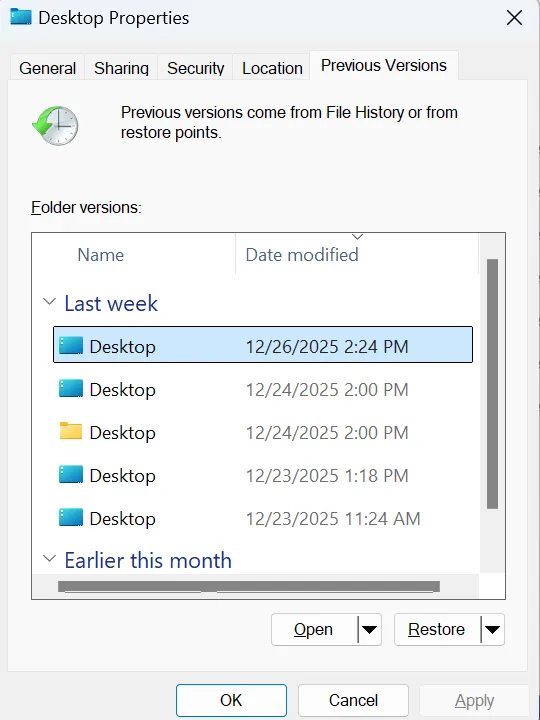
File History can recover ZIP files if you enabled it before deletion and Windows backed up the folder. Microsoft describes File History as a feature that stores versions of personal files and can restore deleted content.
- Open File Explorer.
- Go to the folder that contained the ZIP.
- Right-click it and choose Restore previous versions.
- Select a version from before the deletion.
- Open it to confirm the ZIP appears.
- Choose Restore or Restore to….
This is a useful answer to how to recover deleted ZIP files on PC without third-party software. However, it works only when a previous version already exists.
Method 4: Use Windows File Recovery
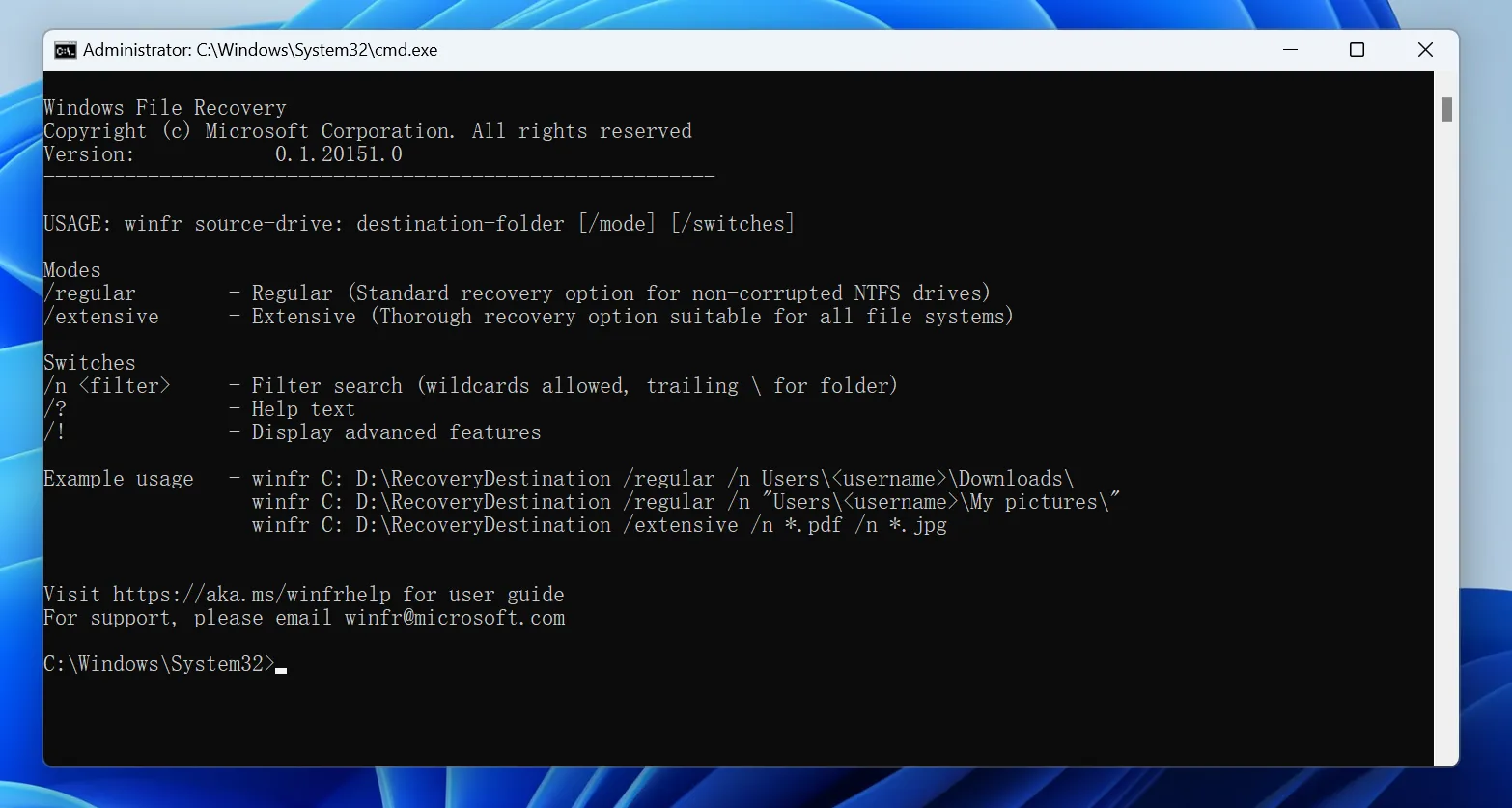
If backups and the Recycle Bin do not contain the archive, Windows File Recovery is Microsoft’s command-line tool for deleted files on local storage. It supports internal drives, external drives, and USB devices, but not cloud storage or network shares.
For a recently deleted ZIP on NTFS, you can use:
winfr C: E: /regular /n *.zip
Here, C: is the source and E: is a different destination drive. For older deletions, formatting, non-NTFS storage, or more difficult cases, Microsoft recommends Extensive mode.
winfr C: E: /extensive /n *.zip
Windows File Recovery can recover deleted ZIP files without commercial software. However, its command-line workflow may feel less convenient when you want to browse many results visually.
Method 5: Recover Deleted ZIP Files with Magic Data Recovery
When the Recycle Bin is empty, backups do not exist, or Windows File Recovery does not find the archive, dedicated recovery software becomes a reasonable next option.
Magic Data Recovery supports common Windows file systems, including NTFS and FAT/exFAT, and its official supported-file list includes ZIP archives.
Unlike File History, OneDrive, or the Recycle Bin, it does not require a previously saved backup copy. Instead, it scans storage for recoverable file records and data. Therefore, it can be useful when you need to recover deleted ZIP files after permanent deletion.
Still, no recovery tool can restore data that has already been overwritten or made unavailable. SSD TRIM, severe file-system damage, and physical drive failure can also limit recovery.
If the built-in recovery options no longer work, you can try Magic Data Recovery before new data overwrites the deleted files.
How to Use Magic Data Recovery to Recover Deleted ZIP Files
Step 1: Download and Install Magic Data Recovery
Install Magic Data Recovery on a drive or partition different from the one where the ZIP was deleted. This helps avoid overwriting data you still want to recover.
Supports Windows 7/8/10/11 and Windows Server
Step 2: Select the Drive Where the ZIP File Was Stored
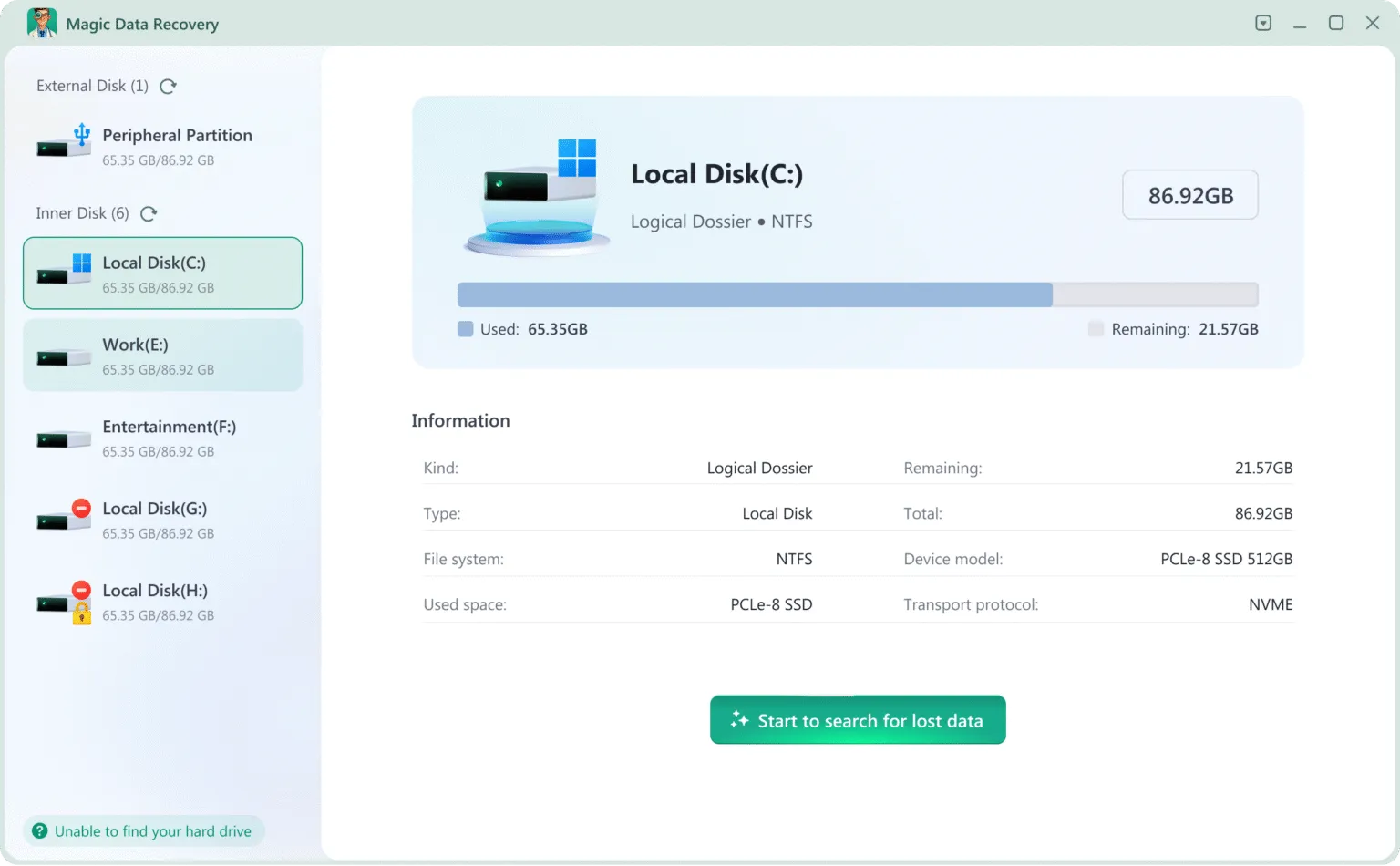
Launch the software, select the original drive or partition that contained the deleted .zip file, and start the scan.
Step 3: Scan for Lost or Deleted ZIP Files
Let the scan run and review results as they appear. When possible, search or filter for ZIP archives so you can locate relevant files faster.
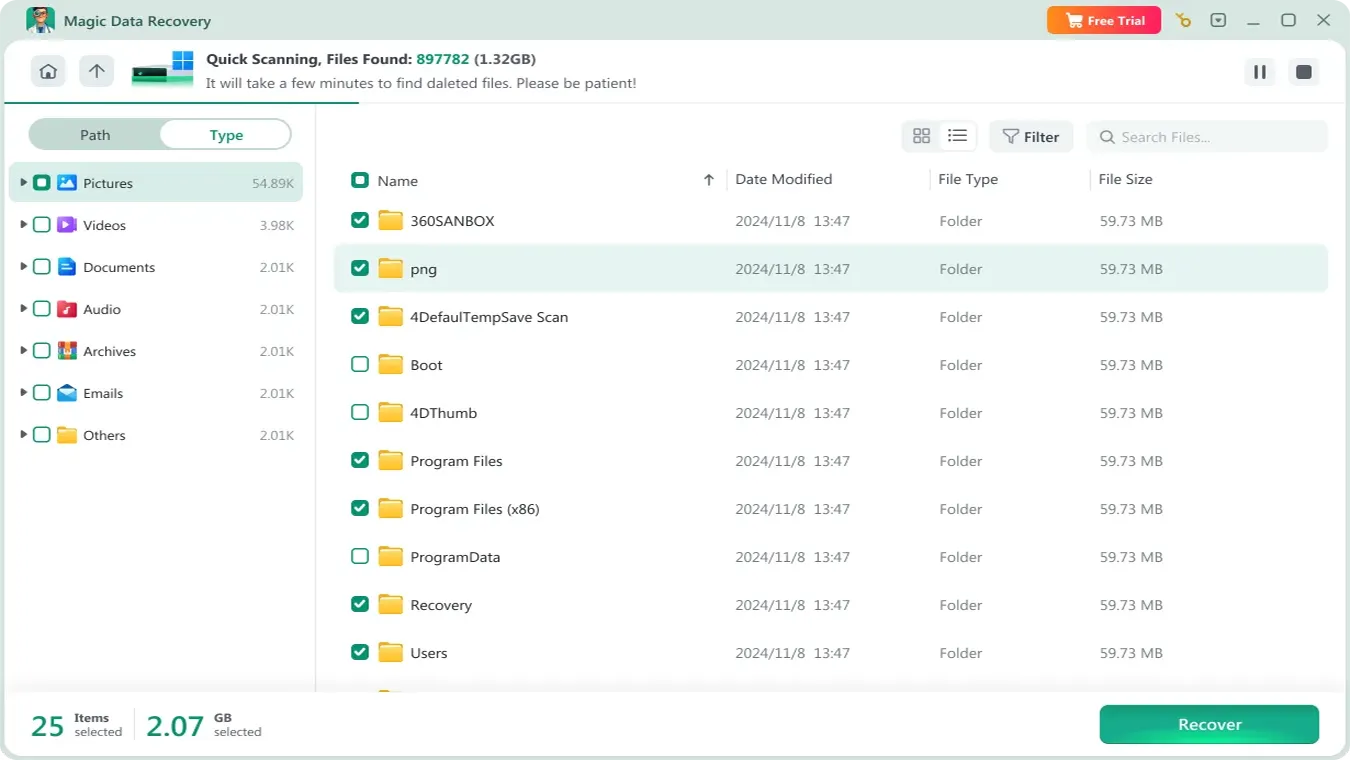
Step 4: Recover ZIP Files to a Safe Location
Select the ZIP files you need and restore them to a different healthy drive. Do not save them back to the original data-loss location until you have confirmed the recovered archive works.
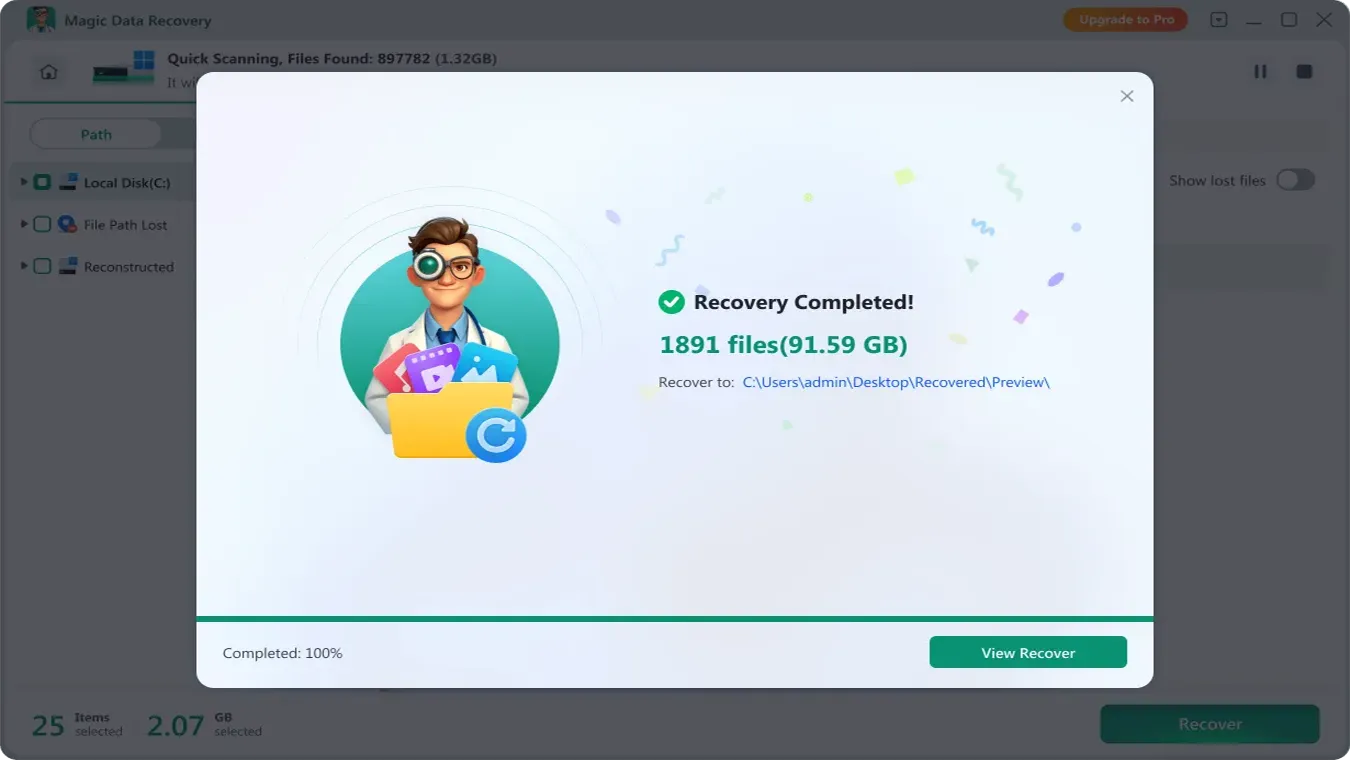
Why a Recovered ZIP File May Not Open
Finding the right filename does not prove that the whole archive survived. ZIP files contain compressed data and internal directory information. If new data overwrote part of the archive, extraction can fail.
Common causes include:
- New data overwrote part of the deleted archive.
- SSD TRIM made deleted blocks unavailable.
- The ZIP was corrupted before deletion.
- Only part of a fragmented archive was recovered.
- The recovered ZIP is 0 bytes or much smaller than expected.
Therefore, after you recover deleted ZIP files, test the archive by opening it and extracting several files to another folder. If it fails, switch to backup retrieval or ZIP repair troubleshooting rather than treating the problem as another deletion.
You can also search for the original files that were compressed into the ZIP. Copies may still exist in cloud storage, email attachments, shared folders, backup drives, or another computer.
Tips to Improve ZIP File Recovery
To improve your chances to recover ZIP files, focus on preventing overwriting and maintaining independent copies. Enable File History or another versioned backup, verify large archives before deleting their source files, and avoid keeping the only copy on a USB drive or SD card.
Also, remember that synchronization is not always a permanent backup. An accidental deletion may sync to other devices, so critical archives should have an independent backup.
Conclusion
The safest way to recover deleted ZIP files is to start with the Recycle Bin, OneDrive, File History, Previous Versions, and other backups. Next, use Windows File Recovery if you are comfortable with the command line.
If those options fail and the ZIP was permanently deleted from local storage, Magic Data Recovery provides a deleted file recovery option by scanning the affected drive for recoverable ZIP data. However, overwriting, SSD TRIM, severe corruption, and physical failure can prevent a usable result. Therefore, stop writing to the source drive and save recovered files elsewhere.
Supports Windows 7/8/10/11 and Windows Server
FAQs
How can I recover deleted ZIP files on Windows 11?
To recover deleted ZIP files on Windows 11, check the Recycle Bin first. Next, try OneDrive, File History, Previous Versions, or another backup. If the archive was permanently deleted, Windows File Recovery can scan local storage. A graphical recovery tool such as Magic Data Recovery is another option when the built-in methods do not find the ZIP.
How do I recover deleted ZIP files on PC after emptying the Recycle Bin?
If you are searching how to recover deleted ZIP files on PC after emptying the Recycle Bin, stop using the affected drive. Then check File History, cloud backups, and other copies. If no backup exists, use Windows File Recovery or data recovery software to scan the original storage before new files overwrite the deleted archive.
Can I recover permanently deleted ZIP files?
You may be able to recover deleted ZIP files after permanent deletion if the underlying data still exists. Recovery becomes less likely as you keep using the drive. SSD TRIM can also reduce recoverability. Start with backups, then try Windows File Recovery or recovery software. Physical storage damage requires professional rather than software-based recovery.
Can File History recover ZIP files?
File History can recover ZIP files if Windows backed up the folder before deletion. Open the folder’s Previous Versions list and choose a version from before the loss. However, File History cannot recreate an archive that was never backed up. In that case, you need another stored copy or a deleted-file recovery method.
Why does my recovered ZIP file not open?
A recovered ZIP may not open if part of its compressed data or directory structure was overwritten, trimmed, or corrupted. The filename can survive even when important archive data does not. Compare the recovered size with the expected size, then check backups or recover the original files inside the ZIP instead of relying on one incomplete archive.
Can I recover ZIP files from an SSD?
You can sometimes recover ZIP files from an SSD, but TRIM can make deleted blocks unavailable to recovery software. Stop using the SSD immediately and check backups first. If no copy exists, scan as soon as practical. Recovery software cannot restore data that the SSD has already erased internally or that new data has overwritten.
What is the safest way to prevent ZIP file loss?
Keep at least two copies of important ZIP archives on separate devices or services. Also enable File History or another versioned backup for active folders. Before deleting source files, confirm that the ZIP opens and extracts correctly. Finally, do not rely on synchronization alone for critical data; maintain an independent backup that accidental deletions cannot immediately mirror.

Vasilii is a data recovery specialist with around 10 years of hands-on experience in the field. Throughout his career, he has successfully solved thousands of complex cases involving deleted files, formatted drives, lost partitions, and RAW file systems. His expertise covers both manual recovery methods using professional tools like hex editors and advanced automated solutions with recovery software. Vasilii's mission is to make reliable data recovery knowledge accessible to both IT professionals and everyday users, helping them safeguard their valuable digital assets.