
Adobe Recover Files: PSD, AI & PDF Guide
Losing an Adobe project can feel serious, especially when the missing file contains hours of design, editing, annotation, or client work. The good news is that adobe recover files methods are not limited to one tool or one situation. You can check Adobe autosave, Creative Cloud, Recycle Bin, Windows backups, temporary folders, and professional recovery software.
This guide explains how to recover Adobe files from Photoshop, Illustrator, Acrobat, Premiere Pro, and other Adobe apps. It also shows when a dedicated deleted file recovery solution such as Magic Data Recovery becomes the better choice, especially after permanent deletion, formatting, file system errors, or lost local storage access.
Supports Windows 7/8/10/11 and Windows Server
Table of Contents
What Does Adobe Recover Files Mean?
Adobe recover files refers to the process of restoring lost, deleted, unsaved, or inaccessible files created or edited with Adobe software. These files may include PSD, PSB, AI, EPS, PDF, INDD, PRPROJ, AEP, XD, SVG, JPG, PNG, and other creative project formats.
In real use, Adobe file recovery usually falls into five common situations:
You closed an Adobe app without saving changes.
An Adobe program crashed during editing.
You deleted a PSD, AI, PDF, or project file by mistake.
You emptied the Recycle Bin or used Shift + Delete.
A drive, USB device, SD card, or external disk became formatted, corrupted, or unreadable.
Because each situation works differently, the right recovery method depends on how the file disappeared. For example, an unsaved Photoshop file may still exist in an AutoRecover folder, while a deleted Illustrator file may require Recycle Bin, Creative Cloud, backup, or recovery software.
Before You Try Adobe File Recovery
Before starting any adobe recover files process, stop using the affected drive or folder. This step matters because deleted files are not always erased immediately. In many cases, Windows removes the file reference and marks the storage space as reusable. If you save new files, install software, export videos, or continue editing on the same drive, new data may overwrite the missing Adobe file.
Follow these safe steps first:
- Close Adobe apps if they keep crashing.
- Do not save new files to the same drive.
- Do not reinstall Adobe software on the affected drive.
- Check cloud and backup options before scanning deeply.
- Save recovered files to another drive, not the original location.
This simple order reduces avoidable damage and improves your chance to recover deleted Adobe files.
Quick Decision Table: Which Adobe Recovery Method Should You Try?
Scenario | Best First Method | Next Method | Best For |
Unsaved Photoshop file | Restart Photoshop | Check AutoRecover folder | PSD, PSB |
Unsaved Illustrator file | Restart Illustrator | Check DataRecovery folder | AI, AID |
Deleted Adobe cloud file | Creative Cloud Deleted folder | Version history | Cloud documents |
Deleted local file | Recycle Bin | Magic Data Recovery | PSD, AI, PDF, PRPROJ |
Shift-deleted file | File History or backup | Deep scan recovery | Permanently deleted files |
Formatted drive | Stop using drive | Magic Data Recovery | HDD, SSD, USB, SD card |
Corrupted file system | Avoid formatting | Scan the device | RAW or inaccessible drives |
Overwritten cloud file | Version history | Local backup | Cloud documents |
Method 1: Recover Adobe Files from Recycle Bin
If you deleted an Adobe file normally, start with Recycle Bin. This method works best when the file was deleted from an internal drive and the Recycle Bin has not been emptied.
Steps to restore Adobe files from Recycle Bin
- Open Recycle Bin on your Windows desktop.
- Search for the file name or extension, such as .psd, .ai, .pdf, .prproj, .aep, or .indd.
- Right-click the file.
- Choose Restore.
- Open the restored file in the original Adobe app.
This is the fastest adobe recover files method because it restores the file to its original location. However, it will not work if you used Shift + Delete, emptied the Recycle Bin, deleted files from some removable drives, or lost files after formatting.
Method 2: Recover Deleted Adobe Files from Creative Cloud
If your Adobe file was saved as a cloud document, check Adobe Creative Cloud before using deeper recovery methods. Creative Cloud can store deleted cloud files and may also keep version history for some cloud documents.
Steps to recover Adobe cloud files
- Open the Creative Cloud desktop app.
- Go to Files.
- Open Deleted.
- Select the file you want to restore.
- Choose Restore.
For overwritten cloud documents, open the file and check Version History. This can help when the file still exists but the latest version contains unwanted edits.
This method works well for Photoshop, Illustrator, InDesign, Fresco, and other Adobe cloud documents. However, it cannot recover files that were only stored locally and never synced to Adobe cloud storage.
Method 3: Recover Unsaved Photoshop Files
When Photoshop crashes, the first step is simple: reopen Photoshop. In many cases, Photoshop will try to show recovered documents automatically. If a recovered file appears, save it immediately with a new name.
If no recovery prompt appears, check the AutoRecover folder.
Windows AutoRecover path
C:\Users[Your Username]\AppData\Roaming\Adobe\Adobe Photoshop [Version]\AutoRecover
macOS AutoRecover path
~/Library/Application Support/Adobe/Adobe Photoshop [Version]/AutoRecover
Look for PSD or temporary recovery files. Then open them in Photoshop and save the useful version to another location.
This adobe recover files method is useful after a crash, power outage, system freeze, or unexpected restart. However, it may not help if the file was never saved, AutoRecover was disabled, or the crash happened before Photoshop created a recovery copy.
Method 4: Recover Unsaved Illustrator Files
Adobe Illustrator includes auto-recovery features for crash situations. First, restart Illustrator. If Illustrator finds recoverable data, it may open files with a “Recovered” suffix. Save the file immediately using Save As.
If Illustrator does not show the recovered file, check the DataRecovery folder manually.
Windows Illustrator DataRecovery path
%AppData%\Adobe\Adobe Illustrator [Version] Settings[Locale]\x64\DataRecovery
macOS Illustrator DataRecovery path
~/Library/Preferences/Adobe Illustrator [Version] Settings/[Locale]/DataRecovery
Open files with .ai or .aid extensions in Illustrator. Then save the recovered content to a safe folder.
This method is effective for crash-related recovery, but it has limits. If Illustrator crashed again during recovery, if auto-recovery was turned off, or if the file was deleted from storage, you may need another Adobe file recovery solution.
Method 5: Recover Unsaved or Deleted PDF Files from Adobe Acrobat
For PDF files, start by reopening Adobe Acrobat. If the program crashed and temporary recovery data exists, Acrobat may offer to restore the file. If that fails, check the AutoSave or temporary folder.
Common Windows AutoSave location
C:\Users[Your Username]\AppData\Roaming\Adobe\Acrobat\DC\AutoSave
You can also search Windows temporary folders by pressing Windows + S and entering:
%temp%
Look for recently modified PDF, TMP, or Acrobat-related files. Copy suspicious files to another folder before opening or renaming them. This avoids damaging the only possible recovery copy.
This adobe recover files approach works best for crash recovery. If you closed the file and chose not to save changes, temporary recovery data may already be removed. In that case, check backups, cloud copies, shared files, or local recovery software.
Method 6: Use Windows Backup, File History, or Previous Versions
If you enabled Windows backup features before the file disappeared, they may help you recover Adobe files without third-party tools.
Steps to check Previous Versions
- Open the folder where the Adobe file was stored.
- Right-click the folder.
- Choose Properties.
- Open Previous Versions.
- Select a backup version.
- Restore or copy the missing file.
You can also check OneDrive, Dropbox, Google Drive, external backups, or NAS backups. This works well when your PSD, AI, PDF, or Premiere project file was saved to a synced folder.
However, backup methods only help if backups existed before the deletion or damage happened. If no backup exists, move to recovery software.
Method 7: Recover Adobe Files with Magic Data Recovery
When built-in methods fail, Magic Data Recovery becomes useful because the problem is no longer just an Adobe app issue. The file may be deleted from the file system, hidden by a damaged directory, lost after formatting, or located on an inaccessible drive.
Magic Data Recovery helps users recover files lost due to deletion, formatting, file system errors, system problems, and other common data loss scenarios. For Adobe users, it is especially useful for recovering PSD, AI, PDF, SVG, image files, video files, project files, archives, and documents from Windows-detectable storage devices.
Why Magic Data Recovery fits Adobe file recovery
- It supports many creative and document formats, including PSD, AI, PDF, JPG, PNG, SVG, video, and document files.
- It can scan internal drives, external drives, USB devices, memory cards, and other storage media.
- It offers a visual workflow for ordinary users.
- It allows users to preview and select recoverable files when available.
- It helps recover files after deletion, formatting, and file system errors.
- It avoids command-line complexity.
How to use Magic Data Recovery
1. Download and install Magic Data Recovery on a healthy drive.
Supports Windows 7/8/10/11 and Windows Server
2. Launch the software.
3. Select the drive, partition, USB device, SD card, or external disk where the Adobe file was lost.
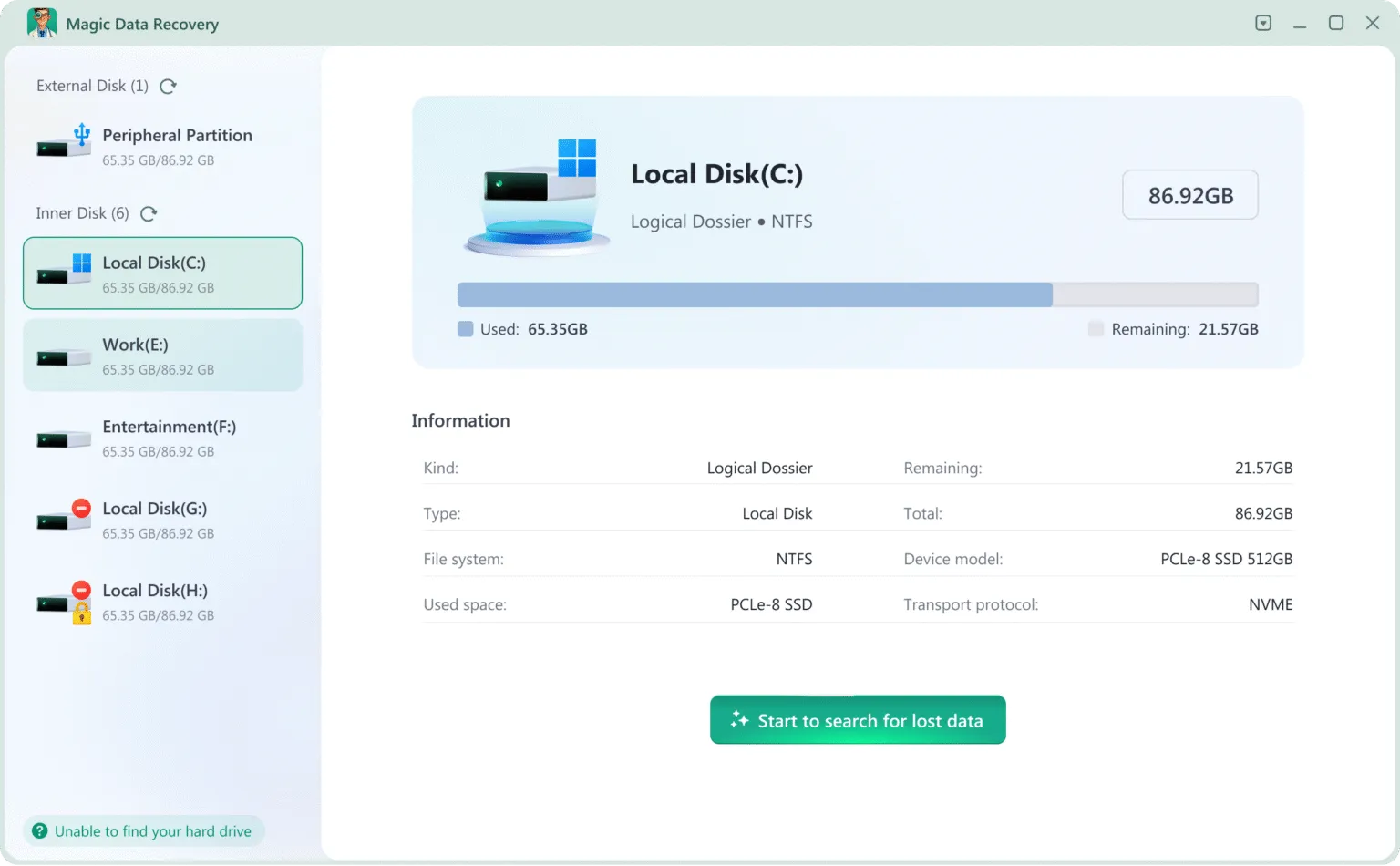
4. Start the scan.
5. Use filters or file types to find PSD, AI, PDF, PRPROJ, AEP, INDD, JPG, PNG, or other files.
6. Preview files when possible.

7. Recover selected files to a different safe drive.
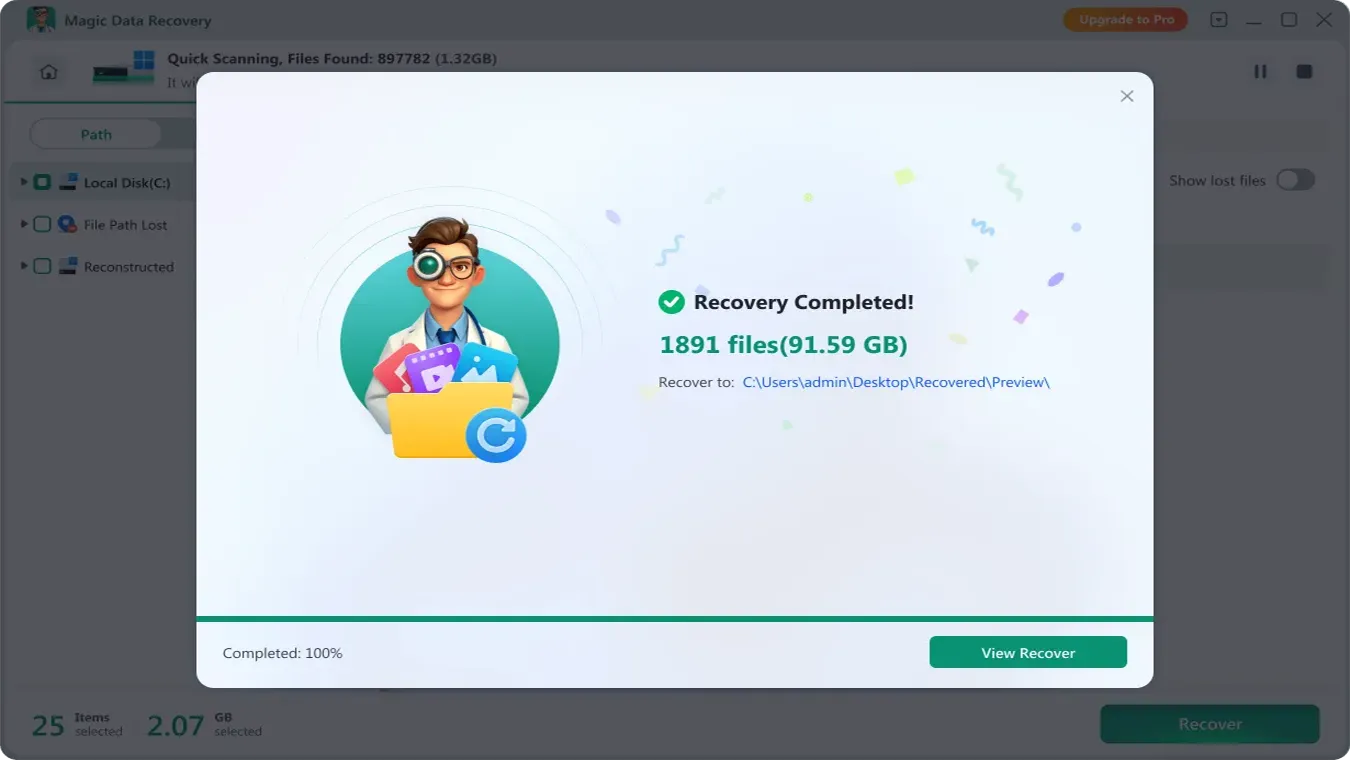
This is often more reliable than random manual searching because the software scans file records and lost data areas more systematically. For example, if a designer accidentally formatted a USB drive containing Illustrator logo files, Recycle Bin will not help. In that case, a deeper scan with Magic Data Recovery gives a more practical path.
Method 8: Search by Adobe File Extension
Sometimes the file is not deleted. It may simply be saved in the wrong folder, renamed, or hidden in a project directory. Before running advanced recovery, search by extension.
Useful Adobe file extensions
Adobe App or File Type | Common Extensions |
Photoshop | .psd, .psb |
Illustrator | .ai, .aid, .eps, .svg |
Acrobat | |
Premiere Pro | .prproj |
After Effects | .aep |
InDesign | .indd |
Adobe XD | .xd |
Images | .jpg, .jpeg, .png, .tif, .tiff, .webp |
On Windows, open File Explorer and search:
*.psd
*.ai
*.prproj
*.aep
Sort results by Date modified. This helps locate files saved recently but placed in the wrong folder.
Common Mistakes That Reduce Adobe Recovery Success
Many users make the situation worse after losing creative work. Avoid these mistakes during any adobe recover files attempt.
- Do not keep exporting, rendering, or saving new files to the same drive.
- Do not install recovery software on the drive where the file was lost.
- Do not format a drive just because Windows says it needs formatting.
- Do not run repair commands before recovering important files.
- Do not save recovered files back to the same storage device.
- Do not assume cloud sync always equals backup.
Also, remember that autosave and recovery files are not the same as a complete backup strategy. Autosave helps during crashes, while backups help when files are deleted, overwritten, or damaged.
How to Prevent Adobe File Loss in the Future
Recovery is useful, but prevention saves more time. After you recover Adobe files, set up a safer workflow.
- Turn on auto-save or recovery settings in Adobe apps.
- Use Save As for major project versions.
- Keep active projects in a synced folder.
- Back up project folders to an external drive.
- Avoid editing directly from unstable USB drives or SD cards.
- Save large Photoshop, Premiere, or After Effects projects regularly.
- Keep enough free disk space for cache and recovery files.
- Use clear file names with dates or version numbers.
For professional work, use a “3-copy” habit: one working copy, one local backup, and one cloud or external backup. This reduces the risk of losing client files, design drafts, video projects, or PDF edits.
Summary
The best adobe recover files method depends on the loss scenario. For unsaved Photoshop, Illustrator, or Acrobat files, restart the app and check AutoRecover or DataRecovery folders. For cloud files, check Creative Cloud Deleted files and version history. For normally deleted files, start with Recycle Bin. For backup users, check File History or Previous Versions.
However, if the Adobe file was permanently deleted, lost after formatting, missing from a corrupted drive, or stored on a USB, SD card, or external disk, Magic Data Recovery is the more practical solution. It supports many Adobe-related formats, scans common storage devices, and gives users a clear recovery workflow without complex commands. If you need a more efficient way to recover Adobe files, start with this deleted file recovery guide and try Magic Data Recovery before giving up on your lost work.
Supports Windows 7/8/10/11 and Windows Server
FAQs
Can Adobe recover files after a crash?
Yes, Adobe apps may recover files after a crash if autosave or recovery data exists. Restart the app first. Photoshop, Illustrator, and Acrobat may open recovered files automatically or store recovery data in specific folders. If no recovery copy appears, check temporary folders, Creative Cloud, backups, or use Magic Data Recovery for deleted local files.
How do I recover deleted Adobe files on Windows?
Start with Recycle Bin if the files were deleted normally. Next, check Creative Cloud, File History, Previous Versions, or cloud backup services. If the files were permanently deleted, removed from a USB drive, or lost after formatting, use Magic Data Recovery to scan the original storage device and save recovered files elsewhere.
Can I recover unsaved Photoshop files?
You may recover unsaved Photoshop files if Photoshop created AutoRecover data before the crash. Relaunch Photoshop first. If no prompt appears, check the AutoRecover folder under the Adobe Photoshop AppData path on Windows or Application Support path on macOS. If no recovery data exists, only backups or previous saved versions may help.
Where are Illustrator recovery files stored?
On Windows, Illustrator recovery files may be stored under the Adobe Illustrator Settings DataRecovery folder inside AppData Roaming. On macOS, they may appear under the Library Preferences path for Illustrator. Open .ai or .aid files in Illustrator, then save the recovered version immediately to another folder.
Can Magic Data Recovery recover Adobe files?
Yes, Magic Data Recovery can help recover many Adobe-related files, including PSD, AI, PDF, SVG, image files, documents, and video-related files, as long as the lost data has not been overwritten. It is useful after deletion, formatting, file system errors, or lost access to Windows-detectable storage devices.
Does Creative Cloud keep deleted Adobe files?
Creative Cloud can restore deleted cloud files through the Creative Cloud desktop app if the files were stored in Adobe cloud storage. Open Files, go to Deleted, select the target file, and choose Restore. This does not help files that were saved only on a local drive and never synced.
Can I recover Adobe files after emptying Recycle Bin?
Recovery may still be possible after emptying Recycle Bin because Windows often removes file references before overwriting the actual data. Stop using the affected drive immediately. Then scan the drive with reliable recovery software such as Magic Data Recovery and save recoverable Adobe files to another safe location.
What should I do first after losing an Adobe project?
Stop using the drive where the Adobe project was stored. Then check the easiest sources first: Recent Files, Recycle Bin, Creative Cloud, autosave folders, and backups. If these options fail, scan the original drive with Magic Data Recovery. Avoid installing software or saving recovered files on the affected drive.

Jason is a data recovery and technical support specialist with over 15 years of hands-on experience. He has worked extensively with frontline users, troubleshooting difficult data loss cases and providing practical recovery solutions for accidental deletion, formatted drives, damaged file systems, lost partitions, system failures, and other recovery emergencies. His expertise also includes backup and restoration, file repair, and disaster recovery, with a strong emphasis on safe, reliable, and technically accurate guidance.