
Does System Restore Recover Files?
You deleted an important document, emptied the Recycle Bin, and then noticed that Windows has a restore point. Naturally, you may ask, does system restore recover files? In most cases, traditional Windows System Restore cannot recover deleted personal files.
System Restore reverses changes to Windows system files, drivers, registry settings, installed programs, and configurations. However, it does not work like a personal backup. Therefore, it normally cannot restore deleted photos, videos, documents, spreadsheets, or other user-created data.
Fortunately, other options may help. You can check the Recycle Bin, File History, Previous Versions, cloud backups, or recovery software. This guide answers does system restore recover files, explains what restore points contain, and shows how Magic Data Recovery can help when no usable backup exists.
Supports Windows 7/8/10/11 and Windows Server
Table of Contents
Does System Restore Recover Files or Only System Settings?
A restore point records important Windows components at a specific time. When you run System Restore, Windows returns those components to the selected state. However, it does not scan the drive for deleted personal data.
System Restore can reverse changes to:
- Windows system files and registry settings
- Device drivers
- Recently installed applications
- Some updates and system configurations
For example, a faulty graphics driver may cause crashes. In that case, System Restore can remove the problematic change and return Windows to an earlier working state.
However, does system restore recover files such as photos or Word documents? Usually, it does not. Traditional System Restore cannot normally recover:
- Deleted Word, Excel, or PDF files
- Lost photos, videos, or audio
- Files removed with Shift+Delete
- Data erased from the Recycle Bin
- Files lost after formatting
In short, System Restore protects system stability. It does not replace a backup or a dedicated deleted file recovery solution.
Does System Restore Recover Files in Windows 11?
The answer depends on the recovery feature you choose. Windows 11 includes traditional System Restore, while some newer systems may also offer Point-in-time restore.
Feature | System Restore | Point-in-Time Restore |
Main purpose | Reverse system changes | Return the Windows drive to an earlier state |
Scope | System files, settings, drivers, and apps | Windows, apps, settings, and local files |
Personal files | Normally remain unchanged | May return to an earlier state |
Recent changes | Usually remain | May disappear after rollback |
Traditional System Restore usually leaves personal files alone. By contrast, Point-in-time restore can roll back local files with Windows settings. Therefore, it may return an older file state, but it can also remove files created after the selected point.
When users ask does system restore recover files in Windows 11, they often confuse these two features. Therefore, confirm the exact recovery option shown on your PC before continuing.
Does System Restore Recover Deleted Files?
No. Traditional System Restore does not rebuild deleted personal files or search unused disk space for file fragments. As a result, it cannot replace File History, Previous Versions, cloud backups, or recovery software.
Still, a file may appear missing because OneDrive has not finished syncing, Windows rolled back the program that opens it, or the file moved to another profile. Therefore, search the original folder, OneDrive, and other user accounts first.
For anyone searching does system restore recover files, the key point is simple: identify the Windows feature you used before choosing a recovery method.
System Restore vs File History and Previous Versions
To understand does system restore recover files, separate System Restore from Windows file-backup tools.
File History
File History saves copies of selected personal folders when you enable it in advance.
- Open Control Panel.
- Select System and Security > File History.
- Choose Restore personal files.
- Find the required file or folder.
- Select Restore.
However, File History only helps when Windows created a backup before the deletion.

Previous Versions
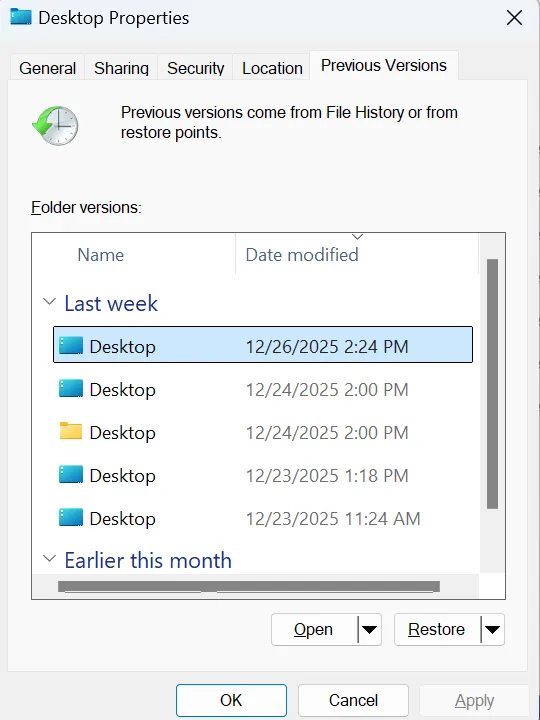
Previous Versions may show older copies of files and folders.
- Open File Explorer.
- Right-click the folder that contained the file.
- Select Properties > Previous Versions.
- Choose and inspect an available version.
- Restore it after confirming the contents.
If no version appears, Windows may not have a suitable copy. Therefore, move to another method.
What to Do Before Recovering Deleted Files
Because does system restore recover files has a negative answer for personal data, your next actions matter. Windows often marks deleted file space as available, and new data may overwrite it.
Therefore:
- Stop saving data to the affected drive.
- Avoid large downloads and updates.
- Do not install recovery software on the affected partition.
- Check backups before scanning.
- Save recovered files elsewhere.
For example, if you deleted photos from drive D:, install recovery software on another available drive when possible. In addition, save recovered photos outside drive D:.
How to Recover Files Without System Restore
If you still ask does system restore recover files, follow these methods in order.
Method 1: Check the Recycle Bin
Search the Recycle Bin by filename, file type, date, or original location. Then, right-click the item and select Restore. However, this method cannot help after Shift+Delete or after you empty the Recycle Bin.
Method 2: Use File History or Previous Versions
If File History was active, restore a saved copy through File History or Previous Versions. Because this method uses an existing backup, it usually offers the safest result.
Method 3: Check Cloud Storage
Review the recycle bin and version history in OneDrive, Google Drive, Dropbox, or another cloud platform. Also, check synced computers, phones, and tablets.
Method 4: Use Magic Data Recovery
When backups cannot find the file, a disk scan becomes the practical next step.
Magic Data Recovery addresses the problem that System Restore cannot solve. It scans supported storage media for deleted, lost, or inaccessible personal data.
It can help with:
- Accidental deletion
- An emptied Recycle Bin
- Shift+Delete file loss
- Lost photos, videos, documents, and archives
- Missing files after formatting
- File-system errors
According to Amagicsoft, the software supports common Windows versions, more than 5,000 file formats, and HDDs, SSDs, USB drives, and memory cards. Moreover, its preview function helps you check file content before recovery.
So, does system restore recover files when no backup exists? No. However, Magic Data Recovery offers a more suitable solution because it searches the selected drive for recoverable data instead of reversing Windows settings.
How to Recover Files with Magic Data Recovery
If your main question is does system restore recover files, remember that System Restore cannot scan for deleted personal data. When backups and Windows tools fail, follow these steps with Magic Data Recovery.
Step 1: Download and Install Magic Data Recovery
Download Magic Data Recovery and install it on a drive or partition different from the one that contained the deleted files. This precaution reduces unnecessary writing to the affected location. As a result, it helps protect recoverable data.
Supports Windows 7/8/10/11 and Windows Server
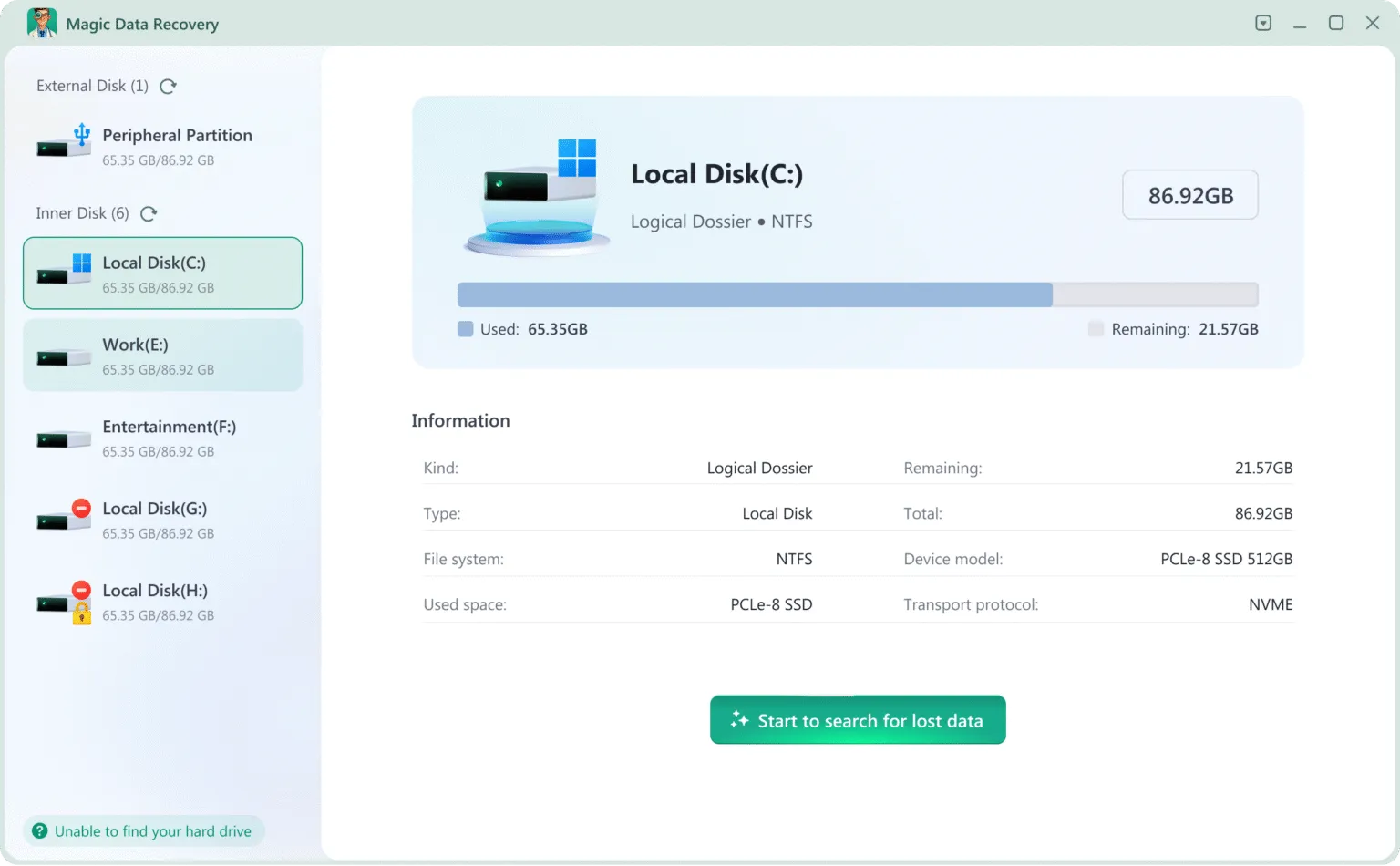
Step 2: Select the Drive You Want to Scan
Open Magic Data Recovery and review the storage devices on the main interface. Then, select the drive or partition where the missing files were stored and start the scan.
Step 3: Scan the Drive for Deleted Files
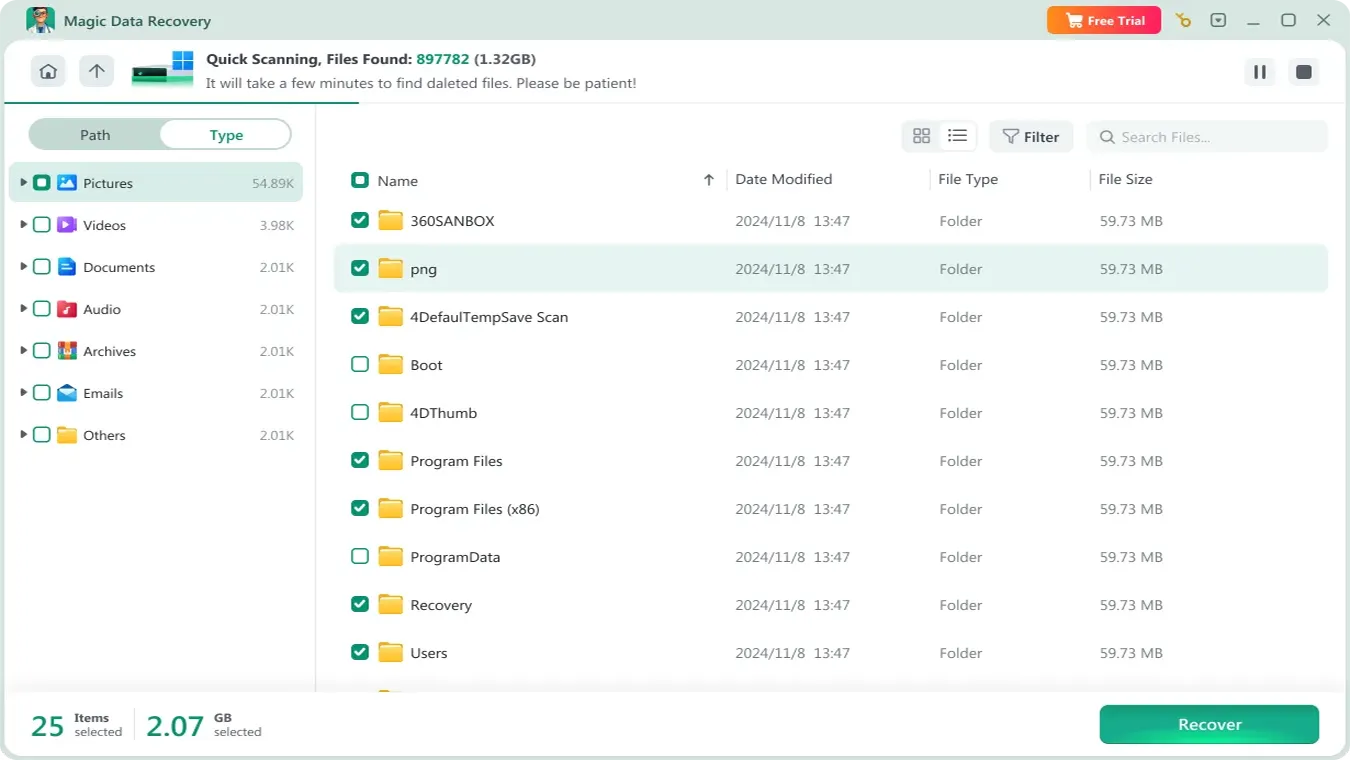
Magic Data Recovery starts an Advanced Scan for deleted, lost, or inaccessible files. Meanwhile, recoverable items appear as the scan continues. You can review files during the scan. However, allow the process to finish when possible because a complete scan may locate more data.
Step 4: Preview Files Before Recovery
After the scan, use the preview feature to check the file content. You can also filter results by filename, path, or file type. Previewing helps you avoid unnecessary recovery. More importantly, it confirms whether important files remain usable.

Step 5: Recover Files to a Safe Location
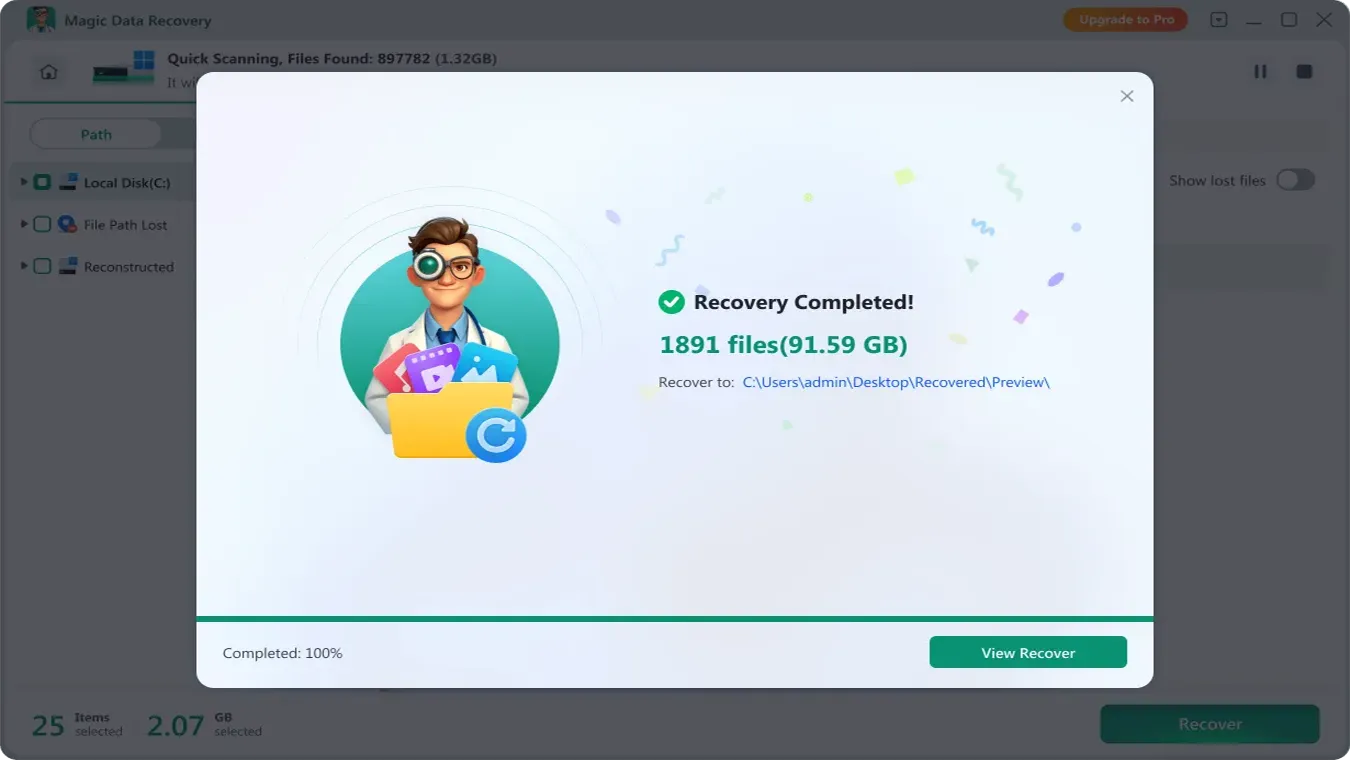
Select the files you need and start recovery. Finally, save them to a different drive, partition, or storage device.
Writing recovered data back to the affected drive may overwrite files you have not restored. Therefore, always choose a separate destination.
Can You Recover Files After System Restore?
Although system restore ovewrites lost files, you may still recover some files after System Restore, but System Restore itself does not perform that recovery. Therefore, does system restore recover files after a rollback? No, although another method may still find the missing data.
First, check File History, Previous Versions, cloud backups, and synced devices. If no copy exists, scan the affected drive quickly.
Recovery depends on overwriting, encryption, storage condition, and file fragmentation. Therefore, no responsible provider should promise every file will return. Moreover, stop using any drive that disconnects, makes unusual sounds, or disappears from Windows.
When Should You Use System Restore?
Use System Restore when a driver causes crashes, an application makes Windows unstable, or a recent configuration change creates errors.
However, do not use it as the first solution for deleted photos, an emptied Recycle Bin, a formatted memory card, or physical drive damage.
In other words, does system restore recover files only addresses one part of the problem. The better question is which method matches the cause of data loss.
How to Prevent Future File Loss
Understanding does system restore recover files helps you create a stronger backup plan.
- Enable File History for important folders.
- Use cloud storage with version history.
- Keep a separate backup.
- Test backups regularly.
- Create restore points before major changes.
Therefore, the answer to does system restore recover files should shape your backup plan: restore points repair Windows, backups protect personal data, and recovery software helps when no usable backup exists.
Conclusion: Does System Restore Recover Files?
So, does system restore recover files? Traditional System Restore does not recover deleted personal documents, photos, videos, or other user-created data. Instead, it restores Windows system files, drivers, programs, registry settings, and configurations.
First, check the Recycle Bin, File History, Previous Versions, and cloud backups. If those options do not contain the missing file, Magic Data Recovery provides a focused next step.
We recommend Magic Data Recovery because it addresses personal file loss directly. It supports common Windows versions, thousands of file formats, several storage-device types, and file preview. More importantly, it lets users scan for deleted or inaccessible data without complex command-line steps.
Therefore, when no usable backup exists, Magic Data Recovery offers a practical deleted file recovery solution. Install it away from the affected partition, scan the correct drive, preview the results, and save recovered files to a safe location.
Supports Windows 7/8/10/11 and Windows Server
FAQ
Does System Restore Recover Files from the Recycle Bin?
No. Traditional System Restore does not rebuild personal files after you empty the Recycle Bin. First, check File History, Previous Versions, OneDrive, or another backup. If no copy exists, stop using the affected drive and scan it with recovery software such as Magic Data Recovery.
Does System Restore Recover Files Deleted with Shift+Delete?
No. Shift+Delete bypasses the Recycle Bin, while System Restore focuses on Windows system components. Therefore, it cannot restore the missing personal file. Check backups first. If none exist, use recovery software quickly because continued drive use may overwrite recoverable data.
Does System Restore Recover Files Such as Photos and Videos?
Traditional System Restore normally leaves photos and videos unchanged, but it does not recover them after deletion. Instead, check File History, Previous Versions, cloud storage, and synced devices. When those options fail, Magic Data Recovery may locate recoverable media files on the affected drive.
Can System Restore Repair Corrupted System Files?
System Restore can return some Windows components, registry settings, drivers, and programs to an earlier state. Therefore, it may fix corruption caused by a recent change. However, Windows also provides System File Checker and DISM for dedicated system-file repair and servicing tasks.
Is Previous Versions the Same as System Restore?
No. Previous Versions focuses on older copies of files and folders when Windows has a suitable backup or snapshot. System Restore focuses on settings, drivers, registry data, and installed applications. As a result, Previous Versions offers a more suitable option for personal file recovery.
Can You Recover Files After System Restore?
Yes, recovery may still be possible. However, does system restore recover files after the rollback? No. First, check File History, cloud backups, synced devices, and Previous Versions. If no copy exists, stop using the affected drive and run a recovery scan before new data overwrites the file.
Can Magic Data Recovery Recover Every Deleted File?
No recovery tool can guarantee every result. Overwriting, encryption, physical damage, fragmentation, and storage behavior can affect recovery. However, Magic Data Recovery can scan supported drives and preview available files, helping users evaluate results before saving recovered data to another location.

Vasilii is a data recovery specialist with around 10 years of hands-on experience in the field. Throughout his career, he has successfully solved thousands of complex cases involving deleted files, formatted drives, lost partitions, and RAW file systems. His expertise covers both manual recovery methods using professional tools like hex editors and advanced automated solutions with recovery software. Vasilii's mission is to make reliable data recovery knowledge accessible to both IT professionals and everyday users, helping them safeguard their valuable digital assets.