
Folder Lock Files Disappeared? Safe Ways to Find Them
If your folder lock files disappeared, do not assume they were deleted. Folder Lock can intentionally hide protected folders from Windows, store encrypted files inside different Lockers, or sync encrypted data through Dropbox, Google Drive, and OneDrive. In other cases, however, files or an entire Locker may actually have been deleted or damaged.
The safest approach is to find out which situation you are dealing with before changing settings or scanning the drive. This guide starts with Folder Lock’s own recovery paths and Windows backups. If the files are genuinely gone from local storage, you can then follow our deleted file recovery guide or scan the affected drive with Magic Data Recovery.
Important: If you suspect real deletion, avoid downloading large files, reinstalling applications, formatting the drive, or saving new data to the affected disk. New writes may overwrite recoverable information.
Supports Windows 7/8/10/11 and Windows Server
Table of Contents
Quick Answer: Why Did Folder Lock Files Disappear?
When folder lock files disappeared, the symptom itself often tells you where to look first.
What You See | Most Likely Cause | Best First Step |
Protected folder vanished from File Explorer | Folder Lock is hiding it normally | Check Safeguard > Protect Folders |
Locker opens but files are not there | Wrong Locker or account | Check every Locker and original login |
Cloud Locker files disappeared | Cloud deletion or sync change | Check cloud Trash/Recycle Bin |
Portable Locker cannot be found |
| Search all local and external drives |
Folder Lock files disappeared after an update | Locker location, account, or protection state changed | Verify Locker/account before reinstalling |
Files cannot be found anywhere | Actual deletion or storage problem | Check backup, then consider data recovery |
Locker exists but will not decrypt | Wrong password/account or damaged encrypted data | Preserve the Locker and contact Folder Lock support |
This distinction matters because Folder Lock’s Protect Folders feature is designed to make protected content disappear from normal Windows access. Folder Lock also uses several different Locker types, so checking only one location can create the impression that data is gone when it is actually stored elsewhere.
Why Do Folder Lock Files Disappear?
Before attempting Folder Lock recovery, understand how Folder Lock stores and protects data.
1. The Files Are Protected, Not Deleted
Folder Lock 10 includes a feature called Protect Folders under Safeguard. Unlike ordinary Windows hidden attributes, it uses Folder Lock’s protection mechanism to prevent the files or folders from appearing through normal Windows access.
Therefore, seeing a folder suddenly disappear after protecting it can be expected behavior rather than data loss. Folder Lock’s current documentation specifically says protected folders can disappear from Windows view and cannot normally be located through Windows Search while protection remains active.
2. You Are Looking in the Wrong Locker
Folder Lock 10 separates encrypted data into several storage locations, including:
- Desktop Locker
- Dropbox Locker
- Google Drive Locker
- OneDrive Locker
- Mobile Locker
- Portable Lockers
The official Folder Lock FAQ identifies checking the wrong Locker as one of the most common reasons users think their encrypted files have disappeared.
For example, files placed in Desktop Locker will not suddenly appear inside OneDrive Locker. Similarly, a Portable Locker stored on an external drive will not appear simply because you open Protect Folders.
3. A Synced File Was Deleted from Cloud Storage
Folder Lock 10 can encrypt files while storing them through Dropbox, Google Drive, or OneDrive. This adds a useful recovery option, but it also means cloud synchronization can affect what appears locally.
Folder Lock specifically recommends restoring accidentally deleted Cloud Locker files through the cloud provider’s own deleted-file recovery mechanism and allowing Folder Lock to synchronize them again.
4. The Portable Locker Was Moved or Deleted
Portable Lockers are encrypted container files that can live on internal drives, USB drives, external disks, or other locations.
Folder Lock 10 can open older .flk, .flka, and .flkb Locker formats, although current versions create .flka Portable Lockers.
If the container itself was renamed, moved, deleted, or stored on a disconnected device, the data inside may appear to vanish.
5. The Files Were Actually Deleted
Actual data loss can still occur. Common examples include:
- accidentally deleting a Locker or protected folder;
- deleting files while a Locker is open;
- emptying the Recycle Bin;
- formatting the drive;
- file-system corruption;
- an unexpected shutdown while storage is being modified;
- losing or damaging the drive containing a Portable Locker.
In these situations, simply changing Folder Lock settings will not restore the missing data.
Method 1: Check Protect Folders and Every Locker First
If folder lock files disappeared but the drive itself works normally, start inside Folder Lock.
Open Folder Lock with the same account you used when protecting the data. Then check Safeguard > Protect Folders.
Look for the missing folder in the protected-items list. If it appears there, use the available unlock or unprotect option. The exact wording can vary slightly between Folder Lock builds.
Next, inspect each Locker that you actually use:
Desktop Locker → Dropbox Locker → Google Drive Locker → OneDrive Locker → Mobile Locker → Portable Lockers
Do not rely solely on Windows Search. Folder Lock states that protected content may not appear in normal Windows search results while protection remains active.
This should be the first method whenever Folder Lock files are missing, because it makes no changes to the disk and avoids unnecessary recovery operations.
Method 2: Search for a Missing Portable Locker
If the files were stored in a Portable Locker, search for the Locker container rather than the individual document or photo names.
Open File Explorer, select This PC, and search separately for:
*.flka
*.flk
*.flkb
Also check:
- Documents
- Desktop
- Downloads
- external hard drives
- USB drives
- network locations you previously used
Folder Lock’s documentation specifically recommends searching the computer for .flk, .flka, or .flkb when a Portable Locker no longer appears inside the program. After locating the file, open it through Folder Lock and provide the correct credentials.
Do not rename or modify an encrypted container while troubleshooting it. If the Locker looks damaged, create a copy on another drive before experimenting with it.
Method 3: Make Sure You Are Using the Original Folder Lock Account
Another overlooked cause of Folder Lock files missing is logging in with a different account.
Folder Lock says that seeing files but being unable to decrypt or open them can happen when the Locker was created under another account. The original email and password combination used to encrypt the data remains important.
This also creates an important limitation:
Resetting your Folder Lock account password does not decrypt old files whose original encryption credentials have been lost.
The vendor states that Folder Lock has no password backdoor. A password reset lets you continue using the account for new data; it does not provide a way to decrypt previously encrypted files without the required credentials.
For that reason, avoid third-party guides that promise to bypass Folder Lock encryption simply by editing the Registry or uninstalling the application.
Method 4: Restore Missing Files from Dropbox, Google Drive, or OneDrive
Cloud storage is often the safest solution when folder lock files disappeared from a Cloud Locker.
Folder Lock 10 integrates with Dropbox, Google Drive, and OneDrive and states that Cloud Locker files can be restored through the associated cloud service.
Google Drive Locker
Sign in to the Google Drive account connected to Folder Lock and open Trash.
Locate the deleted Locker data, right-click it, and choose Restore. Google currently keeps normal deleted Drive items in Trash for 30 days unless they are permanently removed sooner.
OneDrive Locker
Open OneDrive on the web and select Recycle bin. Choose the missing files or folder and click Restore.
Microsoft confirms that deleted OneDrive items can normally be restored from its online Recycle Bin while they remain within the applicable retention period.
Dropbox Locker
Sign in to Dropbox and choose Deleted files. Select the missing item and restore it.
Dropbox says deleted files can generally be recovered during the version-history period included with the user’s plan.
After restoration, allow the relevant cloud application and Folder Lock to synchronize again.
This method is preferable to disk scanning because you are restoring a preserved cloud copy instead of attempting to reconstruct deleted storage sectors.
Method 5: Check the Recycle Bin and File History
If Folder Lock files disappeared from local Windows storage rather than a cloud Locker, check Windows backups before using recovery software.
First open the Recycle Bin and search for the Locker, folder, or recently deleted files.
If nothing appears there and File History was enabled previously:
- Open File Explorer.
- Go to the folder that previously contained the missing item.
- Right-click the folder.
- Select Restore previous versions.
- Choose a version created before the files disappeared.
- Open the version first to confirm its contents.
- Restore the needed files, preferably to another location.
Microsoft confirms that File History can restore previous copies of protected files and folders when backups existed before the loss.
File History cannot recover data that was never included in a backup, but when a valid copy exists, it should normally take priority over sector-level recovery.
Method 6: Recover Actually Deleted Files with Magic Data Recovery
If you have checked Folder Lock, Portable Lockers, cloud storage, the Recycle Bin, and available backups but the files still cannot be found, the problem may involve actual deletion or storage damage.
At this point, Magic Data Recovery can help scan the Windows storage device where the lost data originally existed.
It is particularly relevant when:
- a local folder was permanently deleted;
- a Portable Locker file was deleted;
- the Recycle Bin was emptied;
- a partition was formatted;
- the file system became inaccessible;
- files disappeared after logical disk errors.
Magic Data Recovery supports Windows storage devices including HDDs, SSDs, USB drives, SD cards, and external drives, and its scan is designed to locate deleted or otherwise lost files without modifying the source data during scanning.
How to Recover Missing Folder Lock Data
Step 1. Stop using the affected drive
Avoid creating or downloading new files there.
Step 2. Launch Magic Data Recovery
If possible, install the program on a different drive from the one containing the lost data.
Supports Windows 7/8/10/11 and Windows Server
Step 3. Select the original storage drive
Choose the partition or device where the Locker or original files were stored and start scanning.
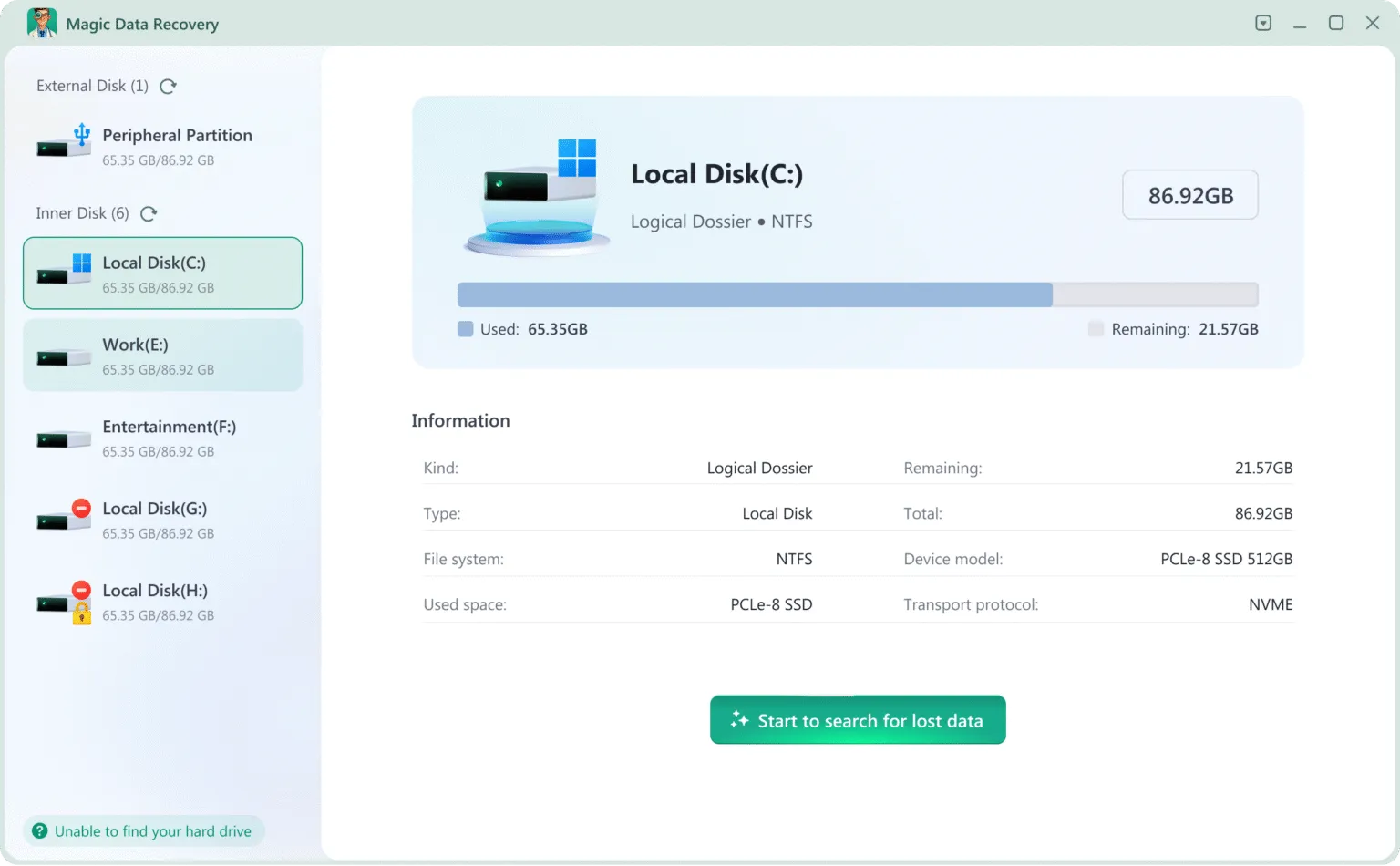
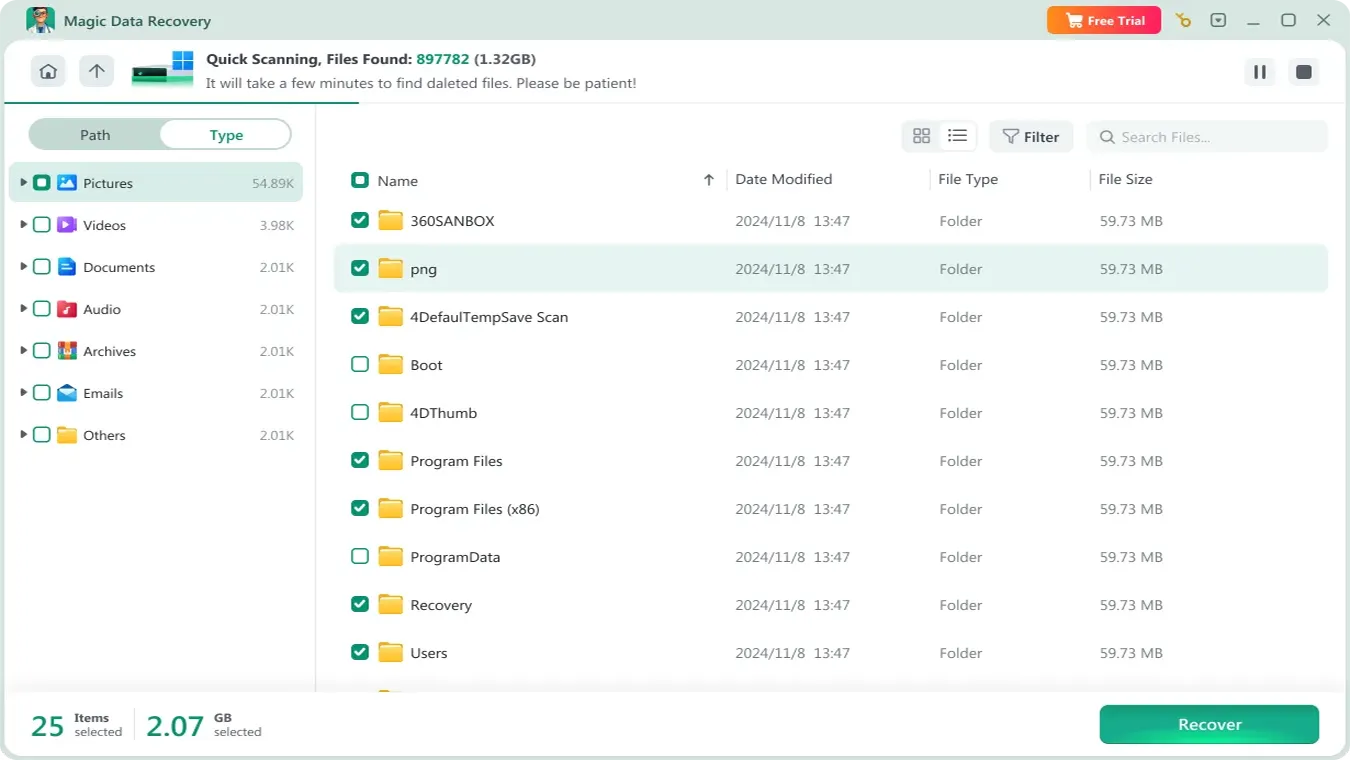
Step 4. Preview and recover
Locate the missing file or Locker, preview recoverable files when supported, and save the recovered data to another drive.
For a broader explanation of permanently deleted data, see our deleted file recovery guide.
Important: Data Recovery Is Not Encryption Recovery
This distinction is essential.
Magic Data Recovery can search storage for deleted or lost data, but it does not bypass Folder Lock encryption or recover a forgotten Folder Lock password.
For example, if a deleted .flka Portable Locker can be recovered intact, you would still need Folder Lock and the correct Locker credentials to decrypt its contents.
Likewise, if the only surviving data consists of encrypted Folder Lock files, recovering those files does not automatically turn them back into readable documents.
That limitation is consistent with Folder Lock’s own statement that encrypted data cannot be decrypted without the required credentials.
What If Folder Lock Files Disappeared After an Update?
An update does not automatically mean the underlying data was deleted.
Folder Lock has previously fixed issues involving Protect Folders and locking/unlocking behavior. Its current version history shows continued changes to these functions, including stability and Protect Folders improvements.
If the problem started immediately after an application or Windows update:
- Confirm that you are using the correct Folder Lock account.
- Check every Locker and Protect Folders.
- Search for
.flka,.flk, and.flkbfiles. - Check connected cloud storage.
- Preserve copies of any Locker files you find.
- Contact Folder Lock support if the Locker exists but does not open correctly.
If actual deletion is possible, avoid repeatedly reinstalling applications before protecting or recovering the missing data because installation creates new disk writes.
What Not to Do When Folder Lock Files Are Missing
Several actions can make Folder Lock recovery harder.
Do not immediately uninstall Folder Lock. Current Folder Lock documentation warns that uninstalling the application prevents normal access to encrypted data until compatible software is available again.
Do not delete an unfamiliar Locker file. A .flka, .flk, or .flkb file may contain the data you are trying to find.
Do not assume resetting the account password decrypts existing files. Folder Lock specifically says old encrypted files still require their original credentials.
Do not format a drive just because Windows reports a problem. Formatting changes disk metadata and may complicate recovery.
Do not save recovered files to the source drive. Doing so can overwrite other data that has not yet been recovered.
Finally, avoid Folder Lock’s Shred Files function when troubleshooting missing data. That feature is specifically intended to make deleted information unrecoverable.
How to Prevent Folder Lock Files from Disappearing Again
Once you recover your files, make the storage layout easy to understand.
Keep a simple record of which data lives in Desktop Locker, which files use a Cloud Locker, and where Portable Lockers are physically stored. For important encrypted data, keeping a synchronized Cloud Locker provides an additional recovery path that a Desktop-only Locker does not have. Folder Lock itself notes that Desktop Locker data is local and therefore cannot be restored from cloud storage when no separate backup exists.
Also keep independent backups of important data. Encryption protects confidentiality; it should not replace backup.
Conclusion
When folder lock files disappeared, the safest response is not to jump straight to recovery software. First determine whether Folder Lock intentionally hid the folder, whether you opened the wrong Locker, whether a Portable Locker moved, or whether cloud synchronization deleted a copy.
Folder Lock’s own storage and cloud recovery options should come first because they preserve the encrypted data in its native form. If the data was truly deleted from a Windows drive, our deleted file recovery guide explains the broader recovery process.
For cases involving permanent deletion, accidental formatting, or file-system problems, Magic Data Recovery provides a practical way to scan the original storage device and locate recoverable data. Its role is deliberately limited: it helps recover lost files or Locker containers, while Folder Lock and the correct credentials remain necessary for decrypting protected content.
Supports Windows 7/8/10/11 and Windows Server
FAQs About Folder Lock Files Disappeared
Why did my Folder Lock files disappear?
Can Folder Lock hide files from Windows Explorer?
How do I find a missing Folder Lock Portable Locker?
*.flka, *.flk, and *.flkb. Also check external drives and USB devices. Folder Lock 10 supports opening these older Locker formats, although current Portable Lockers use .flka.Can I recover files deleted from a Folder Lock Cloud Locker?
Can Magic Data Recovery decrypt Folder Lock files?
Can I recover Folder Lock files after emptying the Recycle Bin?
Will resetting my Folder Lock password restore old encrypted files?
Should I uninstall Folder Lock when my files disappear?

Jason has over 15 years of hands-on experience in the computer data security industry. He specializes in data recovery, backup and restoration, and file repair technologies, and has helped millions of users worldwide resolve complex data loss and security issues.