
How to Free Recover Files from Hard Drive: A Complete Guide
Losing important files from a hard drive is stressful, especially when the deletion happens without warning. A power outage, an accidental format, or a simple slip of the “Shift + Delete” keys can wipe out photos, documents, or projects in seconds. The good news is that lost data is rarely gone for good. This guide explains how to free recover files from hard drive storage, what actually happens when a file disappears, and which steps give you the best chance of getting everything back safely. For a deeper look at recovery methods for deleted content specifically, the deleted file recovery covers related scenarios in more detail.
Along the way, we’ll introduce Magic Data Recovery, a tool built to handle the situations where basic recovery attempts fall short.
Supports Windows 7/8/10/11 and Windows Server
Table of Contents
Why Files Disappear from a Hard Drive
Understanding why data loss happens makes recovery far less confusing. Deletion, formatting, corruption, and hardware faults are the four most common triggers.
- Accidental deletion: Files removed from the Recycle Bin, or deleted using Shift+Delete, skip the bin entirely.
- Formatting errors: A drive formatted by mistake, or reformatted to change the file system, clears the visible file table.
- File system corruption: A sudden shutdown or malware infection can damage the file system’s index, making files invisible even though the data remains.
- Logical errors vs. physical damage: Logical issues (corruption, bad sectors reported by software) are usually recoverable. Physical damage, such as clicking noises or a drive that won’t spin up, requires professional lab intervention rather than software.
Here’s the technical detail that matters most: when a file is deleted, the operating system does not erase the actual data immediately. It only removes the file’s entry from the index and marks that storage space as available for new data. Until something else overwrites it, the original content is still sitting on the disk. This is exactly why acting quickly, and avoiding writing new files to the affected drive, is the single most important rule in any recovery attempt.
Is It Really Possible to Free Recover Files from a Hard Drive?
Yes, in most logical data-loss cases, you can recover deleted files from a hard drive without paying for professional services. Free recovery software scans the drive at a low level, reads what remains of the file system, and reconstructs files that the operating system can no longer see.
However, “free” comes with trade-offs worth knowing before you start:
- Scan depth limits: Many free tools cap how deep a scan goes, missing files in badly damaged partitions.
- Recovery quotas: Some free versions cap the number of files or the total data volume you can restore per day.
- File type restrictions: Certain free tools only recover common formats like JPG or DOCX, skipping less common formats such as project files or database backups.
- No RAW or partition-level recovery: Basic free tools often can’t rebuild a partition that has gone RAW or repair a corrupted file system.
For simple, recent deletions, a free tool is usually sufficient. For deeper data loss, formatting, or a drive with file system errors, more capable software becomes necessary, which is where a full-featured recovery solution earns its place.
Step-by-Step: How to Recover Deleted Files from a Hard Drive
Follow these steps in order to maximize your chances of a full, clean recovery.
1. Stop Using the Affected Drive Immediately
Every new file you save, every program you install, risks overwriting the very data you’re trying to recover. Pause any downloads, close unnecessary programs, and if possible, disconnect the drive until you’re ready to scan it.
2. Choose Reliable Recovery Software
Download recovery software only from the official vendor’s website. Third-party download portals sometimes bundle unwanted programs or outdated installers, which can slow down the process or introduce new risks.
Supports Windows 7/8/10/11 and Windows Server
3. Run a Full Scan, Not Just a Quick Scan
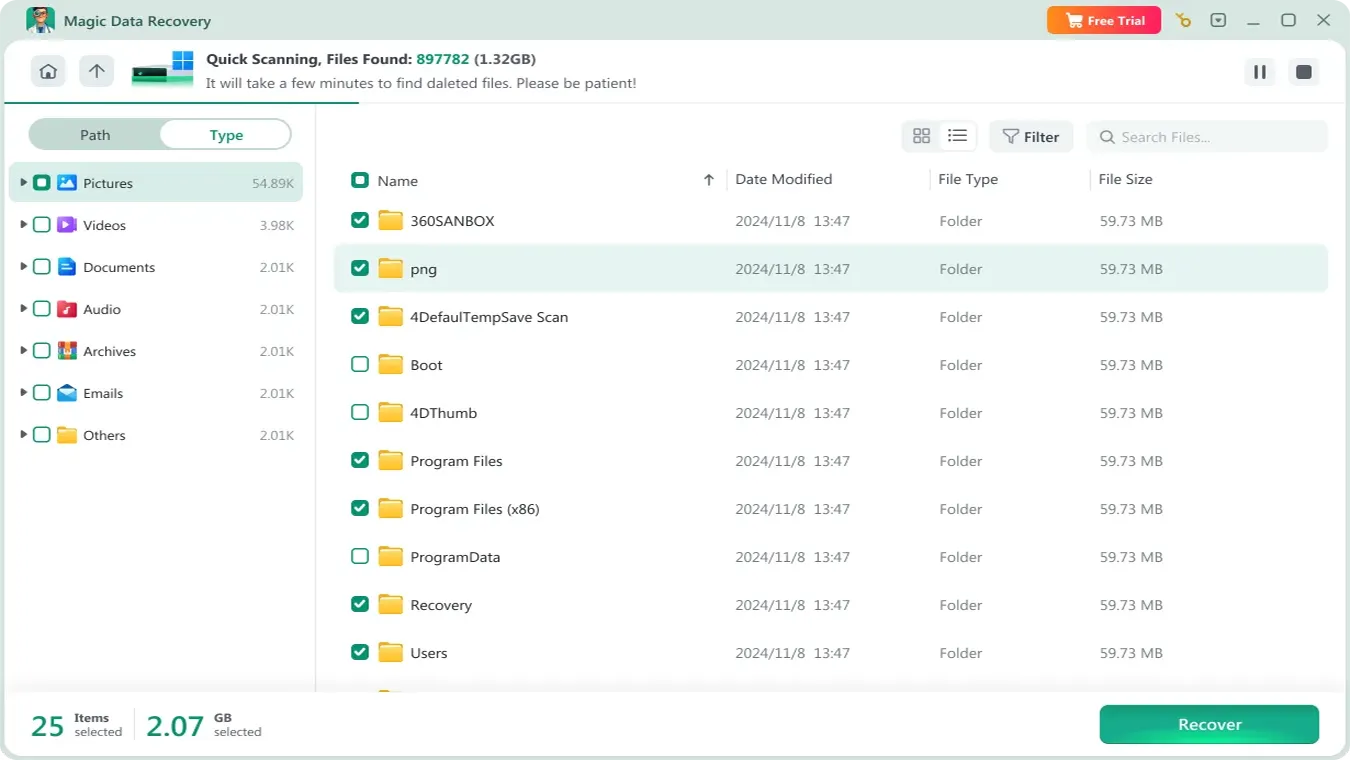
A quick scan checks the file system’s recently deleted markers. A deep or full scan reads raw sectors directly, uncovering files that the quick scan misses entirely. If the quick scan doesn’t find what you need, always follow up with a deep scan.
4. Preview Before You Restore
Reputable recovery tools let you preview a file’s content before restoring it. Previewing confirms the file is intact and not just a partial fragment, saving you from wasting time recovering broken data.

5. Save Recovered Files to a Different Drive
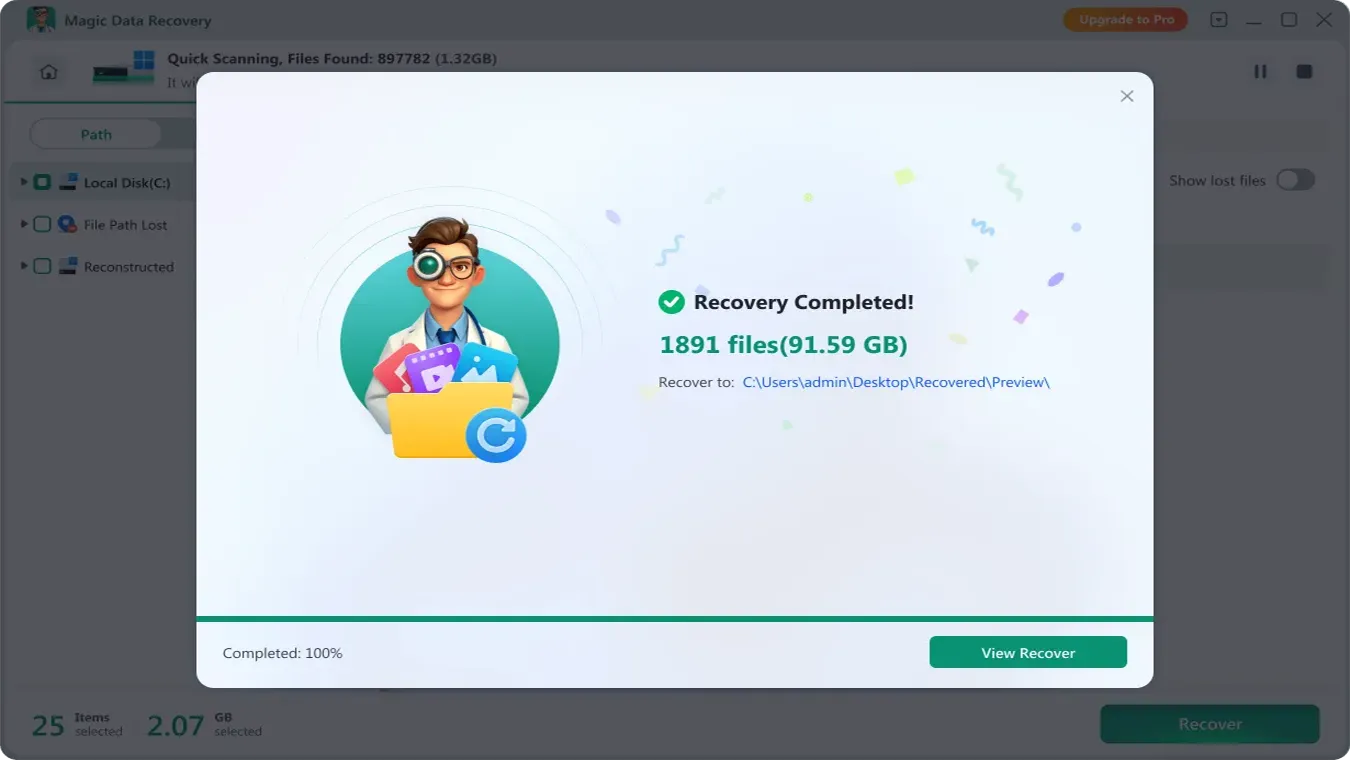
Never restore files back to the same drive you’re recovering from. Doing so risks overwriting other deleted files still waiting to be recovered. An external drive, USB stick, or a separate internal disk works best.
Best Practices Before You Start Recovery
A few habits separate a successful recovery from a frustrating one.
- Back up regularly so a single deletion never becomes a crisis in the first place.
- Avoid installing new software on the affected drive during the recovery process.
- Check drive health using built-in diagnostic tools (like CHKDSK on Windows) only after recovery is complete, since running repair tools beforehand can alter data.
- Keep a recovery checklist handy for future incidents, since data loss often happens at the worst possible time.
Industry best practice across data recovery labs is consistent: speed and restraint matter more than any specific software feature. Recovering files from a hard drive is fundamentally a race against overwriting, not a race against time pressure to click faster.
When Free Tools Aren't Enough: A Smarter Recovery Solution
Free recovery software solves plenty of everyday cases, but it starts to fall short when the situation gets more complex: a formatted drive, a corrupted file system, a partition that suddenly shows as RAW, or thousands of files spread across mixed formats. This is the point where Magic Data Recovery becomes the more practical choice.
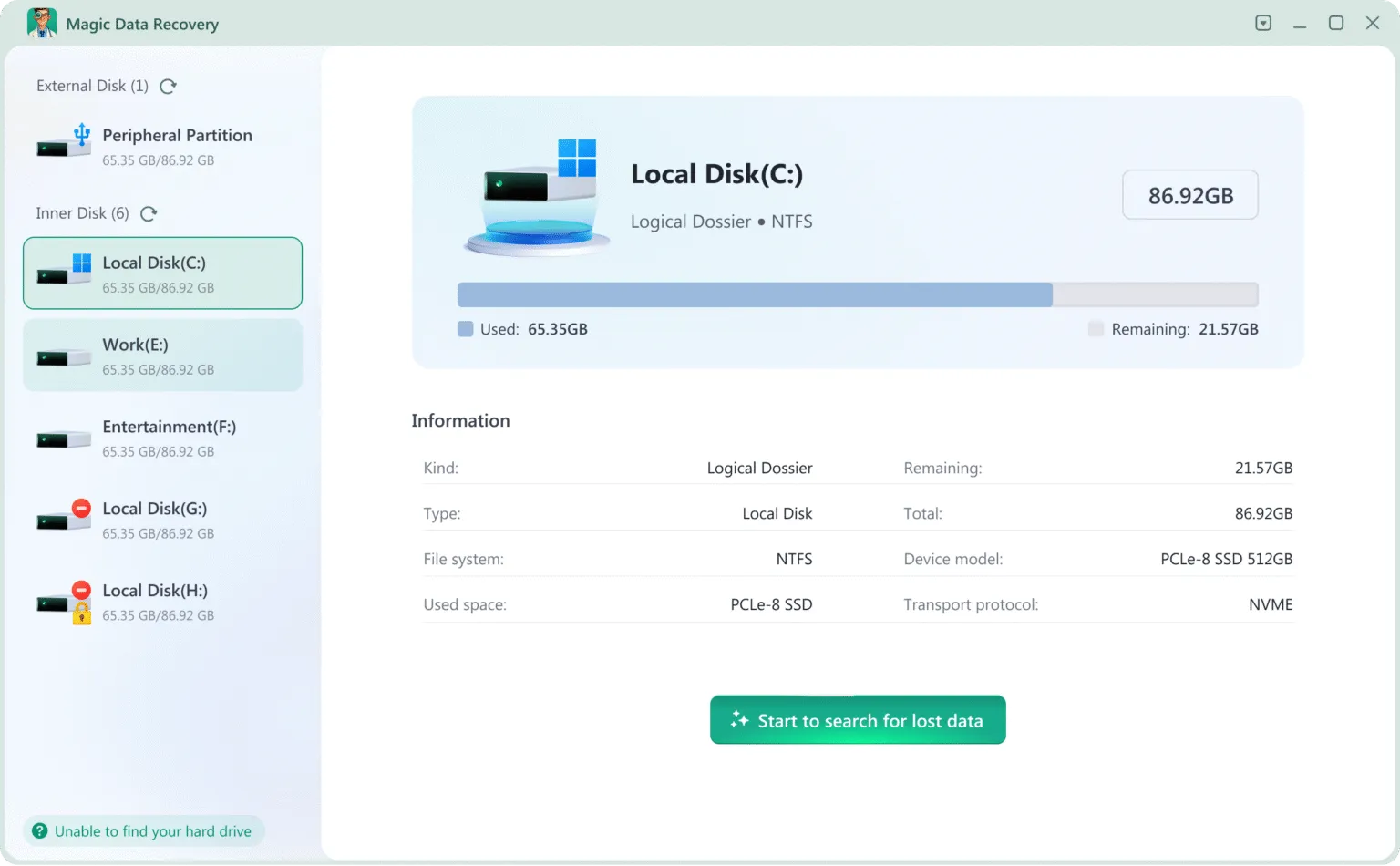
Core pain points it solves:
- Recovering files that were deleted, formatted, or lost due to file system errors, all from a single tool.
- Rebuilding access to drives that Windows no longer recognizes properly.
- Restoring specific file types (documents, photos, videos, archives) without wading through unrelated fragments.
What makes it stand out:
- Deep scanning engine that reconstructs file structures even after formatting or partition loss.
- Preview-before-recovery, so you confirm a file’s integrity before committing to a restore.
- Broad format support, covering common documents, images, videos, and compressed files without extra plugins.
- Read-only scanning process, which means the original drive isn’t modified during the scan itself.
Typical use case: Imagine formatting an external hard drive by mistake before transferring its contents elsewhere. A basic free tool may only recognize a handful of recently deleted items, while Magic Data Recovery scans past the formatting and rebuilds the original folder structure, recovering both recent and older files in one pass.
Why it holds up better than a patchwork of free tools: instead of switching between separate apps for deletion, formatting, and file system errors, one consistent scanning engine handles all three scenarios. That consistency reduces the risk of missed files and repeated scanning attempts. If you’re dealing with anything beyond a simple deleted file, and you want a single solution rather than several free apps, Magic Data Recovery is worth trying.
Common Mistakes to Avoid During Data Recovery
Even careful users fall into a few predictable traps:
- Installing recovery software directly onto the affected drive — this can overwrite the exact files you’re trying to save.
- Ejecting the drive mid-scan — interrupted scans often produce incomplete or corrupted results.
- Ignoring file previews — restoring hundreds of files blindly wastes time on damaged or irrelevant data.
- Waiting too long to start recovery — the more the drive is used, the lower the odds of a complete recovery become.
- Assuming all data loss is software-related — clicking sounds, overheating, or a drive that isn’t detected at all point to physical failure, which software cannot fix.
Recognizing these mistakes early prevents a recoverable situation from turning into a permanent loss.
Conclusion
Recovering deleted data doesn’t have to be complicated. In most cases, you really can free recover files from hard drive storage as long as you act quickly, stop using the affected drive, and choose reliable software. Free tools handle straightforward deletions well, but formatting issues, file system errors, and RAW partitions call for something more capable. Magic Data Recovery brings deep scanning, file preview, and broad format support together in one tool, making it a practical next step when a basic scan isn’t enough. For related recovery scenarios and deeper guidance, visit the deleted file recovery.
Supports Windows 7/8/10/11 and Windows Server
FAQs
Can I free recover files from a hard drive after emptying the Recycle Bin?
Yes. Emptying the Recycle Bin only removes the file's index entry, not the actual data. Recovery software can scan the drive and rebuild these entries as long as the space hasn't been overwritten by new files. Acting quickly after emptying the bin significantly improves your recovery odds.
Is free data recovery software safe to use?
Free data recovery software is safe when downloaded from the official vendor's site and used correctly. Always avoid third-party download mirrors, since they sometimes bundle unwanted extras. Reputable tools scan in read-only mode, meaning your original drive stays unmodified during the scanning process itself.
How long does it take to recover files from a hard drive?
Recovery time depends on drive size, scan type, and file count. A quick scan on a small drive may finish in minutes, while a deep scan on a large or damaged drive can take several hours. Larger drives with more fragmented data naturally require more scanning time.
Can formatted drives still be recovered for free?
Often yes, though free tools may struggle with deep formatting or file system changes. Basic free versions can sometimes recover recently formatted drives, but severely formatted or reformatted partitions usually need more advanced scanning capabilities, like those found in dedicated recovery software such as Magic Data Recovery.
Why do some recovered files show up as corrupted?
Corrupted results usually mean parts of the file were already overwritten by new data before recovery began. This happens most often when a drive continues to be used after deletion. Previewing files before restoring them helps you identify and skip these broken fragments early.
Should I recover files to the same hard drive they were lost from?
No, this is one of the most common recovery mistakes. Saving recovered files back onto the same drive risks overwriting other deleted data still waiting for recovery. Always restore files to a different drive, whether external, USB, or a separate internal disk.
What's the difference between a quick scan and a deep scan?
A quick scan checks recently deleted file markers and finishes fast, but it misses older or more complex data loss. A deep scan reads raw disk sectors directly, uncovering files that quick scans overlook, though it takes considerably longer to complete.
When should I stop trying free tools and use dedicated software instead?
Once you're dealing with formatting, file system errors, RAW partitions, or a large mix of file types, dedicated software becomes more efficient than a patchwork of free tools. Magic Data Recovery is designed for exactly this range of scenarios in a single application.

Jason is a data recovery and technical support specialist with over 15 years of hands-on experience. He has worked extensively with frontline users, troubleshooting difficult data loss cases and providing practical recovery solutions for accidental deletion, formatted drives, damaged file systems, lost partitions, system failures, and other recovery emergencies. His expertise also includes backup and restoration, file repair, and disaster recovery, with a strong emphasis on safe, reliable, and technically accurate guidance.