
How to Restore Recently Deleted Photos
Accidentally deleting photos is a common and stressful experience. Whether it happens on a Windows PC, SD card, or external drive, the first reaction is often panic: are those photos gone forever, or can I restore my deleted photos before it’s too late? The good news is that in many cases, recently deleted photos are not immediately erased. With the right photo recovery actions—and the right tools—you still have a strong chance to recover them.
This guide explains how to restore recently deleted photos using practical, proven methods, and shows when a professional solution like Magic Data Recovery becomes the most reliable option.
Supports Windows 7/8/10/11 and Windows Server
Wondering if your files can be recovered? Find out in seconds with our quick check below.
Data Recovery Assessment
Answer 3 quick questions to estimate your recovery chances
Table of Contents
Can You Restore Recently Deleted Photos?
Yes, in most cases, you can restore recently deleted photos if the data has not been overwritten. When photos are deleted, the operating system usually removes the file reference, not the actual data. Until new data replaces that space, recovery remains possible.
From real-world usage scenarios, photos are often recoverable when:
- They were deleted minutes or hours ago
- The storage device has not been heavily used since deletion
- The drive was formatted but not overwritten
Understanding this principle helps users act quickly and avoid mistakes that reduce recovery success.
Where Recently Deleted Photos Are Usually Stored
Before using any recovery software, it is important to check common locations where photos may still exist:
- Recycle Bin / Trash on Windows or macOS
- Cloud backups such as iCloud or Google Photos
- External storage including SD cards, USB drives, and cameras
If these options fail, professional recovery software is typically required to restore deleted photos from deeper storage layers.
Recovering Permanently Deleted Photos: What Changes?
When photos are permanently deleted, recovery becomes more complex but not impossible. At this stage, the system no longer tracks the files, and manual recovery options disappear. Based on industry best practices, success depends on:
- How much new data was written after deletion
- The storage type (SSD vs HDD vs SD card)
- Using reliable recovery software that supports photo preview and deep scanning
This is where Magic Data Recovery provides a clear advantage.
How to Restore Recently Deleted Photos Using Magic Data Recovery
Magic Data Recovery is designed for users who need to restore recently deleted photos even after permanent deletion or formatting. Below is the recommended recovery workflow.
Step 1: Download and Install Magic Data Recovery
Start by downloading and installing Magic Data Recovery on a separate drive, not the affected storage device. This prevents overwriting recoverable photo data.
Supports Windows 7/8/10/11 and Windows Server
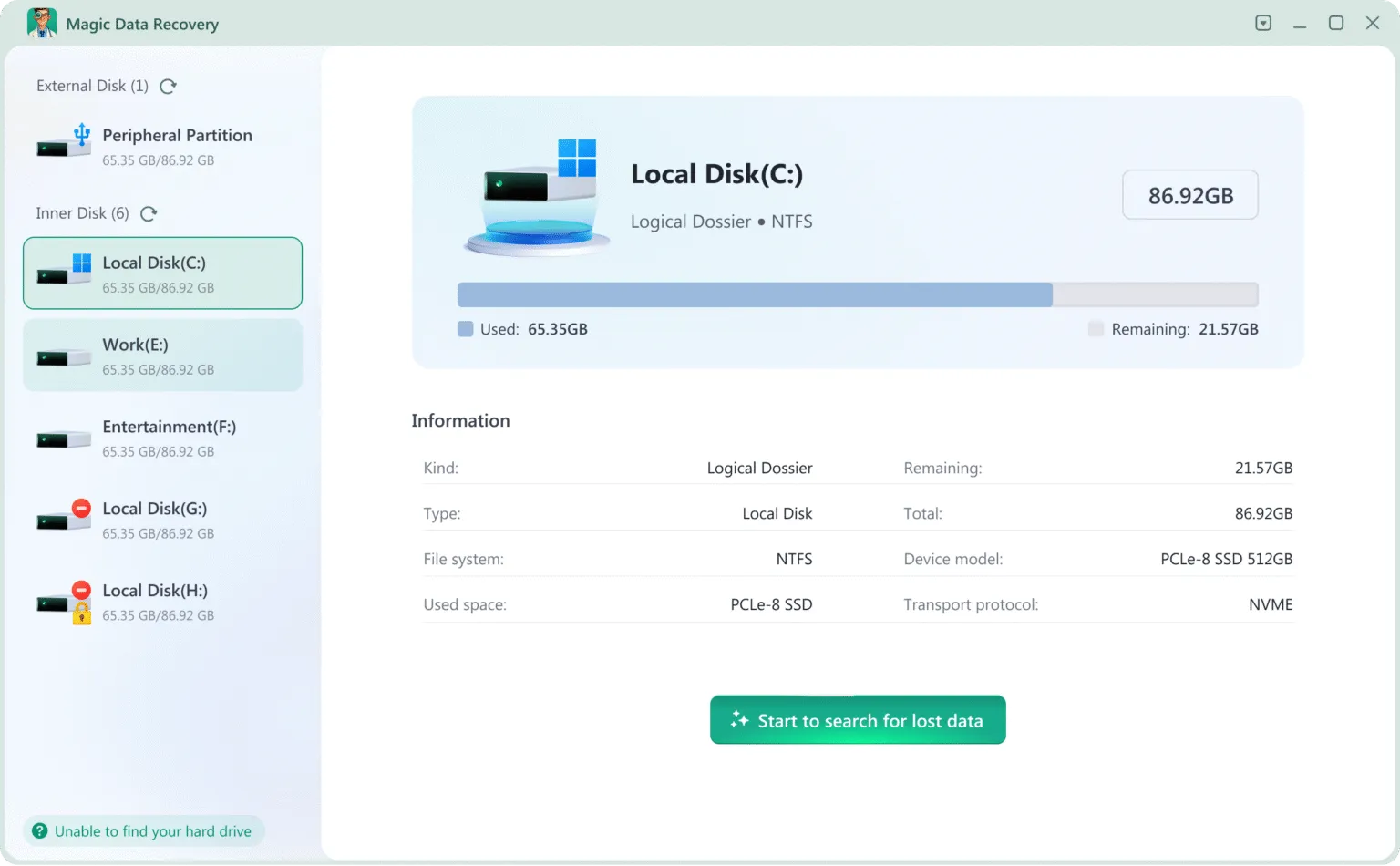
Step 2: Launch the Software and Select the Drive
After installation, open Magic Data Recovery. Select the drive where your photos were deleted and click Search to begin scanning.
Step 3: Wait for the Scan to Complete
The software automatically performs an advanced scan. Scan time varies depending on drive size and condition. Once completed, all recoverable files, including photos, will be displayed.
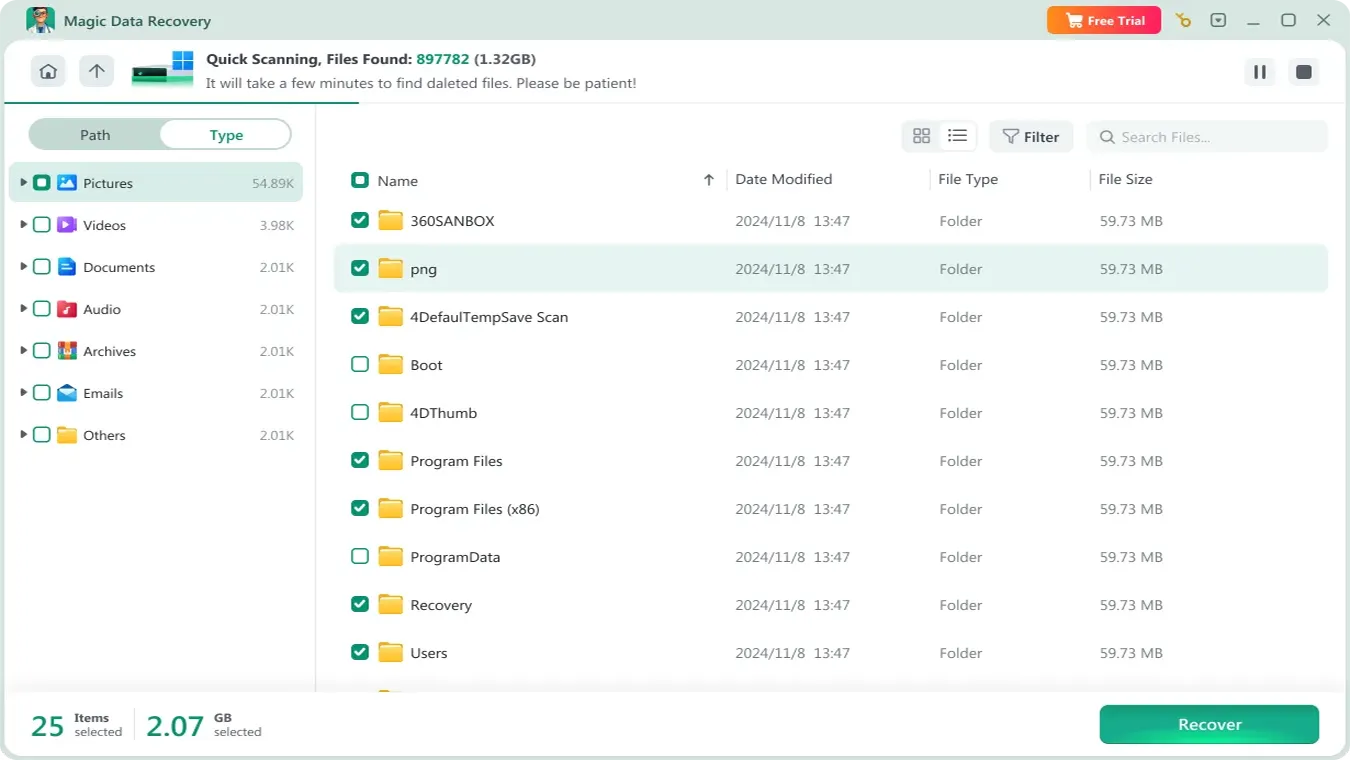
Step 4: Preview Files Before Recovery
Previewing photos allows you to confirm file integrity before restoring them. This feature helps ensure you only recover photos you actually need.

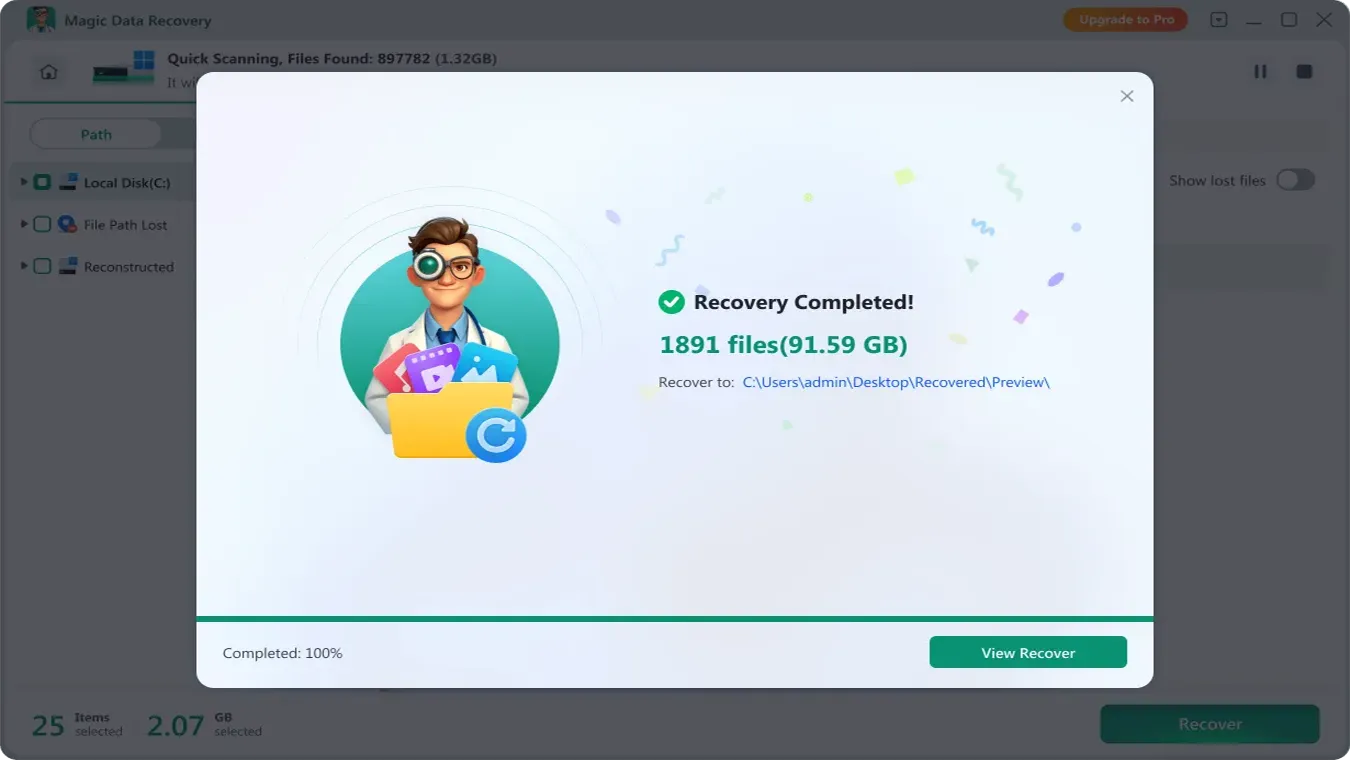
Step 5: Recover Files to a Safe Location
Select the photos you want to recover and save them to a different drive or external device. Never restore files to the original drive to avoid data overwriting.
Why Magic Data Recovery Is a Reliable Choice
From a practical recovery standpoint, Magic Data Recovery solves several common pain points:
- Deep scan technology for formatted and deleted photo recovery
- Preview before recovery, reducing wasted time
- Wide format support, including JPG, PNG, RAW, and more
- User-friendly interface suitable for non-technical users
Compared to manual solutions, it offers a higher success rate in real recovery scenarios, especially when users need to restore deleted photos quickly and safely.
Tips to Improve Photo Recovery Success
To maximize recovery chances, follow these expert recommendations:
- Stop using the affected device immediately
- Do not reinstall the operating system
- Avoid saving new files to the same drive
- Use recovery software as early as possible
These practices are widely accepted across the data recovery industry.
Conclusion
Restoring lost photos does not have to be a guessing game. By understanding how deletion works and acting quickly, many users can successfully restore recently deleted photos even after permanent deletion. When built-in tools are no longer enough, Magic Data Recovery offers a reliable, user-focused solution that balances effectiveness with ease of use. If you are looking for a dependable way to restore deleted photos without risking further data loss, Magic Data Recovery is a practical option worth considering.
Supports Windows 7/8/10/11 and Windows Server
FAQs about Restoring Recently Deleted Photos
Can you recover photos from recently deleted after deleting?
Are photos gone forever after recently deleted?
How do I recover my permanently deleted photos?
How can I recover recently deleted files?
Is it possible to recover permanently deleted?
Is there a way to recover recently deleted items?
How to recover deleted photos from recycle bin after empty?
How long can you recover deleted photos?

Vasilii is a data recovery specialist with around 10 years of hands-on experience in the field. Throughout his career, he has successfully solved thousands of complex cases involving deleted files, formatted drives, lost partitions, and RAW file systems. His expertise covers both manual recovery methods using professional tools like hex editors and advanced automated solutions with recovery software. Vasilii's mission is to make reliable data recovery knowledge accessible to both IT professionals and everyday users, helping them safeguard their valuable digital assets.