
How to Recover Files That Were Deleted from Recycle Bin

Accidentally losing important files can feel overwhelming, especially when you are searching for how to recover files that were deleted from Recycle Bin after emptying it. Many users assume their data is gone forever. In reality, Recycle Bin recovery often remains possible if the storage space has not been overwritten.
This guide explains how to recover files that were deleted from Recycle Bin, why recovery is often still possible, and which solutions work best in real-world scenarios. If built-in options fail, we will also explain when a professional recovery tool like Magic Data Recovery becomes necessary—and why it performs better than many alternatives.
Supports Windows 7/8/10/11 and Windows Server
Table of Contents
Understanding What Happens After You Delete Files from the Recycle Bin
Before discussing recovery methods, it helps to understand what actually happens behind the scenes.
When you delete a file and send it to the Recycle Bin, Windows only changes its logical status. The file still exists on the disk. Once you empty the Recycle Bin, the operating system marks that storage space as “available,” but it does not immediately erase the data.
Because of this behavior, how to recover files that were deleted from Recycle Bin depends largely on timing and disk activity. As long as new data does not overwrite the original file blocks, recovery remains possible.
Common Scenarios Where Recycle Bin Recovery Is Needed
Users search for how to recover files that were deleted from Recycle Bin for many different reasons. In practice, data loss rarely happens in a single, simple way. Understanding the exact scenario helps you choose the most effective recovery method and avoid unnecessary mistakes.
Below are the most common real-world situations where Recycle Bin recovery becomes necessary.
Files Deleted but the Recycle Bin Was Not Emptied
This is the most straightforward recovery scenario. When files still appear in the Recycle Bin, Windows keeps full references to their original paths.
In this case:
- The files remain intact
- No disk scanning is required
- Recovery takes only a few seconds
However, many users delay action. During that delay, they may accidentally empty the Recycle Bin or restart the system, which escalates the situation. Acting early always provides the highest success rate.
Recycle Bin Was Emptied by Accident
Many users empty the Recycle Bin as part of routine cleanup without checking its contents. Once this happens, files disappear from the user interface, which creates the impression of permanent loss.
Despite that, Windows does not immediately erase the underlying data. Instead, the system marks the disk space as reusable. At this stage, recovery still remains possible, but timing becomes critical. The sooner you stop using the affected drive, the better the results.
Files Deleted Using Shift + Delete
Shift + Delete bypasses the Recycle Bin entirely. Users often trigger this shortcut unintentionally, especially when working quickly with large batches of files.
In these cases:
- The Recycle Bin shows no trace of the files
- Native restore options do not appear
- Users often assume recovery is impossible
In reality, the data often remains recoverable through deep scanning techniques that analyze file signatures rather than directory records.
Data Loss After Disk Cleanup or System Optimization
Some system cleanup tools automatically empty the Recycle Bin during optimization tasks. This behavior frequently surprises users who did not authorize file removal explicitly.
Additionally, scheduled maintenance or third-party optimization software may remove files without clear warnings. These situations often require recovery software because Windows offers no rollback option.
Files Lost After Formatting or Partition Changes
Formatting a drive or modifying partitions can remove both files and file system records. While this scenario goes beyond basic Recycle Bin deletion, many users experience it after attempting to “fix” storage issues.
Even after formatting:
- File data may still exist on the disk
- File names and folder structures may be partially recoverable
- Deep scan recovery remains viable if overwriting has not occurred
This scenario often benefits from professional recovery tools rather than manual methods.
Data Loss Caused by System Crashes or Reinstallation
Unexpected system crashes, blue screen errors, or operating system reinstallation can remove access to personal files. Users often realize the loss only after logging back into a fresh system.
In such cases, files deleted before or during system changes may no longer appear in the Recycle Bin. Recovery depends on whether the original disk sectors remain intact.
External Drives and Removable Storage Devices
When users delete files from USB drives or external hard disks, Windows often skips the Recycle Bin entirely. As a result, files disappear instantly.
This behavior confuses many users and leads them to search for recovery solutions. Fortunately, deleted data on external drives often remains recoverable if no new data overwrites it.
Why Identifying the Exact Scenario Matters
Each recovery scenario involves different risks and recovery limits. Some cases allow instant restoration, while others require deeper analysis and specialized tools.
Before choosing a recovery method for deleted files, always consider:
- How the files were deleted
- Whether the Recycle Bin was emptied
- Whether the drive is still in active use
By identifying the scenario correctly, users significantly improve their chances of successful recovery and avoid actions that could permanently destroy recoverable data.
Method 1: Restore Files Directly from the Recycle Bin
If the Recycle Bin has not been emptied, recovery is straightforward:
- Open the Recycle Bin.
- Locate the deleted file.
- Right-click and select Restore.
Where Does the Recycle Bin Restore To?
Windows always restores files to their original location before deletion. This behavior helps users quickly resume work without manual reorganization.
Method 2: Recover Files Using Built-in Windows Backup Features
If the Recycle Bin is empty, Windows may still offer recovery options.
Use File History or Previous Versions
If File History was enabled before deletion:
- Navigate to the original folder.
- Right-click and choose Restore previous versions.
This method works best for documents and folders backed up regularly.
Cloud Backup Recovery
Files synced to OneDrive or similar services may still exist in the cloud’s recycle bin. Always check cloud dashboards before assuming permanent loss.
Why Native Methods Often Fail After Emptying the Recycle Bin
Built-in tools depend on prior backups. Once you empty the Recycle Bin without backups enabled, Windows no longer provides a direct recovery path.
At this stage, users searching for how to recover files that were deleted from Recycle Bin typically need a specialized recovery solution.
How Professional Recovery Software Works
Recovery software scans storage devices for file signatures and file system records that Windows no longer indexes. Instead of relying on visible directories, these tools analyze raw disk data.
Key factors that influence success include:
- How soon recovery begins
- Whether the disk has been heavily used
- The file system type (NTFS, exFAT, FAT32)
Why Magic Data Recovery Is a Reliable Solution
When native recovery options fail, Magic Data Recovery provides a practical and dependable alternative.
Core Problems It Solves
- Recovers files deleted from an emptied Recycle Bin
- Handles Shift+Delete scenarios
- Restores data after formatting or system crashes
- Repairs recovery paths affected by file system errors
Key Advantages
- Supports NTFS, FAT32, exFAT, and other common file systems
- Performs deep scans to locate old and fragmented files
- Allows file preview before recovery
- Works with documents, photos, videos, and archives
Unlike basic tools, Magic Data Recovery focuses on accuracy rather than speed alone. This balance improves recovery success without risking further data damage.
How to Recover Files Using Magic Data Recovery
1. Download & Install Safely: Download your chosen recovery tool immediately. Crucially, install it on a different drive (e.g., if files were lost on C:, install on a USB stick or D:) to prevent overwriting.
Supports Windows 7/8/10/11 and Windows Server
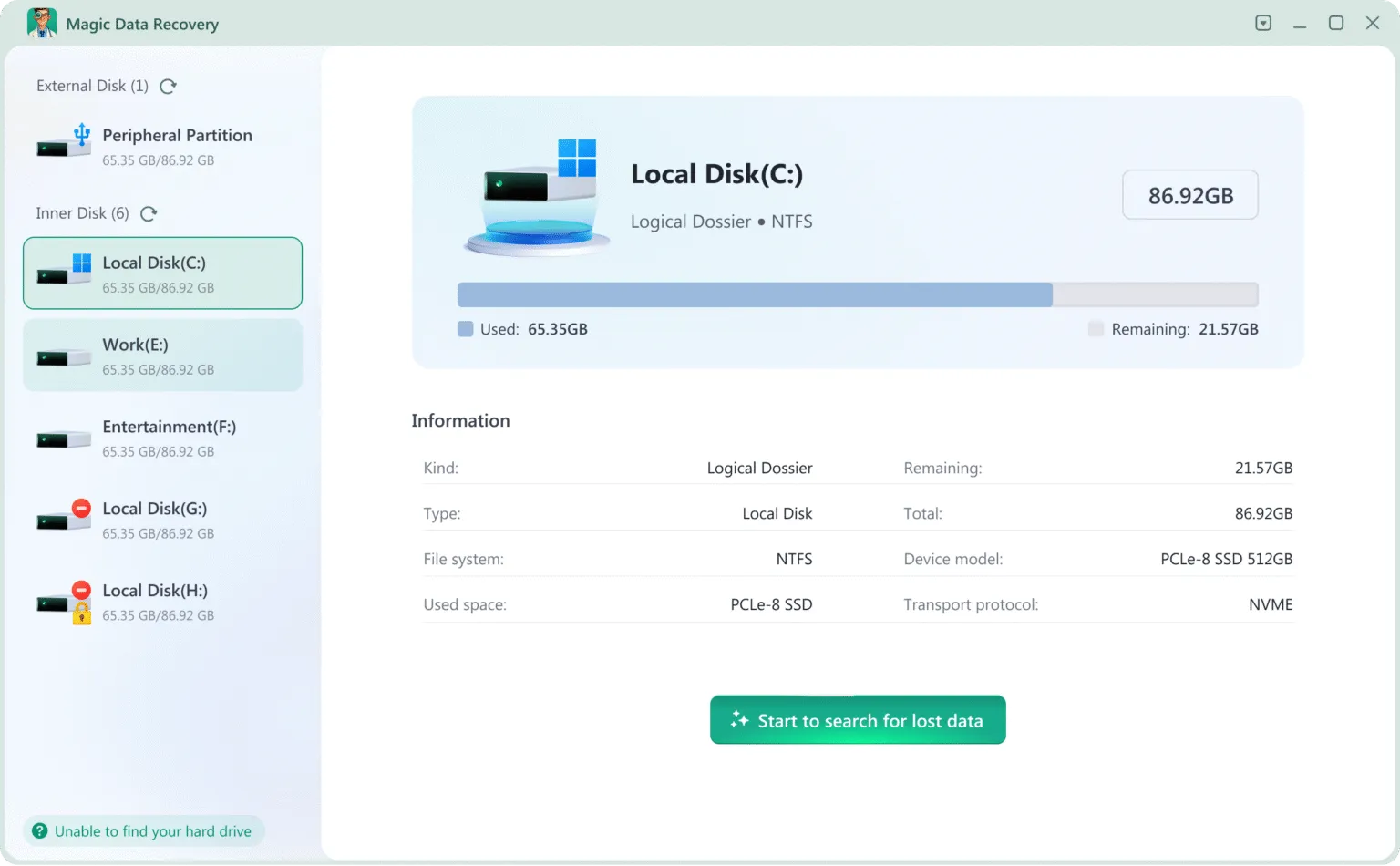
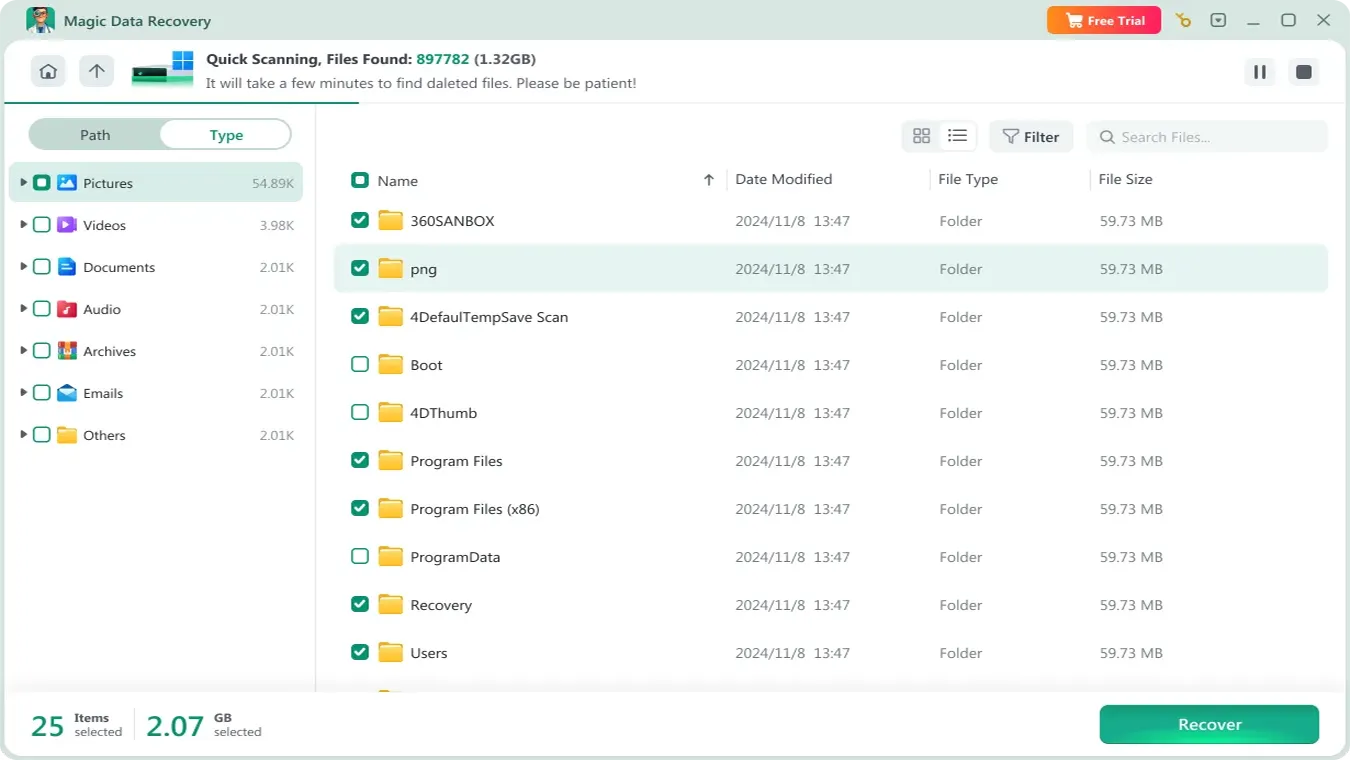

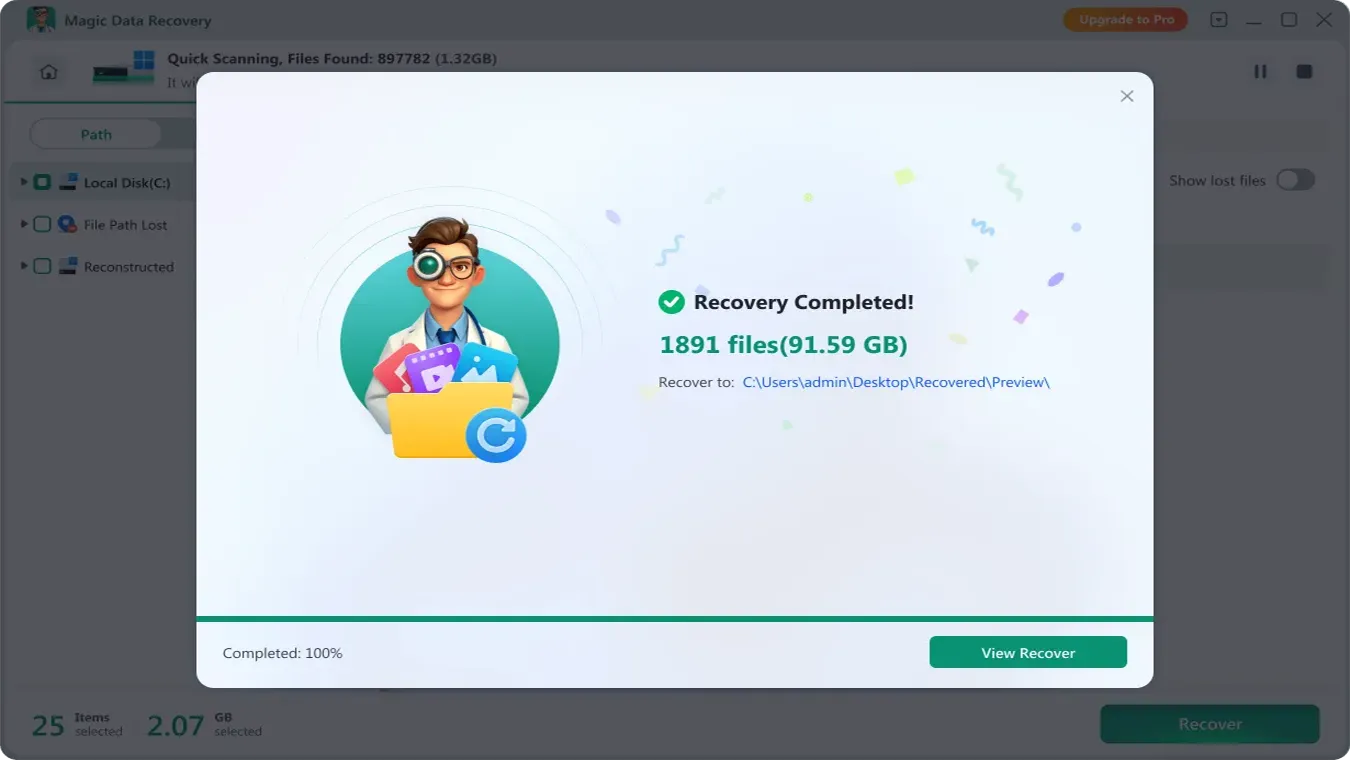
Why Magic Data Recovery Outperforms Other Solutions
Many recovery tools emphasize quick scans but miss older or partially overwritten files. Magic Data Recovery uses deeper analysis methods, which improves results in complex cases such as:
- Long-term deleted files
- Formatted partitions
- Corrupted file tables
For users who need a dependable answer to how to recover files that were deleted from Recycle Bin, this reliability matters more than marketing claims.
Practical Tips to Maximize Recovery Success
- Stop using the affected disk immediately
- Avoid installing recovery tools on the same drive
- Act as soon as possible
- Choose deep scan options when basic scans fail
These steps significantly increase recovery chances, regardless of the tool used.
Conclusion
Recovering deleted files requires understanding both system behavior and recovery limits. Built-in tools work well for recent deletions with backups. However, once the Recycle Bin is emptied, specialized Recycle Bin recovery solutions become essential.
For users who want a dependable way to recover lost data across deletion, formatting, or file system errors, Magic Data Recovery offers a balanced, reliable solution.
If you are actively searching for how to recover files that were deleted from Recycle Bin, choosing the right tool early can make the difference between permanent loss and successful recovery.
Supports Windows 7/8/10/11 and Windows Server
FAQs
Can you recover files after emptying a bin?
Where do permanently deleted files go?
Where does the Recycle Bin restore to?
How do I recover old deleted files?
How long do deleted files stay recoverable?
How to recover deleted files that didn't go to the Recycle Bin?
Can I still recover permanently deleted files?
Is deleted from Recycle Bin gone forever?

Jason is a data recovery and technical support specialist with over 15 years of hands-on experience. He has worked extensively with frontline users, troubleshooting difficult data loss cases and providing practical recovery solutions for accidental deletion, formatted drives, damaged file systems, lost partitions, system failures, and other recovery emergencies. His expertise also includes backup and restoration, file repair, and disaster recovery, with a strong emphasis on safe, reliable, and technically accurate guidance.