
Top 7 Methods for Data Recovery from Formatted Hard Drive
In many real-world cases, data recovery from formatted hard drive scenarios remain possible. The key lies in understanding how formatting works and choosing the right recovery method before new data overwrites the disk.
This guide explains why formatted data can still be recovered, compares the top methods for formatted hard drive data recovery, and shows why Magic Data Recovery offers a dependable solution when accuracy and safety matter.
Supports Windows 7/8/10/11 and Windows Server
Table of Contents
Why Formatting Doesn’t Always Mean Data Is Lost
Before choosing a recovery method, it helps to understand what formatting actually does.
What Happens When a Hard Drive Is Formatted
Formatting removes file system references such as directory entries and allocation tables. However, the operating system usually leaves the underlying data blocks untouched.
Because of this behavior, data recovery formatted hard drive operations often succeed, especially when users act quickly and avoid further disk usage.
Quick Format vs Full Format
- Quick format deletes file system metadata only
- Full format scans the disk and may overwrite sectors
Quick formats offer a much higher success rate for formatted hard drive data recovery, particularly on traditional hard drives.
HDD vs SSD Recovery Differences
- HDDs store data magnetically and allow deep scanning
- SSDs often use TRIM, which clears deleted blocks automatically
As a result, recovery works best on HDDs and external drives, while SSD recovery depends heavily on timing and system behavior.
Top 7 Methods for Data Recovery from Formatted Hard Drive
The methods below are ranked based on effectiveness, safety, and real recovery success.
Method 1: Magic Data Recovery Software (Best Overall Solution)
For most users, professional recovery software provides the most reliable path for data recovery from formatted hard drive situations.
Magic Data Recovery focuses on recovering lost data caused by formatting, accidental deletion, and file system errors.
Core Problems It Solves
- Accidental or quick formatting
- Lost or damaged partitions
- Corrupted file systems (NTFS, FAT32, exFAT)
Why Magic Data Recovery Stands Out
- Advanced deep-scan technology rebuilds file structures
- Read-only scanning prevents further data damage
- Wide file type support improves recovery accuracy
Practical Use Case
A user formats an external HDD during system cleanup. Magic Data Recovery scans the entire disk sector by sector, identifies recoverable files, and allows selective restoration without modifying the original drive.
Compared with generic tools, Magic Data Recovery delivers more consistent results for formatted hard drive data recovery, especially in complex scenarios.
Method 2: Disk Drill for Formatted Hard Drive Recovery
Disk Drill is a popular recovery tool often used for light recovery tasks.
Strengths
- Clean and intuitive interface
- File preview before recovery
- Suitable for beginners
Limitations
- Deep scan performance weakens on large drives
- Less effective with damaged file systems
Disk Drill can help in simple data recovery formatted hard drive cases but struggles with severe formatting or partition issues.
Method 3: Recuva for Basic Format Recovery
Recuva offers a free option for basic recovery attempts.
Strengths
- Free version available
- Quick scans for recently formatted drives
Limitations
- Low success rate on complex formats
- Limited support for large or external disks
This method fits small-scale recovery needs but rarely handles advanced data recovery from formatted hard drivescenarios.
Method 4: Restore from Backup or Cloud Storage
Backups remain the safest recovery option when available.
Common Backup Sources
- Windows File History
- macOS Time Machine
- Cloud services such as OneDrive or Google Drive
When This Method Works
- Backups existed before formatting
- Files synced correctly
- Storage media remains intact
Unfortunately, many users discover missing backups only after formatting occurs.
Method 5: Windows File Recovery (Command-Line Tool)
Microsoft provides a command-line recovery tool for advanced users.
Advantages
- Free utility
- Fine-grained control for technical users
Drawbacks
- Command-line complexity
- No preview before recovery
- Higher risk of user mistakes
This option suits IT professionals but often frustrates average users dealing with formatted hard drive data recovery.
Method 6: TestDisk and Open-Source Recovery Tools
Open-source tools like TestDisk offer powerful recovery features.
Pros
- Strong partition recovery capabilities
- Free and widely supported
Cons
- Steep learning curve
- No graphical interface or file preview
Incorrect usage may worsen data loss, so caution is essential.
Method 7: Professional Data Recovery Services
When software solutions fail, professional labs offer a last resort.
When to Consider This Option
- Physical drive damage
- Firmware failure
- Extremely valuable data
These services provide strong results but involve higher costs and longer turnaround times.
How to Recover Data from a Formatted Hard Drive Using Magic Data Recovery
A structured process improves formatted drive recovery success.
1. Download and install Magic Data Recovery to your computer.
Please download it from Amagicsoft website or the following download button to get the software.
Supports Windows 7/8/10/11 and Windows Server
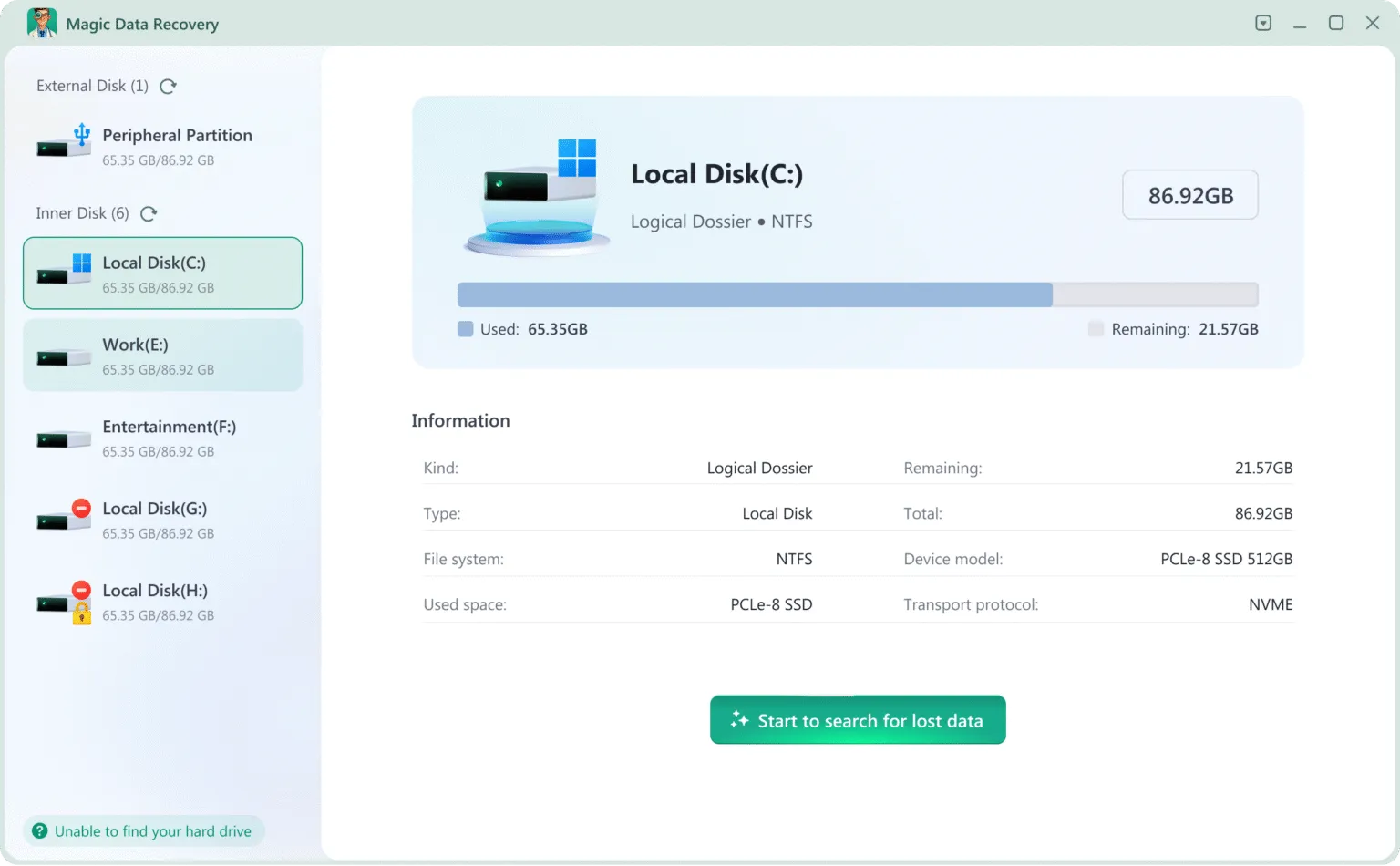
2. Connect the formatted drive and Launch Magic Data Recovery
Connect the formatted drive to your computer, then run the software to select the drive from the device list.
3. Start a Scan
Click the “Search for lost data” button to search for your lost files.
4. Preview Recoverable Files
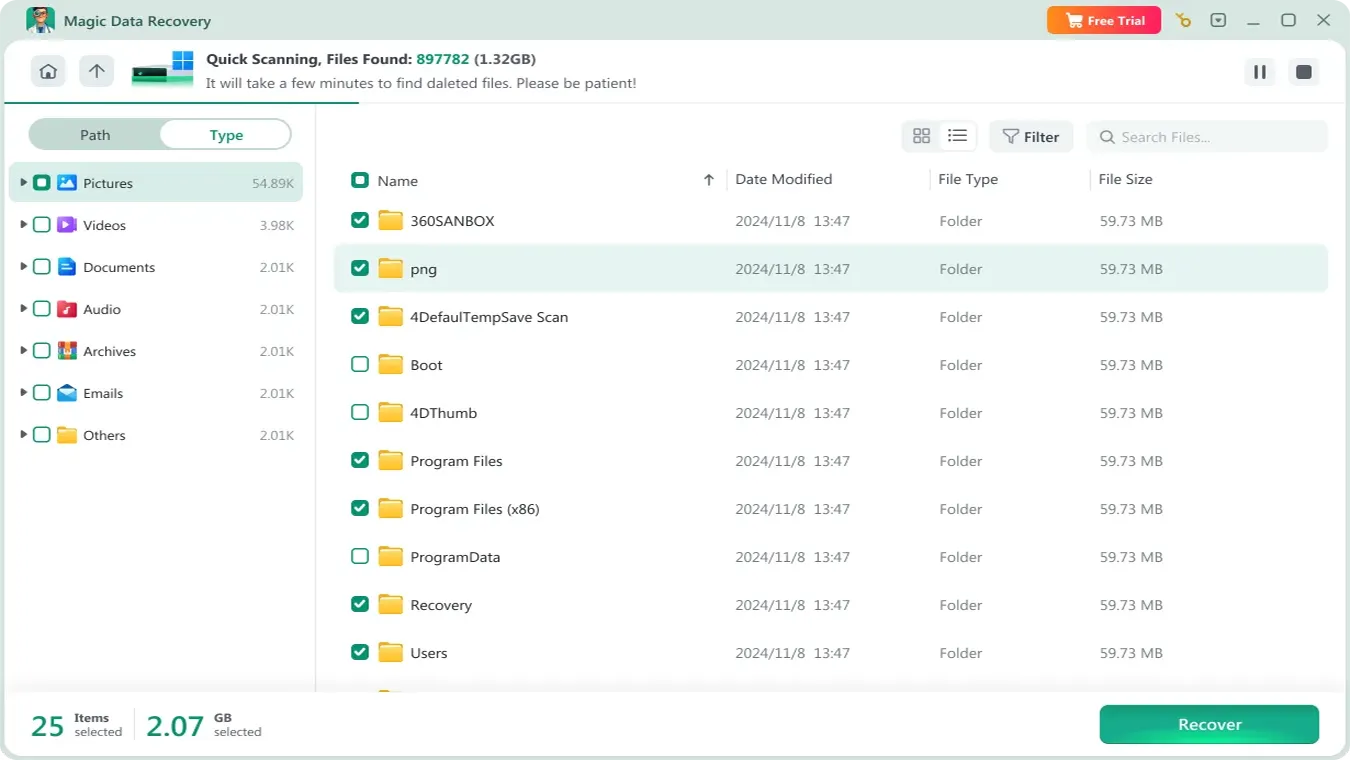
Filter by file type and preview before recovery.

5. Recover Files Safely
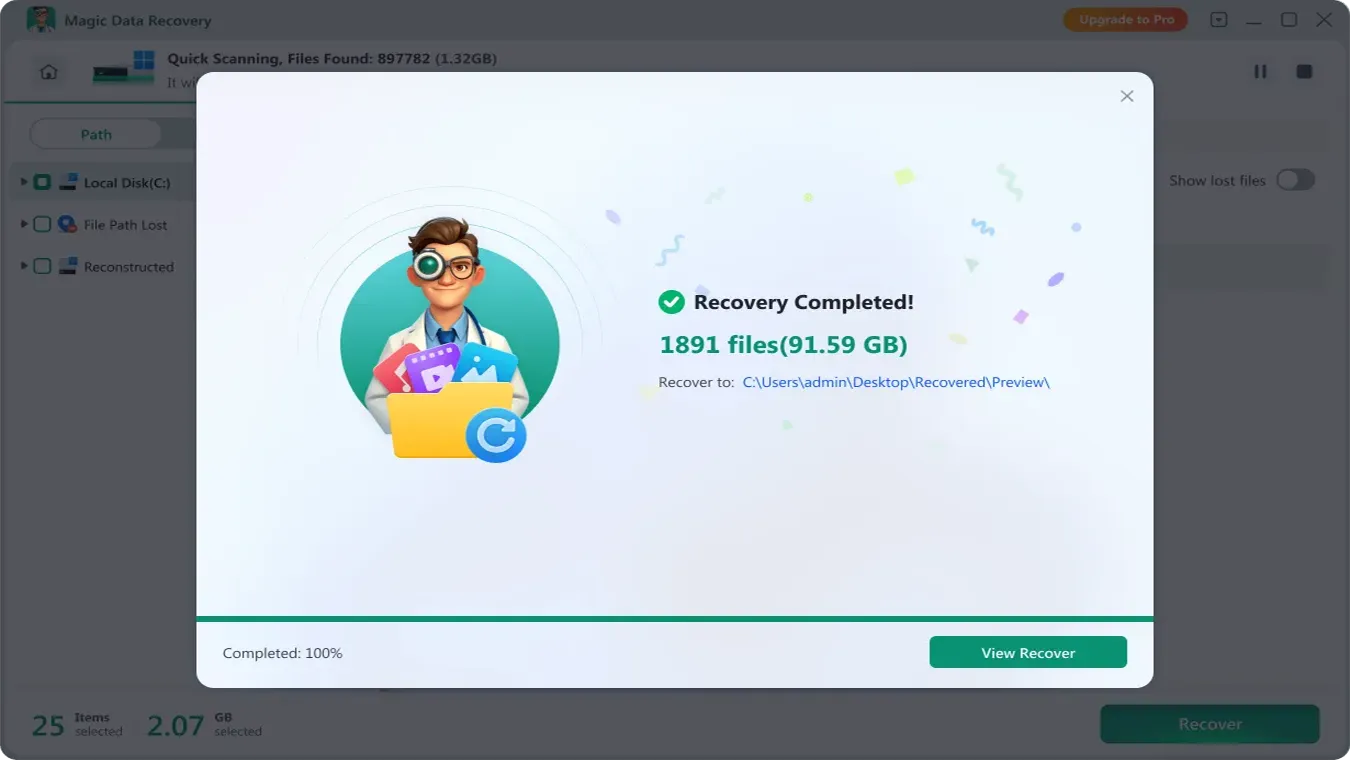
Save recovered files to a different storage device.
Common Mistakes to Avoid After Formatting
Avoiding these errors significantly improves recovery results:
- Continuing to use the formatted drive
- Installing recovery software on the same disk
- Interrupting scans too early
- Saving recovered files to the source drive
Even advanced tools cannot recover overwritten sectors.
Conclusion
Formatting a hard drive does not always mean permanent data loss. With the right formatted drive recovery approach, data recovery formatted hard drive scenarios often succeed.
Among all available methods, Magic Data Recovery offers the best balance of reliability, ease of use, and recovery depth. Its ability to handle formatted drives, damaged file systems, and complex recovery scenarios makes it more dependable than basic tools or manual solutions.
If you need a practical and trustworthy option for formatted hard drive data recovery, Magic Data Recovery provides a clear and proven solution—focused on results rather than promises.
Supports Windows 7/8/10/11 and Windows Server
FAQs
Can I recover data from a formatted hard drive for free?
Is formatted SSD data recovery possible?
How long does formatted hard drive data recovery take?
Where should I save recovered files?
Can data be recovered from a formatted hard drive?
Is it possible to recover data from a wiped hard drive?
How much data can be recovered from a formatted hard drive?
Can you undo formatting a hard drive?

Jason is a data recovery and technical support specialist with over 15 years of hands-on experience. He has worked extensively with frontline users, troubleshooting difficult data loss cases and providing practical recovery solutions for accidental deletion, formatted drives, damaged file systems, lost partitions, system failures, and other recovery emergencies. His expertise also includes backup and restoration, file repair, and disaster recovery, with a strong emphasis on safe, reliable, and technically accurate guidance.