
How to Fix Hard Disk Error Quickly
Table of Contents
Introduction
Encountering a hard disk error can be stressful, especially when important files suddenly become inaccessible. Such errors not only disrupt daily work but can also result in permanent data loss if not handled properly. This guide will explain the common causes of hard disk errors, practical methods to fix them, and how to recover data safely using reliable tools like Magic Data Recovery.
By the end of this article, you’ll understand how to troubleshoot your hard disk, prevent future errors, and recover lost data effectively.
Common Causes of Hard Disk Error
Understanding why hard disk errors occur is the first step toward prevention and repair. Common causes include:
- Physical Damage
- Dropping or bumping a hard drive can lead to mechanical failure.
- Symptoms: clicking noises, unrecognized drive, frequent crashes.
- File System Corruption
- Improper shutdowns, virus attacks, or software crashes may corrupt the file system.
- Symptoms: “Drive not accessible” messages, corrupted folders.
- Bad Sectors
- Hard disks naturally develop bad sectors over time.
- Symptoms: slow file access, read/write errors, system freezes.
- Software Conflicts
- Conflicting programs or outdated drivers can trigger disk errors.
- Symptoms: frequent error messages, unexpected reboot loops.
Signs Your Hard Disk Might Be Failing
Early detection can prevent data loss. Watch for these warning signs:
- Frequent system crashes or blue screens
- Slow file transfers or applications taking longer to open
- Unusual noises from the hard drive
- Files disappearing or becoming inaccessible
How to Fix Hard Disk Error: Step-by-Step Guide
1. Run Disk Check Utility
Most operating systems include a built-in tool to scan and repair disk errors:
Windows:
- Open Command Prompt as administrator.
- Type
chkdsk C: /f /r(replaceC:with your drive letter). - Press Enter and wait for the process to complete.
Mac:
- Open Disk Utility.
- Select the disk and click “First Aid.”
- Follow on-screen instructions to repair.
2. Update Drivers and Firmware
Outdated storage drivers can cause disk errors. Ensure your system uses the latest drivers:
- Visit the hard drive manufacturer’s website.
- Download and install the latest driver and firmware updates.
3. Use Third-Party Disk Repair Tools
Professional disk repair tools can fix issues beyond standard OS utilities. They offer advanced scanning, bad sector mapping, and repair features.
Preventing Future Hard Disk Errors
Prevention is always better than recovery. Follow these tips:
- Regularly back up important data to cloud storage or external drives.
- Avoid sudden power outages; use a UPS for desktops.
- Run periodic disk checks and system updates.
- Handle drives carefully to prevent physical damage.
Recovering Lost Data from Hard Disk Error
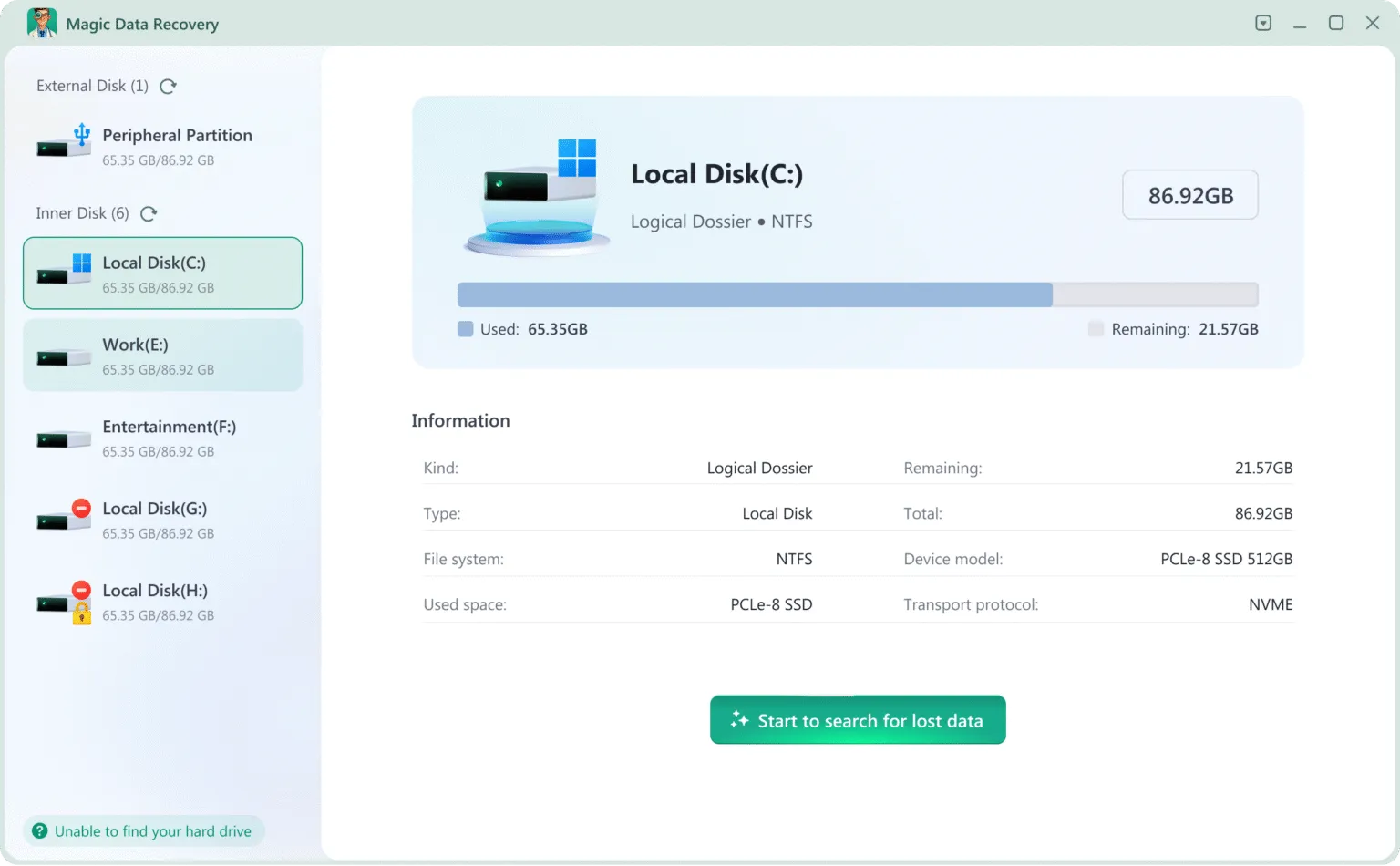
Magic Data Recovery can:
- Recover deleted, formatted, or corrupted files from hard disks.
- Support multiple file types, including documents, photos, and videos.
- Handle complex scenarios such as partition loss or severe corruption.
Example Scenario:
Imagine your laptop fails with a hard disk error, and you lose a week’s worth of work files. Magic Data Recovery scans the damaged disk, identifies recoverable files, and restores them quickly without requiring technical expertise.
Compared to manual methods or generic software, Magic Data Recovery is more reliable because it combines advanced scanning algorithms with a user-friendly interface. If you are seeking an effective solution for hard disk error data recovery, this tool is a practical choice.
Supports Windows 7/8/10/11 and Windows Server
Conclusion
FAQs
How to fix a Hard Disk Error?
Can hard disk failure be fixed?
What is a Hard Disk Error?
How do I check for hard disk errors?
Is it worth fixing a hard drive?
What causes a hard disk to fail?
Is it expensive to fix a hard drive?
What happens if a hard drive is corrupted?

Erin Smith is recognized as one of the most professional writers at Amagicsoft. She has continually honed her writing skills over the past 10 years and helped millions of readers solve their tech problems.