
Disaster Recovery Documentation: How to Write, Structure, and Use It
Disaster recovery documentation is the written record of the procedures, contacts, systems, priorities, and technical steps your organization uses to restore operations after an outage, cyberattack, hardware failure, or data loss event.
Many businesses already have a disaster recovery plan, but fewer maintain detailed disaster recovery documentation that teams can follow under pressure. Without that documentation, recovery becomes slower, less consistent, and more dependent on individual memory.
This guide explains what disaster recovery documentation is, how it differs from a disaster recovery plan, what sections to include, and how to build a practical document that supports real recovery work when backups, systems, or storage devices fail. A professional data recovery tool is recommended for this case.
Supports Windows 7/8/10/11 and Windows Server
Table of Contents
What Is Disaster Recovery Documentation?
Disaster recovery documentation is the operational record that explains exactly how an organization restores systems, applications, infrastructure, and data after a disruptive event. It turns disaster recovery strategy into executable instructions.
A disaster recovery plan defines goals, priorities, and recovery objectives. Disaster recovery documentation supports that plan by recording technical procedures, system dependencies, contact lists, escalation paths, backup locations, validation steps, and recovery workflows.
In simple terms, the plan explains what must be protected and restored, while the documentation explains how the team actually performs recovery.
Why Disaster Recovery Documentation Is Essential
Modern organizations depend heavily on digital systems. Therefore, even brief downtime may impact revenue, compliance, and customer trust.
Structured disaster recovery documentation helps organizations:
- Restore services faster
- Assign clear responsibilities
- Reduce recovery errors
- Maintain operational continuity
Furthermore, many industry standards recommend documented recovery procedures. Even when regulations do not require it, structured planning reflects responsible risk management.
Without documentation, teams improvise. With a clear disaster recovery document, they execute efficiently.
Disaster Recovery Plan vs Disaster Recovery Documentation
Although the terms are closely related, they are not the same.
A disaster recovery plan defines the overall recovery strategy. It usually includes business priorities, recovery objectives, decision-making authority, and continuity goals.
Disaster recovery documentation is more detailed and operational. It records the exact recovery procedures, infrastructure information, system configurations, application dependencies, backup sources, communication steps, and verification tasks needed during execution.
A simple way to remember the difference is this:
The plan sets direction.
The documentation supports action.
Disaster Recovery Documentation Template: What to Include
A practical disaster recovery document should include the following sections.
- Document Purpose and Scope
Explain what systems, business units, applications, and storage environments the document covers. Define when the document should be activated. - Risk Assessment
List the most realistic threats, such as ransomware, accidental deletion, server failure, power outage, storage corruption, cloud outage, or human error. Briefly note the business impact of each risk. - Recovery Priorities
Identify critical systems, essential applications, high-priority data, and operational dependencies. Clarify which services must be restored first. - Recovery Objectives
Document Recovery Time Objective (RTO) and Recovery Point Objective (RPO) for each critical service or data set. - Backup and Restore Information
Record where backups are stored, how often they run, how long they are retained, who can access them, and how backup integrity is verified. - System and Infrastructure Details
Include server names, storage locations, network dependencies, cloud resources, authentication requirements, and software configurations needed during restoration. - Roles and Responsibilities
Assign ownership for technical recovery, incident coordination, communication, escalation, compliance, and business approval. - Step-by-Step Recovery Procedures
Provide clear instructions for isolating the issue, restoring data, validating systems, re-enabling services, and documenting the outcome. - Communication and Escalation Contacts
Add internal stakeholders, external vendors, managed service providers, compliance contacts, and emergency escalation details. - Testing and Revision Schedule
Document how often the recovery process is tested, how results are reviewed, and when the document must be updated.
Simple Disaster Recovery Documentation Example
Below is a simple structure organizations can adapt for internal use:
Document Title: Disaster Recovery Documentation for Core Business Systems
Owner: IT Operations Manager
Last Updated: [Date]
Activation Trigger: Major outage, ransomware event, storage failure, or backup restoration failure
Critical Systems:
- File server
- Customer database
- Email platform
- ERP system
Recovery Priorities:
- Restore authentication services
- Restore file access and document storage
- Restore line-of-business applications
- Validate user access and data integrity
Backup Sources:
- Daily local backup
- Weekly offsite backup
- Cloud snapshot archive
Recovery Procedure Summary:
- Confirm incident scope
- Isolate affected systems
- Verify backup integrity
- Restore critical systems in priority order
- Validate recovered data
- Resume business operations
- Record lessons learned and update documentation
Primary Contacts:
- IT lead
- Infrastructure engineer
- Security lead
- Executive approver
- External recovery vendor
What to Do When Backup Restoration Fails
Even strong backup strategies do not eliminate every recovery risk. Backup restoration may fail because of corrupted archives, incomplete backup jobs, damaged storage devices, file system errors, missing encryption keys, or incompatible restore environments.
When this happens, the recovery document should not end at “restore from backup.” It should also define fallback actions, including storage-level diagnostics, file recovery workflows, escalation contacts, and criteria for using professional recovery tools or services.
A mature disaster recovery document should answer these questions:
What if the backup is incomplete?
What if the target system cannot mount the restored data?
What if only selected documents need to be recovered?
What if the original partition or file system is damaged?
How Recovery Software Fits Into Disaster Recovery Documentation
Recovery software should not replace backup strategy, system redundancy, or formal disaster recovery planning. However, it can support recovery when backups fail, when only selected files must be restored, or when logical storage damage prevents normal access.
Magic Data Recovery can be included in disaster recovery documentation as a fallback option for scenarios such as accidental deletion, formatting errors, partition loss, or file system corruption. In these situations, software-based recovery may help retrieve business documents before escalation to advanced recovery service.
Recommended software workflow:
Step 1: Download and Install the Software
Download Magic Data Recovery and install it on a healthy drive. Do not install it on the affected storage location. This precaution protects lost data from accidental overwriting.
Supports Windows 7/8/10/11 and Windows Server
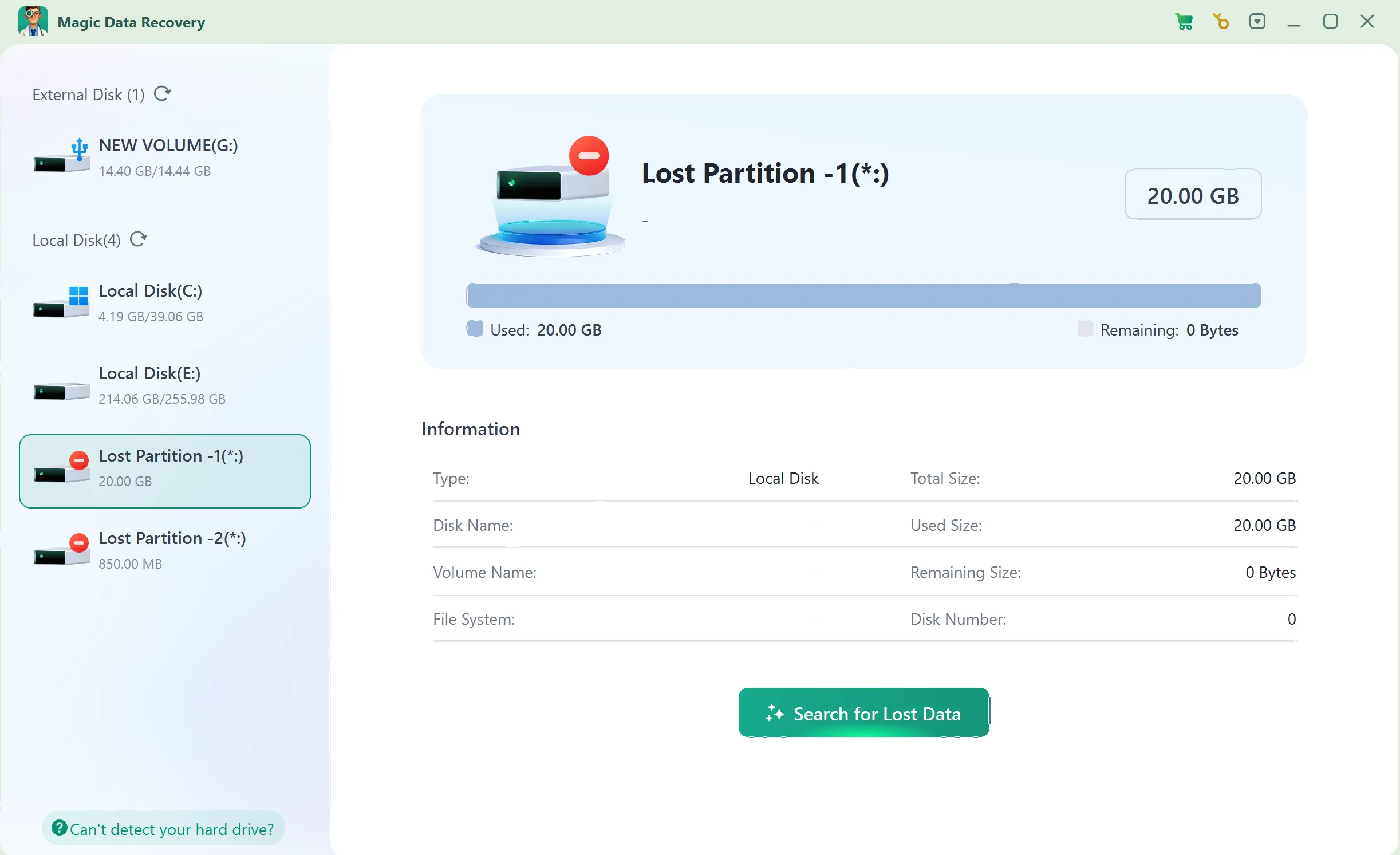
Step 2: Select the Affected Drive or Partition
Launch the program and choose the drive or partition where data loss occurred. Then begin scanning.
Step 3: Run a Comprehensive Scan
The software performs an advanced scan automatically. During the process, it displays recoverable files progressively.
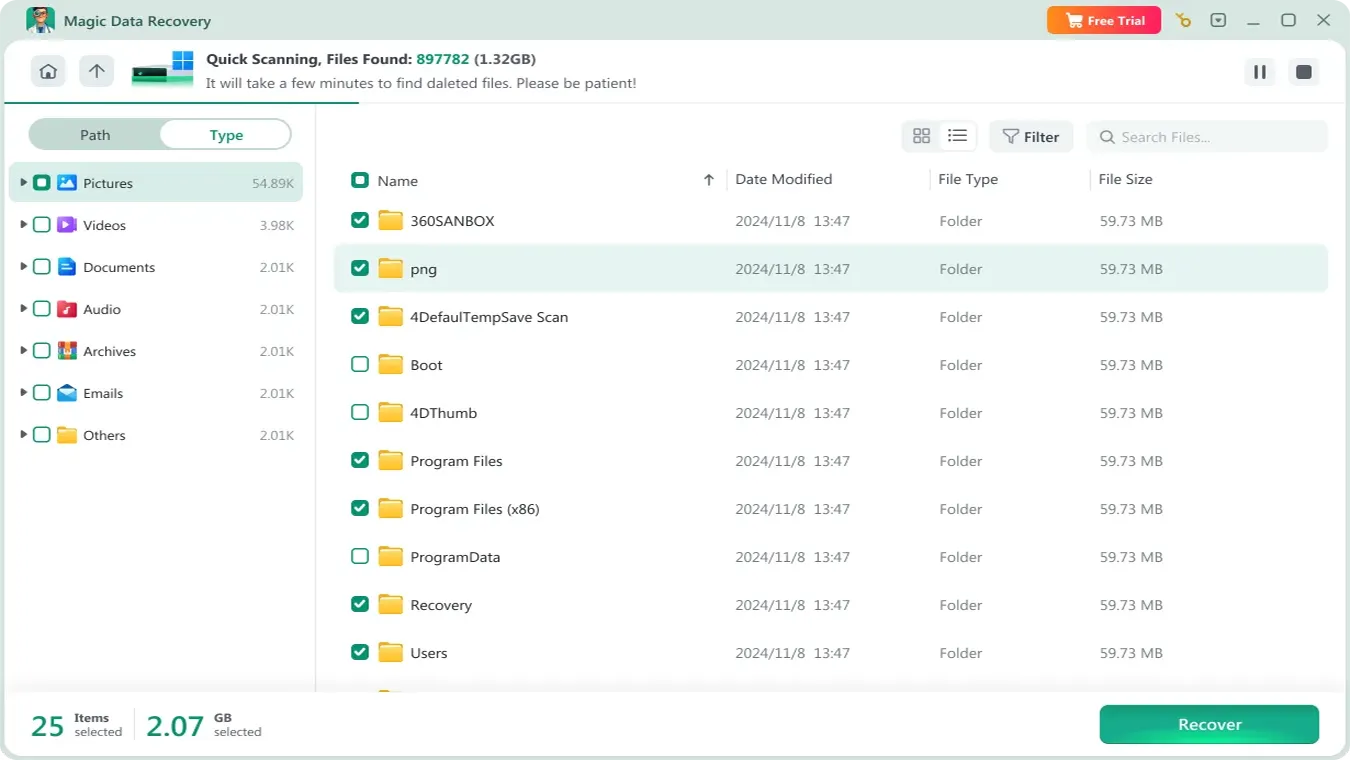
Step 4: Preview Files Before Recovery
Use the preview function to confirm file integrity before restoration.

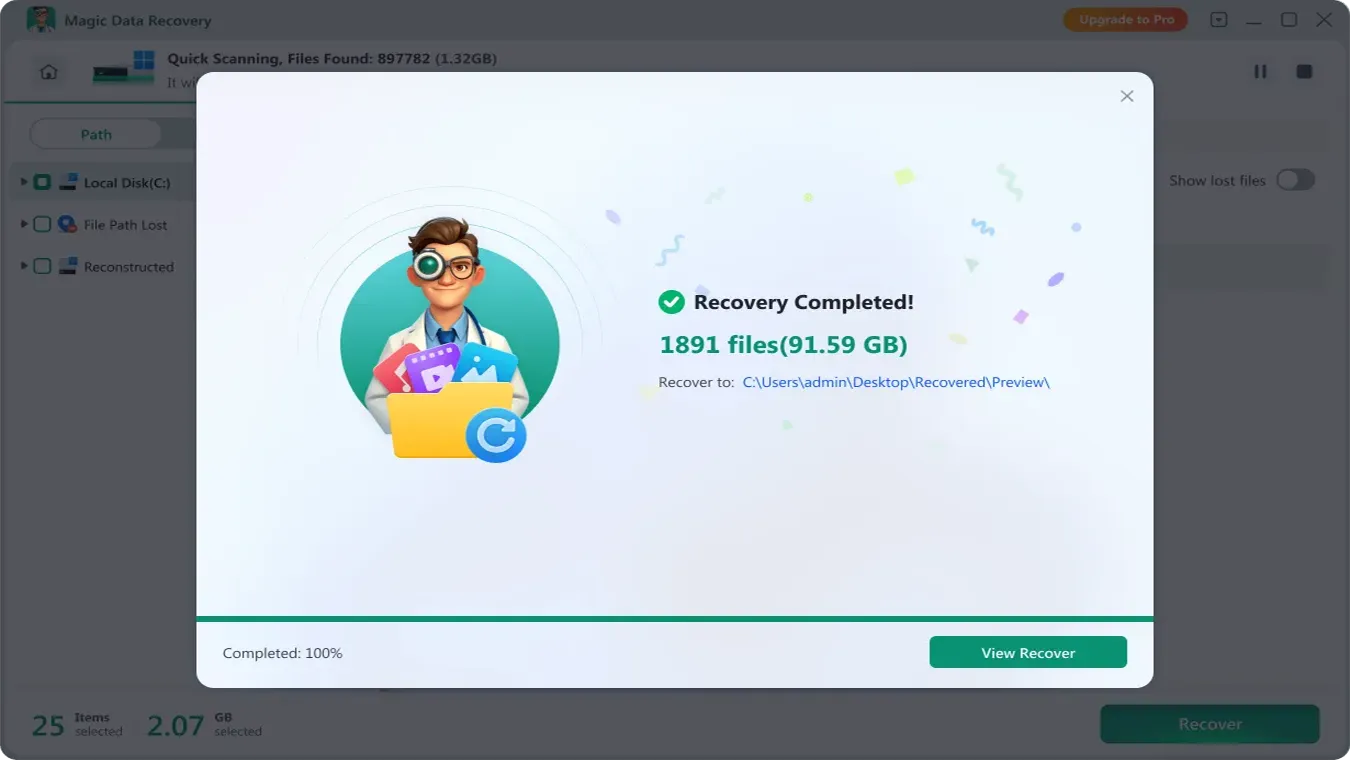
Step 5: Save Files to a Safe Location
Select the required files and save them to a different drive. Avoid restoring them to the original damaged location, as this action may increase corruption risk.
Why Recovery Software Strengthens Your Disaster Recovery Plan
Magic Data Recovery addresses scenarios such as:
Because it scans storage sectors directly, it often retrieves files that standard utilities cannot detect.
Importantly, the software does not replace your disaster recovery document. Instead, it enhances execution capability when unexpected technical failures occur.
If you want to improve resilience, integrating recovery software into your disaster recovery plan adds practical protection.
Disaster Recovery Documentation Checklist
Before finalizing your disaster recovery documentation, confirm that it includes:
- Clear scope and activation criteria
- Business-critical systems and data priorities
- RTO and RPO targets
- Backup locations and retention details
- Step-by-step recovery procedures
- Internal and external contact lists
- System dependencies and access requirements
- Validation and testing steps
- Escalation procedures for backup failure
- Revision history and review schedule
Best Practices for Maintaining Disaster Recovery Documentation
To keep disaster recovery documentation useful in real incidents, organizations should review and update it regularly.
Update the document after infrastructure changes, cloud migrations, storage replacements, security incidents, or major application updates. Test recovery procedures on a scheduled basis instead of assuming backups will always work. Review RTO and RPO targets as business priorities change. Make sure contact lists stay current, especially for vendors, hosting providers, and response owners. Keep both secure digital and offline-accessible copies when appropriate.
Documentation should be treated as a living operational asset, not a one-time compliance file.
Conclusion
Disaster recovery documentation turns recovery strategy into clear action. A useful document does more than describe policy. It records priorities, technical dependencies, recovery procedures, contacts, validation steps, and fallback options for real-world incidents.
The most effective disaster recovery documentation is practical, regularly tested, and easy to follow under pressure. When backup restoration does not work as expected, documented fallback workflows, including file-level recovery options, can improve resilience and reduce downtime.
Magic Data Recovery complements your disaster recovery plan by addressing deletion, formatting, and partition loss scenarios. When backup restoration becomes impossible, it provides a practical way to recover data from hard drives.
Supports Windows 7/8/10/11 and Windows Server
FAQ
What is disaster recovery documentation?
What is the difference between a disaster recovery plan and disaster recovery documentation?
What should be included in disaster recovery documentation?
How often should disaster recovery documentation be updated?
Why can backup restoration fail?
Should recovery software be included in disaster recovery documentation?
Do small businesses need disaster recovery documentation?
Is there a simple disaster recovery documentation template?

Vasilii is a data recovery specialist with around 10 years of hands-on experience in the field. Throughout his career, he has successfully solved thousands of complex cases involving deleted files, formatted drives, lost partitions, and RAW file systems. His expertise covers both manual recovery methods using professional tools like hex editors and advanced automated solutions with recovery software. Vasilii's mission is to make reliable data recovery knowledge accessible to both IT professionals and everyday users, helping them safeguard their valuable digital assets.